
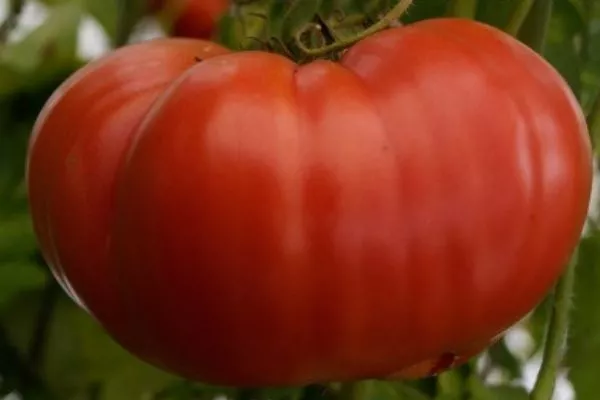
Crimean tomato is domestic a variety with excellent taste properties and agronomic characteristics. This versatile tomato can be grown both outdoors and under plastic. It will appeal to lovers of tall varieties with juicy, sweet fruits.
Description of the variety and origin
The Krymskie tomato plant has tall, indeterminate bushes, reaching 1.8 m in height. The bushes are semi-spreading, with moderate branching and foliage. The stems are upright, and the leaves are dark green and standard-shaped.
The Crimean tomato produces fairly large fruits, with four to six fruits forming in a single cluster.
Brief description of fruits:
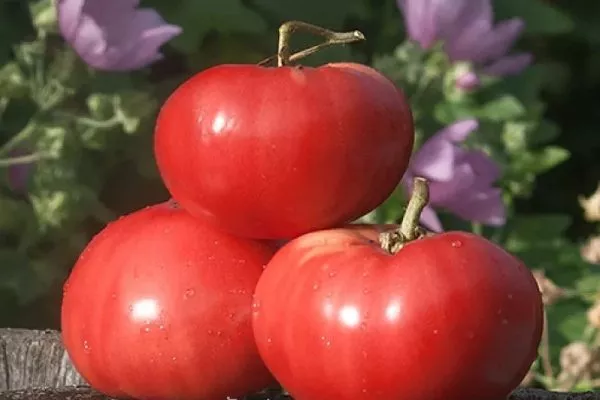
- Unripe fruit color: green.
- Color of ripe fruit: dark pink.
- Form: flat-round.
- Pulp color: pink.
- Skin: medium thickness, smooth, glossy.
- Weight: 250-300 g
Individual specimens reach 500-600 g.
The Krymskie tomato's flesh is plump and juicy, and the flavor is very good, even excellent. The fruit has a rich tomato aroma. They're ideal for salads and can be used to make a variety of sauces and ketchups. They're also suitable for pickling and canning.
Characteristics
The Krymskie tomato is a mid-season variety. It takes 110-115 days from germination to ripening of the first fruits. The variety is highly productive and resistant to fungal, bacterial, and viral diseases.
Pros and cons
The Krymskie tomato has many advantages that are valuable to gardeners, but it also has some drawbacks. Before planting this variety in your garden, it's helpful to familiarize yourself with all its pros and cons.
Advantages:
Flaws:
Landing features
The Crimean tomato is grown using seedlings. Seedlings are grown in a greenhouse or other heated area, after which they are planted in open ground, a greenhouse, or under plastic.
Preparing containers
A variety of containers are used for growing seedlings—common or individual. The former is used if the seedlings will be transplanted. If you decide to grow seedlings without transplanting, you can sow tomatoes directly into individual containers—pots, cups, kefir bags, etc.
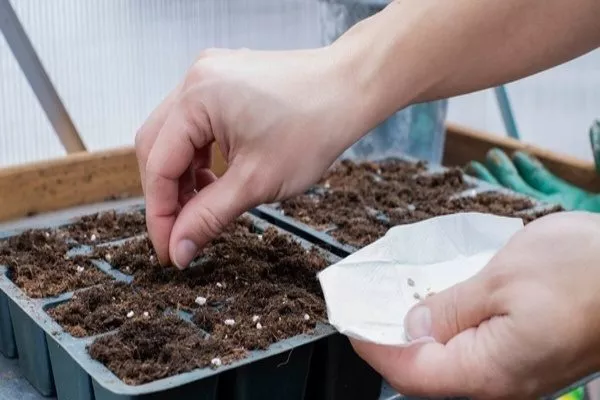
For transplanting, seedlings are sown in large containers, low fruit and berry crates, high-sided plastic trays, and cassettes. The containers should have drainage holes to allow excess moisture to escape.
Before use, wash containers with hot water and soap, and disinfect used containers. Potassium permanganate solution, hydrogen peroxide, or Fitosporin can be used as antiseptics.
Nutrient substrate
Growing tomato seedlings requires loose, light, uniform, nutritious soil with good moisture retention. It should be slightly acidic or neutral. The optimal pH is 5.5–6.2.
The substrate can be purchased at an agricultural store, for example:
- Zion for vegetables — a nutrient substrate with nitrogen, phosphorus, potassium, macro- and microelements.
- BALTIK PEAT BP3204 "Terraflor" — professional substrate with high-moor sphagnum peat of low decomposition degree.
- Terra Vita "Living Earth" — the substrate is made on the basis of high-moor peat, sand and vermicompost.
- Humimax — ready-made soil with disinfected river sand, lowland peat and beneficial humic acids.
You can prepare your own nutrient substrate. However, it must be disinfected first—soak it in a solution of potassium permanganate or another antiseptic. You can also bake the soil mixture in the oven.
For example, you can prepare a soil mixture for tomato seedlings from the following ingredients:
- peat - 10 l;
- sand - 10 l;
- humus or compost - 10 l;
- wood ash - 1 l;
- wood shavings - 1 l.
The resulting mixture should be loose and moist; clay soil should not be added to it.
How to prepare seeds for sowing?
Preparing tomato seeds for planting depends on where they come from. If you bought them, read the instructions on the packaging; they may have been fully processed and are ready for planting.
If the seeds are self-collected, they must be prepared according to the accepted technology: selection, sorting, disinfection, hardening and germination.
It is also recommended to treat the seeds with a growth stimulant such as Epin or Kornevin. Soak them in melted, rainwater, or bottled water. Tap water should not be used, as it may contain chlorine. Germinate the seeds for 3-4 days; plant them immediately as soon as they sprout.
Sowing seedlings
If sowing outside of containers, level the nutrient substrate and prepare shallow furrows—approximately 1 cm deep—for planting. Leave 2 cm between adjacent seeds. Plant 2-3 seeds at a time in individual containers, also leaving 2-3 cm between them.
- ✓ Optimum temperature for seed germination: +25..+30 °C.
- ✓ The need for round-the-clock illumination during the first week after germination.
Sprinkle the seeds with a thin layer of loose soil. Lightly moisten the seedlings with room-temperature water from a spray bottle, then cover with transparent film. Place the seedlings in a warm, bright room, where the temperature is maintained at 25°C to 30°C. Seedlings should appear within 3 days—the warmer the room, the faster the tomatoes will sprout.
Sowing times vary by region, depending on climate and soil type. Under plastic, sowing should be done 2-3 weeks earlier.
Caring for seedlings
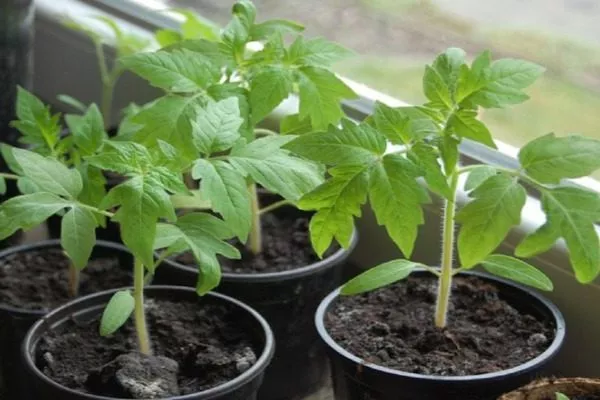
Until the seedlings emerge, the crops are aired daily and watered as needed. As soon as the shoots begin to emerge, the covering is removed and the planting containers are moved closer to the light. To prevent the seedlings from becoming elongated, the temperature is reduced to 14–16°C immediately after removing the covering.
Features of further care for Crimean tomato seedlings:
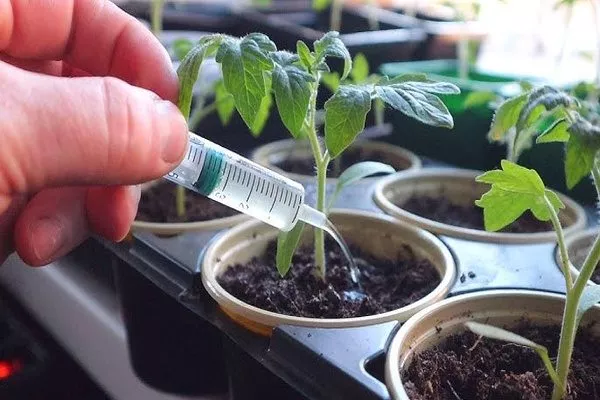
- Watering should be moderate and, before transplanting, even less frequent—once or twice a week, no more. Use only settled water warmed to room temperature. Pour it directly under the roots, avoiding drips on the leaves and stems, as this increases the risk of fungal infections. After transplanting, water more frequently—three to four times a week.
- Tomatoes require 11-12 hours of light per day—this regimen is established at about one month of age. Before this, the seedlings need to be illuminated for several hours a day. During the first week, the seedlings require 24-hour lighting, and gradually the light period is reduced from 24 hours to 12 hours.
- After 5 days of "cold" conditions, the temperature is raised to +20…+22°C during the day and to +14…+16°C at night. Relative humidity is maintained at 60-70%.
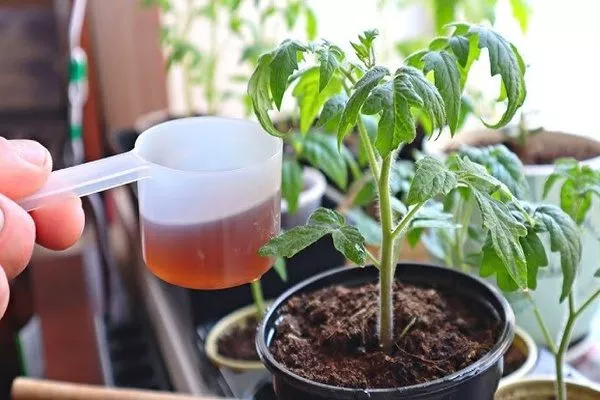
- Fertilizing tomato seedlings begins approximately two weeks after transplanting. Fertilize the seedlings with a nitrogen-rich complex mineral fertilizer. Subsequent feedings are administered at 2-3 week intervals, and should contain more potassium and phosphorus than nitrogen.
- The seedlings are picked after 2-3 true leaves appear, as a rule, this occurs 2 weeks after the emergence of seedlings.
- About two weeks before planting, the seedlings begin acclimating to fresh air—this procedure is necessary if the tomatoes will be growing outdoors. The seedlings are taken outside every day, initially for short periods of an hour or two, gradually increasing their time outdoors to 8-10 hours.
How to choose a site?
The site for tomatoes is selected taking into account the requirements for growing this crop. The Krymskie variety, like all other tomatoes, should be planted on level ground or on slopes, but not in low-lying areas, where water accumulates, leading to root rot and the death of the plants.
Tomatoes don't thrive in areas with high groundwater levels. Therefore, if the groundwater level in your area is very close to the surface—around 1 meter or higher—you should create raised beds—around 25 cm high.
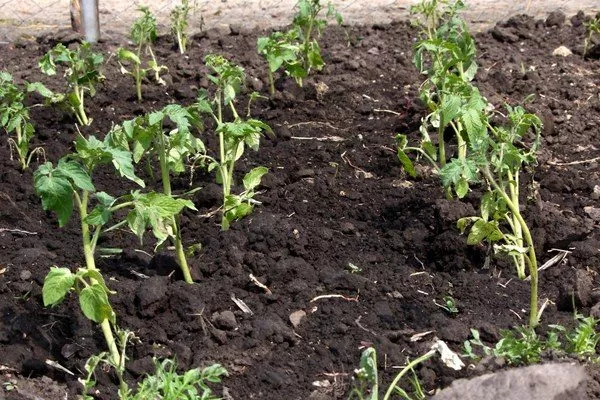
Other requirements for the site for planting Crimean tomatoes:
- Lighting should be maximum - plantings should be well lit throughout the day, there should be no shading.
- Tomatoes are planted in areas where nightshade crops have not been grown for at least 3 years - potatoes, peppers, tobacco, eggplants and tomatoes themselves (of any variety).
- The best predecessors to tomatoes are considered to be cucumbers, zucchini, pumpkins, squash, onions, garlic, peas, watermelons, melons, corn and lentils.
- The site should be protected from strong gusty winds and drafts. However, it must have good air circulation, otherwise the tomatoes will be susceptible to late blight and other fungal infections.
Preparing the soil for planting
The best soil for tomatoes is loamy and sandy. They require nutritious, well-drained soil that is light and loose, and permeable to water and air.
Features of soil preparation for Crimean tomatoes:
- Digging is best done in the fall. If this isn't possible in the fall, the soil should be dug in early spring.
- Organic matter is added during digging—this is done only in the fall. Mineral fertilizers—superphosphate, potassium sulfate, etc.—can be applied in both the fall and spring.
- For heavy and clayey soils, add sand at a rate of 10 kg per square meter. It is also recommended to add a double dose of organic matter to such soils: 20 kg of compost or humus per square meter.
- The optimal soil acidity is between 6.2 and 6.8 pH. This is determined using litmus strips, which are available at garden supply stores. If the soil is acidic, add slaked lime, dolomite flour, or wood ash; if the soil is slightly acidic, add high-moor peat.
- ✓ Check soil acidity using litmus strips before planting.
- ✓ Adding sand and a double dose of organic matter to heavy and clay soils.
Transplanting
Seedlings are planted in the ground or under plastic when they have 6-8 true leaves. By this time, the soil should warm to at least +13…+14°C, and the air temperature should reach +18…+20°C. Planting is also done when the threat of recurrent frost has passed in the area.
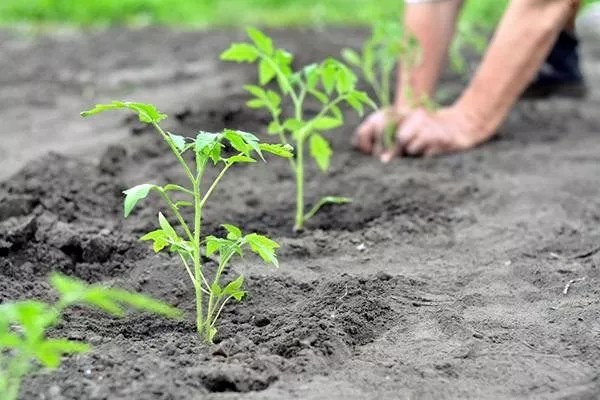
Seedlings for planting should be well developed, but not overgrown; the optimal length is 18-28 cm. The stems should be thick, and the leaves should be developed.
Features of planting seedlings of the Krymskie variety:
- Recommended planting pattern: 50 x 40 cm.
- For planting, dig holes in a checkerboard pattern or in rows. The depth is the depth of a spade blade.
- Place humus, wood ash, and superphosphate at the bottom of the hole. Add a little soil on top and water with 3 liters of water.
- Once the water has been absorbed and the soil has settled slightly—after 30-60 minutes—plant the seedlings using the transshipment method. If the seedlings are growing in peat-humus pots, plant them in the holes along with the container—it will decompose in the soil.
- The seedlings are placed vertically in the holes to encourage the bushes to grow upward. The empty space is filled with soil, compacted to form a small hole around the stem, and watered with warm, settled water.
Care Features
Crimean tomatoes require standard care. The bushes require regular watering, top dressing, other measures provided for by the agricultural technology of the crop.
Watering
Watering of newly planted tomatoes begins 10 days after planting. Before this time, watering young plants is not recommended—they should focus on root formation and establishment in their new location.
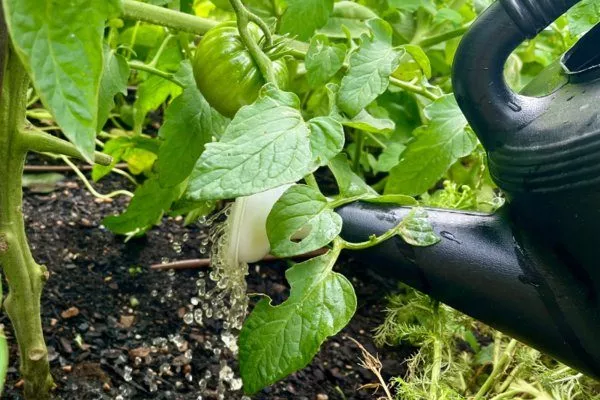
The soil should always be slightly moist; in normal weather, watering should be done 1-2 times a week, and in hot weather, 3-4 times.
Loosening
The soil in tomato beds is loosened the day after watering or heavy rainfall. This procedure prevents the formation of a hard soil crust, which prevents air from reaching the roots.
Feeding regime
The first fertilizer for tomato plants is applied 2-3 weeks after planting, when the first cluster blooms. You can feed the plants with superphosphate and potassium sulfate—4 teaspoons and 1 teaspoon, respectively, diluted in 10 liters of water.
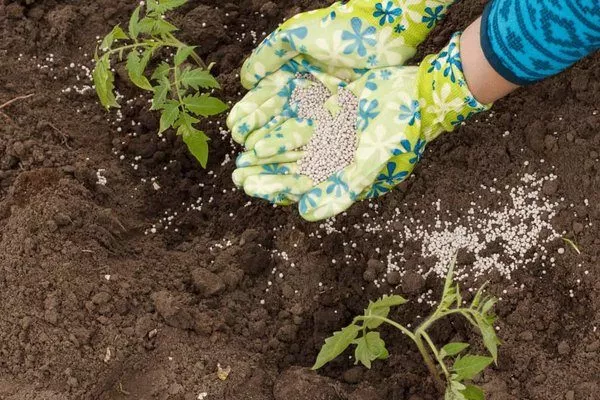
Next, tomatoes can be fed with potassium humate or a solution of complex mineral fertilizer - at the beginning and end of July.
If the tomatoes show signs of fattening, use an ash solution: 2 handfuls of ash are diluted in 8-10 liters of water and added during watering.
Shaping and garter
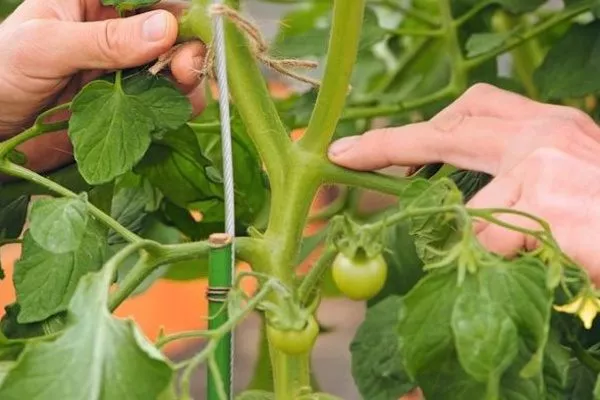
The variety is tall, so the bushes need to be tied to wooden or metal supports, or to trellises.
They also need to be formed into 1-2 stems and periodically side-sonned - shoots growing in the axils of the leaves need to be torn off.
Diseases and pests
The Krymskie variety is rarely affected by diseases, as it has strong immunity against a wide range of pathogens. However, when adverse factors and poor agricultural practices combine, the risk of infection increases. Prevention can help prevent the development of infections, such as spraying with biological products such as Trichoderma Veride, or fungicides such as Bacterra, Bronex, and others.
The most common pests affecting the Krymskie tomato include aphids, spider mites, thrips, Colorado potato beetles, and root-knot nematodes. Various insecticides, such as Fosbecid, Corado, and others, are used to control them.
Harvesting
The Krymskie tomato is a mid-season variety, so it's harvested in the first half of August. If the weather is dry and warm, fruiting can continue until the end of summer. The key is to harvest all the fruits before frost, even if they're slightly unripe.
Reviews
Krymskie tomatoes will appeal to lovers of unusual varieties. These tomatoes not only have a super dark pink color but also a very rich flavor and aroma. This variety will be an excellent addition to the collection of both experienced and novice gardeners.