
Krasavchik is a high-yielding tomato hybrid that attracts gardeners in our country with its unique shape, large size, and fleshy flesh. The tomatoes store well and do not crack during transportation. This variety is disease-resistant and characterized by excellent productivity. These tomatoes are consumed fresh and used for preserves.
Origin and growing regions
The hybrid was created by breeders from the Tomagros company: Andreeva A. N., Nazina S. L., Andreeva E. N., and Ushakova M. I. After successful testing, it was approved for use in 2008. Over the long period of cultivation, Krasavchik has received wide recognition due to its unpretentiousness and excellent fruit quality.
The crop is undemanding regarding soil composition and tolerates temperature fluctuations. It is successfully grown in garden beds in warm regions of Russia:
- in the Caucasus;
- in the Astrakhan, Belgorod, Voronezh, Saratov regions;
- in the south of Krasnodar Krai.
In temperate regions, plastic covers are often used to protect them from variable weather. In northern regions, this tomato is grown exclusively in greenhouses due to the short summer season.
Description of the bush and fruits
The plant is indeterminate and reaches a height of 150 cm. Distinguishing features:
- leaves are medium-sized, slightly elongated, rich green in color;
- each brush produces 7 to 12 vegetables;
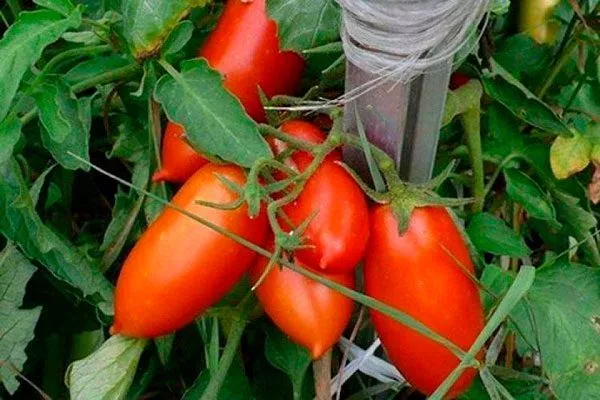
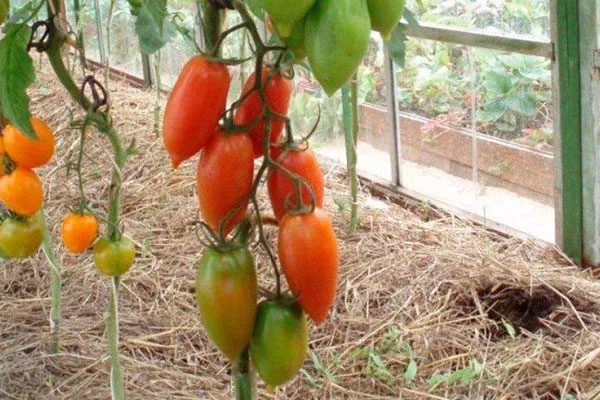
- At the ripening stage, tomatoes first acquire a bright green hue, and then turn deep red;
- the fruits are small, weighing up to 87 g, have a cylindrical shape with a pointed tip;
- The skin is smooth and dense, the flesh is firm.
Main characteristics
Krasavchik is popular with many gardeners. Its main advantage among the many hybrids is its low maintenance and high yield.
Ripening and fruiting, productivity
This is a mid-early variety. It takes about 104 days from the first shoots to the tomatoes ripening, although weather conditions can affect the ripening process.
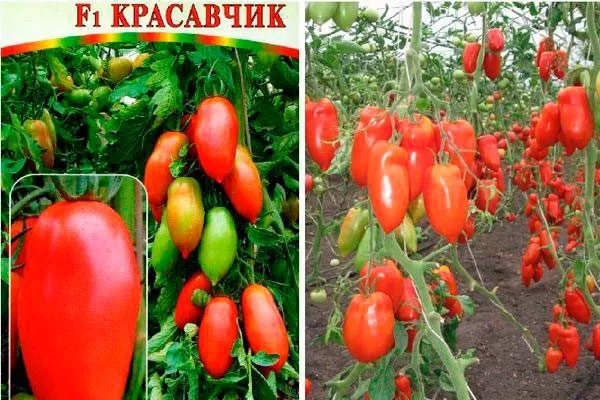
The hybrid is renowned for its high yield—with proper care, up to 13.6 kg of vegetables can be harvested per square meter. However, achieving this result requires carefully thought-out agricultural practices.
Scope of application
Tomatoes of this variety have versatile properties, making them popular for both home use and industrial processing. Freshly harvested, they are ideal for salads—their dense flesh preserves their shape and flavor.
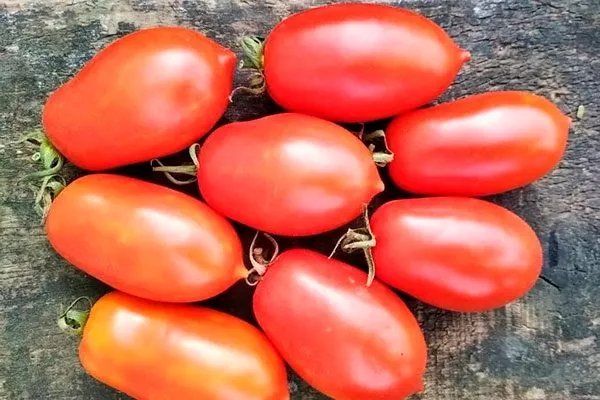
Small vegetables are pickled and marinated. This variety retains its flavor and nutritional properties in cooked dishes. In industrial production, Krasavchik is widely used to make pastes, sauces, and juices.
Resistance to diseases and pests
Hybrid tomatoes are characterized by high resistance to a number of common diseases, which is a significant advantage. However, absolute immunity does not exist, so resistance depends on growing conditions and agricultural practices.
The variety is particularly resistant to:
- late blight;
- fusarium;
- Verticillium wilt.
The intensity of pathogen development can affect the degree of protection a variety receives. High humidity, sudden temperature fluctuations, and insufficient ventilation in greenhouses can trigger disease outbreaks.
How to grow the crop?
The hybrid grows successfully both outdoors and indoors. Seeds for seedlings are sown 1.5-2 months before transplanting to a permanent location. The exact timing depends on the regional climate, but sowing is typically done in late February or early March.
Seed preparation
Process the tomato seeds thoroughly. Follow these steps:
- Select large, firm seeds, excluding damaged or small ones. Check their germination by soaking them in a 5% salt mixture (5 g per 100 ml of water). Remove any that float to the surface, and rinse and use those that settle for planting.
- Soak the seeds in a weak solution of potassium permanganate (1 g per 100 ml of water) for 15-20 minutes, then rinse. To protect against fungal diseases, disinfect them with Fitosporin or hydrogen peroxide.
- To speed up germination, place the seeds in a damp cloth or cotton pads, wrap them in a bag and leave in a warm place (about +25°C) for 1-2 days until they sprout.
- Place the sprouted seeds in the refrigerator (2°C to 5°C) for 1-2 days, then return them to a warmer location. This will help the future plants tolerate temperature fluctuations more easily.
After all the activities, proceed to placing the planting material in the prepared soil.
Sowing and growing seedlings
For this procedure, use special cassettes or plastic cups with drainage holes to prevent moisture stagnation. Follow the instructions:
- Disinfect the containers and fill them with a universal substrate for seedlings or a mixture of peat and sand (1:1).
- Moisten the soil and place one seed in each cup, burying it 1 cm deep.
- Cover the plantings with film or glass to maintain optimal humidity and temperature.
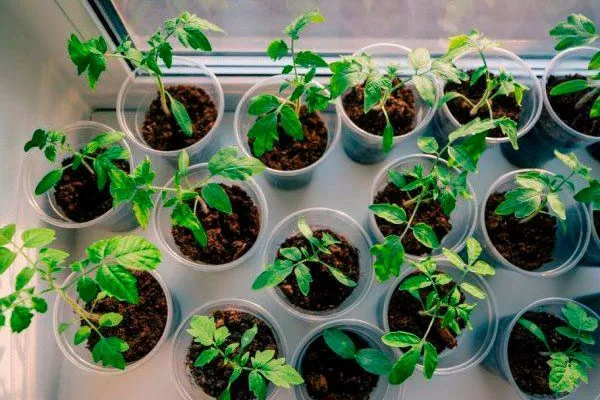
Once the seedlings emerge, remove the covering. Water with a spray bottle to avoid damaging the sprouts. When the first true leaves appear, begin hardening off the plants: reduce the temperature to 10-15°C during the day and 8-10°C at night for three days. Repeat this process—the seedlings should remain in these conditions for at least two weeks.
Preparing the soil for planting seedlings
Begin this project in the fall, allowing the top layers of soil to freeze over the winter. Thoroughly clear the area of plant debris and debris, then dig the soil and apply fertilizer.
Helpful tips:
- In mid-September, remove all weeds and fallen leaves, as they can become a source of harmful microorganisms.
- Dig the soil to a depth of about 25 cm so that it is saturated with moisture and air.
- The final step is to add nutrients. However, avoid over-fertilizing, as this can lead to excessive foliage growth instead of fruit.
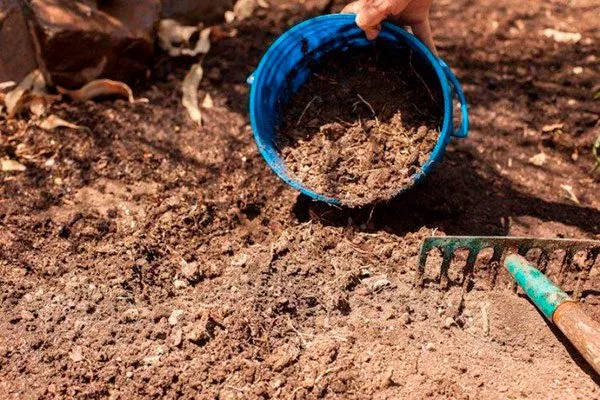
For tomatoes, the optimal mixture is:
- 50% peat;
- 30% sand;
- 20% compost.
Add 45-50 g of potassium and nitrogen per square meter. Apply the fertilizer during digging to ensure all soil layers are evenly saturated with nutrients. After these steps, you can safely begin planting your seedlings.
Seedling planting technology
Transplanting is always stressful for plants, so harden off the seedlings beforehand. To do this, begin ventilating the room a few weeks before transplanting, then move the seedlings outside.
Follow the rules:
- It is optimal to carry out the procedure in cloudy weather, and on sunny days - only in the evening, so that the seedlings get used to the light and can adapt.
- The planting time depends on the region, usually it is the beginning or middle of June, when the temperature stabilizes at a level of at least +13°C.
- Before transplanting, moisten the seedlings well to avoid damaging the roots and to facilitate removal from the container.
- The plant holes should be 8-9 cm deeper than in the previous container, then fill them with water and let it soak in. Leave at least 60 cm between plants to prevent them from interfering with each other.
- After planting, fill the hole with soil, compact it and water again.
- To protect tomatoes from the night cold, cover the bed with film, which you remove after the seedlings have taken root.
Care
Although this variety is easy to grow, without proper care, its productivity will decline significantly. It's important to follow basic agricultural practices to achieve positive results.
Watering and fertilizing
The Krasavchik tomato doesn't require frequent fertilizing, but for a good yield, such treatments are essential. Fertilize the crop no more than three times per season, setting a schedule in advance:
- Ch20 days after transplanting the seedlings, when flowering begins. Apply nitrogenous substances, but monitor their quantity so as not to stimulate excessive growth of green mass and not to delay fruiting.
An infusion of bird droppings or mullein is effective. Add 200 g of ash to improve budding and plant nutrition. - A week after the first ovaries appear. To do this, add 20 g of mineral solution (such as Kemira or Rastvorin) and 4 g of potassium permanganate to a 10-liter solution of bird droppings. Since Krasavchik is a tall variety, use at least 2 liters per bush.
- INabout the time of harvesting the first fruits. You can use the same substance as for the second feeding, or opt for potassium fertilizers such as ash or potassium sulfate. To do this, dissolve 20 g of ash in 10 liters of water. Pour 2.5 liters of the mixture under the bush.
If flowers and ovaries are dropping, this may indicate a boron deficiency. This problem can be solved by spraying the plants with a boric acid solution (1 g per 1 liter of water).
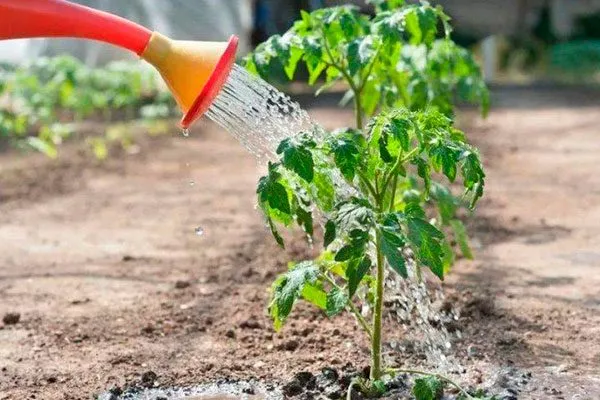
When watering the Krasavchik, maintain a balance: the soil should not be too dry or too wet. Water 1-2 times a week with warm water, using about 10 liters per bush. Perform this procedure in the evening, after sunset.
Loosening, weeding
These are important agricultural practices that help increase crop yields. Maintaining loose soil around the plants is crucial, so perform these procedures after each watering, periodically combining them with weeding.
Helpful tips:
- The depth of loosening depends on the plant's growth stage. In the first weeks after planting, a depth of 11-13 cm is optimal, but over time, increase the depth to 7-9 cm to avoid damaging the roots. If the soil is heavy, loosen it deeper, but with caution.
- Weeding should be performed after the previous procedure. This helps prevent exposed roots, accelerating fruiting. Weeds negatively affect the growth and quality of the crop, so remove them manually, as mechanical tools can damage the tomato root system.
Mulching helps retain moisture in the soil, preventing weed growth and improving heat exchange. Use straw, hay, sawdust, or compost. This technique is especially useful on hot summer days when the soil dries out quickly.
Pinching and shaping
A key feature of this variety is the need to structure the bush into a single stem. Begin this process a few weeks after planting the seedlings, as the plants form lateral shoots from an early age.
Helpful tips:
- Formation is a crucial step for a fast and high-quality harvest, as it promotes active fruiting and prevents excessive accumulation of green mass.
- Krasavchik can have a single stem with 7-8 flower clusters. A side shoot left under the first inflorescence will develop fastest. It should be at a height of 11-13 leaves.
- Remove lower leaves promptly, leaving a distance of 35-40 cm between them and the ground. This is important to protect the plant from disease and improve air circulation.
- When 7-8 clusters are formed, pinch the top of the bush to limit the growth of the stem.
Remove side shoots at least twice a week, depending on how active the tomatoes are growing.
Prevention of diseases and pests
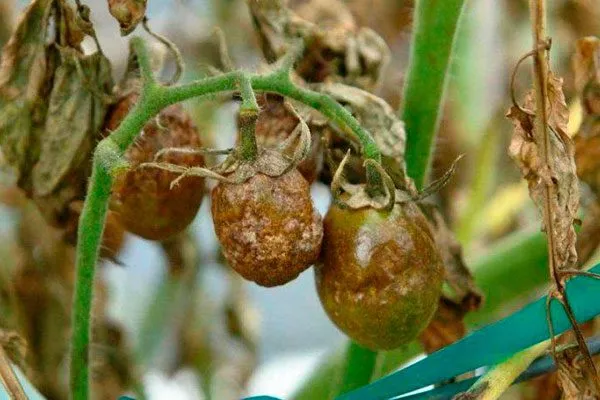
Tomatoes grown outdoors are often susceptible to diseases, as most thrive in high humidity. One of the most dangerous is late blight, which appears as brown spots on all above-ground parts of the plant, including the vegetables.
Excess nitrogen fertilizers can lead to the infection of tomatoes with gray or root rot, which causes small round spots covered with mold to form on the bushes.
As for pests, the most common ones found on plants are:
- Spider mite. It attacks leaves, sucking out their sap and covering them with a fine white web. It thrives in dry air, so it most often damages plants that are poorly watered or ventilated.
- Whitefly. It destroys crops during the larval stage, feeding on leaf sap. A black fungal growth appears on the bushes, leading to rapid fruit death.
- Wireworm. It damages plant roots by penetrating deep into the soil and eating them, and then moves on to the tomato stems.
To avoid these difficulties, follow these agricultural precautions:
- use healthy planting material;
- maintain the optimal distance between seedlings;
- Remove infected specimens immediately;
- dig the soil deeply;
- water correctly and on time;
- regularly remove plant debris and weeds;
- observe crop rotation;
- add microelements.
Treat plantings with broad-spectrum fungicides: Fundazol, Fitosporin-M, Quadris and Funazim.
Rules for harvesting and storing crops
Begin harvesting Krasavchik hybrid tomatoes in late July or early August. If you plan to keep the fruits fresh for a long time, pick them in dry weather, preferably in the morning. Select only large, healthy tomatoes that are not overripe and have no visible skin defects.
Please adhere to the following instances:
- Place tomatoes in various containers, from cardboard boxes to plastic crates lined with paper. The lid of the container should be secure enough so that it doesn't press on the tomatoes when closed.
- Cover the top with burlap or other thick material - this will leave behind ethylene, which has a beneficial effect on tomatoes.
- Storage location is also important. Avoid storing vegetables in a cellar, as high humidity can cause rotting. In winter, carefully monitor the room temperature to prevent tomatoes from freezing.
If you've selected tomatoes for long-term fresh storage, inspect them regularly for damaged or diseased ones to preserve the rest of the crop.
Pros and cons
Before growing a crop in your garden, carefully consider its advantages and disadvantages. Krasavchik has many advantages:
Among the disadvantages, gardeners note the impossibility of obtaining a fruitful hybrid and the need to tie up the bushes, as well as the difficulty in shaping them.
Reviews
The Krasavchik tomato is an ideal choice for those who value high yields and minimal maintenance. These large, sweet tomatoes are ideal for fresh salads, canning, and processing. This variety is disease-resistant, tolerates a variety of weather conditions, and has excellent commercial qualities, making it popular among gardeners.