
The Krasa Sibiri tomato is a pink variety bred specifically for the harsh Siberian climate. It is easy to grow, productive, and capable of growing in the most adverse weather conditions.
Who and when developed the Krasa Sibiri variety?
The Krasa Sibiri tomato was developed by a group of Russian breeders. The originators were Center Ogorodnik LLC and Agrofirm Poisk. In 2015, the variety was added to the State Register and approved for cultivation. Authors: V. V. Ognev, A. N. Khovrin, S. V. Maksimov, and T. A. Tereshonkova.
Description of the plant
The Krasa Sibiri tomato plant grows tall and is an indeterminate variety, reaching a height of 2 meters. Despite its large size, its stems are slender. The leaves are green, small, and narrow. The inflorescences are simple, and the stalks are jointed.
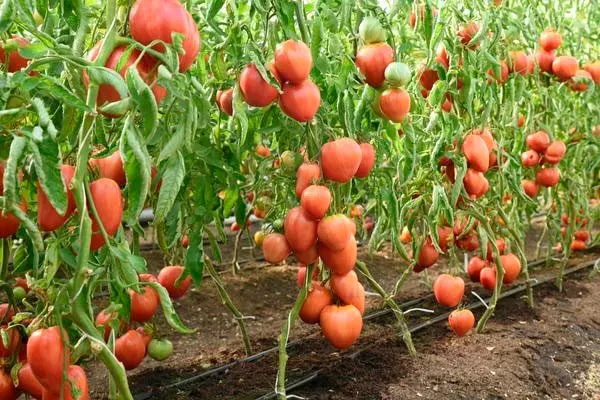
Description of fruits
The Krasa Sibiri tomato produces large, attractive fruits with excellent marketability. The skin is thin and smooth, and the flesh is tender and sweet, with a pleasant tomato aroma.
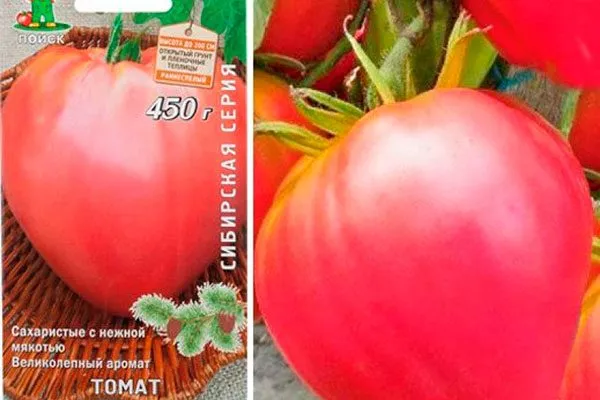
Brief description of fruits:
- Color of ripe fruit: light green.
- Unripe fruit color: pink, with a small yellowish spot near the stalk.
- Form: heart-shaped, ribbed.
- Weight: 300-400 g.
Taste and purpose
Taste testers rate the Krasa Sibiri variety's fruit as very good to excellent. The flesh is juicy and slightly sweet. This variety is ideal for salads and fresh eating.
Ripe tomatoes also produce delicious tomato juice, and are suitable for making ketchups, pastes, and other processed products.
Characteristics
The Krasa Sibiri tomato is an early-ripening variety. It takes 95-110 days from germination to the first tomatoes ripening. This variety has a high yield, with an average of 5.8 kg of tomatoes harvested per square meter.
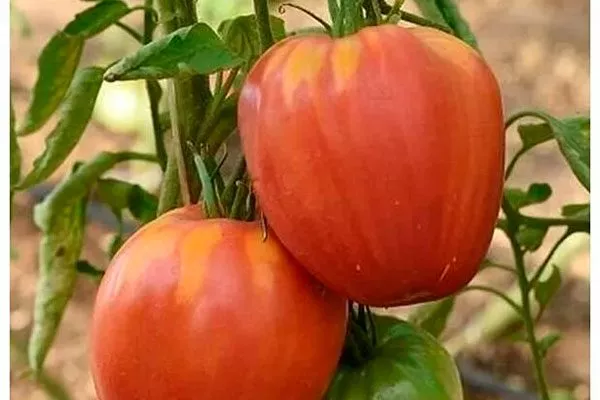
This variety is cold-hardy and tolerates short periods of drought. It tolerates sudden temperature fluctuations and can produce fruit even in partial shade.
The Krasa Sibiri tomato has strong immunity to major diseases, allowing it to be grown with virtually no treatment.
Pros and cons
The Krasa Sibiri variety boasts numerous advantages that gardeners can't help but appreciate. But before planting this tomato in your garden—under plastic or in open ground—it's helpful to evaluate all its advantages and disadvantages.
Landing features
To ensure a good tomato harvest, it's important to plant them correctly. The "Beauty of Siberia" variety is grown using seedlings, as this allows for an early harvest and minimizes the risk of late blight.
Selecting a site
The Krasa Sibiri tomato grows best in sunny, warm locations, but will also produce fruit in some shade. Light loam or sandy soils are ideal for the growth and development of the bushes.
Elevated sites with a southern, southeastern, or southwestern slope are best suited for tomato beds. In areas with cool summers and harsh climates, it is recommended to choose sites protected from cold winds.
Early tomatoes, which include the Krasa Sibiri variety, are best planted on southern slopes, with beds oriented east to west. This allows the surface to warm up earlier and better due to the sun's rays hitting the soil at a less acute angle.
Soil preparation
Soil preparation for tomato planting begins in the fall. The area is first cleared of plant debris and then dug to a depth of a spade. In the fall, organic matter is added, such as peat, humus, compost, and rotted manure. Phosphorus-potassium mineral fertilizers, such as granulated superphosphate, can also be added.
Mineral fertilizers can be replaced with organic ones, such as bone meal and crushed eggshells. It's also recommended to measure the soil's acidity before digging. This can be done using special test strips, which are available at any organic store.
The optimal soil acidity for the Krasa Sibiri tomato is between 6 and 6.5 pH. If the soil is more acidic, add dolomite flour, slaked lime, and wood ash. If the soil is slightly acidic, add lowland peat.
Seed preparation
Seeds in an organo-mineral coating do not require any preparation or soaking. They have already undergone pre-planting treatment under industrial conditions. These seeds can be planted directly, even while dry.
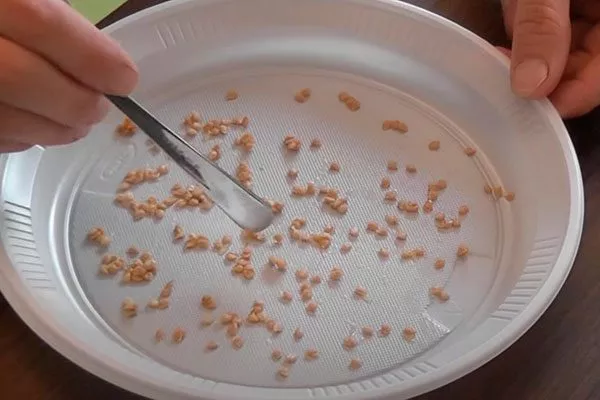
Preliminary preparation is required for old seeds, those collected independently or purchased from questionable sources. Such planting material must be inspected and prepared for planting. First, it must be determined whether they have passed their expiration date, then they are sorted, calibrated, and tested for germination.
The seeds selected for planting are disinfected, for example, with garlic infusion or aloe juice, treated with growth stimulants, and hardened. The final stage is germination, which ensures rapid emergence. To do this, the seeds are wrapped in damp gauze and placed on a saucer, which is then placed in a warm place, such as a radiator.
Growing seedlings
Seeds for seedlings are sown approximately in March; the exact timing depends on the region's climate and the intended planting time. Soil type should also be considered: seedlings should be planted under plastic covers and in greenhouses 2-3 weeks earlier than in open beds. Seedlings take 60-65 days to grow.
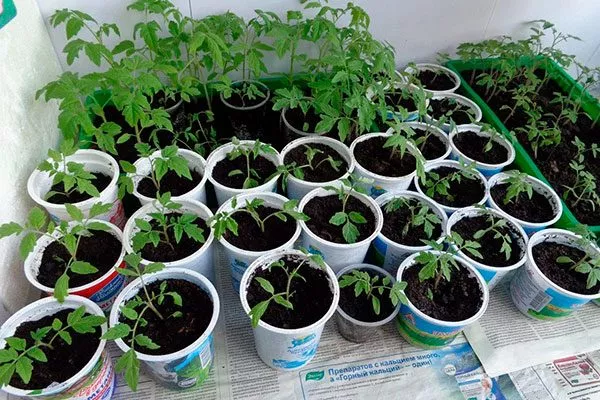
Features of growing seedlings:
- Use any suitable container, either shared or individual, for planting. It must have drainage holes to allow excess water to drain away.
- If you plan to transplant seedlings, it's easier to sow them in a large container, from which they can be transplanted into individual cups. However, you can also grow seedlings without transplanting, in which case they can be sown directly into large cups or pots with a capacity of 350-400 ml.
- Peat pots can also be used for growing seedlings. Their advantage is that they don't require removing the seedlings from their pots. The pots are planted in the planting holes along with the plants—this prevents root damage, reduces stress on the young tomatoes, and allows them to adapt quickly to their new location.
- Planting containers (except peat pots) should be filled with soil—either store-bought or homemade. The latter can be made from humus, peat moss, sand, and wood ash. Wood sawdust can be added for loosening.
- Sow the seeds according to the standard pattern—in rows spaced 2 cm apart. If planting in individual pots, place three seeds in each. Leave a 2 cm gap between each pot.
- Leave 3-4 cm between rows. First, level the soil, then moisten it with a spray bottle. Plant the seeds 1 cm deep, cover with a thin layer of soil, and spray with warm, settled water.
- The crops are covered with plastic film; the containers can also be covered with glass. They are placed in a warm, bright room. The covers are removed daily and the crops are aired to prevent condensation from forming inside the greenhouse.
The seedling containers are moved closer to the light, and the room temperature is lowered from +22…+23 °C to +14…+15 °C. This will help prevent the seedlings from stretching.
Caring for seedlings
Growing seedlings is the most crucial stage in the cultivation of any crop. During this period, a single mistake—in temperature, moisture, lighting, etc.—is enough to irreparably ruin the planting material.
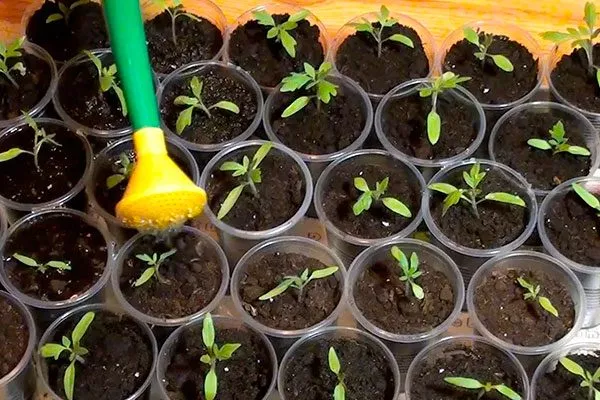
Proper care will help you grow strong and healthy seedlings:
- Until the film is removed, the seedlings are sprayed with water daily, then the frequency is sharply reduced. During the first few weeks, before transplanting, the seedlings are watered no more than 1-2 times a week. Overwatering during this period is extremely dangerous for seedlings, as the risk of blackleg is high.
- Fungal diseases can also develop due to overcrowding, sudden temperature fluctuations, and other improper cultivation practices. The optimal water temperature for watering seedlings is 20 to 25°C, and the air temperature is 20 to 22°C. However, for 5 days after removing the cover, maintain the temperature at 14 to 16°C to prevent the seedlings from stretching. Seedlings are hardened off at the same temperature (this is done 2-3 weeks before planting them outdoors).
- During the first week, the seedlings are illuminated 24 hours a day. Before transplanting, daylight hours should be 16 hours. Starting at one month of age, seedlings are provided with 12-14 hours of daylight.
- The optimal relative humidity is maintained at 60–70%. Higher levels increase the risk of fungal diseases.
- Pricking out is done when 2-3 true leaves appear. This usually occurs two weeks after germination. When transplanting the seedlings into individual cups, pinch back the central root by 1/3. The transplanted seedlings are shaded from direct sunlight for 2-3 days and watered moderately.
- Tomato seedlings are first fed 1-2 weeks after transplanting or after 3-4 leaves have emerged. Initially, a complex mineral fertilizer with a high nitrogen content is used. Subsequently, the seedlings are fed every 2-3 weeks, gradually increasing the amount of phosphorus and potassium in the mineral fertilizer.
Transplanting
Seedlings are planted in May-June, 2-3 weeks later than under plastic. The exact planting time depends not only on the soil type (open or closed) but also on the regional climate.
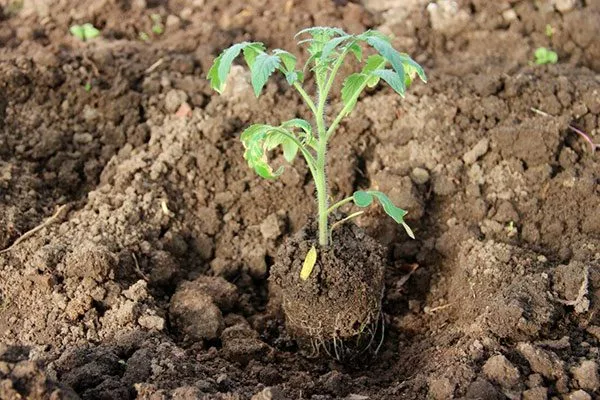
Features of planting seedlings:
- The optimal planting pattern is 30 x 40 cm. Add 40 g of humus and 20 g of wood ash to each hole.
- The holes are moistened, and after half an hour the seedlings are planted. The seedlings are planted deeper than in seedling beds.
- If the seedlings have become elongated or overgrown, they are placed horizontally in the holes, covering the part of the stem with leaves with soil.
- Planted tomatoes are generously watered with warm, settled water. Once the water has been absorbed, the soil around the seedlings is mulched—sprinkled with peat, straw, sawdust, etc.
- Initially, the plantings are covered with spunbond or other non-woven material to protect the young plants from direct sunlight. As soon as new leaves begin to emerge, the covering is removed.
Care Features
To obtain a good harvest from the Krasa Sibiri tomato, it requires proper care. In addition to watering and fertilizing, this variety also requires staking and shaping.
Watering
Water the Krasa Sibiri tomato plant as needed, taking into account weather conditions and soil conditions. Immediately after planting, the tomatoes should not be watered for about 10 days, and then watered 2-3 times a week.
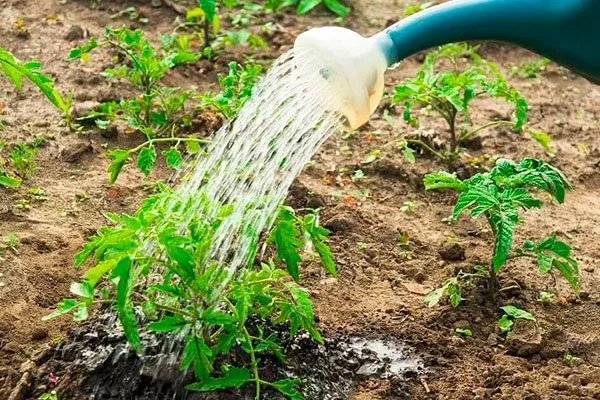
The water requirement per bush depends on the growing season and increases gradually from 1-3 liters to 5-8 liters.
Loosening
The space between the rows is loosened approximately every 10–12 days. It is advisable to loosen the soil the following day after each watering or rainfall.
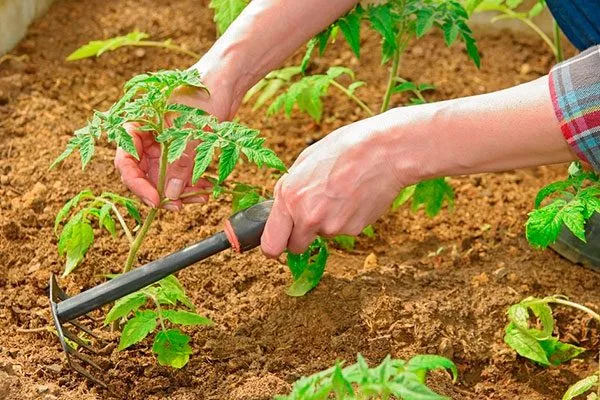
At the same time, the soil is weeded, trying to remove weeds along with the roots.
Fertilization
The order of fertilization depends on the stages of the tomato growing season. At different stages, tomato plants require different nutrients.
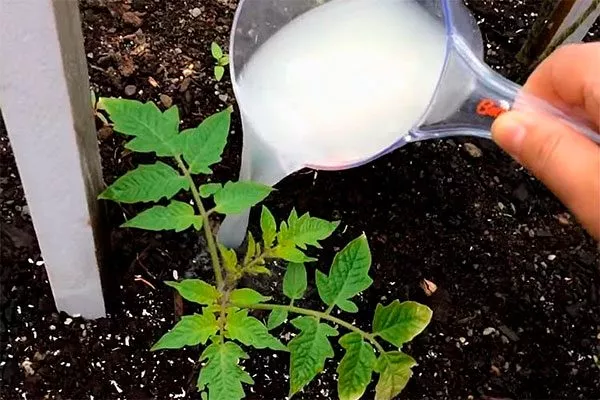
Approximate feeding regime:
- Two to three weeks after planting the seedlings in their permanent location, apply fertilizers containing nitrogen and phosphorus. Urea and superphosphate are suitable, but complex fertilizers such as Fertika or Aquarin can also be used.
- Fertilizer is applied a second time during the flowering and fruit formation phases. You can add chicken manure (0.5 l), superphosphate, and potassium sulfate (1 tbsp each) mixed with water.
- During the fruit formation period, nitrogen is not added; plants require potassium and phosphorus. Monopotassium phosphate, for example, is suitable: 15 g dissolved in 10 liters of water and watered.
Shaping and garter
The Krasa Sibiri variety is tall, so it requires shaping into 1 or 2 stems and tying as the plants grow.
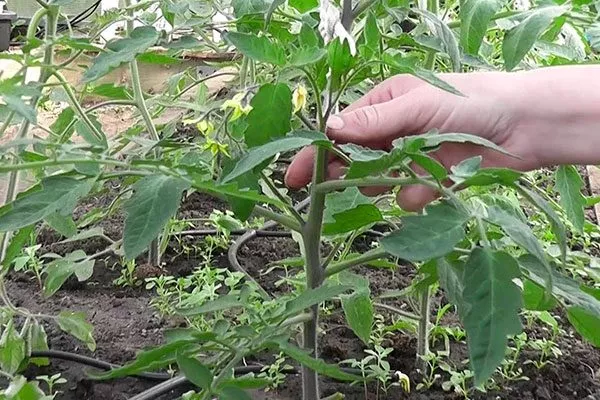
Also, the bushes of this tomato need to be stepsoned.
Diseases and pests
The Krasa Sibiri tomato is resistant to many common diseases, but under unfavorable circumstances it can be affected by late blight, blossom-end rot, and other fungal infections. These are controlled by standard preventative measures and treatment with fungicidal preparations, such as Quadris and Ridomil Gold MC.
The variety is not susceptible to pests, but if pests are widespread or agricultural practices are severely violated, it can be attacked by aphids, thrips, and spider mites. Nematodes, mole crickets, and slugs can also pose a threat to tomato plants. These and other pests can be controlled with folk remedies or insecticides such as Aktara, Fitoverm, etc.
Harvesting and storage
The Krasa Sibiri tomato is harvested in July and August. If the tomatoes are to be eaten immediately, they should be picked ripe; for storage, they should be at the technologically ripe stage. They ripen within 7-10 days. Store the tomatoes in shallow boxes, stacked in a single layer, or wrapped in paper.
Reviews
The Krasa Sibiri tomato is a striking example of the Siberian collection. Unlike many other varieties, it withstands a wide range of extreme weather conditions—temperature fluctuations, cool and cloudy weather—making it an ideal choice for Siberian gardeners and pink tomato lovers.