
It's no coincidence that the Cosmonaut Volkov tomato bears its name. This variety is distinguished by its vigorous and dynamic growth, producing fruits that boast not only a unique shape but also a fleshy texture. It's ideal for both greenhouse and garden cultivation. It has good disease resistance, but its rapid growth can be challenging to care for.
Features of the variety
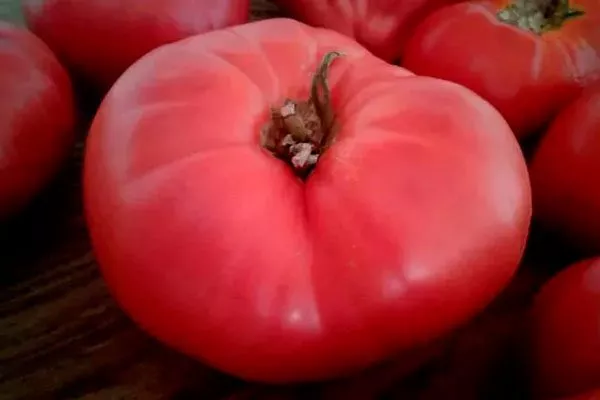
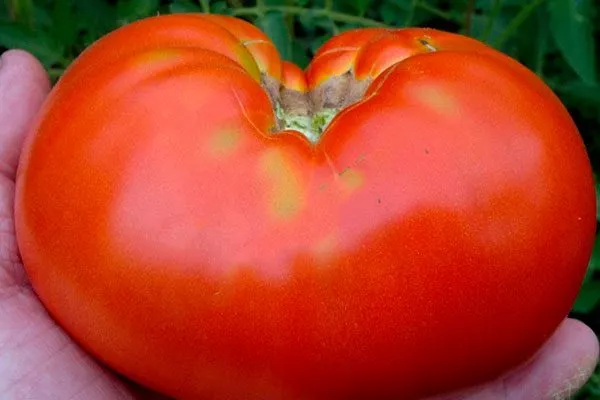
The variety is characterized by tall shoots and large, ribbed, round fruits, slightly flattened at the stalk. A distinctive feature is the presence of 6-7 seed chambers within the juicy pulp.
Bushes
| Name | Growth type | Fruit shape | Fruit color |
|---|---|---|---|
| Cosmonaut Volkov | Indeterminate | Rounded, ribbed | Red |
| Novikov's Giant | Indeterminate | Rounded | Crimson |
| Korneevsky | Indeterminate | Harmonious | Bright red |
| Diva | Determinant | With a pointed tip | Reddish |
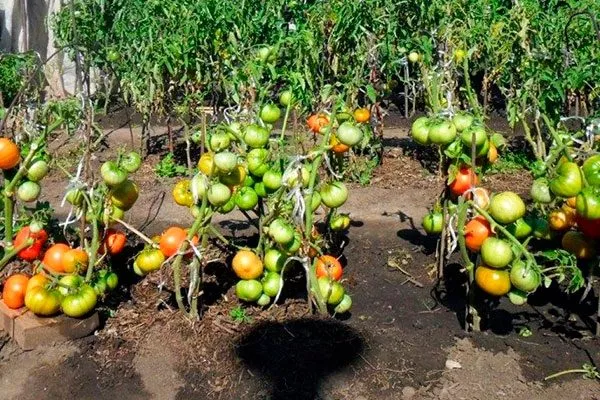
Cosmonaut Volkov bushes are indeterminate, meaning they have no growth limit. As a result, their shoots can reach heights of 180-200 cm. These stems require support, so in open ground, sturdy stakes are installed nearby to tie the bushes to.
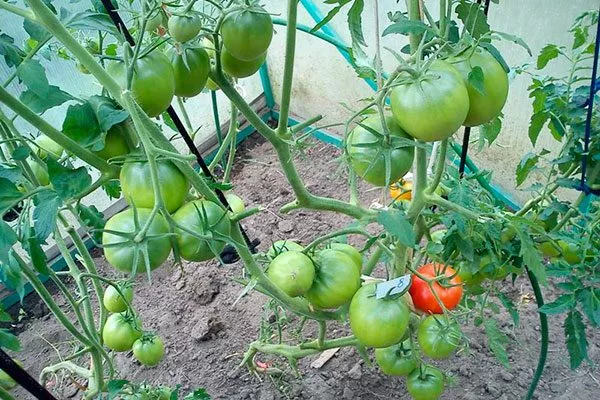
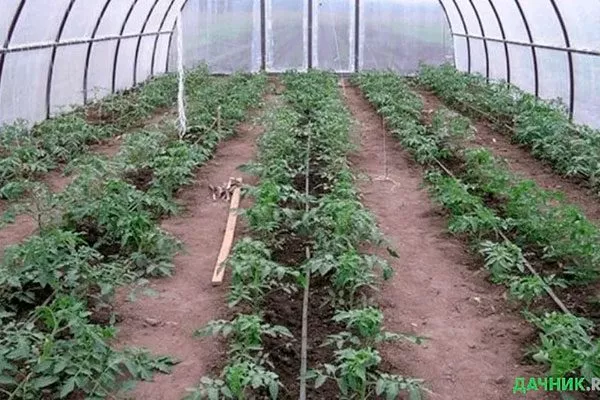
In greenhouses, it is recommended to install a trellis to support the shoots as they grow. If not supported, the stems may break or fall to the ground under the weight of ripening fruit.
Other varietal characteristics:
- the bushes are of a standard type, with medium-leafy shoots;
- the foliage is typical for tomatoes, medium-sized, elongated, slightly wrinkled, with narrow tips and a rich emerald tone;
- the flowers are not very large, each of them has 5 yellow petals and is collected in racemose inflorescences;
- the first inflorescence is formed under the 9-10 permanent leaf, and each subsequent one – after 2-3 leaflets;
- Each bunch can contain up to 7-9 ovaries.
Fruit
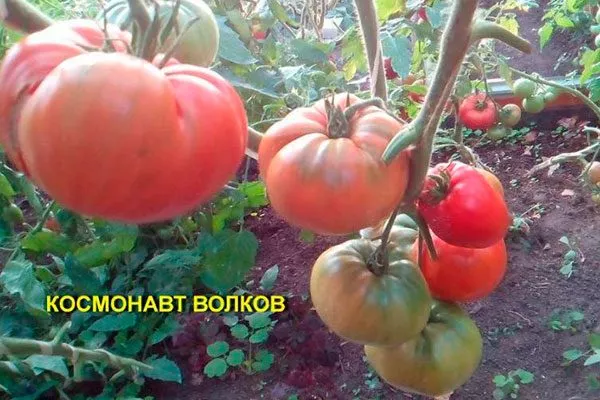
This variety is characterized by large, rounded fruits with a distinct flattening at the base and a distinctive ribbing at the top. Note the following other characteristics:
- the skin of the fruit is elastic, smooth and without spots, colored a rich red;
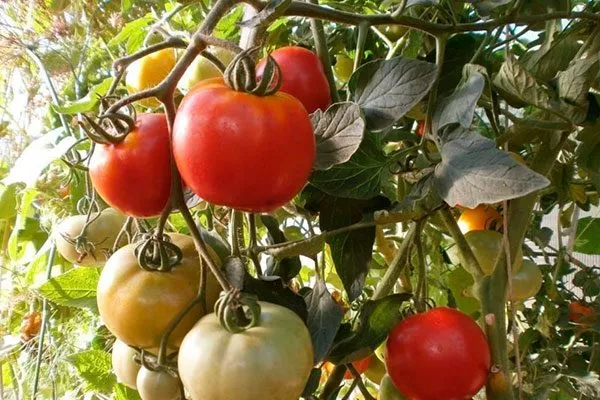
- when not fully ripened, tomatoes have a greenish tint with darker zones near the stalk, which completely disappear with biological maturity;
- Cosmonaut Volkov is famous for its large fruits, especially the first ones, growing on the lower part of the bush, can reach a weight of up to 750-800 g, the rest usually weigh from 400 to 600 g;
- the pulp is very juicy, fleshy, with a slight sweet taste and barely noticeable sourness;
- It has a bright red color and contains up to 6-7 seed chambers with a sufficient number of seeds.
Cosmonaut Volkov tomatoes offer competitive transportability over any distance. They also store well under suitable conditions, maintaining their flavor and attractive appearance.
Main characteristics and history
Many vegetable growing experts note that tomatoes not included in the official Russian registry often lose their original characteristics over many years of cultivation. This is also true of the Kosmonavt Volkov tomato.
Origin, climate and regions
The tomato variety named in honor of the famous cosmonaut A. A. Volkov, who died along with his crew in the Soyuz 11 spacecraft disaster in 1971, is not officially listed. The name belongs to I. M. Maslov, who, after retiring from cosmonaut training, devoted himself to gardening and became an amateur breeder, creating this variety in memory of his fallen comrade.
However, there is no official information regarding the license for this variety held by I. M. Maslov. Today, seeds of this variety are offered by many agricultural companies, such as Sedek, Bekker, and Sibirsky Sad.
This variety is ideally suited for greenhouse cultivation, making it suitable for use in various regions of Russia, including the Central Russian region, the Northwest, the Urals, Transbaikal, and the Far East. It tolerates extreme temperature fluctuations, allowing the plant to easily withstand unpredictable weather conditions.
Ripening and fruiting, productivity
This variety is mid-late—the period from planting to harvesting the first fruits is 120 to 140 days. The plant produces fruit before widespread late blight attacks. Two to four ripe tomatoes form on a single cluster. The fruit ripens over a long period.
A yield of 10-12 kg can be harvested per square meter, and with modern growing methods, this figure can increase to 15 kg. A single bush can yield 4-8 kg of fruit. Harvesting occurs in July-August, with the largest fruits located closer to the base of the bush, decreasing in size with increasing height. The last tomatoes can weigh only 100-120 g.
Resistance to drought and cold
This vegetable crop isn't particularly drought-tolerant, requiring regular irrigation. However, during rainy periods during ripening, watering should be reduced to a minimum to prevent cracking of the nearly ripe tomatoes.
Tomatoes have a good tolerance to low temperatures; their plants can survive short-term cold snaps down to -5 degrees Celsius. This allows them to be grown in open gardens in southern Russia, the Volga region, and other areas with similar climates. However, in other regions, greenhouses are preferable.
How to use?
Cosmonaut Volkov is characterized by its high vitamin content and an ideal balance of acidity and sweetness. Its flavor is rich and vibrant, making it stand out from many Soviet varieties, which tend to be more bland or sour.
With its perfect balance of sweetness and tartness, Cosmonaut Volkov tomatoes are versatile, suitable for both raw consumption and canning. These tomatoes are often used in fresh salads, soups, appetizers, and sauces, as well as for stuffing. Due to their size, they are not suitable for whole pickling, but they are excellent when cut into slices for winter salads, marinades, and ketchups.
How to grow seedlings?
Cosmonaut Volkov is grown from seedlings. To ensure fruitfulness, it's important to start with healthy, strong seedlings. This involves carefully selecting seeds, preparing a nutritious substrate, and strictly following plant care recommendations.
Seed preparation
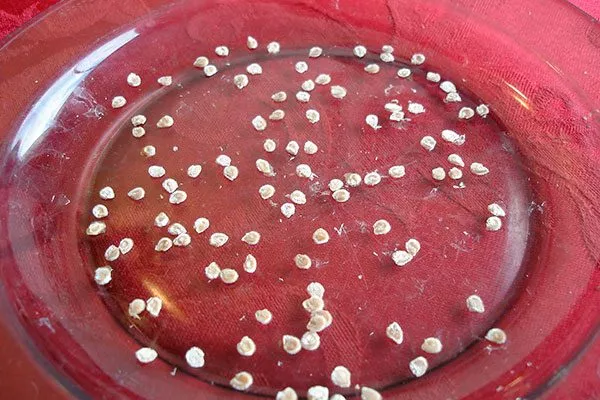
Planting stock for this variety is rarely available in specialty stores. However, if you can find it, no pre-treatment is required. However, seeds purchased from private sellers or collected in your own garden require special preparation:
- First, the seeds are tested for germination by soaking them in water. Only those that sink to the bottom are suitable for planting. The rest should be discarded.
- Then the seed material is left in a weak solution of potassium permanganate for 30 minutes for disinfection, after which it is washed.
- To improve seed germination, sprout the seeds on damp cheesecloth in a dark, warm place with a temperature of at least 26°C. Use warm water to moisten the cheesecloth, and once the first sprouts appear, the seeds are ready for planting.
Container and soil
Seed containers should be large enough to accommodate numerous seeds. Whether they have been previously used for seed growing or not, they should be disinfected before each new use. Simply rinse them with a weak solution of potassium permanganate.
It's recommended to use soil purchased from specialized stores that offer pre-prepared, enriched, and aerated gardening substrate. Some farmers prefer to prepare their own soil mixture. To do this, they mix the following components in equal parts:
- turf;
- river sand;
- high-moor peat;
- compost/humus.
To destroy pathogens that may be present in such a mixture, disinfect it. This can be done in one of the following ways:
- Sterilization in the oven. The tray with soil is heated to 180°C and kept there for about half an hour. After sterilization, the soil should be cooled before being placed into containers.
- Heating in a water bathThe soil is heated in a bathhouse for 30-40 minutes, after which it is cooled and placed in pots.
- Spillage of disinfectant. You can wash the soil with a weak solution of potassium permanganate.
Sowing
Determining the exact time to sow seeds for seedlings directly depends on the climate conditions of the region where the crop will be grown. It's important to keep in mind that seedlings require approximately 55-65 days of indoor growth to reach the desired size.
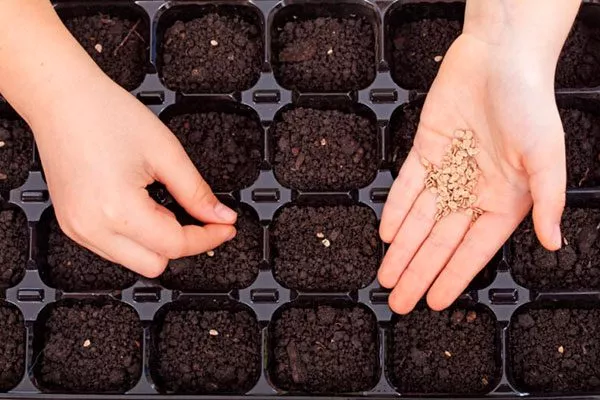
Based on this, the optimal time for planting seeds for seedlings can be calculated. Therefore, seeding for seedlings can be done between February 5 and March 15.
Once the containers are filled with soil, you can begin sowing the seeds. Instructions:
- the seeds are planted into the soil to a depth of 1-1.5 cm;
- level the surface;
- watered from a spray bottle;
- containers with sown seeds are covered with film;
- Place in a warm place for germination.
Growing and care
When the first green shoots appear, move the containers to a well-lit location, usually a windowsill. The daylight hours should be at least 13-15 hours. If natural light is insufficient, use grow lights.
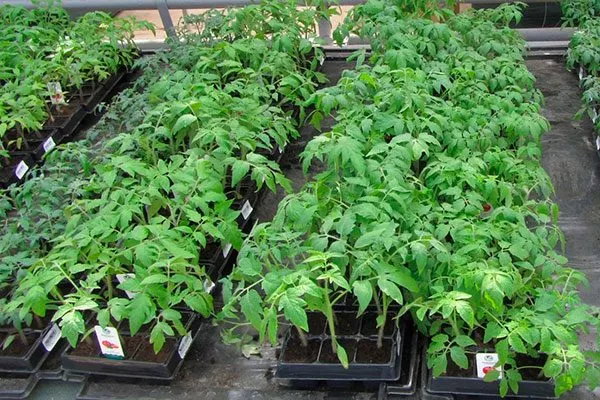
Other important events:
- Water as the top layer of soil dries, using warm, settled water and avoiding overwatering. Use a small watering can or a regular tablespoon to avoid overwatering the plant. To stimulate seedling growth, add a solution of nitrophoska to the water.
- After moistening, loosen the soil to improve oxygen access to the roots.
- When the seedlings have two true leaves, transplant them. Transplant them into individual cups or pots. During transplanting, remove about one-third of the main root. Discard any weak or non-viable plants.
If the seeds were planted in peat pots, picking is not required. - Two weeks before transplanting to their permanent location, begin hardening off the young plants. To do this, place the containers outside for one hour a day, gradually increasing the time to 12 hours. Simultaneously, reduce the nighttime temperature to 13 degrees Celsius.
Transfer
In warm climates, it's best to transplant tomato seedlings into open beds when the soil warms to 15-16 degrees Celsius and the air temperature remains stable. This typically occurs in early May. For greenhouses, transplanting tomato seedlings is best done between April 25 and May 5.
To prepare the site, work must begin in the fall. This includes clearing away plant debris, adding organic fertilizers (such as rotted manure or compost), and digging the soil to a shovel's depth.
Planting seedlings in a permanent location is carried out according to the following scheme:
- Dig holes 12-15 cm deep at a distance of 65-75 cm from each other.
- Place a handful of wood ash and potassium salt at the bottom of the holes, and sprinkle a layer of soil on top.
- If the seedlings were grown in peat pots, they can be planted along with the pots. If they were grown in plastic containers, carefully remove the plants along with the root ball and place them in the hole.
- Fill with soil and compact lightly.
- After this, water and mulch the top with peat or straw to retain moisture and prevent weed growth.
- ✓ Optimum soil temperature for planting seedlings: +15-16°C.
- ✓ Distance between bushes when planting: 65-75 cm.
- ✓ Seedling planting depth: 12-15 cm.
Care
This variety is resilient to adverse conditions. Even with minimal care, it guarantees a good harvest. However, before growing, buyers should consider the care requirements for this variety.
Watering
When growing tomatoes in greenhouses or beds, it is recommended to water the plants every 6-8 days using warm, settled water. At least 5-7 liters of water should be applied to each plant. When buds appear on the tomatoes, the frequency of watering should increase to once every 3 days, using 3 liters of water per plant.
During the ripening period, it's important to maintain the frequency of watering, otherwise the tomatoes may crack. During the rainy season, watering should be reduced or eliminated altogether, as excess moisture can also cause cracking.
Top dressing
Throughout the growing season, tomatoes require three basic fertilizers, which should be applied to the soil before fruit formation begins. Although the variety is considered a plant with moderate soil requirements, development without nutrient supplements will be difficult. Large fruits consume many nutrients, which must be replenished regularly.
Using compost and wood ash alone isn't enough. Tomatoes require mineral-rich fertilizers, which can be purchased at specialty stores. The recommended fertilizer dosage is indicated on the packaging. Experienced gardeners adjust it based on the soil's fertility, increasing the dosage if it's depleted.
Loosening, mulching and tying
Two weeks after transplanting tomato seedlings to their permanent location, it's recommended to deeply earth up the bushes. This is important to stimulate new root growth, allowing the plants to absorb more nutrients from the soil.
Other actions:
- Two weeks after the first hilling, the procedure is repeated.
- After each watering or rain, loosen the soil around the base of the plants, removing any dry crust and weeds that have formed.
- Then the root zone is covered with a layer of humus mulch to prevent rapid evaporation of moisture.
- This variety requires staking of fruiting and supporting shoots. The best method is to use a trellis with netting and plastic clips. If clips are unavailable, strips of cotton fabric or twine can be used, but be careful not to tie the string too tightly or it may cut into the stems.
Pinching, shaping and pruning
To ensure that Cosmonaut Volkov produces a good harvest, regularly remove any shoots that form, as they can rob the fruit of essential nutrients.
Peculiarities:
- When shaping bushes, it is recommended to limit yourself to one or two shoots:
- If the first option is chosen, it is necessary to remove all the side shoots, leaving only the central stem.
- If you decide to structure the bush into two shoots, you should leave the first shoot that appears under the first inflorescence, and remove all other shoots as they appear. This remaining shoot will form the second shoot, which will also bear fruit.
- When pruning, remove some of the inflorescences so that the bush is not overloaded with fruit.
- At the end of July or the beginning of August, it is necessary to pinch the top of the central shoot to stop the growth of the bush and direct all the nutrients to the ripening of large fruits.
- In summer, it is recommended to cut off some of the lower foliage if there is too much of it, so that the roots warm up better, which will have a positive effect on the productivity of the bush.
Nuances for greenhouse conditions and open ground
Growing this tomato variety in greenhouses and open fields varies, which is important to know for successful gardening:
- In greenhouse conditions:
- After irrigation, soil and air humidity may increase indoors, which can promote the development of fungal diseases such as late blight. Therefore, regular ventilation of the greenhouse is essential.
- At the end of the season, it is recommended to disinfect the entire structure and replace the top layer of soil with fresh, nutritious soil. If this is not possible, disinfect it and fertilize it with organic matter.
- Trellis are usually used to support plants in a greenhouse.
- Outdoors:
- After planting the seedlings in a permanent location, it is necessary to protect them from night frosts by installing metal arches and stretching a non-woven covering over them at night.
- To support the plants, a strong, high stake is installed near each bush, to which the tomato shoots are attached at several points.
- Avoid direct exposure to sunlight during lunchtime.
Features of cultivation and possible difficulties
The basic rules for caring for the Cosmonaut Volkov variety include:
- mandatory fastening of bushes to posts or individual supporting structures, as well as placing supports under the lower branches with future fruits;
- regular pinching of side shoots (at least once every 7 days) and removal of late clusters, even if ovaries have already appeared on them.
Of all the possible problems, gardeners report only a lack of ovary formation, which indicates that the plants have been overloaded with nitrogen fertilizers. This leads to excessive growth of leaves and stems, which threatens flower formation.
You can increase your harvest by using artificial pollination. Experimental gardeners can try a unique technique developed by the cultivar's supposed creator, I. M. Maslov:
- It involves stimulating fruiting using the tomato's natural ability to form roots along the entire length of the stem.
- To do this, the shoots are placed in special grooves, laid from north to south, 10 cm deep, with 2/3 of the stem immersed in the ground.
- The lower shoots are not removed, but rather, they are allowed to grow and then also placed into the ground.
This method expands the plant's root system, which in turn promotes a more fertile harvest, as roots are key to the nutrition and development of fruits.
Diseases and pests
Despite the Kosmonavt Volkov variety's resistance to various diseases, special attention should be paid to preventative measures during epidemic periods. Furthermore, the succulent foliage and fruit, which are attractive to insects, require additional measures to protect plantations.
Struggle
This tomato has a strong immune system and is virtually immune to infections, eliminating the need for treatment. However, the plants may occasionally suffer from certain problems:
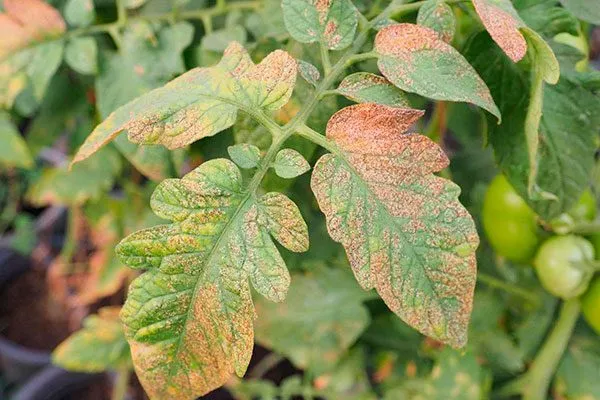
- Tobacco mosaic – If left untreated, it can lead to plant death. If infected branches are found, they should be removed and destroyed by burning. The remaining parts of the plant should be treated with a concentrated solution of potassium permanganate.
- Brown spot - This can occur due to care errors, such as improper watering or temperature control. By regulating these factors, the plant can be cured in its early stages.
If the disease progresses and affects the fruit, you can try to save the plant with chemicals. In extreme cases, the affected bushes must be removed. - Whitefly – Damages tomato foliage. Confidor is recommended for controlling this insect.
- Spider mites – They most often occur in open beds. To protect against this, you can spray the tomato plants with a soapy solution, and wash heavily affected areas.
- Slugs – They appear in high humidity. To counteract this, sprinkle ash or ground hot pepper on the ground around the bushes.
Prevention
To protect your crops from various diseases, including viral infections, take a set of precautionary measures:
- adhere to crop rotation rules;
- regularly disinfect soil, greenhouse structures, garden tools and seeds;
- Water properly and maintain optimal humidity in greenhouses by periodically ventilating them.
To ensure the absence of pests on tomato plantings, it is necessary to systematically remove weeds, dig the soil in the fall, and treat the soil with insecticides in the spring and fall.
Pros and cons
Similar varieties
There are many tomato varieties on the market that resemble the Cosmonaut Volkov variety in their characteristics. They are characterized by large fruits, mid- to early ripening, and disease resistance.
- Novikov's Giant – This is a mid-season tomato variety, bred by Russian specialists, with raspberry-colored fruits. The bushes require minimal care. Up to 20 kg of tomatoes can be harvested from 1 square meter.
- Korneevsky – This early-ripening interdeterminate variety is an excellent choice for home consumption or commercial sale. The resulting fruits have a harmonious shape, bright red color, and a pleasant flavor. Each fruit weighs 500-800 g.
- Prima Donna – An early-ripening hybrid tomato of Russian origin. The fruits have a pointed tip, sweet, firm flesh, and a thin, reddish skin that resists cracking. Each tomato weighs up to 200 g.
Reviews
Judging by the characteristics and reviews of the Kosmonavt Volkov variety, it occupies a leading position among other tomatoes. Despite some growing difficulties, its high fruiting rate, disease resistance, and rapid adaptation to weather conditions make it one of the best choices for various regions.