
The King King tomato is a high-yielding and disease-resistant variety that makes an excellent choice for any greenhouse or garden. It produces large, fleshy fruits with a sweet flavor and firm texture, making them ideal for fresh salads and winter preserves. This variety easily adapts to a variety of climates and requires minimal maintenance.
Description of the plant and fruits
This American variety, with unlimited growth (indeterminate type), produces fruit throughout the season. Gardeners appreciate it for its long-term cultivation.
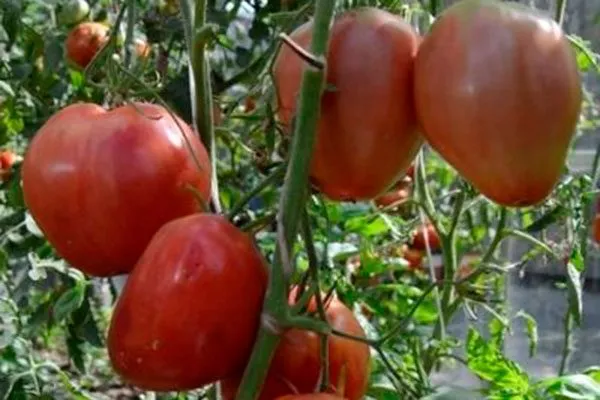
Distinctive features:
- bush – powerful, reaches 2 m in height;
- leaves - compact, colored in a rich green shade;
- tomatoes - bright crimson, large;
- weight - varies from 300 to 500 g, and in some cases up to 700-800 g;
- configuration – even heart.
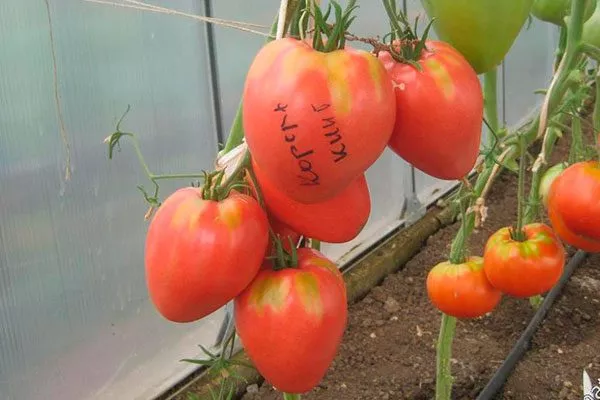
Up to five vegetables are formed in a brush.
Main characteristics
King King is an excellent choice for those who enjoy large, juicy fruits with a rich flavor. It's easy to care for and suitable for both garden plots and urban cultivation.
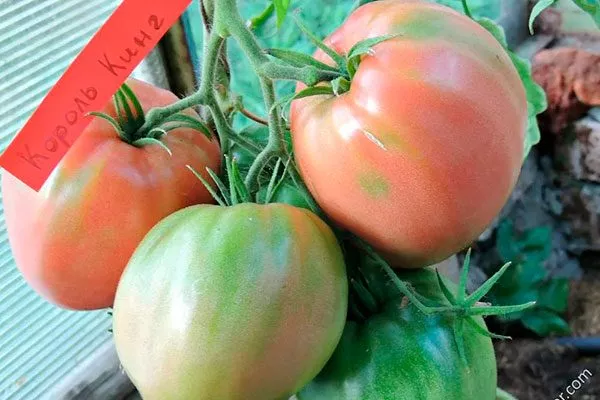
Main qualities:
- Vegetables are versatile in cooking. They enhance the flavor of fresh salads, sauces, and soups. They are also used for canning, juicing, and pureeing.
- Thanks to their dense flesh and sweet flavor, tomatoes are often used for baking, grilling, and roasting. They pair harmoniously with meat and fish dishes.
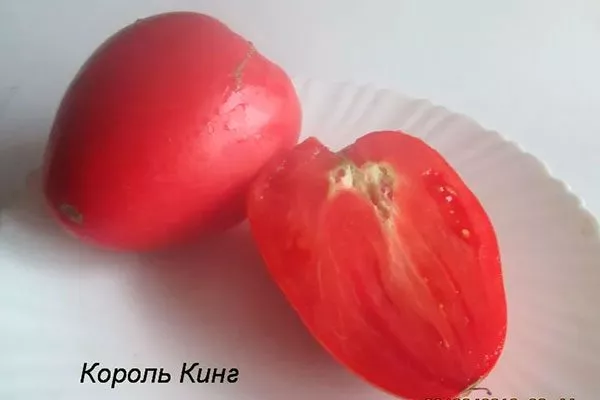
The period from germination to harvesting of ripe fruits is 100-110 days. Yields reach 5-6 kg per bush.
Landing
Growing the King King tomato variety requires following several important steps to ensure a good harvest. The crop thrives in greenhouses and can be grown outdoors with proper preparation.
Optimal growing conditions
Create a suitable environment for your plants to ensure rapid growth and consistent fruiting. Follow these guidelines:
- air temperature – within +22-25°C;
- soil – drained and fertile;
- plot – well lit and protected from strong winds.
Rules for planting seeds
Plant seeds 50-60 days before transplanting into the garden or greenhouse. Follow these guidelines:
- Sow seeds into containers with loose soil to a depth of about 1 cm.
- Cover the containers with seedlings with film to create a greenhouse effect.
- ✓ Optimum soil temperature for seed germination: +25-28°C.
- ✓ The need to use phytolamps when there is insufficient natural light: at least 12-14 hours a day.
Place the pots in a warm place with a temperature of about +25°C until the sprouts appear.
Growing seedlings and transplanting
Once seedlings emerge, reduce temperatures to 18-20°C to prevent plants from stretching. Helpful tips:
- The seedlings need to receive enough light, so provide them with 12-14 hours a day using phytolamps or natural light.
- Water the seedlings with warm, settled water as the top layer of soil dries out, avoiding over-watering.
- Transplant the plants into open ground or a greenhouse when they reach 20-25 cm in height and have 6-7 true leaves. The weather outside should be consistently warm.
- Before transplanting, harden the seedlings, gradually acclimating them to external environmental conditions by taking them out into the fresh air for several hours.
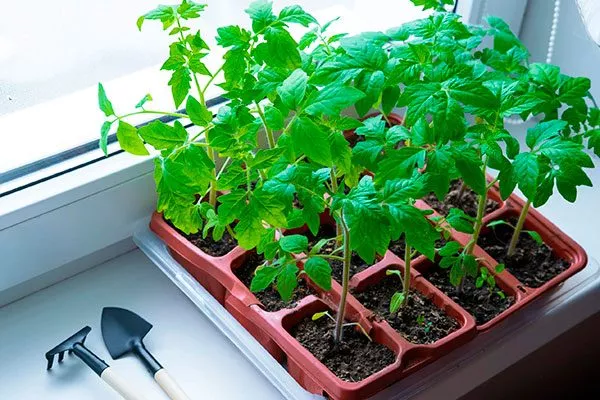
Place into holes 40-50 cm apart to ensure good root development and air flow between the plants.
Further cultivation
King King is easy to care for. To achieve generous harvests, it's important to follow standard agricultural practices.
Watering and fertilizing
Tomatoes require regular watering—at least twice a week. Providing sufficient moisture is especially important during the fruit set and ripening period. Use warm, settled water for watering.
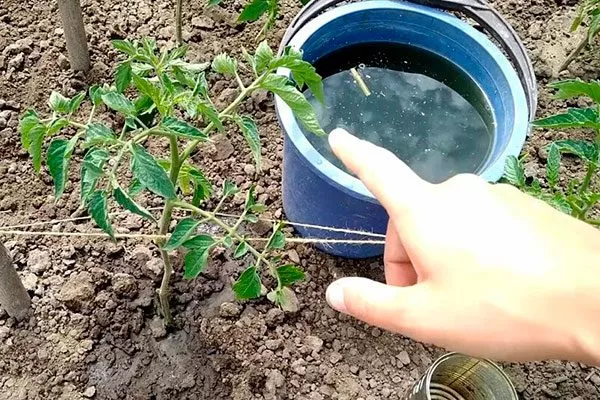
Please comply with the following requirements:
- Add a mullein solution to the liquid. After each watering, wait until the top layer of soil dries, then loosen the soil at a shallow depth and remove weeds.
- If bumps (root buds) appear on the lower part of the stem, hill it up to encourage additional root development. To do this, lift the loose, moist soil at the base of the stem.
- During the growing and fruiting period, fertilize tomato plants 3-4 times to replenish lost nutrients. Apply fertilizer 14-16 days after transplanting the seedlings into the soil, when the plants have significantly increased their foliage.
- During the growth stage, during the period of active development, bushes require nitrogen. For the first feeding, use organic matter: a solution of mullein (1:10) or chicken manure (1:20) – let it sit for 24 hours and water at a rate of 2-3 liters.
- Apply the next fertilizers after 2 weeks, then during the period of vegetable formation and again during active fruiting.
For root feeding, you can use the following mixtures (dosage per 10 liters of water, consumption – 1 liter per bush):
- 500 ml of bird droppings infusion (1:20), superphosphate (20-25 g) and potassium sulfate (5 g);
- 1 l of mullein and nitrophoska (15 g);
- ash (40 g), superphosphate (20 g) and manganese sulfate (2 g);
- 1 l of green fertilizer infusion, ash (300 g), superphosphate (40 g), copper sulfate (1 g).
Pinching out and tying up
These are important agricultural practices for the proper growth and development of tomatoes. Follow these recommendations:
- Remove lateral shoots that appear in the leaf axils—they compete with the main stem for nutrients and light. This helps improve ventilation, reduce the risk of disease, and direct energy toward the development of the main stem and fruit.
- Perform this procedure regularly, starting from the moment the first side shoots appear – 1-2 times a week. Pluck only weak and small shoots to avoid damaging the main stem of the plant.
- Secure the trunk to a vertical support (trellis, stakes, or netting). This helps maintain the bush in the correct position, improves light and air circulation, and makes harvesting easier.
- Staking prevents damage to the tomatoes by keeping them off the ground. Secure the shoots when the plants reach about 30 cm in height. As they grow, tie the stems securely to avoid overstretching them.
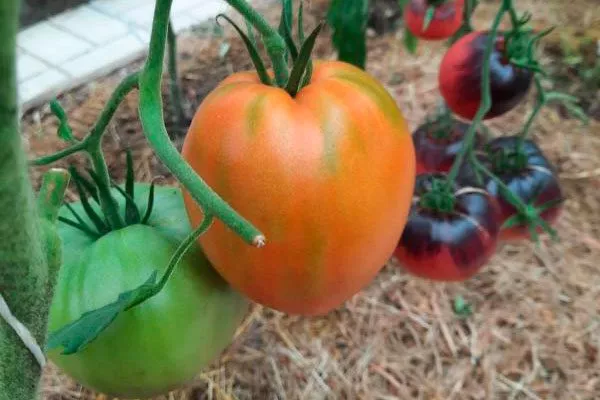
Both processes contribute to increased yields, improved fruit quality and a reduced risk of disease.
Train the King King variety into a single stem, although it can also be grown as a double stem, which accelerates fruiting by 1-1.5 weeks. When growing as a double stem, leave no more than 2-3 fruit clusters on each stem.
Protection from diseases and pests
The crop is characterized by strong immunity to the main diseases of nightshades. However, the bushes can be attacked by whiteflies, an insect capable of destroying entire crops in a short period of time.
A small parasite (up to 3 mm in length) sucks the sap from tomato leaves and shoots. As a result, the plants lose their color, begin to turn yellow, and wilt. Without timely treatment, they may die.
Inspect the bushes 10-12 days after transplanting them outdoors. If whiteflies are detected, spray them with specialized products such as Mospilan or Actellic.
Pros and cons
Before growing a crop in your garden, be sure to research all its advantages and disadvantages. This knowledge will help you avoid potential problems in the future.
The following advantages are noted for the King King tomato:
The variety's disadvantages include the fact that the seeds are not reusable—they must be purchased each season. In colder regions, tomatoes must be grown exclusively in greenhouses, which entails additional heating and lighting costs.
Reviews
King King is a reliable tomato variety with excellent flavor and strong immunity. Gardeners choose it for its consistent yield and large, juicy tomatoes, suitable for canning and eating fresh. Its ease of care and versatility make this variety worthy of attention.