
The 'King of Giants' tomato variety was developed less than 10 years ago, but has already become widely popular. They are suitable for open-ground cultivation Both grown in greenhouses and commercially, they are prized for their excellent taste. Read this article to learn about the advantages of the "King of Giants" over other varieties and how to grow it.
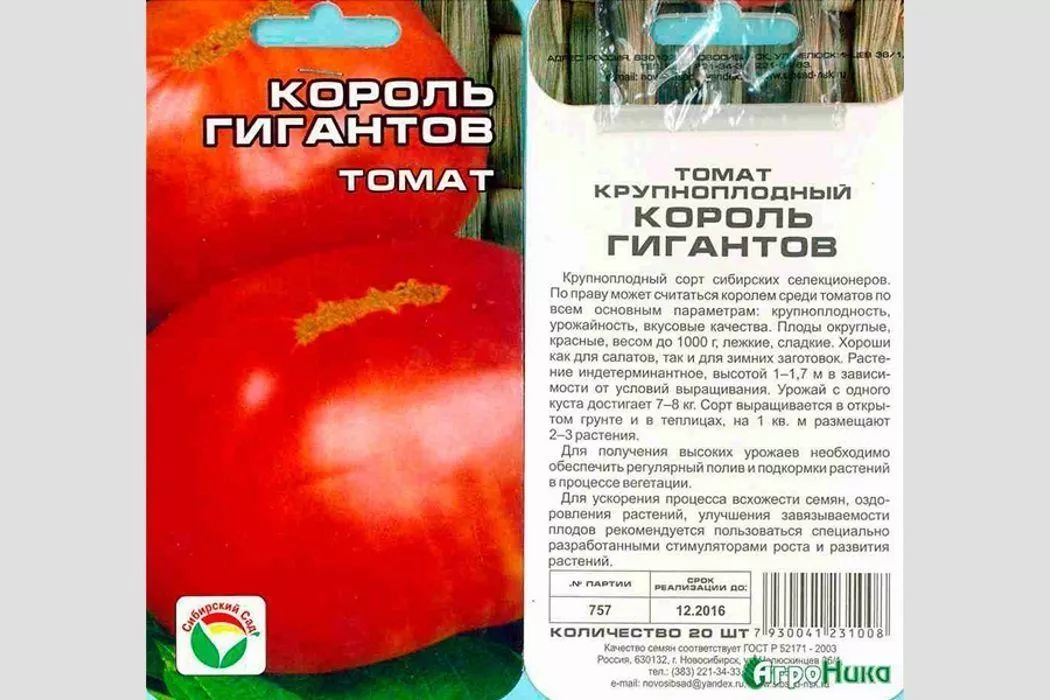
Tomato seeds "King of Giants"
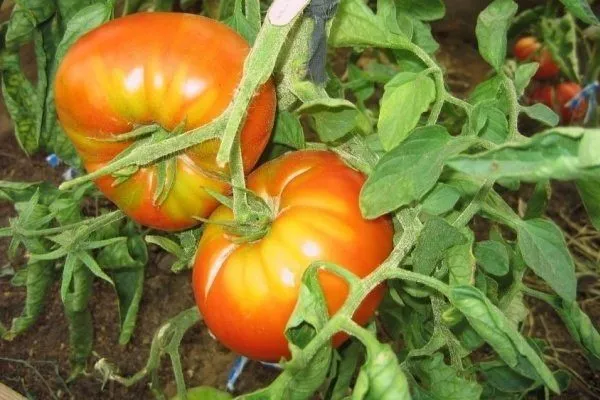
Tomato variety "King of Giants"
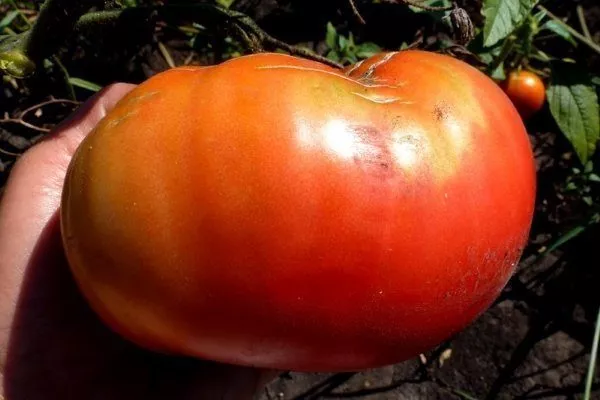
The weight of the King of Giants tomato can range from 400 to 800 grams.
Origin
The exact origin of the variety is unknown. Seeds are produced by several companies, each claiming credit for the leading breeders. This may be because seeds from different companies have slightly different characteristics, so when buying "King of Giants" from the Urozhai brand and, for example, from the Siberian Garden brand, you can't be completely sure that the resulting tomatoes will be identical.
Although this variety has not yet been included in the State Register, it became widespread almost 10 years ago. Today, it is sold in all regions of the country, as well as throughout the CIS.
It is not a hybrid variety.
Description
There are several main characteristics of tomatoes of this variety.
Plants
They differ in the following parameters:
- Height. Tomatoes can reach 1.5 m in height and even more if their growth is not limited in time.
- Ovaries. The first one forms at the level of the 9th leaf. Subsequently, clusters grow every 3 leaves.
- Inflorescences. Two to three flowers form on a single raceme. The fruits appear in small clusters.
Fruit
As for the fruits, they can be described as follows:
- Form. Rounded, slightly flattened at the base. Ribbed surfaces become apparent closer to the stalk.
- Weight. Large. The average weight of a single tomato reaches 400 g. There have been cases of growing fruits weighing up to 800 g.
- Pulp. It's fleshy in texture and rich in juice and vitamins. Therefore, the fruit is recommended for children and those trying to lose weight.
- Skin. Dense. This prevents tomatoes from cracking.
- Taste. Sweetish with a slight sourness.
- Seeds. They are located in 7-8 separate chambers of the fetus.
- Color. Rich red. Yellow and pink tomato seeds are rare.
Productivity
The following is known about this:
- Ripening period. Mid-late. At least 120 days should pass from germination to the first harvest.
- Fertility. Good. You can get no more than 6-8 kg of tomatoes from a bush. That's about 8 large fruits.
- Collection period. Falls in July-August.
Application
From the "King of Giants" you can prepare:
- various sauces;
- fresh salads;
- snacks;
- tomato juice.
Preserving can be challenging—a whole fruit won't fit in a jar, and cutting it into pieces can make it lose its appeal. Therefore, this method of use isn't suitable for everyone.
Because of their high juiciness, tomatoes are not suitable for drying.
You can learn more about the main characteristics and features of this variety by watching the video below:
Landing features
It is worth paying attention to the peculiarities of growing the "King of Giants".
Seed preparation
The germination rate of tomatoes depends on the stage of seed preparation.
You need to use the following rules:
- Buying seeds. Only buy seeds from specialized stores to avoid counterfeit products. You can also harvest the seeds yourself. In this case, they will only last for up to three years.
- Sorting. Sort out the seeds, remove empty and small ones.
- Protection. To protect seeds from pests, wrap them in gauze and soak them in a weak solution of potassium permanganate for 10 minutes.
- Preparation. Spread the seeds on paper or cloth soaked in warm water, wrap in transparent film, and store in a warm place. Maintain a temperature of 22-25 degrees Celsius.
Once sprouts begin to appear, the seeds can be planted. This usually happens on the third day.
Soil preparation
You can also buy soil at the store, but it's better to prepare the mixture yourself. It doesn't take much time and allows you to be sure of the quality of the material you're using.
The mixture should include:
- Humus. It is better to take the one obtained by rotting pig or horse manure.
- Compost. It's made from plant residues. However, nightshades should not be added.
- Earth. Should be taken near deciduous trees.
- Sand. The ideal option would be river water, but without clay impurities.
Mix the first three components in equal proportions. Then add sand at a rate of 1 kg per bucket of mixture. For every 10 kg of soil, add 2 tablespoons of stove ash, saltpeter, and superphosphate.
The mixture should be left to infuse for 2-3 days and only after that can it be used.
This type of soil helps protect plants from pests, provides sufficient air permeability and saturation with useful substances.
Growing seedlings
Growing seedlings is carried out as follows:
- Selecting a container. Choose a hole made of wood or plastic. It should be shallow – about 10 cm.
- Preparation. Place pebbles on the bottom of the container. Sprinkle soil on top. Then compact it well.
- Planting seeds. Place the seeds in 1 cm deep holes at a distance of 2-3 cm. Cover with a thin layer of soil and compact lightly.

- Watering. Using a spray bottle, spray the seeds with warm water.
- Germination. Cover the container with cling film and put it in a place where a constant temperature of 25 degrees is maintained.
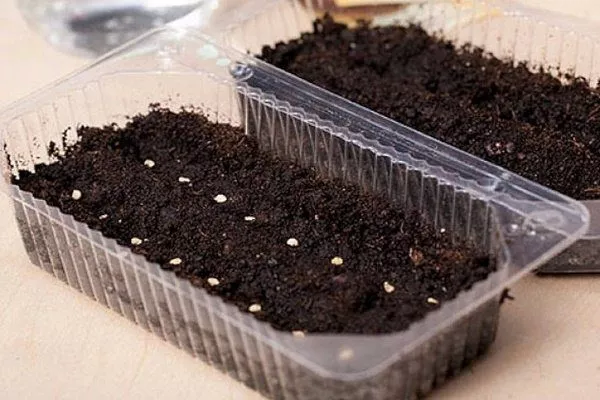
Read more about how to plant tomato seedlings. here.
Caring for seedlings
As soon as the sprouts appear, you need to adhere to the following care rules:
- Temperature. Lower it to 18 degrees, at night it should be another 4 degrees lower.
- Watering. Proceed as the top layer of soil dries.
- Ventilation. Remove the film for at least 30 minutes per day to ensure optimal humidity levels.
- Illumination. Place the container with plants in a well-lit place, but provide protection from direct sunlight. It is good to use lamps for seedlings.
Picking
At this stage, the plants are transplanted into individual containers. This should be done when the tomatoes have 2-3 leaves.
The following events are held:
- Extraction. Carefully remove the sprouts from the container, being careful not to damage the roots. Remove all soil from the bottom.
- Picking. This is done manually. Tear off about 1/3 of the lower root stem. This will ensure better nutrient absorption.
- Transfer. Fill individual containers 1/3 full with soil. Then place the plant in each container, cover with soil up to the level of the cotyledon leaves, and water.
Planting in the ground should be carried out on the 55th day after preparing the seeds.
Bedding
In the fall, you need to prepare the soil for planting. To do this, dig up the beds and add the necessary fertilizers to the soil.
There are 2 ways of landing:
- To the greenhouse. In this case, it's essential to constantly maintain optimal temperature, humidity, and light. Three days before planting, treat the soil with a copper sulfate solution and water generously. Plants are spaced at a rate of 2-3 plants per square meter.
- Into open ground. Planting takes place towards the end of May. Tomatoes ripen best in sunny weather, when there is no risk of frost. When planting, ensure the shoots are planted deep into the soil to allow the root system to develop. The planting pattern is the same as for greenhouse plants.
- ✓ Optimum soil temperature for planting seedlings: not lower than 15°C.
- ✓ The distance between bushes when planting in open ground should be at least 50 cm to ensure sufficient ventilation and lighting.
Immediately after transplanting, the soil must be thoroughly loosened.
Care
Proper care is the key to getting a good tomato harvest.
Bush formation
The bush must be shaped manually. To do this:
- Install the supports. Without this, the plant may break under the weight of the fruit. Therefore, tie it up not only after planting but also as it grows.
- Pinching out stepsons. Prune off side shoots regularly. Do this only in dry weather. Treat the broken area with ash.
- Topping. Pinch off the top of the plant when it reaches 1.5 m. This is necessary so that most of the nutrients are directed toward fruiting.
- ✓ High sensitivity to magnesium deficiency, manifested by yellowing of leaves between the veins.
- ✓ Tendency to blossom-end rot of fruits due to a lack of calcium in the soil.
Top dressing
Feeding seedlings is carried out several times after transplanting into the ground:
- Week 3. Add ammonium nitrate at a rate of 30 g per 10 liters of water.
- Week 6. Mix 1 kg of manure with 10 liters of water.
- Week 8. Dissolve 30 g of superphosphate in 1 bucket of water (you can use a watering can).
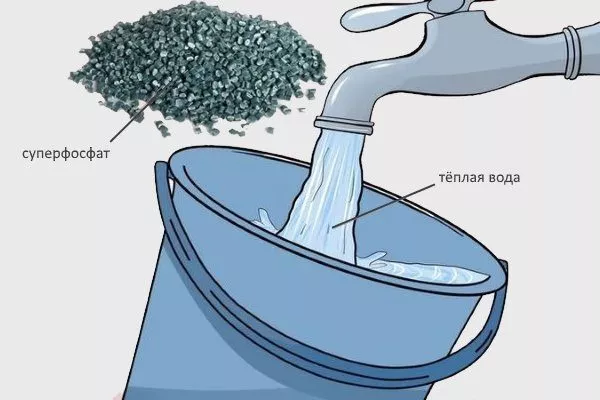
Apply 500 ml of fertilizer under each bush.
It is better not to use fertilizers during the flowering and fruiting periods, otherwise this may negatively affect the taste of tomatoes.
Other features
Other rules for caring for the "King of Giants" include:
- Watering. The first watering is carried out 7 days after transplanting. When planting outdoors in hot weather, water the plants twice a day, 1 liter per plant. The rest of the time, water as the soil dries out.
In a greenhouse, a drip irrigation system can be installed, which would be an ideal option for growing the "King of Giants".
- Loosening. Apply 1 day after watering.
- Weeding. Apply after watering.
Harvesting
If you plan to eat tomatoes right away, it is best to pick them when they are fully ripe, when they are a bright red or yellow color.
However, if tomatoes are needed for sale or for long-term storage, it's best to harvest them when they're not fully ripe. This will help them retain their texture and flavor longer.
Diseases and pests
The main pest for the "royal" variety is whitefly. You can protect plants from it by spraying them with a garlic solution. Prepare it as follows:
- mix 150 g of crushed garlic with 1 liter of water;
- Let it brew for 1 week.
The product can be used.
You can also use specialized chemicals to get rid of pests. However, this should be done one month before the tomatoes begin to bear fruit. Otherwise, the tomatoes will accumulate harmful substances.
Pros and cons
Among the main advantages of the variety:
- Unpretentiousness. The variety does not require special care.
- Yield. Up to 24 kg can be harvested per square meter.
- Storage. "King of Giants" retains its flavor for a long time. In cool conditions, it can be stored for three months without changing its appearance.
- Transportation. When transported over long distances, tomatoes do not crack or become crushed. They are suitable for sale.
- Germination. Almost 90% of seeds sprout, making them easy to grow yourself.
- Resilience. Plants tolerate temperature fluctuations well.
- Nutritional value. Thanks to their flavor and properties, tomatoes are highly valued in cooking.
But one should pay attention to the disadvantages:
- The need for shaping. Without it, it's impossible to get a good harvest.
- Susceptibility to pests. This necessitates the implementation of preventative measures.
- The transplant is carried out with a multitude of precautions.
Reviews
The most informative reviews from people who grow the King of Giants tomato:
"King of Giants" is highly prized among gardeners. The plants require little care and produce a bountiful harvest. They can be eaten fresh or juiced. The only drawback is their high susceptibility to pests such as whiteflies. Therefore, it's important to take preventative measures promptly.