
Konfetka F1 is a mid-season tomato hybrid from the Aelita agricultural firm. It impresses domestic gardeners with its remarkably sweet fruit flavor, attractive appearance, high bush productivity, consistent yield, and the ability to be harvested mechanically. It is grown in plastic or heated greenhouses, as well as in open beds.
Description of the plant and fruits
The bushes of this hybrid variety are short and quite compact. They are distinguished by their appearance:
- "height" - 0.5-1 m;
- neat crown, not very spreading;
- powerful stems;
- foliage: dark green, medium sized;
- a fruit cluster consisting of 10-15 tomatoes that ripen simultaneously.
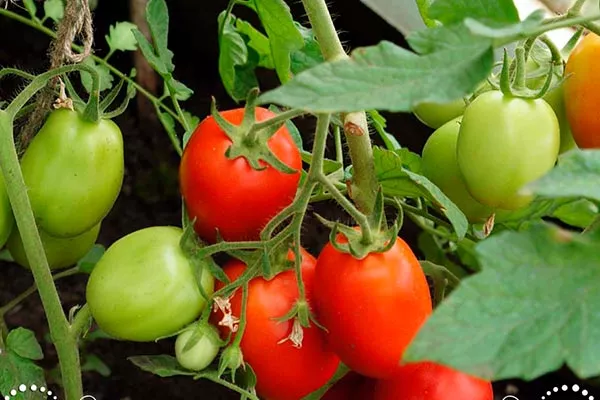
Konfetki plants do not require pinching. Despite their short stature, they require staking to avoid the risk of shoot breakage under the heavy weight of the voluminous fruit clusters. To ensure maximum productivity, they are trained into 2-3 stems.
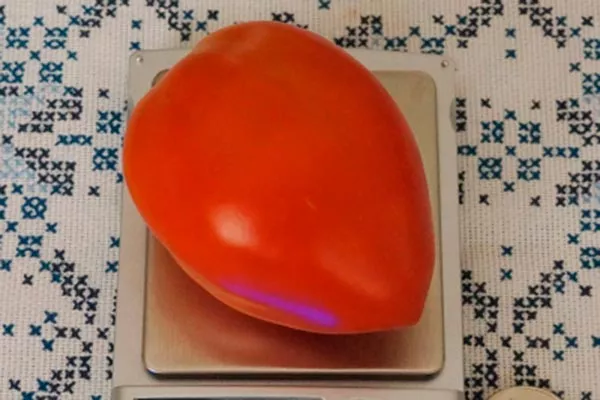
Thanks to its compact size, this sweet tomato hybrid grows well not only in a greenhouse or garden bed, but also in any limited space. It can be successfully grown indoors in pots or tubs on the balcony.
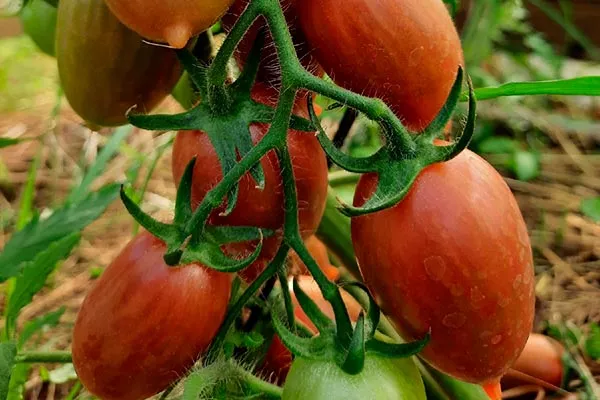
Candy tomatoes are small to medium-sized and beautiful in appearance. They possess the following characteristics:
- weight - 100-150 g (in the total mass of the harvest there may be small specimens, the weight of which does not exceed 50 g, and large ones up to 290 g);
- flattened-rounded shape;
- slightly pronounced ribbing;
- dark red color;
- thin, glossy skin;
- dense pulp, without seeds, moderately juicy, exuding a delicate tomato aroma.
Taste, beneficial properties, purpose
The "Konfetka" tomato lives up to its name. Its flavor is excellent. The flesh is caramel-sweet with a subtle tartness, and its flavor is very rich and vibrant. It has a high sugar content and a moderate acidity.
These candy-sweet tomatoes are rich in vitamins (A, C, E, K, B6, and folate), minerals (potassium, iron, magnesium, calcium, copper, phosphorus, and others), antioxidants, and fiber. Eating them offers numerous health benefits.
By including this product in your diet, you will experience healing effects:
- strengthen your immune system;
- improve the condition of your skin, hair and nails;
- improve your visual acuity;
- improve your digestion;
- balance the amount of fluid in the body;
- lower your bad cholesterol levels;
- normalize the functioning of the cardiovascular system;
- improve your metabolism;
- protect your body's cells from the harmful effects of free radicals;
- stimulate hematopoiesis;
- strengthen your nervous system;
- improve your mood and vitality.
The use of the Konfetki harvest in home cooking is very wide:
- adding to salads, side dishes, and also to dishes from the children's menu;
- preparation of sauces, marinades, ketchup;
- processing into puree/paste;
- pickling;
- drying;
- drying;
- canning, in particular whole fruits;
- freezing;
- decorating dishes.
The delicious fruits are characterized by long shelf life without losing their marketable appearance and withstand long-distance transportation well. Thanks to its excellent shelf life and transportability, the hybrid is ideal for commercial cultivation.
Characteristics
This vegetable variety belongs to the mid-season tomato category. Its fruits ripen within 113-117 days after emergence. It is characterized by a consistent yield, ease of cultivation, and high bush fertility.
- up to 4 kg from 1 plant is the maximum yield that can be obtained with enhanced agricultural technology;
- 6 kg per 1 sq. m is the average productivity of candy tomatoes.
Like other tomato hybrids, Konfetka is characterized by good resistance to diseases and pests. Its plants are rarely affected by fusarium or verticillium wilt. Despite the plant's strong immunity, infection prevention should not be neglected.
Planting and growing
Grow candy tomatoes using seedlings. Sow seeds in March if you plan to grow the crop in a heated greenhouse, in April under a plastic cover or in an open bed. Transfer the seedlings to a heated shelter in April, under plastic in May, and into the garden in June in regions with warm climates.
Soil and conditions
This vegetable crop isn't particularly demanding when it comes to soil conditions. To ensure maximum yield, plant it in soils with the following characteristics:
- lungs;
- loose;
- fertile;
- breathable;
- having good water-holding capacity;
- non-acidic (optimal pH 6 to 6.5).
- ✓ The soil pH level should be strictly within 6.0-6.5 for optimal nutrient absorption.
- ✓ Drainage is required to prevent water stagnation and root rot.
Tomatoes thrive in light loam or sandy loam soil. A mixture of garden soil (30%), sand (20%), peat (20%), and humus (30%) is considered the most suitable for tomato seedlings.
In addition to creating favorable soil conditions, ensure that the open area of the garden meets the following requirements:
- was sunny;
- windless;
- had protection from drafts;
- was not located in a lowland, but on an elevated, level surface (flooding by groundwater is unacceptable);
- well drained;
- used last season to grow the right tomato precursors (legumes, pumpkin and green crops, as well as root crops).
Avoid planting tomato plants where you previously grew potatoes, peppers, eggplants, tomatoes, or physalis. Ignoring this rule increases the risk of vegetable disease.
In the fall, dig up the selected plot of your garden, clear it of weeds, and fertilize it with organic matter (cow manure or humus) and mineral fertilizers (superphosphate, potassium sulfate). If the soil is dense, add coarse sand to improve its texture. Add wood ash to acidic soil.
If you plan to grow candy tomatoes in a greenhouse, create favorable conditions for the growth and fruiting of its bushes:
- replace the top layer of soil with highly fertile soil of the correct structure;
- maintain the air temperature at +17-19°C during the day and +12-14°C at night;
- ventilate it regularly;
- Maintain air humidity at 60-70%, soil humidity at 70-75% (during the fruiting season of tomatoes - 80%).
Sowing seeds and growing seedlings
Sow Konfetka tomato seeds 6-8 weeks before you plan to transplant them to the garden. Use seedling trays filled with store-bought potting soil or a homemade potting mix (mix garden soil with peat, manure, and river sand).
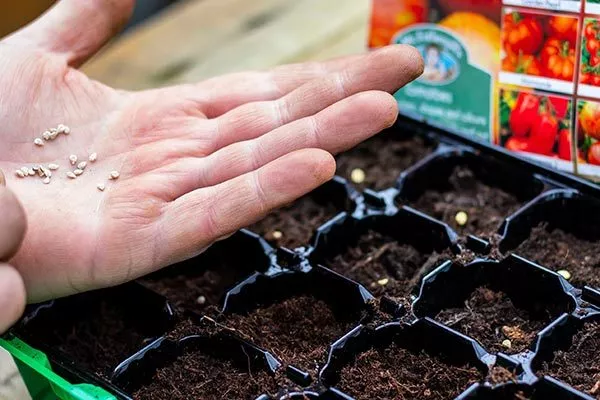
Place the seeds in furrows 1 cm deep and 2-3 cm apart. Cover with soil. Gently moisten and cover with plastic wrap. Leave in a warm place (temperature not below 25°C).
Provide proper care for the sprouted seedlings:
- maintain the room temperature at +20°C;
- protect seedlings from cold, drafts, and temperature changes;
- provide the planting with at least 12 hours of daylight by using a phytolamp (in the first weeks, it is desirable that its duration be 18 hours);
- Water the plants moderately, 1-2 times a week for the first 20 days after the sprouts appear, then 3-4 times a week;
- dive the seedlings after they have 1-2 true leaves;
- fertilize the planting:
- Water the seedlings with Agricola solution for the first time 2 weeks after picking them;
- Feed them with Superphosphate for the second time 14 days after the first application of the nutrient composition;
- Harden off the seedlings during the last week before “moving” them into the garden by taking them out into the fresh air for several hours every day).
Transfer
Transplant candy tomato seedlings to their permanent location once they have 5-7 true leaves. Follow the recommended planting pattern: 40x50 cm or 50x60 cm. Place 4-5 plants per square meter.
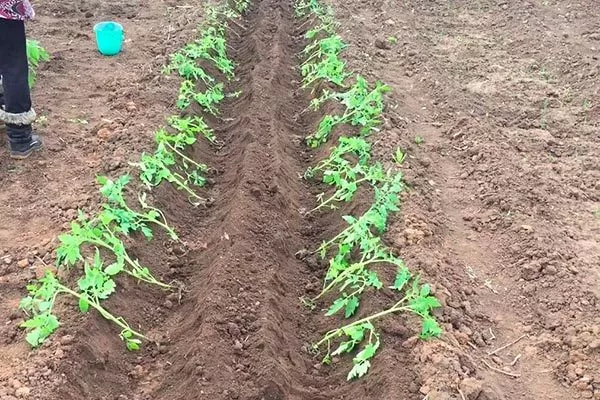
Before transplanting seedlings, make sure that the threat of frost has passed and the soil is well warmed up:
- up to +15-17°С — in an open area of the garden;
- from +10°С — in a greenhouse.
After replanting, water the tomato plants. Avoid overwatering the bed for the next 10-12 days.
Care
Provide your candy tomato plant with quality care to ensure a bountiful harvest of caramel-sweet fruits. This includes the following steps:
- Regular wateringWater the soil every 5-7 days. During hot weeks, water the soil under the bushes more frequently—every other day or daily. Use warm, settled water. Avoid splashing the stems and foliage when watering.

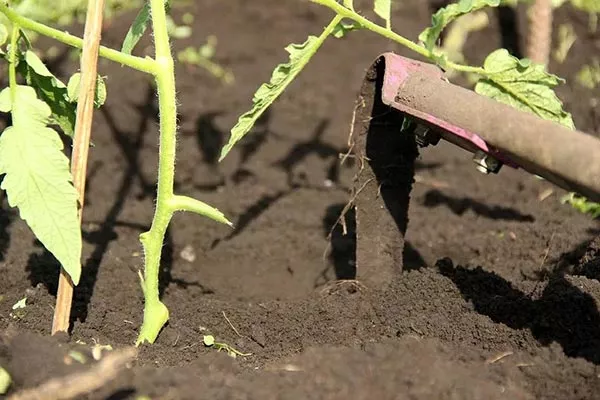
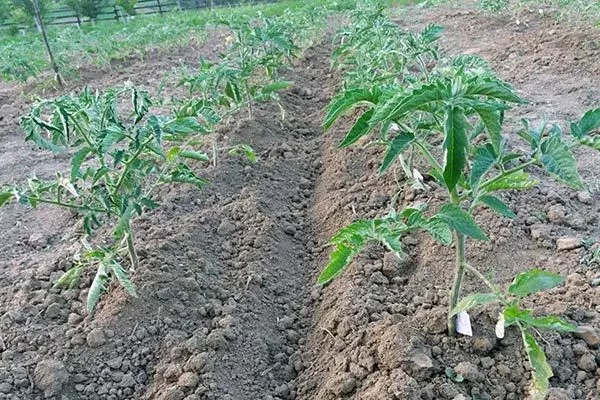
- Loosening the soilLoosen the soil in the garden bed the day after rain or watering to prevent a hard crust from forming on the surface. This will improve oxygen and nutrient availability to the roots of the hybrid bushes.
- Weeding. Regularly remove weeds from your garden bed. They rob plants of water and nutrients, inhibit growth, and are a source of infection and pests.
- Top dressingTo maximize yield, fertilize your tomato plants with organic and mineral fertilizers. Apply nutrients 3-4 times during the season: immediately after the seedlings have established roots in the garden bed, 10 days after the first feeding, during flowering, and during fruit ripening.
The first 2 times, water the tomato hybrid plantings with a solution of mullein or bird droppings; for the 3-4th application of fertilizer, use phosphorus-potassium mixtures (superphosphate, potassium sulfate). - Tying to a support and shaping the bushTo increase productivity, train the plants into multiple trunks. No need to pinch them off. Staking determinate plants is not necessary, but experienced gardeners do not neglect this care procedure. It helps prevent shoots from breaking under the weight of ripening fruit.

- First feeding: 2 weeks after transplanting, use a solution of mullein (1:10) or bird droppings (1:15).
- Second feeding: 10 days after the first, use phosphorus-potassium mixtures (Superphosphate 20g + potassium sulfate 15g per 10l of water).
- Third feeding: during the flowering period, use the same phosphorus-potassium mixtures.
- Fourth feeding: during the period of fruit filling, repeat the phosphorus-potassium mixtures.
Diseases and pests
The Konfetka hybrid, like many dwarf tomatoes, is highly resistant to infections and pests. When grown in favorable conditions, the bushes are disease-free. During epidemic years and when not properly cared for, they are prone to late blight, powdery mildew, early blight, and pests (aphids and whiteflies).
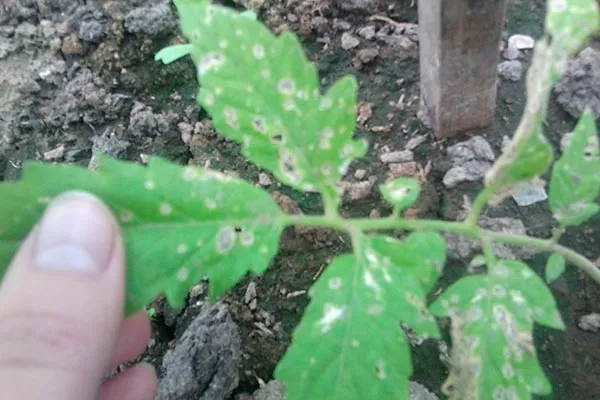
To prevent tomato plantings from becoming diseased, pay attention to preventative measures:
- compliance with the rules of agricultural technology of the crop;
- regular inspection of bushes;
- preventive treatment of plantings with fungicides and insecticides;
- the use of folk remedies against parasites.
Fungal tomato disease is difficult to treat. In the early stages of the disease, use a copper-based fungicide (Abiga-Peak, copper sulfate, Oxychom), and in advanced cases, dig up the affected plants and burn them outside the garden. Applying Fitosporin (once every 10 days) can help prevent the problem.
To detect pests early, inspect the planting periodically. If any are detected, treat the following:
- before the fruiting season, spray the bushes with insecticides (Confidor, Actillik, Iskra, Aktara);
- During the ripening period of tomatoes, use the biological preparations Fitoverm and Bitoxybacillin-BTU to combat parasites.
Reviews
The Konfetka hybrid is a domestically bred achievement from the Aelita agricultural firm. It boasts beautiful fruits with a wonderful caramel-sweet flavor, high yields, and strong immunity. It's an excellent choice for those growing tomatoes specifically for fresh consumption, canning, and garnishing.