
The Kistevaya tomato is a popular hybrid that appeals to gardeners with its good productivity and good adaptability to a variety of climates. The fruits are noted for their good shelf life and resistance to cracking. This variety is ideal for both greenhouses and open ground, and even beginners can grow it.
Briefly about cluster tomatoes
This variety combines a multitude of positive qualities, making it a popular choice for garden plots. Features of the hybrid:
- has high resistance to the main diseases typical for the crop;
- maintains freshness and quality during long-term storage;
- It stands out for its attractive appearance, which is especially appreciated by customers.
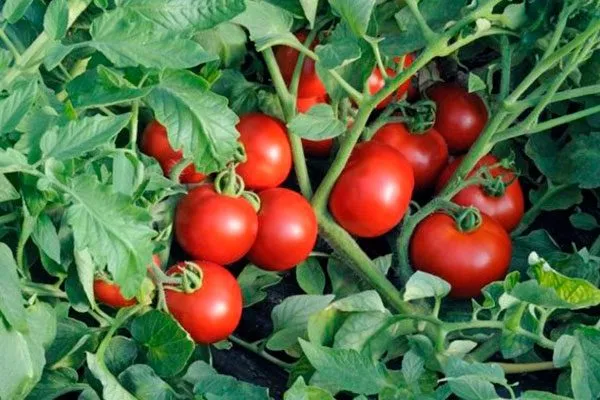
This variety was developed by Russian breeders and is suitable for cultivation throughout the country. The region's climate dictates its cultivation approach, but it is most often grown in protected areas—hothouses, greenhouses, under plastic sheeting, or other insulated structures.
Description of the plant and fruits
It's an indeterminate variety. The bushes reach a height of 1.5 m. They require staking, pinching, and shaping.
Distinguishing characteristics:
- The leaves are medium length, colored dark green.
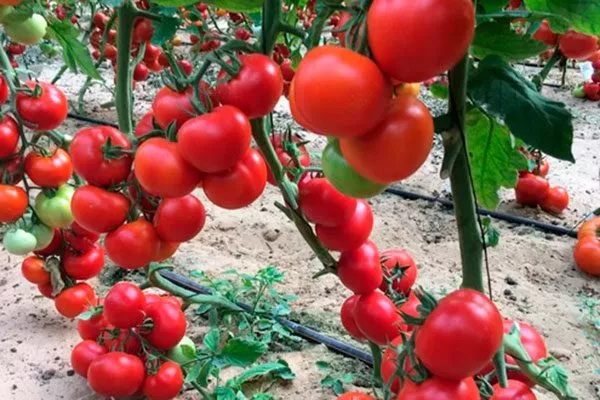
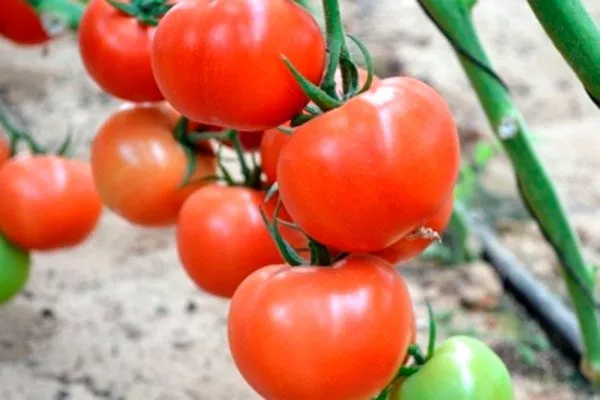
- Each brush produces 18 to 20 fruits.
- The tomatoes are small, round, and red when fully ripe. The skin is smooth and the flesh is firm. They weigh between 90 and 110 grams.
The taste is sweet and sour. These vegetables are suitable for fresh consumption, winter preservation, and the preparation of juices, pastes, and salads.
Characteristics
The Kistevaya variety's growing season lasts 95-105 days. This hybrid is an early-ripening variety: fruiting begins in the second half of July or early August, depending on the region's climate.
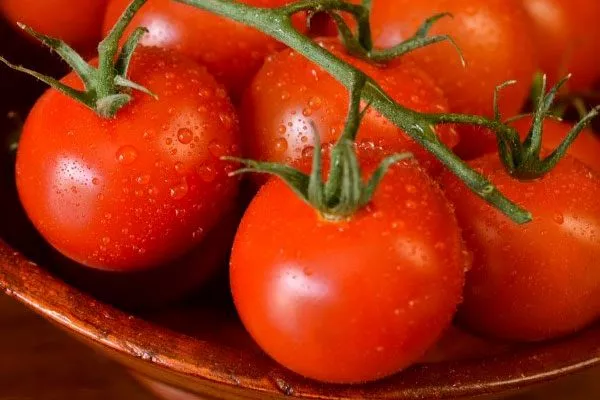
This variety is distinguished by its high yield. A single bush can yield up to 7 kg of tomatoes, with productivity reaching 90%. Gardeners can harvest 27-36 kg of fruit per square meter of planting. The tomatoes keep well after harvesting and retain their marketable appearance during transportation.
Features of planting seedlings and transplanting into the ground
Grow the crop from seedlings, which shortens the growing season and speeds up harvesting. Greenhouse seedlings are planted in April, so sow the seeds in February. For open ground, sow in March.
- ✓ Optimum soil temperature for planting seedlings: not lower than +15°C.
- ✓ Recommended air humidity in the greenhouse: 60-70%.
Recommendations for growing seedlings:
- Before sowing, sort the seeds and disinfect them by soaking them in a pink solution of potassium permanganate for 20 minutes. Then, germinate them in a damp cloth for 1-2 days, or dry them.
- Use 500 ml pots or cups. Fill them with a general-purpose substrate for vegetable seedlings. Plant the seeds no more than 1.5 cm deep. After sowing, moisten the pots, sprinkle a thin layer of substrate or peat moss over them, cover with plastic wrap or glass, and place in a warm place.
- When seedlings emerge, move the containers to the brightest spot. During short spring days, to prevent plants from stretching, use fluorescent lighting, providing 10-12 hours of light per day.
- To prevent root rot, water moderately. Feed the seedlings every two weeks with a complete fertilizer according to the instructions.
Before transplanting, harden off the seedlings. Begin this process a week before transplanting, gradually acclimating the plants to the environmental conditions.
Next, proceed to planting the seedlings:
- Choose a sunny location with well-drained, fertile soil.
- Dig over the area, adding humus or compost. To neutralize soil acidity, add ash or lime.
- A few days before planting, treat the soil with a solution of potassium permanganate or copper sulfate for disinfection.
- Water the plants 1-2 days before repotting to make them easier to remove from their pots. Strong seedlings should be 20-25 cm tall and have 5-7 true leaves. If the roots are heavily intertwined in the pot, gently straighten them out before planting.
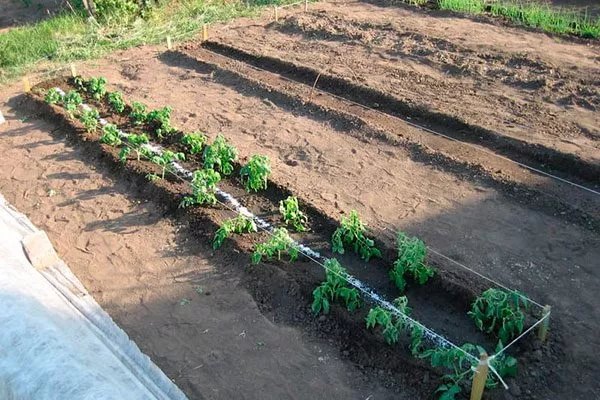
- Dig holes 15-20 cm deep at a distance of 40-50 cm from each other, keeping the interval between rows at 50-60 cm.
- Add a small amount of humus or a complete fertilizer, thoroughly mixed into the soil, to the bottom of each hole. Place the seedlings at an angle to encourage additional root development if they become too leggy. Fill in the hole with soil, compacting it lightly around the stems.
Provide supports (trellises, pegs) already at the planting stage. - Water each plant with warm water (around 22°C), using 1-2 liters per bush. Mulch the soil with peat, compost, or straw to retain moisture.
If there's a risk of frost, cover the plants with plastic film, agrofibre, or plastic bottles. Remove the covering during the day to prevent overheating.
Further cultivation and care
Water tomatoes regularly but moderately, using warm water. Avoid dripping onto leaves and stems to prevent fungal diseases. The best method is to water at the roots or in furrows. Before flowering, water once every 5-7 days; during fruiting, water once every 3-5 days.
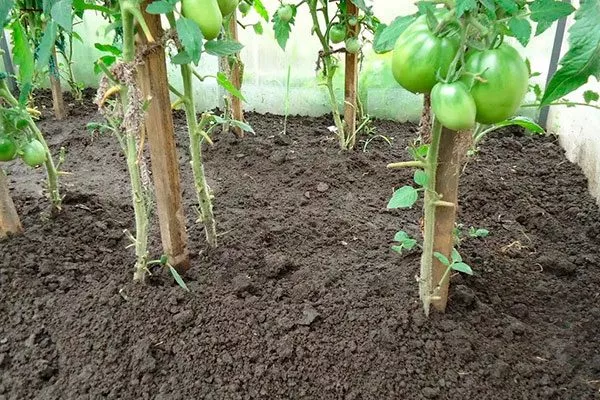
Perform other care activities:
- 10-14 days after planting, fertilize the bushes with organic fertilizers (mullein infusion, chicken manure) or complex minerals. During flowering, apply phosphorus-potassium fertilizers to stimulate fruit set. Potassium sulfate and wood ash solutions are effective for fruit formation.
- Remove side shoots every 7-10 days to prevent crowding. Train the bush to 1-2 stems, depending on the variety. Trim the lower leaves back to the first flower cluster to improve ventilation.
- Loosen the soil after each watering to prevent crusting. Mulch the soil with straw, peat, or compost to retain moisture and suppress weed growth.
Treatment and prevention of diseases and pests
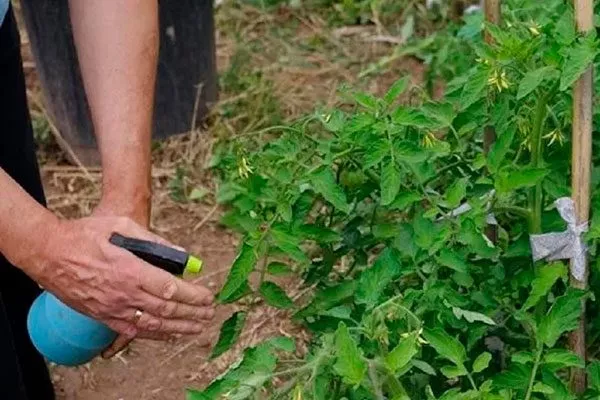
The Kistevaya tomato is resistant to many common diseases, but under unfavorable conditions it can be susceptible to infections and pests. Begin treatment promptly:
| Disease/Pest | Signs | Prevention | Treatment |
| Late blight | Brown spots on all parts of the bushes, white coating on the underside of the leaves. | Ensure proper ventilation of greenhouses. Water only at the roots. Treat with fungicides (Fitosporin, Ridomil Gold, Hom). | Remove affected parts. Spray with a 1% solution of Bordeaux mixture or copper-based products. |
| Gray mold | Gray fluffy coating. | Maintain moderate humidity. Remove lower leaves and weeds. | Treatment of damaged areas with Fundazol solution. |
| Powdery mildew | White powdery coating on leaves and stems. | Ventilate greenhouses. Spray with a solution of soda and soap (1 tablespoon of soda per 1 liter of water). | Use of Topaz or Skor preparations. |
| Blossom end rot | Black or brown spots on the top of the fruit. | Regular watering. Fertilize with calcium nitrate (10 g per 10 liters of water). | Use of a solution of calcium preparations. |
| Whitefly | Sticky coating and yellowing of leaves, accumulation of small white insects on the underside. | Installing sticky traps. Ventilating greenhouses. | Spraying with insecticides (Aktara, Fufanon). |
| Spider mite | Fine webbing on the leaves, marbled pattern on their surface. | Humidification of air in the greenhouse. | Acaricides (Fitoverm, Actofit) are effective. |
| Aphid | Curling of leaves, sticky coating, colonies of small green insects. | Planting repellent plants (dill, mint) next to tomatoes. | Spraying with garlic infusion or soap solution. Using preparations (Inta-Vir, Iskra). |
Similar varieties
| Name | Growth type | Disease resistance | Ripening period |
|---|---|---|---|
| True friends | Indeterminate | High | Early ripening |
| Intuition | Indeterminate | Average | Mid-early |
| Red Star | Determinant | High | Early ripening |
Besides the Kistevaya hybrid, there are other varieties with similar characteristics: early or mid-season, indeterminate, with cluster-shaped fruits of uniform size and weight. These varieties include:
- True friends;
- Intuition;
- Red star.
The shelf life of harvested clusters is 3-4 weeks, which is excellent for early-ripening tomatoes. This list includes only a few of the cluster-type tomato hybrids that can be grown in your garden.
Pros and cons
Before cultivating seedlings, it's important to carefully study the crop's characteristics to avoid potential difficulties in the future. The Kistevaya variety has the following advantages:
No significant disadvantages have been identified for this crop, but some gardeners consider the tallness of the bushes, which require mandatory tying, to be a disadvantage.
Reviews
The Kistevaya tomato is a popular hybrid that combines high productivity, excellent flavor, and resistance to environmental factors. It boasts numerous advantages, making it highly valued by gardeners across the country. To ensure bountiful harvests, the bushes require thorough care.