
The "Katya F1" tomato is an ultra-early hybrid with excellent varietal and commercial characteristics. This variety quickly gained popularity among gardeners, captivating them with its easy cultivation techniques and delicious fruit. Let's find out what else makes "Katya" special, and how to plant and grow it.

A pack of tomato seeds "Katya"
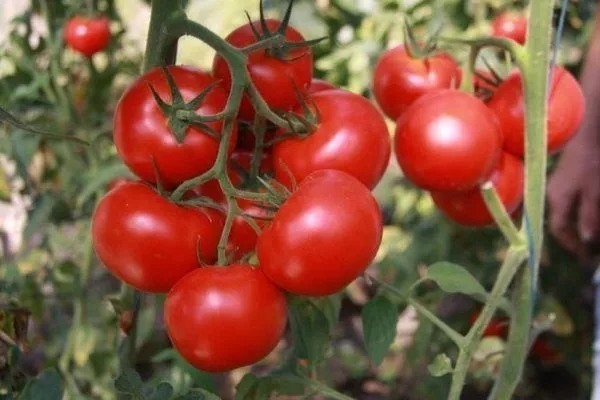
Tomato "Katya" on a branch
Variety selection
The creators of the "Katya F1" hybrid are Russian breeders. The new tomato was developed about 10 years ago. The originator is Semko-Junior. Katya tomatoes are first-generation hybrids, as indicated by the F1 designation.
The hybrid was officially included in the State Register in 2007 and is recommended for cultivation in all regions of the Russian Federation. Since then, "Katya" has gained considerable popularity among Russian gardeners.
Description and characteristics of "Katya"
"Katya F1" is a versatile tomato. This hybrid boasts excellent varietal characteristics and is easily grown under plastic, in polycarbonate greenhouses, and even in the open ground.
Region and growing conditions
The recommended growing region is the North Caucasus. In fact, gardeners from across Russia grow the "Katya" tomato, as it thrives both in open ground and greenhouse conditions.
Read on to learn how to grow tomatoes outdoors. Here.
Description of the variety
Brief botanical description:
- Bush. Height: 60 cm. Determinate – limited growth. Foliage is sparse, requiring little thinning.
- Flowers and fruits. The inflorescences are simple, with 7 to 15 ovaries per cluster. The first inflorescence forms above the fifth leaf. Fruit weight is 80-120 g. The tomatoes are uniform in size, flattened, round, not ribbed, and slightly flattened. There are few seeds inside the fruit—one seed pod contains only three seeds. The color when ripe is uniform, initially light green, gradually turning bright red. There are no spots or blotches.
The fruits of "Katya" contain 4.6% dry matter and 2.9% sugar.
Varietal characteristics
"Katya" is an early-ripening, ultra-early hybrid. To get fresh tomatoes earlier, even in southern regions, they use seedlings.
Varietal characteristics of the hybrid "Katya":
- The fruits ripen evenly. From germination to the appearance of the first ripe tomatoes, it takes 75-80 days.
- Resistance to high humidity and drought.
- Resistance to diseases – blossom-end rot, tobacco mosaic virus, late blight, alternaria.
- 85-95% of fruits have excellent commercial appearance.
- They are easy to transport.
- The taste is pleasant, with slightly sweet notes. It's slightly sour, and the flesh is sugary.
Katya tomatoes are hybrids, so seeds taken from grown tomatoes don't replicate their parent's characteristics. Seeds must be purchased annually.
Purpose of fruits
"Katya" is prized for its versatility. The hybrid's superb flavor is combined with its suitability for a variety of preserves. These tomatoes are delicious fresh, eaten whole, in salads, dried, juiced, and used in pastes and sauces. They are also suitable for whole-fruit canning.
Watch a video review of the hybrid tomato "Katya":
Productivity
Tomato yield "Katya F1":
- in open ground – 8-10 kg per 1 sq. m;
- in a greenhouse – 12-15 kg per 1 sq. m.
This yield is considered quite high for an early variety. The harvest is uniform, which is convenient when growing commercial crops. For comparison, Table 1 shows the yields of other popular tomato varieties. The values shown are for open-field cultivation.
Table 1
| Variety | Yield, kg per 1 sq. m |
| King of the Market | 10-12 |
| President | 7-9 |
| Lazybones | 13-15 |
| Summer resident | 4-5 |
| Doll | 8-9 |
| Lady Shedy | 7-8 |
| Fat Jack | 5-6 |
| Gulliver | 6-8 |
Transportability
"Katya" fruits are dense and transport well, without leaking or bruising. They do not crack or lose their marketable appearance during shipping.
If tomatoes are being picked for sale and are to be transported, it's best to buy them at the blanched stage of ripeness. After a few days in transit, they will reach their marketable condition.
Advantages and disadvantages of the variety
The secret to "Katya"'s popularity lies in the combination of two varietal characteristics that are crucial for gardeners and summer residents. These tomatoes are tasty, productive, and easy to care for. But these are far from the hybrid's only advantages.
Pros:
- high early maturity;
- friendly ripening of fruits;
- undemanding to soil composition;
- high taste and commercial qualities of fruits;
- high yields;
- resistance to diseases typical for nightshades;
- resistance to temperature changes and drought – they can withstand several days without watering without damaging the crop;
- simple agricultural technology – does not require tying or pinching;
- good keeping quality – fruits picked brown ripen well without losing their taste;
- versatility of fruit use.
Many of the advantages of the "Katya" variety are easily explained by its botanical characteristics. For example, its high yield and excellent fruit characteristics are due to the bush's low foliage—it devotes most of its energy to ripening the tomatoes.
Cons:
- due to the weight of the fruit, branches may break;
- in rainy weather, plants can be affected by phomosis and mosaic;
- demanding feeding - lack of nutrition causes a drop in yield.
Varieties of the variety
The "Katya" hybrid has a variety that differs only in one quality: color. It's easy to guess that "Pink Katya" produces pink, not red, fruits.
All other characteristics of the hybrids are identical—bush height, early maturity, transportability, etc. However, the pink variety even surpasses the red Katya in yield, reaching up to 18 kg per square meter in greenhouses.
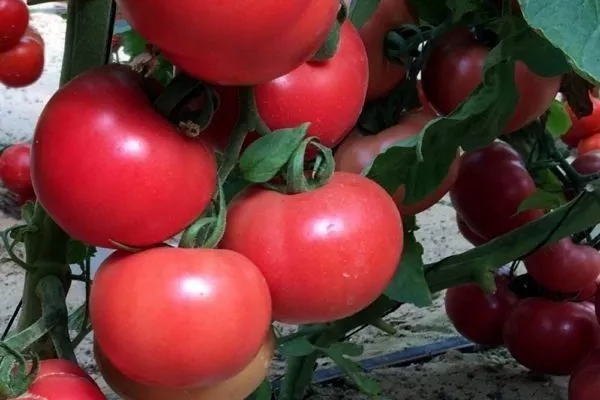
Pink Katya
Differences from other varieties
Comparing 'Katya' and its pink variety with early tomato varieties, it is easy to notice:
- Their sugar content is lower than that of "Bull's Heart".
- It ripens earlier than many early varieties. For example, it beats 'Liana' by two weeks.
- The Mongolian Dwarf wins in terms of taste.
- They are twice as productive as ‘Yablonka Rossii’ and ‘Sibirskiy skorospel’.
- Significantly superior to ‘Classic White’ in disease resistance.
- Transports better than Betta and many other varieties.
Features of growing seedlings of the "Katya" variety
The "Katya" tomato can be sown from seeds, but growing from seedlings is considered more effective. Without seedlings, the hybrid's early maturity will not yield much benefit. The hybrid's defining characteristic is its early harvest, and only seedlings allow one to fully take advantage of this advantage.
Soil requirements
Optimal soils are sandy loam and loamy clay. Good air permeability is preferred. Seeds for seedlings are sown in soil covered with plastic wrap or in containers filled with potting mix. The latter can be purchased at agricultural stores – there are mixes specifically for tomato seedlings.
- ✓ The optimal soil pH for tomato seedlings should be in the range of 6.0-6.5.
- ✓ The soil should contain at least 30% organic matter to ensure good aeration and moisture retention.
If you're sowing seeds in the ground, it's important to prepare it properly. To determine your soil type, simply wet and knead a handful of soil in your hand. If the soil cracks when rolled between your palms, it's loamy; if it doesn't crack, it's clayey.
Any type of soil needs to be fertilized – this is the only way to ensure high yields and good-tasting tomatoes.
Fertilization of open ground depends on the soil type:
- Sour. Once every 3-4 years, add dolomite flour or lime – 300-600 g per 1 sq. m.
- Heavy clay. Add two buckets of rotted manure per square meter. Compost can also be used instead of manure. A bucket of sand, pre-soaked in a urea solution (150 g per bucket of water), is also helpful.
Timing of planting seeds
When sowing seeds, keep in mind that the seedlings will be ready in approximately two months. By this time, if planting outdoors, the weather should be warm. Each region has its own planting time. For example, in the North Caucasus region, seedling sowing begins in winter—in February—and the seedlings are ready for planting before May Day.
In the temperate zone, planting outdoors before early summer is risky, so seedlings for open ground are sown in late March. Planting will take place in early June, and by early July, the first tomatoes will be ready to harvest.
It takes approximately 100 days from germination to harvest. This figure is used to calculate the time for sowing, planting, and harvesting.
Seed preparation
Hybrid seeds are prepared for sowing in a standard manner – they undergo all stages of preparation aimed at increasing germination, their:
- They calibrate – select suitable specimens.
- Disinfect in a solution of potassium permanganate.
- Wash after disinfection and soak.
- Before sowing, harden the seeds at a temperature of 0-3 degrees for 16 hours. To do this, place the seeds on the top shelf of the refrigerator.
When sprouting, it's important not to over-germinate the seeds—the sprouts shouldn't turn into long, thin threads. Read more about sprouting tomato seeds. here.
Sowing tomatoes for seedlings
Any containers, boxes, or crates can be used for seedlings. However, special seedling containers are best. They have holes in the bottom to allow excess moisture to drain. Without these holes, the seedlings will become infected with blackleg. Instead of store-bought substrate, you can use a peat-sand mixture—use equal parts of each.
Sowing order:
- The substrate or soil mixture is watered generously.
- Before sowing, seeds are warmed up for 2 days at +30 °C, then for 3 days at +50 °C.
- Plant the seeds 1-2 cm deep, leaving 2-3 cm between adjacent seeds. Avoid sowing tomatoes too densely, as the seedlings will grow weak, thin, and unviable.
- The crops are covered with film or glass.
How to care for seedlings?
Features of seedling care:
- From the moment of sowing until germination, the temperature is maintained at +22-25 °C.
- As soon as the sprouts appear, the film is removed to prevent the seedlings from suffocating in the fumes.
- The temperature is lowered to 18 °C, then raised again to 20-24 °C.
- The seedlings are provided with sufficient light and are usually placed on a windowsill.
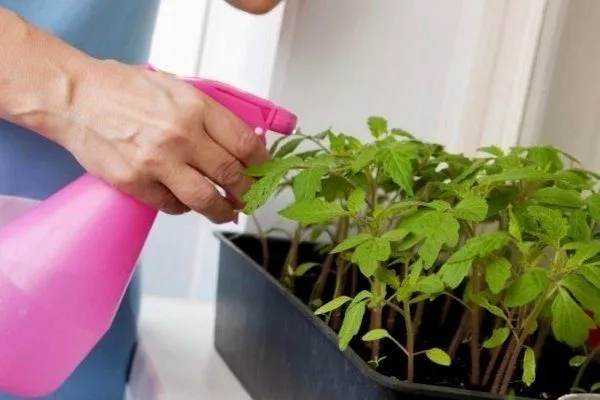
- Water the seedlings as needed using a spray bottle. Avoid overwatering.
Picking seedlings
After 10-12 days, when the seedlings have 2-3 true leaves, transplant them into individual containers. Otherwise, the seedlings will become excessively elongated.
- 10 days after emergence, apply a complex mineral fertilizer with a high nitrogen content to stimulate growth.
- Two weeks before planting in open ground, feed the seedlings with potassium-phosphorus fertilizer to strengthen the root system.
Features of picking:
- The transplanted plants are deepened into the soil to the level of the cotyledon leaves.
- Seedlings are watered infrequently and moderately. Use only warm water.
- 1-2 times feed with mineral complex fertilizers or a solution of wood ash.
- If the seedlings begin to stretch, additional lighting is turned on.
- A week before planting the seedlings in the ground, hardening begins - periodically taking them outside for short periods of time.
With proper cultivation, "Katya" seedlings grow strong and stocky. They never become too tall. The typical height of seedlings ready for planting is 15-20 cm.
Find more information about transplanting tomato seedlings. Here.
Planting seedlings in open ground
The easiest and least expensive way to grow tomatoes is by planting seedlings outdoors. There's no need for plastic or a greenhouse—the seedlings are planted outdoors.
Timing for planting seedlings of the "Katya" variety in open ground
Planting seedlings in open ground is only possible if recurring frosts are completely avoided. Otherwise, temporary plastic cover is provided. Planting times vary by region, and adjustments are made for the current weather.
Typically, seedlings are planted in open ground no earlier than the second half of May, or even better, in the first half of June.
Process technology
Tomato beds are placed in sunny areas. The soil is fertilized beforehand, preferably in the fall. A few days before planting, the soil is dug, watered, and fertilizer is added if necessary.
Features of planting tomato seedlings in open ground:
- The optimal planting pattern is 70 x 30 cm or 50 x 50 cm. The planting rate is 4 bushes per 1 square meter. Planting more densely is not advisable.
- The holes are prepared according to the size of the seedlings. Stake stakes up to 50 cm high are driven into each hole. Plastic mesh or fencing will also work for "Katya."
- Empty holes are watered - 1 liter in each hole.
- Additional fertilizer is added to the prepared holes: half a glass of ash and 1 teaspoon of nitrophoska.
- Seedlings are planted in holes slightly deeper than they were in containers. A depth of 50% is acceptable. A northwest-facing slope is recommended. Gardeners also recommend plucking a few leaves from the bottom of the seedlings.
- The planted seedlings are watered generously at the roots, the soil is sprinkled with mulch, and if the weather is not cloudy, it is advisable to shade the plantings.
Only fresh and healthy seedlings should be planted; if they wither, they will not root well, become sick, and will lag in growth.
How to care for the Katya tomato variety?
The "Katya" hybrid doesn't require much maintenance. Care is limited to standard farming practices—watering, loosening the soil, weeding, and fertilizing.
Watering and fertilizing
Tomatoes are watered in the evenings. The recommended watering rate is 0.9-1 liter. Watering frequency is every two days. Additional watering is given during fruit formation and when fertilizing is applied. Increase watering frequency during hot weather, and reduce it during high humidity.
Excess moisture is the most common cause of root rot and late blight.
The yield of "Katya" depends on the timing and composition of fertilizers. When and what to feed tomato plants is described in Table 2.
Table 2
| Feeding period | What to feed? |
| 2 weeks after planting | Apply a complex fertilizer. Experienced gardeners prefer to water tomatoes with cow manure at the roots—dissolve 500 g of manure in 10 liters of water. This amount is enough for 10 plants. |
| During flowering | Use mullein at twice the concentration. At the same time, it's advisable to add superphosphate (20 g) directly to the mullein. |
| A couple of weeks later | Nitrogen-free fertilizing. Apply ash infusion or phosphorus-potassium fertilizers under the roots. |
Pinching out side shoots and tying up the plant
This hybrid can survive without side shoots, as it has little foliage. However, if you have the time and inclination, it's a good idea to remove the lower side shoots by carefully cutting them off or breaking them off. This should be done in the morning, as the sun will help the wounds heal better. If you remove the side shoots in the evening, the wound surface risks rotting.
The bushes are trained to have two stems. The second stem is usually a side shoot that grows earlier than the others. If three stems are left, the plant won't be able to provide all the necessary nutrients for the fruit. Instead of normal fruit, the resulting tomatoes will be the size of walnuts.
Due to the fragility of the stems, staking is essential. Plants are tied to supports or trellises made from thick twine stretched between the stakes.
Soil care
Tomato plantings are periodically loosened, weeds are removed and mulchAll these measures have a beneficial effect on root growth, stimulating and strengthening plant growth, and increasing yields. Mulch also inhibits weed growth.
Mulching uses natural components that retain moisture well and supply plants with nutrients - straw, humus, and rotted straw-manure mixture.
Diseases and pests
'Katya F1' is resistant to the most dangerous tomato diseases. However, it requires fungicide treatment for prevention. The bushes are sprayed with Bordeaux mixture and garlic infusion.
Diseases usually appear due to violation of agricultural practices:
- the plant is low-growing, so many gardeners neglect garters;
- It is a mistake to water tomatoes with cold water;
- In greenhouses, problems can arise due to poor ventilation.
Pests are the biggest problem for Katya. Katya's biggest enemies are listed in Table 3.
Table 3
| Pest | What harm? | How to fight? |
| Mole cricket | It gnaws at the roots and the plants die. | When planting tomatoes, sprinkle granulated poison into each hole—there are special preparations for mole crickets. Don't scatter the poison on the surface, as it could poison pets. |
| owl | The larvae feed on the green parts of the plant. They then burrow into the fruit and consume the pulp. They also trigger outbreaks of fungal diseases. | Spray with insecticides in dry weather at temperatures above +20 °C.
Suitable products include Decis Profi, Confidor, Fufanon and others. |
| May beetle larvae | They can destroy young plants in a matter of hours. They attack the plant's root system. | Before planting, seedlings are treated with an "Anti-beetle" solution. |
| Aphid | They attack the above-ground parts of the plant. By sucking out the sap, they inhibit the plant's development, which can ultimately lead to its death. | Spray with insecticides, for example, "Ratibor". |
Harvesting the tomato variety "Katya"
The stage of ripeness at which tomatoes should be picked depends on the purpose for which they are being harvested:
- Ripe fruits with bright red skin are picked for salads and cooking.
- Slightly pink and yellowish fruits are used for canning.
- Tomatoes at the milky stage of ripeness are suitable for long-term storage; this is achieved when the bright green color changes to a pale green, almost white color.
It's important to harvest tomatoes before frost sets in, before the temperature drops below 13°C. Otherwise, the tomatoes will darken and become unfit for consumption.
Features of growing tomatoes in a greenhouse
In areas with harsh climates where tomatoes are at high risk of freezing, greenhouse cultivation is used. In greenhouse conditions, "Katya" grows up to 1 meter in height. Therefore, instead of two stems as in open ground, a single stem is left.
The greenhouse is constantly maintained at normal humidity and a temperature no higher than 30°C. In hot conditions, pollen is unsuitable for fertilization, and fruit does not set. To achieve a high yield, the tomato plants must be shaken.
Reviews
I spend a lot of time growing good seedlings—I buy special potting mixes for them. I don't neglect hardening them off.
"Katya F1" has become truly popular. This productive hybrid is easy to grow, requires little care, is virtually disease-free, and produces a very high yield. The fruits of this hybrid are not only delicious but also marketable—they keep well and transport well.