
The Cascade tomato is a relatively new Russian-bred variety that produces high yields. It can be grown in the ground or under plastic, and its fruits are suitable for all occasions—for fresh eating, canning, preparing a wide variety of dishes, and winter preserves.
Who bred the Cascade tomato?
The Cascade tomato variety was developed by Russian breeders. The originator of the Cascade tomato is the agricultural technology company Agros. Authors: V. G. Kachainik, A. A. Kamanin, M. N. Gulkin, O. A. Karmanova, and S. V. Matyunina. The variety was registered in the State Register in 2010. It is suitable for cultivation in all regions of the country.
Description of the bush
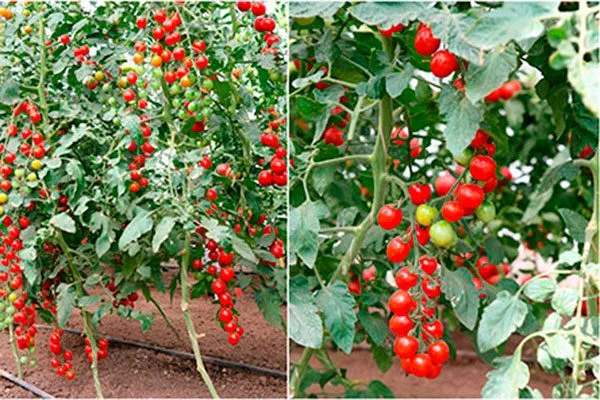
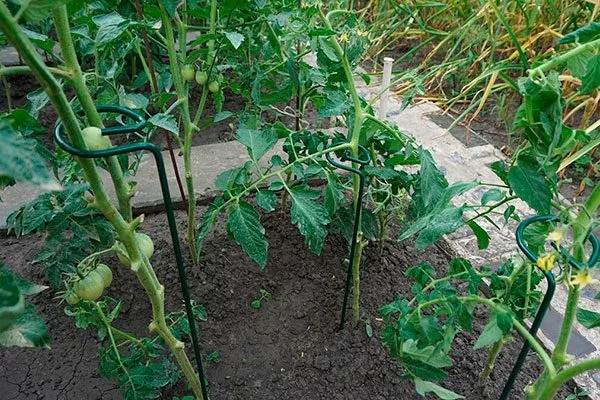
The Cascade variety grows tall, indeterminate bushes. They are strong, compact, and have a robust root system. They reach a height of 150-170 cm. The leaves are light green and medium-sized. The flowers are small and yellow.
Description of fruits
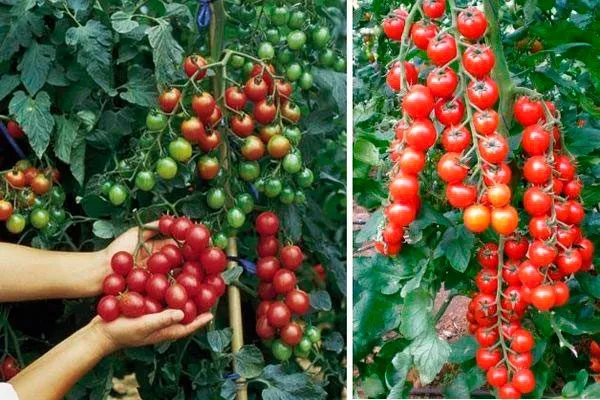
The Cascade tomato produces small fruits on complex clusters. Each cluster can contain over two dozen tomatoes. The number of clusters per stem is 5 when grown in greenhouses, and 3-4 in open ground.
Brief description:
- Color of unripe fruits: light green.
- Color of ripe fruits: red.
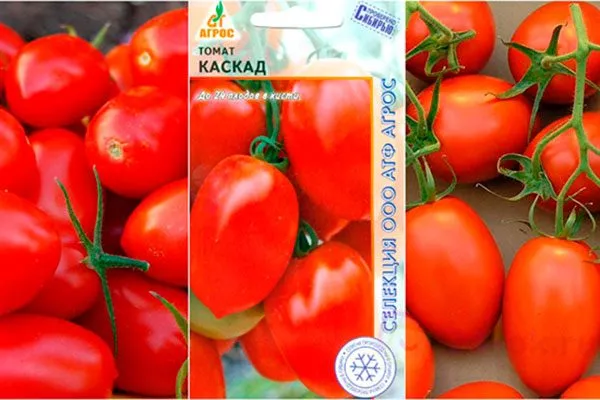
- Form: cylindrical, slightly ribbed.
- Skin: elastic, thin, smooth, glossy.
- Pulp: juicy, with a dense consistency, with four seed chambers, no voids.
- Weight: 90-100 g
The taste of fruits and their purpose
Cascade tomatoes have a sweet and sour taste, with a balanced acidity and sweetness. The flesh exudes a distinct tomato aroma.
The fruits are versatile—they're eaten fresh, used to make juices and ketchups, added to vegetable salads, and preserved. On a five-point tasting scale, the Cascade tomato received a 4.8.
Characteristics of the Cascade tomato
The Cascade tomato has excellent agronomic characteristics, allowing it to be grown in a variety of soil types. It adapts well to a wide range of climates and is suitable for both experienced and novice gardeners.
Ripening time
The Cascade variety is self-pollinating. It has a medium ripening period, so the time between germination and fruit ripening is approximately 70-90 days.
Productivity
The Cascade variety is a high-yielding variety, yielding 7.4 kg per square meter. With proper care, a single bush can yield up to 3.5 kg of tomatoes.
Immunity to diseases
The variety can easily withstand extreme weather conditions and is also resistant to fungal and bacterial diseases.
Pros and cons
The Cascade variety has many positive qualities that appeal to vegetable lovers. Before planting it in your garden, it's a good idea to familiarize yourself with all its advantages and disadvantages.
Landing
Before planting tomatoes in the ground or in a greenhouse, you need to grow seedlings. You also need to prepare the plot, beds, and seedlings for planting.
Planting container
The planting container is selected based on your capabilities and personal preferences. Tomato seedlings can be grown in cassettes, cups, peat pots, or containers. The containers are filled with store-bought soil or a homemade potting mix.
For tomatoes, you can prepare a soil mixture, for example, of equal parts humus, peat, soil, and sand. You can also add 20 g of superphosphate, 5 g of ammonium nitrate, and 15 g of potassium sulfate to the soil mixture. The soil should be neutral; the optimal pH is 6.0–7.0.
How to prepare seeds for sowing?
Before planting, it's recommended to test the seeds for viability to ensure maximum germination. To test, use a salt solution (1 teaspoon per 0.5 liters of water). Good seeds will settle to the bottom, while unviable ones will float to the surface. After soaking in the salt solution, rinse the seeds thoroughly under running water.
It's advisable to disinfect the seeds in a solution of potassium permanganate or hydrogen peroxide. Then rinse them again. To speed up germination, it's also recommended to treat the seeds with Epin or another growth stimulant.
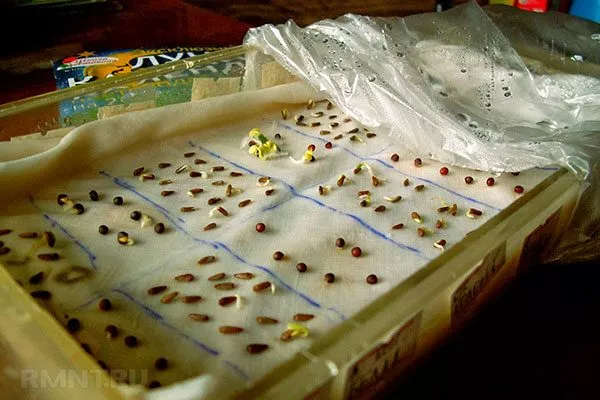
Before planting, the seeds are germinated by placing them in a damp cloth. Once the seeds sprout, they are planted in prepared seedling containers. Experienced gardeners also subject the seeds to oxygen enrichment and refrigeration.
Growing seedlings
This variety is mid-season, so seedlings are sown between March 1 and 15. In the south, tomatoes are sown earlier, as early as February, and in the northern regions, as late as April.
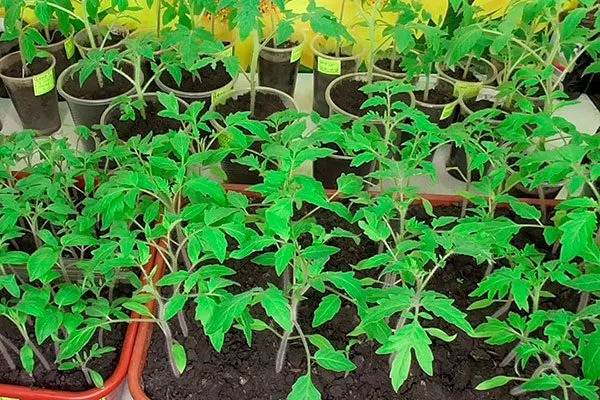
Features of growing seedlings:
- Water the soil with warm water and make furrows in it at intervals of 3-4 cm. Place the seeds in these furrows at intervals of 2 cm, deepening them to a depth of 1 cm. Sprinkle the top with soil. If sowing in cups, plant three seeds in each, spaced 3 cm apart. Cover the seeds with a transparent covering material and place them in a warm, bright place. The optimal temperature is +25…+27 °C. Seedlings should appear in 3-4 days.
- Once the seedlings emerge, the plastic wrap is immediately removed and the seedlings are moved closer to light. To prevent them from becoming too tall, the daytime temperature is immediately lowered to 12–15°C and the nighttime temperature to 9–12°C. After 5–6 days, the temperature is raised again to 23–25°C, and maintained at 12–14°C at night. This temperature regimen helps produce strong seedlings with well-developed roots.
- As soon as the seedlings have two true leaves, they are pricked out and planted in separate cups, after pinching the roots.
- Watering depends on the age of the seedlings. Before transplanting, water them only once a week, and then 2-3 times more often. A week before transplanting, water the seedlings daily. It's important to maintain a balance—the soil shouldn't dry out, but it shouldn't be overwatered either.
- Before transplanting into the ground, seedlings are fertilized twice: two weeks after picking, and again two weeks later. Special complex seedling fertilizers are used.
- One to two weeks before planting outdoors, begin bringing the seedlings outside to gradually acclimate them to the new conditions. This will help them quickly establish themselves and adapt to their new location. If nighttime temperatures don't drop below 10°C, the seedlings can be left outside overnight before planting.
How to choose a site?
Tomatoes will grow well in warm, sunny locations, away from shade and drafts. Level or slightly elevated areas are ideal; avoid planting tomatoes in low-lying areas, as rainwater will collect there and the dampness will cause the plants to rot.
The site is selected taking into account crop rotation, which stipulates that tomatoes should not be planted in the same spot without a 3-4 year interval. Tomatoes should also not be planted after nightshade crops such as potatoes, peppers, and eggplants. Legumes, greens, cabbage, cucumbers, beets, and carrots are considered the best predecessors for tomatoes.
Soil preparation
The Cascade tomato grows best in light, loose, sandy loam soils with a pH of up to 6.5. Prepare the soil in the fall by digging it down to the depth of a spade, incorporating organic fertilizers such as compost, humus, and well-rotted manure. Superphosphate and potassium salt can also be added to the soil.
Transplanting
Seedlings are planted after the threat of frost has passed. It's also important to consider the depth of soil warming: the temperature at the 20-cm depth should be 14–15°C, and the air temperature should reach 18–20°C. In central regions, seedlings are planted in the ground in the second half of May, and in greenhouses in early May.
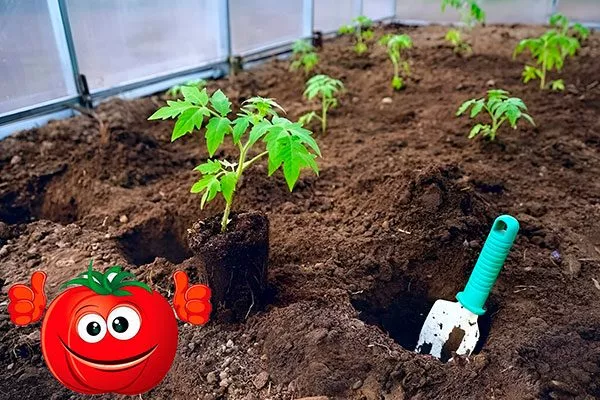
Features of planting tomato seedlings Cascade:
- The holes are dug large enough to comfortably accommodate the seedlings' root systems. It's also important that the plants, planted at a slight angle, be planted down to the bottom leaves. The approximate depth of the holes is 15 cm, and the width is 20 cm.
- The optimal planting pattern is 30-40 cm between plants and 50 cm between rows.
- The seedlings are watered generously the day before planting so that they can be easily removed from the planting container.
- The holes are watered generously with warm water in advance, approximately 0.5-1 hour before planting, to allow the soil to settle and warm up.
- Planting should be done in the morning or evening to avoid exposure to direct sunlight. Cloudy weather is also suitable for planting.
- The plants are positioned in the hole so that the roots are not bent. The roots are carefully covered with soil, compacted, and then watered again. The next watering is done approximately a week later, allowing the seedlings to root more quickly.
Care Features
The Cascade tomato cannot be called overly capricious; this variety requires standard care, including watering, fertilizing, loosening, and other measures required by the crop's agricultural technology.
Watering and loosening
Water the bushes at the roots. Avoid allowing water to come into contact with the leaves and stems, as this can cause burns and fungal infections. In greenhouses, water tomatoes almost every other day, while in the open field, the frequency is determined by the weather and soil conditions.
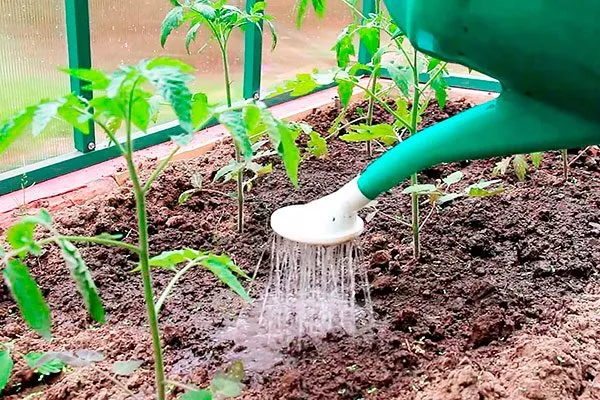
The soil should be slightly moist, but not waterlogged. On average, tomatoes are watered 2-3 times a week. The watering amount varies depending on the age of the plants and weather conditions and ranges from 1 liter to 5 liters.
To improve soil aeration, loosen the soil regularly (after watering and heavy rains). Weeds are removed at the same time, and it is also recommended to hill the plants when they reach a height of 20 cm. Sprinkling the soil with mulch (peat, humus, straw, etc.) will reduce the need for watering, loosening, and weeding.
Top dressing
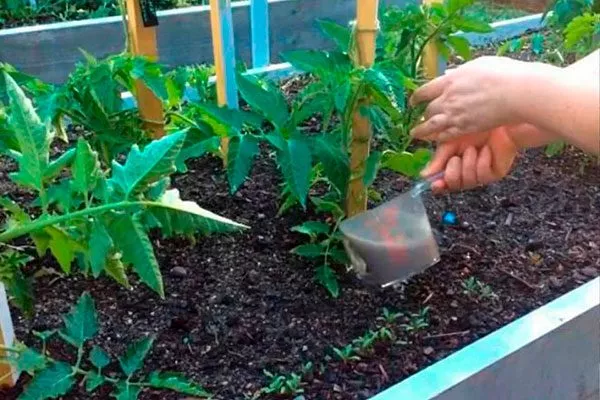
The Cascade tomato is fertilized every 2-3 weeks, alternating organic and mineral fertilizers. Fertilizers include diluted manure or chicken manure, wood ash, superphosphate, and phosphorus-potassium compounds.
Shaping and garter
The Cascade variety requires staking. The bushes also need to be trained into a single stem and pinched out to ensure adequate nutrition for the developing fruit and increase yield. When the plants reach 150–180 cm, their tops are pinched.
Diseases and pests of tomato Cascade
The Cascade variety has excellent immunity, but under unfavorable conditions, it is susceptible to late blight, tobacco mosaic, and blackleg. To prevent this, treat the plants with copper sulfate at the fruit-set stage, then repeat the treatment after three weeks.
The pests that cause the most damage to the Cascade tomato are aphids and spider mites. Insecticides, such as Aktara, are used against aphid colonies, while Actellic is effective against spider mites. It's also important to remove anthills from the area.
Harvesting
Harvesting of the Cascade tomato begins in July or August, depending on the regional climate. In greenhouses, harvesting occurs as it ripens. In open fields, the temperature also determines when the fruit reaches 10°C. Even unripe ones are harvested when the temperature reaches 10°C.
Reviews
The Cascade tomato earned its name for a reason: its bushes are simply covered with fruit during the ripening period. This variety is ideal for gardeners and winter preservers, and it can also be successfully grown commercially.