
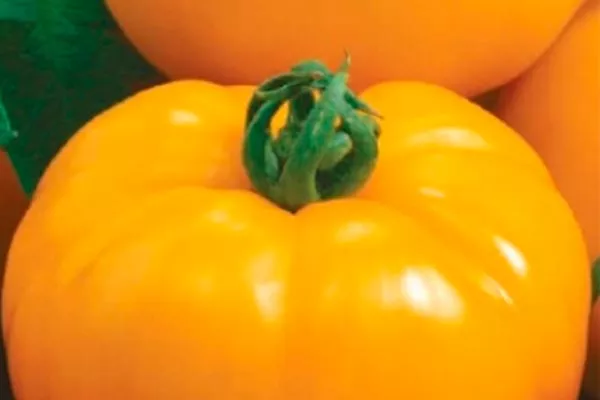
Persimmon is an unusual variety of tomato, appealing to domestic gardeners for its resemblance to the exotic fruit of the same name. It is loved not only for its interesting appearance, but also for its large size, fleshiness, and dessert-like flavor. It delights gardeners with a long harvest period. It is suitable for both open-air and greenhouse cultivation.
Origin
A variety of orange tomatoes, visually reminiscent of persimmon, was developed by researchers at the Gisok breeding and seed company:
- E. N. Andreeva;
- E. A. Sysina;
- S. L. Nazina;
- K. B. Bogdanov;
- M. I. Ushakova.
This tomato variety was approved for use in the Russian Federation in 1999.
Main qualities of fruits and bush
Persimmon plants have limited growth vigor. Their height is determined by growing conditions:
- up to 1.6 m (semi-determinate type) - in protected ground;
- 0.7-0.8 m (determinate type, standard tomatoes) - in open areas of the garden.
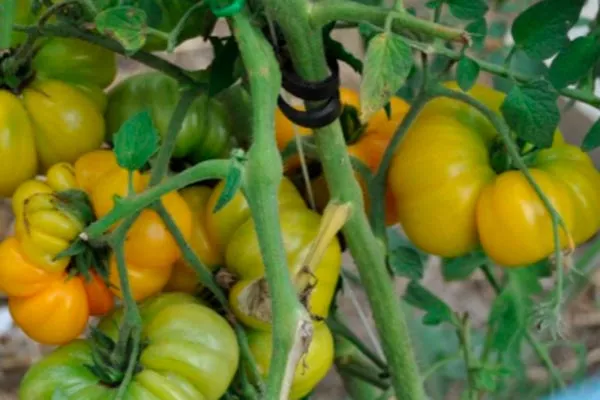
The bushes of this cultivar are characterized by a low degree of branching and foliage. Their stems are strong and well-developed. The foliage is large and light green. The first ovary forms above the 7th leaf.
- ✓ The first ovary is formed strictly above the 7th leaf, which is a key characteristic of the variety.
- ✓ The leaves have a characteristic light green color and large size, which distinguishes them from other varieties.
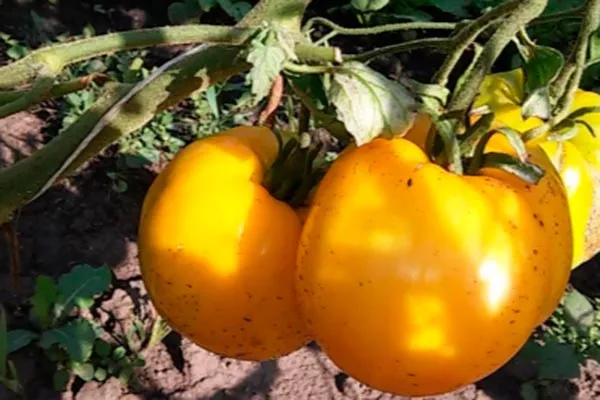
During flowering, yellow buds appear on persimmon plants. Each cluster produces 5-6 fruits. As they ripen, the branches sag under their weight. To prevent the stems and shoots from breaking, gardeners tie the entire crown to a trellis.
This variety is renowned for its large fruits, beautiful coloring, and unusual tomato shape. Its yields are characterized by the following characteristics:
- flat-round shape;
- slightly ribbed surface;
- weight - 240-350 g (with enhanced agricultural technology the figure increases to 450-600 g):
- yellowish-green color with a pronounced dark green spot located next to the stalk (in unripe fruits), which gradually turns deep orange (in fully ripe tomatoes the spot is absent);
- skin: smooth with a shine, thin but strong;
- pulp: fleshy, with 6-8 seed chambers (there are few seeds inside the nests), tender consistency, juicy, aromatic.
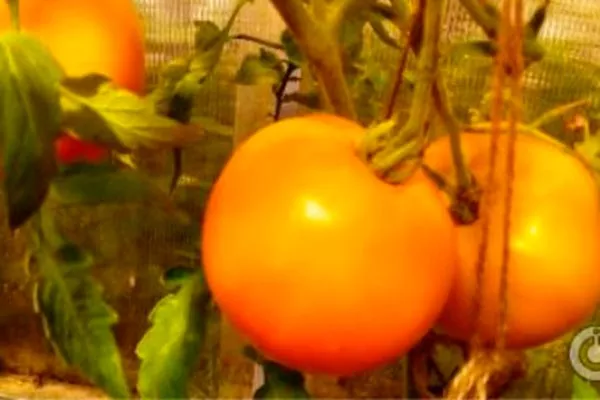
Persimmons also delight gardeners with their excellent flavor, which experts describe as dessert-like. Their flesh is pleasantly sweet, with a subtle tartness. The fruit is also distinguished by its high vitamin content, particularly beta-carotene. It is provitamin A that gives them their beautiful orange color.
Varieties of the variety
Seeds of several persimmon varieties are available for sale. Learn about their distinctive characteristics.
| Name | Growth type | Fruit color | Taste |
|---|---|---|---|
| Yellow persimmon | Determinant | Yellow | Very sweet |
| Red persimmon | Determinant | Orange with a reddish tint | Sweet |
| Persimmon NK | Determinant | Bright yellow | Sweet with a fruity note |
Yellow persimmon
The fruits are characterized by a light, sunny color. Unripe specimens have a dark green spot. Yellow tomatoes contain a lot of carotene and are low in organic acids. They have a very sweet taste. They are distinguished by their good shelf life and transportability. Housewives use yellow tomatoes in home cooking:
- add them to summer vegetable salads;
- used to decorate dishes;
- canned.
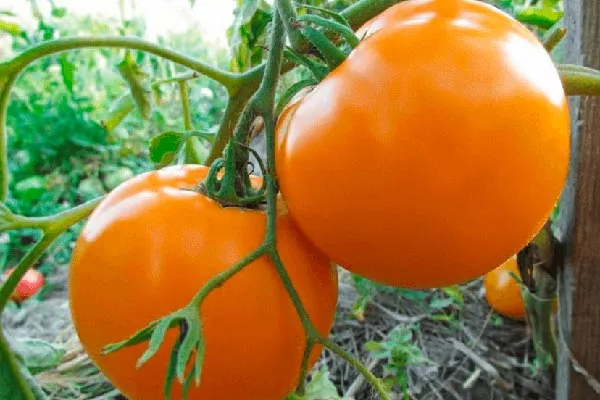
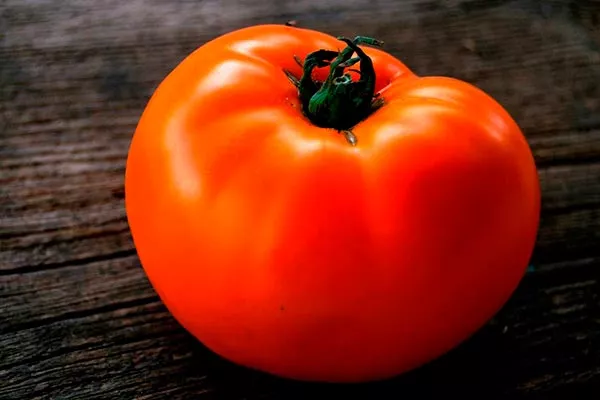
Red persimmon
The fruits are characterized by their large size (average weight is 300 g), bright orange color with a reddish tint, delicate texture, and remarkable sweetness. Visually, they are very similar to persimmons. They are used in dishes such as:
- vegetable salads;
- second courses;
- juices;
- sauces;
- Canned food for the winter.
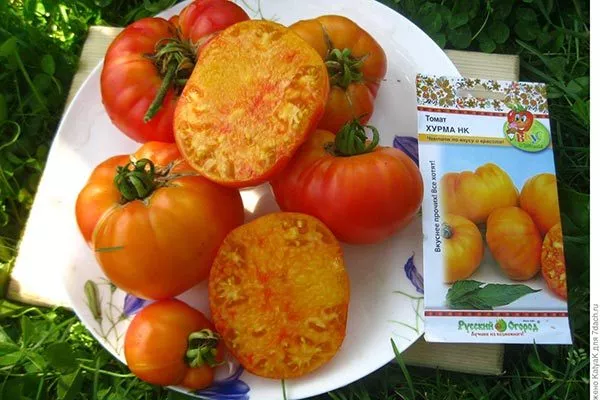
Persimmon NK
This variety of persimmon is characterized by a late ripening period. Gardeners harvest it from early August until the first autumn frosts. Its fruits have bright yellow skin and pinkish-orange flesh, a sweet, fruity flavor, and are large (weighing from 300 to 500 grams). They are very shelf-stable and easy to transport.
Features of the variety
If you are planning to grow persimmon in your garden, first study the technical characteristics of the variety.
Productivity
The yellow-fruited variety of garden crop has good productivity indicators:
- 5.8-6.5 kg/sq. m (approximately 3 kg from 1 bush) is the yield of tomato bushes growing in greenhouse conditions;
- 4 kg/sq. m is the amount of fruits obtained when growing plants in an open bed.
Ripening and fruiting
Persimmon is a mid-season tomato variety and hybrid. It takes 115-125 days for the crop to ripen. The first tomatoes ripen in July. Fruiting continues throughout the second half of summer and early fall (almost three months).
Application of fruits
The purpose of the Persimmon harvest is universal:
- sweet fleshy tomatoes are eaten fresh;
- add them to salads;
- used in the preparation of first and second courses;
- processed into juice, puree, tomato paste;
- they are used to make sauce, ketchup, gravy for meat or fish;
- canned.
Transportability
The fruits of this variety tolerate long-distance transportation well. Their tough skin reliably prevents them from cracking. The harvest has a shelf life of two months if stored in a cool, dark place.
Geography of cultivation
The State Register of the Russian Federation has approved the variety for cultivation in the following regions:
- Northern;
- North-West;
- Central;
- Volga-Vyatka;
- North Caucasian;
- Middle Volga;
- Lower Volga;
- Ural;
- West Siberian;
- East Siberian;
- Far Eastern.
Persimmon plants are heat-loving. They dislike sudden weather changes, extreme temperature fluctuations, and sweltering heat. They grow and bear fruit best in temperate climates. In northern regions, they can only be grown indoors.
Basics of Growing
Gardeners cultivate this tomato variety in open beds and under plastic covers. Greenhouse cultivation is preferred, as it ensures maximum productivity and earlier ripening of the fruit. By strictly following the proper cultivation practices, you'll reap a bountiful harvest.
Conditions
Set aside a plot of your garden for tomato planting that meets the following characteristics:
- well lit;
- windless;
- protected from drafts;
- not located in a lowland where water and cold air masses stagnate.
Providing optimal conditions for good growth and fruiting of persimmon bushes is easiest when grown in a greenhouse. In protected soil, maintain an optimal temperature (17-19°C during the day, 14-15°C at night), humidity at 60-75%, and provide supplemental lighting.
Required soil
Grow Persimmon in a plot with soil that has the following characteristics:
- loose, with good air and water permeability;
- rich in nutrients;
- with neutral acidity.
- ✓ The soil pH level should be strictly within 6.0-6.8 for optimal nutrient absorption.
- ✓ The soil should contain a high percentage of organic matter (at least 4%) to ensure good structure and water holding capacity.
Prepare the area for planting tomatoes in advance, starting in the fall:
- carry out deep digging of the soil;
- remove all weeds and plant debris;
- add organic matter (in addition to humus or compost, enrich the soil with a complex mineral composition rich in phosphorus, potassium and nitrogen);
- add coarse sand if the soil in the garden is heavy (clay);
- Add chalk, ash or dolomite flour if the soil acidity is high.
Tomato bushes grow and bear fruit especially well in soil that served as a bed for garden crops such as carrots, zucchini, cucumbers, cauliflower, and beans last season.
Timing of planting seedlings and transplanting into the ground
Start sowing persimmon seeds to obtain seedlings in late March or early April. You can transplant the seedlings to the garden towards the end of May or in June. By this time, the temperature should be stable (at least 12–16°C) and there should be no risk of frost.
Seed preparation
This variety's seed has a high germination rate—90-93%. However, it's still important not to neglect preparation for planting. Follow these steps before sowing:
- Place the seeds in a bowl of water and leave them there for 20 minutes;
- Discard the floating specimens, and wrap those that have settled on the bottom in a piece of gauze:
- place them in a pale pink solution of potassium permanganate for 5-8 minutes;
- then rinse;
- leave to dry on a napkin.
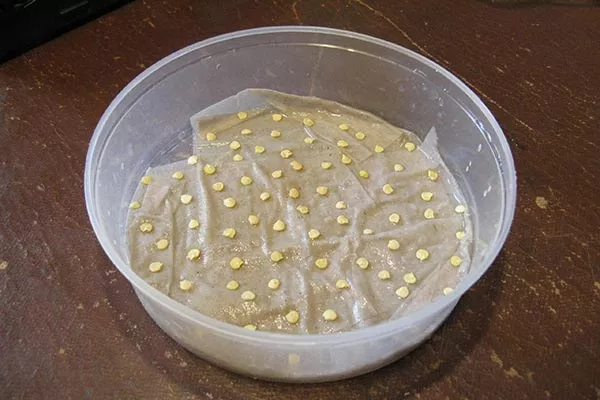
Experienced gardeners additionally treat tomato seeds with Epin or Zircon. These products increase the vegetable crop's yield.
Container and soil
To grow Persimmon seedlings, use the following substrate:
- purchased (universal soil mixture for growing seedlings);
- homemade: to obtain it, combine garden soil with peat and sand in a ratio of 1:1:1.
Choose a suitable container for growing tomato seedlings. Initially, use a shallow wooden or plastic container with drainage holes in the bottom. Then, when it's time to transplant the seedlings into individual containers, you'll need peat pots. Disposable cups can also be used instead.
Sowing
Follow the step-by-step instructions to complete the procedure:
- Fill the planting container with nutrient substrate.
- Pour some lukewarm water over it.
- Make holes in the soil, 1.5 cm deep and 3 cm apart.
- Place 1-2 seeds in each.
- Cover the crops with soil.
- Pour them again.
- Cover with film and leave in a warm place (+23-26°C) until the seeds germinate.
Growing and caring for seedlings
Once the sprouts emerge, remove the film. Move the seedling tray to a sunny windowsill in a cooler room (18-20°C). Care for the plants using the following procedures:
- water them moderately with warm, settled water once a week;
- gently loosen the soil around the stems;
- apply liquid fertilizer after watering;
- Provide additional light to the seedlings to ensure they receive 16 hours of daylight.
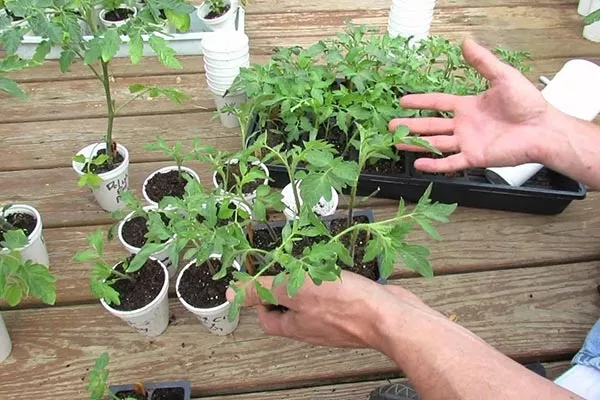
At 20 days old, when the seedlings have developed a pair of strong leaves, transplant them. Transplant them into individual pots. Add a growth-promoting fertilizer to the soil.
Hardening off seedlings, planting in the ground
To help the seedlings acclimate to their new location, harden them off 10 days before transplanting them into the garden. Leave them outside on the balcony daily, gradually increasing the time spent outdoors. Spend the last night before transplanting outside under a plastic cover.
Persimmon seedlings are ready to be transplanted to the garden when they reach 50-60 days of age. It's not advisable to keep them indoors for too long. These seedlings are more susceptible to disease, have a harder time establishing themselves in a new location, and begin bearing fruit later. By the time they're transplanted to the garden, the plants should have at least six leaves.
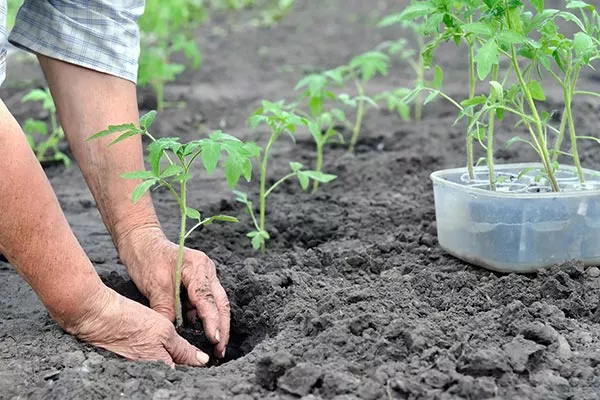
Transplant the strengthened and hardened tomato seedlings to your plot towards the end of May. The soil should be warmed to 16°C. Choose a warm but cloudy day for this procedure. Plant the plants according to the following guidelines:
- planting pattern - 50x40 cm;
- hole depth - 15 cm;
- number of seedling bushes per 1 sq. m - 3-4 pcs.
Growing technologies
In addition to the classic method of growing tomatoes, experienced gardeners also practice more original methods that allow them to achieve better results.
Trench method
Growing in trenches is recommended for tall, large-fruited varieties whose shoots are prone to breaking under the weight of ripening tomatoes. Gardeners also resort to this method to save overgrown seedlings. It aims to transform long stems into strong, well-developed root systems.
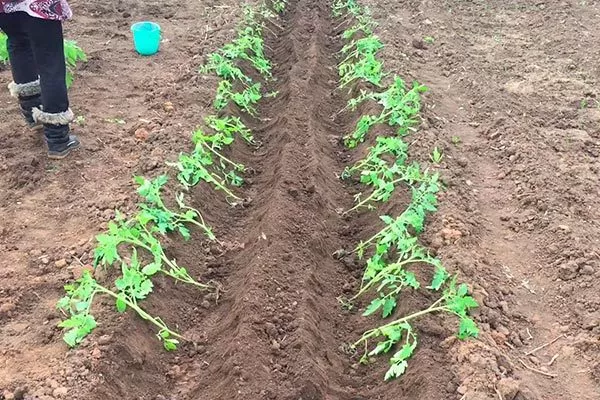
If you are planning to cultivate persimmon using the trench method, follow the sequence of steps when planting seedlings in the garden:
- Dig an oblong hole in the ground.
- Place the seedling stem in it, having first removed its lower leaves (2 pairs). Leave the top above the ground.
- Fill the trench with soil.
- Water the planting.
This growing method promotes earlier and more abundant fruiting. It does have its drawbacks:
- due to the shallow location of the stem and root ball, there is a risk of damaging them during weeding and loosening;
- Bushes planted in trenches require more frequent watering.
Pit method
This growing method involves dividing the garden plot into squares. In the center of each square, gardeners dig a watering hole (40 cm in diameter and a spade's depth). Four tomato plants are planted in the corners, spaced 50-60 cm apart.
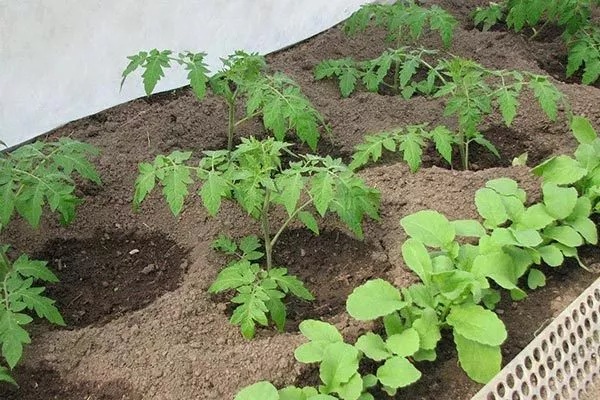
The bottom of the hole is lined with wood ash, using 1 liter of crushed material. The hole is filled with mown grass. This is then used to water and fertilize the tomato plants. This moisture is delivered directly to the roots of the plants, preventing it from reaching the green parts and causing late blight.
The contents of the hole gradually rot, enriching the soil with nutrients. The tomatoes receive enough nutrients for abundant fruiting. The heat released by the organic matter during decay warms the roots of the plants. They are resistant to temperature fluctuations.
The nuances of growing in open ground and in a greenhouse
When cultivating a variety in different conditions, consider the following nuances:
- Sow seeds for seedlings you plan to transplant into protected soil in February. Transplant them in April.
- Equip the greenhouse with additional lighting. Maintain the temperature at 22-25°C.
- Persimmon bushes growing in protected soil reach a height of 1-1.4 m. Be sure to tie them to a support.
- In warm climates, plant seedlings in an open garden bed. Plants should receive plenty of warmth and light throughout the growing season.
- Plant only hardened seedlings in unprotected soil.
- Pinch off the fruit shoots of tomatoes growing outside of shelter.
- Carry out preventative treatments for plants against diseases and insect pests.
Plant care
Persimmon is a demanding variety when it comes to growing conditions and care. Failure to follow proper cultivation practices can result in reduced yields, increased disease risk, and deteriorating fruit quality. Pay special attention to watering, fertilizing, pruning, and weeding to achieve the best results.
Watering
Water the tomato bed as the topsoil dries out. Use 2-3 liters of water per plant. The water should be warmed by the sun and allowed to settle. Don't overwater. The Khurma tomato variety doesn't tolerate waterlogged soil, which can lead to fungal infections.
Loosening
After rain and watering, loosen the soil under your tomato plants. This procedure has many benefits:
- improves oxygen supply to the root system of bushes;
- makes the soil more permeable;
- prevents the formation of a hard soil crust, which leaves micro-damage on the stem (through which pathogenic microbes penetrate into the green organism).
Work the garden soil carefully. Try not to damage the plant roots or stems.
Weed control
To maintain healthy persimmon bushes and ensure a bountiful harvest, keep the top layer of soil in the bed clean. Weed regularly. This agricultural practice yields the following results:
- helps in the fight against insect pests;
- serves as a preventative measure against vegetable crop diseases;
- promotes better supply of nutrients to the roots of tomatoes.
Tying up bushes
When grown indoors, persimmon stems grow taller than 1 meter. They require staking. This prevents the shoots from breaking under the weight of ripening fruits and makes caring for the bushes and harvesting easier. Gardeners tie up orange tomatoes grown in open beds when necessary.
Bush shaping, pinching out side shoots
Experienced gardeners shape the Persimmon tomato taking into account the growing conditions:
- in 2 stems - in open areas of the garden;
- in 1 stem - in greenhouse conditions.
Plants of this variety require pinching throughout the season. New shoots regularly emerge from their leaf axils. Gardeners train the shoots that grow under the first flower cluster into a second main stem (forming a double stem).
The remaining shoots located above and those that have formed on the second stem should be removed. Remove them completely, leaving no stumps. Monitor for side shoots weekly. Do not allow the bush to become overcrowded.
If you neglect pinching out side-sons, you will encounter the following complications:
- delayed ripening of fruits;
- decrease in bush productivity;
- deterioration of the quality characteristics of the crop;
- crop morbidity.
Remove side shoots from persimmon plants, preventing them from growing too large. Remove them while they're still very young. Perform this procedure on a dry, sunny day to ensure the cut/break area dries quickly.
Top dressing
Fertilize your persimmon plants for the first time after transplanting the seedlings. Feed the seedlings with a phosphorus- and nitrogen-rich fertilizer (such as nitrophoska) or urea.
Since this variety is susceptible to disease, provide the plants with sufficient potassium during growth and development, which boosts immunity. Immediately after fruit set, water the tomato plantings with a potassium humate solution.
Organic fertilizers are also suitable for feeding vegetable crops:
- cow dung;
- chicken manure;
- herbal infusions;
- wood ash.
Features of cultivation and possible difficulties
The variety is prone to "fattening," where plants actively grow foliage at the expense of fruit set. To prevent this, pay special attention to the following aspects of persimmon plant care:
- if the air temperature rises to +24−26°C during the day, stop watering the garden bed for 1 week;
- Force pollination of the buds is carried out by shaking the flower brushes (carry out the procedure on a dry and warm day);
- fertilize the tomato planting with Superphosphate during the fruit formation and ripening phase;
- Three times per season, spray the bushes on the leaves with a biostimulant solution (this method allows you to increase the yield of Persimmon by 25%;
- remove side shoots from plants in a timely manner (remove fattened shoots before they reach a length of 5 cm);
- during the fruiting period, gradually remove the lower branches of the bush to the position of the first brush;
- trim the peripheral roots 20-30 days before harvesting (this measure promotes the formation of lateral branches and the flow of nutrients to the above-ground parts of the plants);
- Carry out mandatory preventative treatments of plantings against diseases and insects.
There are some difficulties associated with growing a varietal variety of the crop:
- Persimmons thrive in moderately dry air. The optimal humidity level for them is 60%. Exceeding this level can increase the risk of fungal infections in tomato plants, delay pollen maturation, and impair fertilization.
- With a sharp transition from drought to excessive moisture, cracking of fruits is often observed.
- This variety is very sun-loving. Its bushes thrive and bear fruit only in intense sunlight and long daylight hours. Otherwise, the plant's nutrition is poorly absorbed, growth slows, fruit quality deteriorates, and yield suffers.
- When there's not enough light, gardeners also have problems with seedlings. This deficiency causes the seedlings to become elongated and stunted.
Diseases and pests
A common disease affecting persimmons is late blight. Fungal spores are quickly transmitted from one plant to another. If gray-brown spots surrounded by a mold ring appear on the foliage, remove the affected plant from the garden immediately. This prevents the spread of the infection.
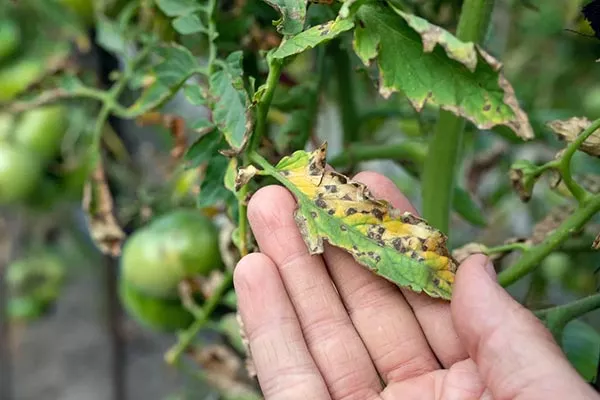
Treat tomatoes affected by fungal infection with Fitosporin-M. To prevent late blight, follow these preventative measures:
- hill up the bushes;
- sterilize the working instrument;
- Disinfect the soil before sowing seeds for seedlings and before planting seedlings in the garden.
The most common pests attacking persimmon plants are slugs, wireworms, and whiteflies. Control them using traditional methods and commercial insecticides:
- Basudin or liming of acidic soil - against wireworm;
- Confidor - against whitefly;
- by loosening the soil in the garden bed and using hot pepper powder against slugs.
To prevent damage to persimmon plants by parasites and diseases, carry out the following measures:
- remove weeds and loosen the soil in the garden bed;
- Observe the crop watering regime;
- apply fertilizer;
- adhere to crop rotation standards;
- Carry out preventive treatments of tomato plantings.
Harvesting and use of the crop
Harvest the fruit as it ripens (every 3-5 days). Don't leave it in the garden for too long. Overripe fruit will become more acidic and may also crack.
Follow the rules for harvesting and storing garden crops:
- pick tomatoes in dry weather;
- collect them in the morning;
- cut the fruits with scissors along with the stalk;
- try not to damage their skin;
- put aside damaged tomatoes (they will need to be eaten or processed as quickly as possible);
- Store ripe tomatoes for up to 7 days at room temperature, or up to 15-20 days in the refrigerator;
- Place unripe fruits in a dark place to ripen (they will gradually ripen within 1 month).
Use the harvest for fresh consumption, juice or tomato paste, and salads. Due to their large size, they are not suitable for whole-fruit canning, but they are excellent in winter preserves such as lecho.
Advantages and disadvantages of the variety
Gardeners love the Persimmon tomato variety for its many advantages:
Among the disadvantages of this variety, gardeners point out the bushes' weak resistance to diseases and pests, poor heat tolerance, and the need for staking when grown in greenhouses.
Farmers' reviews
Khurma is an excellent variety of sweet orange tomatoes, beloved by gardeners for its abundant and consistent fruiting, good shelf life, and rich vitamin content. These tomatoes are often eaten fresh as a summer dessert, but are also used for processing and cooking.