
Khlebosolny is a popular tomato variety that has emerged relatively recently but has already gained popularity. Gardeners choose it for its large size, excellent flavor, and high yield. Although not suitable for canning, it makes a delicious addition to salads and winter preserves.
Description of variety and origin
The Siberian variety was developed at the beginning of the 21st century and has remained popular among Russian vegetable growers for over two decades. It was created by scientists from Novosibirsk, O. V. Postnikova and V. N. Dederko. In 2006, following successful trials, it was included in the State Register of Breeding Achievements of the Russian Federation.
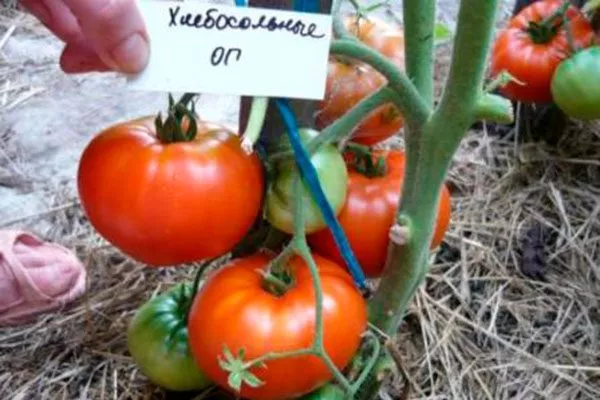
The crop is characterized by high resistance to fungal and viral infections. It demonstrates good resistance to various types of rot.
What does the plant look like?
The bushes are determinate, their growth limited by the formation of an apical flower cluster. They average 80 cm in height, branch well, and have dense foliage.
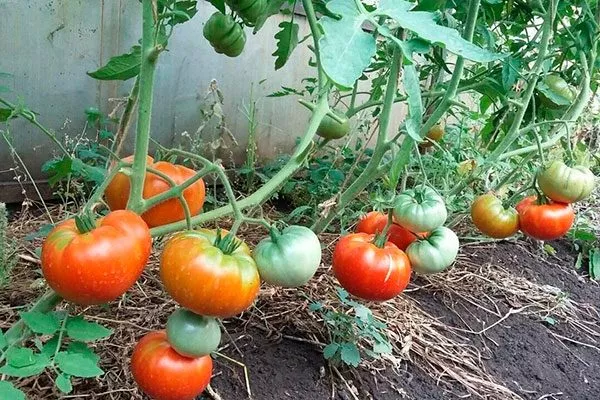
The plants are vigorous and spreading, but due to the large fruits, the shoots may bend or break, so they need to be tied to supports or supported.
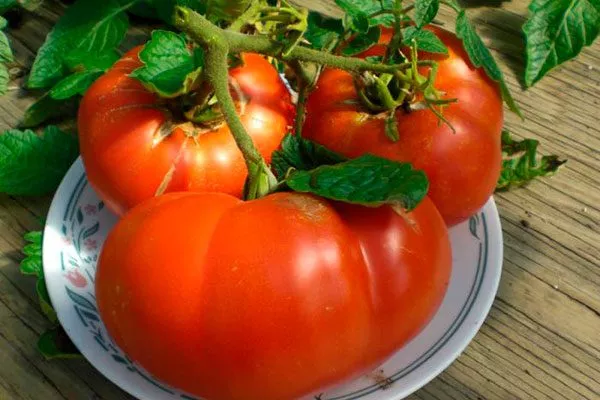
The leaves are large, elongated, with a wrinkled surface and pointed tips. The color is a rich emerald green.
Characteristics of fruits
Khlebosolny is a large-fruited tomato variety. Key features:
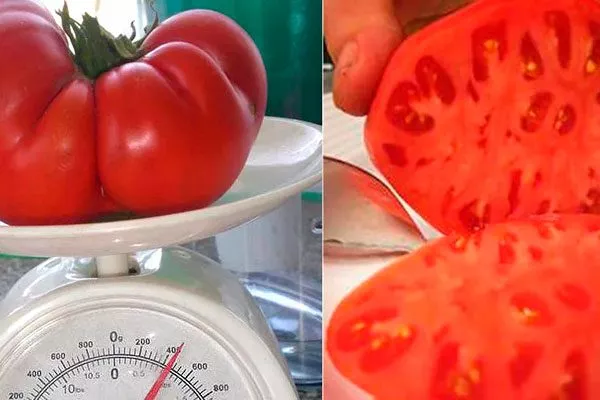
- The average weight of tomatoes is 116-400 g, but by rationing the ovaries, you can grow giants weighing up to 600-1000 g.
- The vegetables have a flat-round or rounded shape, with a noticeable ribbed relief and a glossy surface.
- The skin is dense and elastic, which prevents cracking and deformation.
- As they ripen, tomatoes are initially light green with a dark spot near the stem, then acquire a rich red or red-pink hue.
- The pulp is fleshy, dense, sugary and juicy, without voids or excessive wateriness, divided into 3-4 seed chambers.
The taste is distinctly sweet, without acidity, and the aroma is classic, with light spicy notes.
Peculiarities
The crop is fully adapted to local climatic conditions. Thanks to its robust immunity, it thrives even in unfavorable environments, delivering a consistent and high yield.
Where are they used?
Belongs to the salad variety. The vegetables are used fresh in various dishes, as well as in baby and dietary nutrition. The fruits are processed into juice, paste, and ketchup.
Productivity, ripening time
This variety is considered a medium-fruited variety. It takes 115-120 days from germination to full ripening. Fruiting is extended: the first ripe vegetables are ready for harvest in late July and continue until early September. In southern regions, the harvest continues until frost.
The cultivars claim an average yield of 3.8–8.3 kg per square meter, but in practice, up to 4–5 kg of fruit can be harvested from a single bush per season. The tomatoes tolerate transportation and long-term storage well, making them attractive to farmers and commercial growers.
Climate requirements and growing regions
Khlebosolny can survive even in adverse conditions, but its resilience should not be overused, as proper cultivation practices are essential for high yields. However, the bushes tolerate short-term droughts and brief cold spells well.
This variety was originally developed for cultivation in northern regions—Western Siberia and the Urals—where summers are short and cool. However, it has successfully adapted to central Russia, the Moscow region, and other regions with similar climates. In the south, this crop performs well, adapting even to hot conditions.
How to grow seedlings?
A bountiful harvest depends on the quality of the seedlings. Planting material is sown in the second half of March. By the time of transplanting to their permanent location, the bushes should reach 25 cm in height, be strong, and have developed three pairs of true leaves.
Seed preparation
For good germination, use fresh seeds. Purchase them from specialty stores or harvest your own.
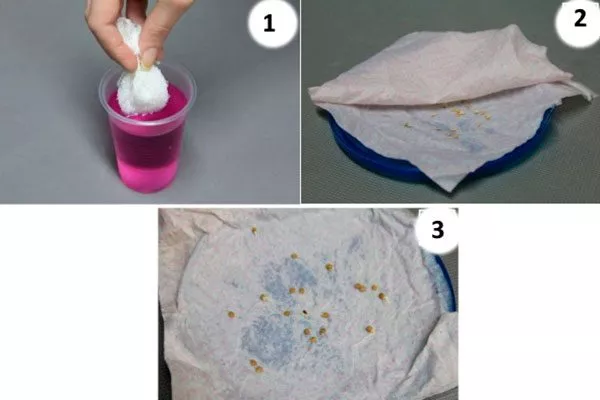
Follow these recommendations:
- Before sowing, perform a selection: soak the seeds for 5-10 minutes in a salt solution (10 g of salt per 1 liter of water). Remove any that float to the surface, and rinse the remaining seeds with clean water.
- Disinfect the seeds by immersing them in a 1% solution of potassium permanganate for 20-30 minutes, then rinse again and treat with a growth stimulator (Heteroauxin, Epin, Kornevin).
For accelerated germination, wrap the seeds in a damp cloth two days before sowing and leave in a cool, dark place, periodically moistening the gauze.
Container and soil
Place the planting material in seedling boxes or plastic containers; any convenient container will do. Vegetable growers most often use peat cups or pellets. In plastic or cardboard containers, make drainage holes to remove excess moisture.
To grow strong seedlings, use a nutritious substrate:
- ready-made mixture;
- homemade soil from garden soil, humus, sand (or sawdust) and wood ash in a ratio of 2:1:1:1.
Be sure to disinfect the soil by pouring boiling water or a weak solution of potassium permanganate on it to destroy possible pest larvae and pathogenic microorganisms.
Sowing
In the prepared soil placed in the containers, make furrows 1 cm deep and spaced 2.5-3 cm apart. Then, follow these steps:
- Moisten the soil and scatter tomato seeds in the beds. Cover them with a thin layer of soil.
- Spray again and cover the containers with transparent film or glass, creating a greenhouse effect.
- Place the containers in a warm place until seedlings appear.
If sown correctly, the first sprouts will appear in 5-6 days.
Caring for seedlings
Maintain the temperature in the mini greenhouse between 21-23°C and humidity around 60%. Ventilate the container regularly to prevent condensation and mold on the soil surface. Keep the seedlings moist with warm water. Be sure the soil doesn't dry out.
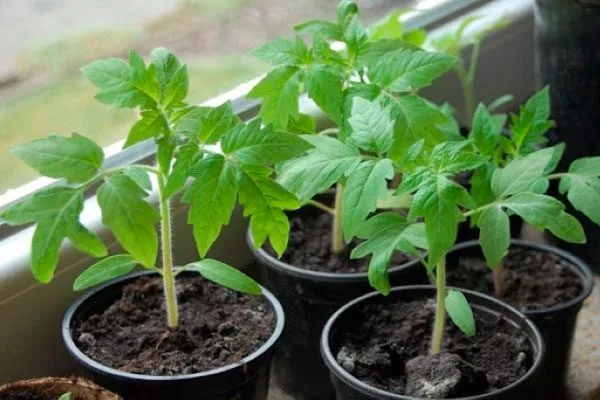
Recommendations for seedling care:
- A week later, when the seedlings emerge, remove the cover and reduce the air temperature to 15-17°C for 5 days. This stimulates root development and prevents the plants from stretching. After this time, return them to a warm location.
- Hospitable is a light-loving variety, so provide it with at least 14-16 hours of light per day.
- If the seeds were sown in a single container, transplant them when the first true leaves appear. First, thoroughly moisten the plants, then after an hour, carefully remove them with the soil and transplant them into separate containers. Supplement the missing soil with a 1:1 mixture of garden soil and compost.
Harden off the seedlings before planting them in the garden. This helps them adapt to their new location more quickly. Two weeks before moving, begin placing them outside or on the balcony for a few hours, gradually increasing the time spent outdoors.
Transplantation into the ground
Choose sunny, wind-protected sites with moderately moist soil for the crop. The soil should be light and loamy, with low acidity. Begin preparing the bed in the fall.
Crop rotation is important. Good precursors for tomatoes include:
- cabbage;
- cucumbers;
- onion;
- garlic;
- radish;
- carrot;
- legumes.
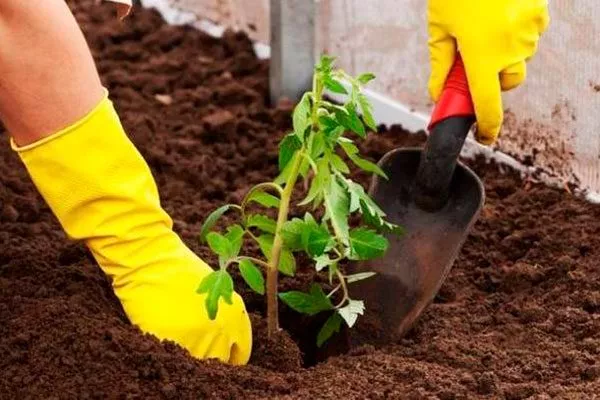
The optimal planting time for greenhouses is the first half of May, and for open ground, the last ten days of May. Follow these recommendations:
- Before the procedure, remove weeds and plant debris. Apply 10 kg of leaf compost or rotted manure, 3-4 kg of wood ash, 80 g of potassium salt, and 100 g of superphosphate per square meter. To reduce soil acidity, add 300 g of chalk or slaked lime.
- Carefully dig the soil, level it, and water it thoroughly. Disinfect the area 14 days before planting. Use a urea mixture (1 tablespoon per 10 liters of water) or a concentrated solution of potassium permanganate.
- Plant the tomatoes in a 50x50 cm pattern, no more than 4-5 plants per square meter. Water the holes thoroughly before planting. Install a support about 1 m high next to each hole. Place the plant roots in the holes, cover with soil, and hill them up.
For the first 3-4 days, cover the beds from strong sun with burlap or agrofibre, and use film to protect against night frosts.
Direct planting of seeds into the ground
In the southern regions of Russia, tomatoes are sown directly into the soil in mid- or late April, after first preparing a bed with loose, nutritious soil.
Follow the recommendations:
- To retain moisture in hot weather, apply mulch of straw, peat, fresh sawdust or wood shavings to the surface.
- Before sowing, treat the seeds with a growth stimulant, then place them in damp gauze until they sprout.
- Sow the seeds in individual holes or in rows, maintaining a staggered pattern. No pricking is required. Plant 1-2 cm deep, cover with a thin layer of soil, and moisten with warm water.
- ✓ Optimum soil temperature for sowing seeds: not lower than +10°C.
- ✓ Seed planting depth: 1-2 cm, taking into account soil density.
No additional actions will be required until the seedlings appear.
Fundamentals of agricultural technology
The Khlebosolny variety is characterized by high survival rates and rapid rooting of seedlings. These tomatoes adapt easily to both greenhouse and open-field conditions.
Watering
The crop doesn't require frequent watering. However, it's important to follow certain rules:
- During the first week after planting, do not overwater the plants. If the soil is mulched, water them once every 7-10 days.
- Tomatoes have deep roots, so surface watering won't provide the required water. Soak the soil to a depth of at least 40 cm.
- Before tomatoes ripen, reduce or stop watering. Use warm, settled liquid.
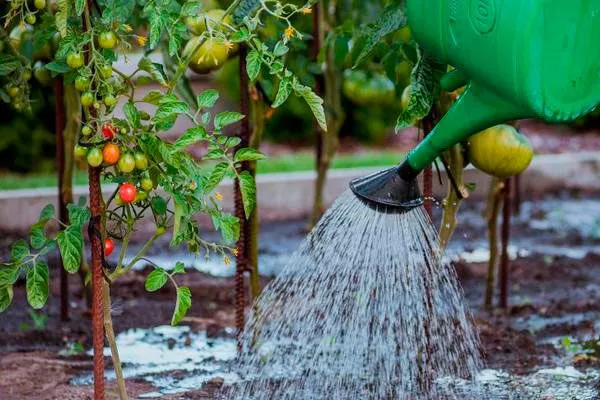
A day after watering, loosen the soil, being careful not to damage the surface roots. If the bed has a layer of mulch, you can skip this step. Perform one to three hillings with moist soil per season.
Top dressing
The crop requires increased nutrition to produce large vegetables. Follow these guidelines:
- Prepare the beds and apply several fertilizer applications throughout the season. Experienced agronomists recommend fertilizing the crop up to five times, with 10-day intervals.
- Two weeks after planting, apply nitrogen fertilizer: 40 g of ammonium nitrate per 10 liters of water. Then, apply potassium-phosphorus or complex mixtures.
- Foliar feeding can include solutions of potassium permanganate and boric acid (1 g per 1 liter of water). Spray in the evening to avoid burning.
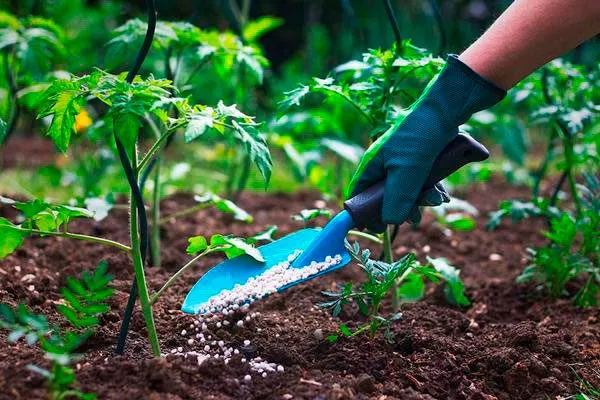
Stop fertilizing the tomatoes once the fruit begins to ripen. During the ripening period, any nutrients, including organic ones, are not recommended.
Bush formation
Khlebosolny is a mid-season variety. It is characterized by the slow formation of axillary shoots, which reduces the need for frequent pruning, but these shoots can be used to form new branches.
Helpful tips:
- The bushes do not require support, but it is important to tie up the shoots with clusters on which there are ripening fruits.
- The plants grow spreading and vigorous, with a powerful root system, allowing them to be trained into two or even three stems. In open ground in central Russia, it is recommended to train the bushes into a single trunk, removing side shoots.
- The determinate variety doesn't require pinching and will stop growing on its own. However, to obtain larger fruits, pruning should be done at a height of about 70 cm. This technique is especially effective in greenhouses, where plants can reach 1 m.
- To increase the size of tomatoes, regulate the number of brushes by cutting off excess ones located above the main cluster, and leaving no more than 5 ovaries on the entire bush.
- In regions with short summers, it is recommended to remove the flower clusters that appear in August to allow the remaining ovaries to ripen.
Prune the leaves located at the base of the stem immediately after flowering, removing no more than two at a time. Repeat this process until the first cluster appears, then thin out the crown to provide better light for the vegetables.
Temperature and humidity
The crop adapts well to temperature fluctuations and can withstand temperatures exceeding 40°C. Tomatoes on the vines ripen before the first frost.
Optimal conditions:
- seed germination – up to +28°C;
- growing seedlings – up to +20°C;
- transplantation into open ground – above +15°C;
- permissible fluctuations in temperature are from +5°C to +42°C;
- plant death – close to 0°C.
The bushes tolerate short-term drought well and are capable of producing crops with both excess and deficient moisture. However, during prolonged low temperatures and constant precipitation, it is important to prevent fungal diseases.
The nuances of growing in open ground and in a greenhouse
When growing tomatoes, gardeners may encounter certain challenges that affect plant growth and productivity. Here are the main ones:
- insufficient watering at the stage of formation of vegetative mass;
- nutritional deficiencies;
- the bush is not structured;
- stepchildren are not removed;
- lack of support often leads to breakage under the weight of vegetables;
- The humidity level is not controlled – this causes tomatoes to crack if overwatered.
Tips for growing in open and closed ground:
- Do not carry out more than three hillings per season, especially if water has washed away the root system of the plants;
- As they grow, pick off the lower leaves.
Pest and disease control, prevention
The Khlebosolny variety demonstrates good resistance to fusarium wilt, late blight, tobacco mosaic, and other common nightshade diseases. In greenhouse conditions, plants are susceptible to white rot, gray rot, blossom-end rot, and root rot.
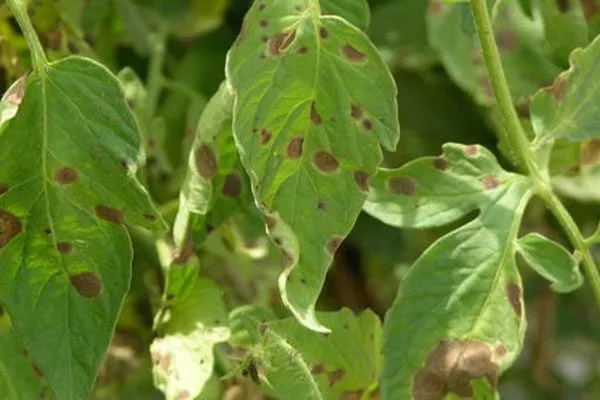
To prevent diseases:
- ventilate the greenhouse regularly;
- remove lower leaves and weeds;
- mulch the soil with humus or straw;
- Spray the plantings with a weak solution of potassium permanganate or Fitosporin.
When growing crops outdoors, bushes are often attacked by pests. To combat aphids, use a solution of water and laundry soap. Spider mites can be controlled with Taran, Medilis-Cyper, or Sipaz Super. However, avoid using toxic products before fruiting.
To prevent infections in greenhouses, properly manage the foliage and remove excess plant parts to ensure good ventilation. Spray indoor plants with bioprotective solutions, such as Fitosporin, several times per season.
Collection, storage
You can harvest ripe tomatoes from the second ten days of July until mid-September, a period of 1.5-2 months. In a greenhouse, you can extend the fruiting season. Tomatoes ripen unevenly, so harvest them every 3-4 days.
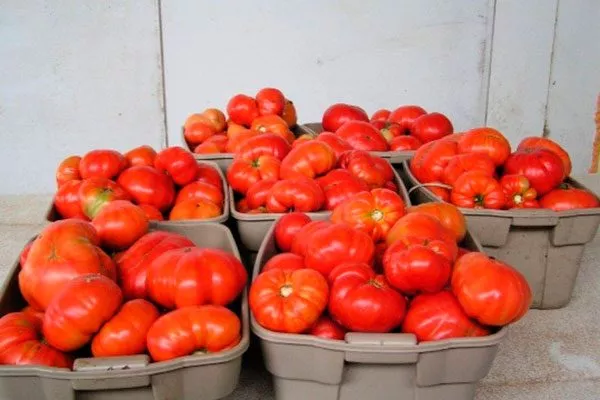
Store harvested vegetables for no more than 1 month. At home, they ripen normally in 40-45 days. Use fresh tomatoes straight from the vine in salads, or process them into adjika, juice, or ketchup.
Pros and cons
Khlebosolny combines excellent taste and a variety of excellent varietal characteristics. Its key advantages include the following:
Among the negative qualities, some gardeners note the need to shape and tie up the bushes, as well as increased requirements for fertilizing.
Reviews
Khlebosolny is a sought-after tomato variety with excellent characteristics. It combines excellent productivity, high resistance to diseases and pests, heat and drought tolerance, and long-lasting fruiting. This variety requires little maintenance, and the tomatoes boast excellent flavor and excellent shelf life.