
Altai Sugar is a large-fruited tomato variety that attracts gardeners who love fresh vegetables. These tomatoes have an interesting shape and weigh up to 400 grams, sometimes more, so a few are enough to make a delicious salad. The fruits contain a minimal number of seeds. These tomatoes are also suitable for winter preservation.
Description of the variety and characteristics
This variety is an excellent choice for gardeners seeking a bountiful and delicious harvest. It boasts excellent flavor and resistance to various diseases. Cultivation is easy and suitable for both open ground and greenhouses.
Features of the plant and fruits
It belongs to the indeterminate type and is characterized by continuous growth, due to which the bushes bear fruit until the onset of frost.
- ✓ The bushes reach a height of 1.5-2 m and require mandatory shaping.
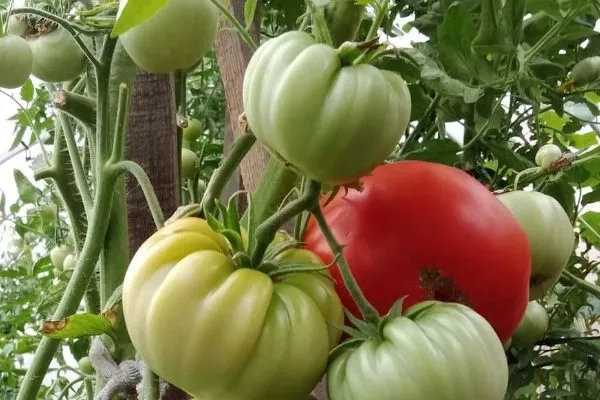
- ✓ The fruits are flat-round in shape and deep red in color when fully ripe.
Distinguishing qualities:
- Plants grow up to 1.5-2 m, so for optimal development and high yield, shaping is essential.
- The shoots are densely covered with large dark green leaves.
- The tomatoes are flat-round in shape and a deep red color when fully ripe.
- The weight of one tomato varies from 250 to 400 g, but individual specimens can reach 800 g.
- The pulp of the fruit is fleshy, with a bright red hue when broken.
Flowers of white or yellow hue are collected in inflorescences located at the top of each stem.
Ripening time and yield
The Altai Sakharny variety is a mid-season tomato. Fruit ripens 110-115 days after germination.
This variety yields approximately 6-8 kg per plant with proper care. Gardeners can harvest up to 15 kg per square meter if they follow proper cultivation practices and provide the crop with optimal conditions.
Taste and scope of use
These tomatoes are characterized by a rich, sweet flavor and vibrant aroma due to the high sugar content in their pulp. These tomatoes are ideal for eating fresh and for use in a variety of dishes.
Vegetables are often used for pickling and preserving, both whole and sliced. They produce a very aromatic and healthy juice, delicious paste, and adjika. Some use tomatoes to make sauces.
Planting nuances
Altai Sugar is recommended for planting in chernozem soil in spacious, well-lit areas. Optimal predecessors for this variety are cabbage, carrots, or cucumbers, which serve as excellent green manure for tomatoes.
- ✓ Soil pH should be between 6.0-6.8 for optimal nutrient absorption.
- ✓ The soil must be well-drained to avoid waterlogging and root rot.
Pre-landing site preparation
Begin preparing the site for planting seedlings immediately after the fall harvest. Follow these recommendations:
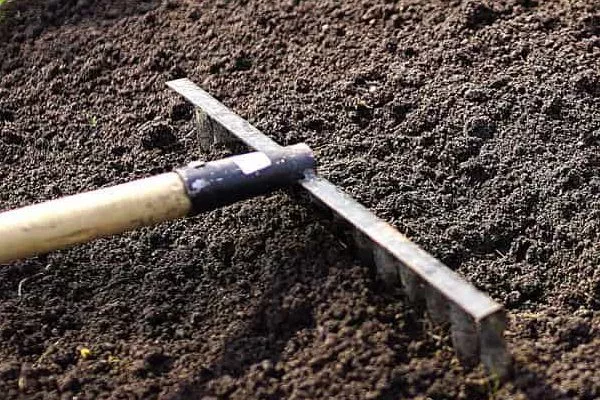
- Loosen the soil to a depth of 2.2 m.
- Treat the top layer with Bordeaux mixture and fertilize with rotted manure with the addition of meadow hay.
- Two days before planting the seedlings, loosen the soil additionally to a depth of 0.5 m, breaking up large clods.
The final step is fertilizing. Use ammophoska and ash powder.
Germination of seeds
Begin preparing your planting material in early March. Follow these guidelines:
- Soak the seeds for 12 hours in a 2% hydrogen peroxide solution, then place them in a Heteroauxin solution for 2.5-3 days.
- After treatment, sow the seeds in long, shallow boxes to a depth of 1 cm in a mixture of turf soil and sand, maintaining a distance of 5-7 cm between them.
- For the first 6-7 days, keep the seedlings at a temperature of +28°C. Once the seedlings emerge, reduce the temperature to +22°C and place the seedlings under supplemental lighting.
Time and sequence of planting
In temperate climates, plant the Altai Sugar tomato in the early third ten days of May, and in colder regions, in the last days of the month. The key is for the soil to warm to 14°C at planting time.
Plant seedlings to a depth of 3-4 leaves, maintaining a distance of 50 cm between adjacent plants to prevent mature bushes from touching. Leave row spacing of approximately 70 cm. The optimal planting density is 2-3 seedlings per square meter.
Care techniques
Regular fertilizing and maintaining moderate root moisture are essential for proper tomato cultivation. Timely agricultural practices can significantly improve productivity and yield generous amounts of vegetables.
Basics of watering
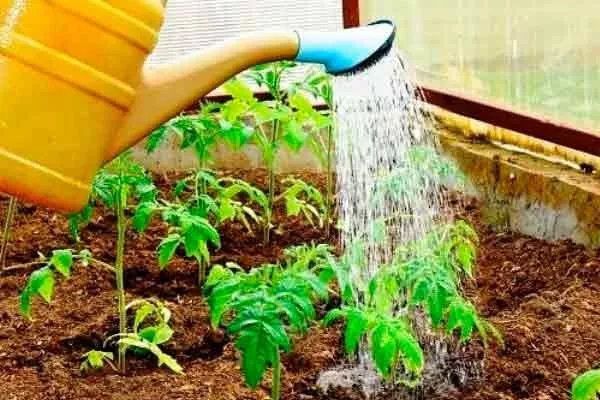
Provide the crop with abundant but infrequent watering. Under normal air humidity, watering the plants once every 4 days is sufficient. During prolonged drought, reduce the interval to 2 days.
Apply 3 liters of water per bush, avoiding contact with the leaves. A sprinkler system is ideal for even soil moisture.
Plant formation
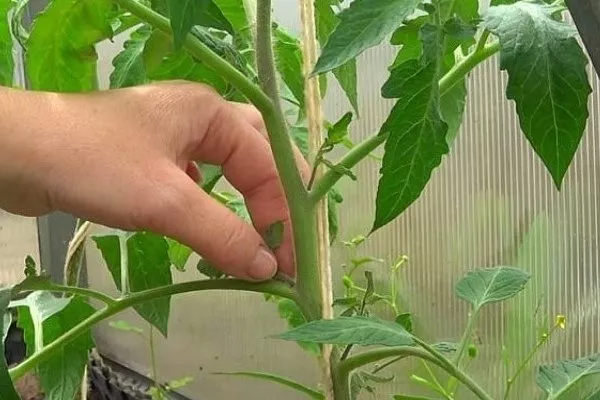
When structuring a bush, it's important to regularly remove side shoots that appear in the leaf axils. This is best done when they're no more than 5-7 cm long, as they haven't yet hardened and can be easily pinched off with your fingers.
Follow the rules:
- Do not neglect this procedure to avoid crowding, which can reduce yields.
- In open ground, remove side shoots at intervals of 7-10 days, and in a greenhouse - more often, every 5-7 days.
- If you plan to grow a plant with two stems, leave one stepson located below the first brush.
- As fruiting begins, gradually remove all lower leaves down to the first cluster or branch of the stem to improve ventilation and light levels in the bushes.
Tie the shoots to stakes or hanging cords.
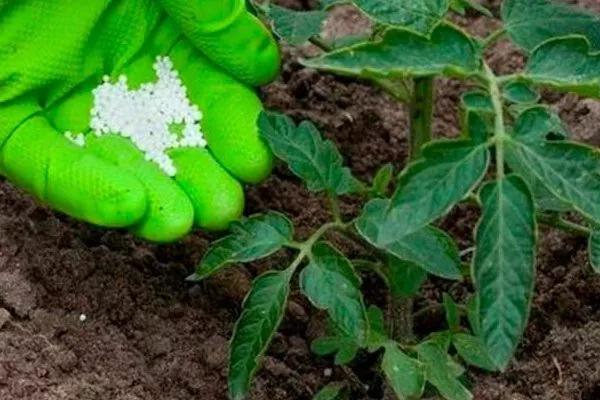
Optimal nutrition
The Altai Sugar tomato responds well to magnesium, phosphorus, potassium, and organic fertilizers. Divide these by season as follows:
- 13-15 days after planting the seedlings – top dressing with potassium nitrate with a solution of urea and chicken manure.
- At the peak of flowering of shoots – potassium magnesium sulfate mixed with yeast tincture and nitrophoska.
- When does fruit set begin? potassium humate with ash infusion and humus.
- When tomatoes ripen – Calcium nitrate with superphosphate.
Diseases and parasites
The crop is characterized by strong immunity and is resistant to most diseases. However, the cultivar can be susceptible to brown spot and spider mites, especially in open ground.
Possible problems:
- Cladosporiosis. A fungal disease that attacks tomatoes due to overwatering and cold watering. The infection appears as yellow spots on the leaves, which eventually turn olive-colored.
Treat plants with effective products such as Zaslon or Poliram. As a preventative measure, use potassium chloride infusion. - Wireworm. Insect larvae appear in poorly weeded and densely populated areas. Signs of infestation include cracks in the lower portion of the stems, which lead to rotting.
To combat the pest, treat the bushes with Diazonin or Bazudin. Valerian tincture is also effective, as it repels the larvae. - Spider mite. The parasite is especially dangerous for densely foliated and overgrown bushes. The insects cause the leaves to dry out and wrinkle, as well as the appearance of webbing on the ovaries. To control them, use chemicals such as Karate Zeon or Lambda-S.
Inspect your plantings regularly to detect pests or diseases early and begin prompt treatment.
Pros and cons
The Altai Sugar tomato has become popular among vegetable growers, particularly due to its sweet flavor. It thrives in greenhouses but also produces equally well in open ground in the Northwest and Ural regions, requiring little care.
Advantages:
- Sweet taste. Its excellent, sweet, non-acidic pulp makes it unique among other varieties.
- Strong branches. The bushes have a good interweaving of branches with a moderate amount of foliage, which promotes excellent ventilation.
- Dense pulp. The tomatoes are juicy but firm, with minimal seeds. The flesh has a steak-like consistency.
- Excellent productivity. One plant can produce up to 30 tomatoes.
- Stability under shade. The taste quality hardly suffers in cloudy summers.
- Disease resistance. High resistance to root rot, late blight and alternaria.
- Long fruiting period. The harvest can be collected until the second half of September.
Cons:
- Tall bushes require garters and regular pinching.
- Need for feeding – Like any large tomato, Altai Sugar needs frequent fertilization.
- Susceptibility to Cladosporiosis – young plants may be susceptible to disease during heavy rainfall.
Another disadvantage that gardeners consider is that mites often appear on long branches, and wireworms may appear on the rhizomes.
Reviews
The Altai Sugar variety is deservedly popular due to its disease resistance and good productivity. Both experienced and novice gardeners can successfully grow this variety. Its vegetables delight not only with their taste but also with their consistent yield. Proper care will ensure high-quality tomatoes throughout the season.