
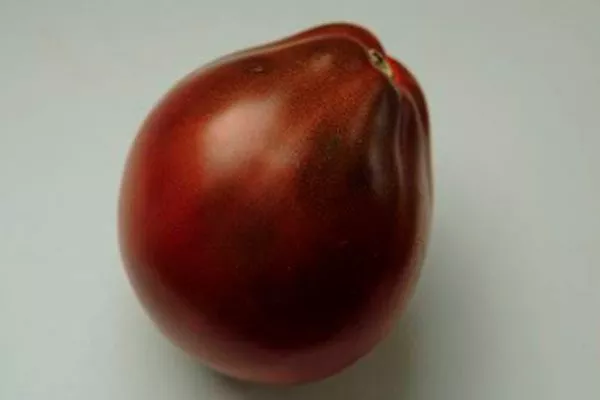
Black Pear is the name of a unique tomato variety characterized by a mid-season ripening period and highly productive bushes. Gardeners cultivate it in open fields and greenhouses. Its signature feature is the unusual appearance of its fruits, which visually resemble chocolate browns and have a sweet taste.
Features of the variety, description of the bush and fruits
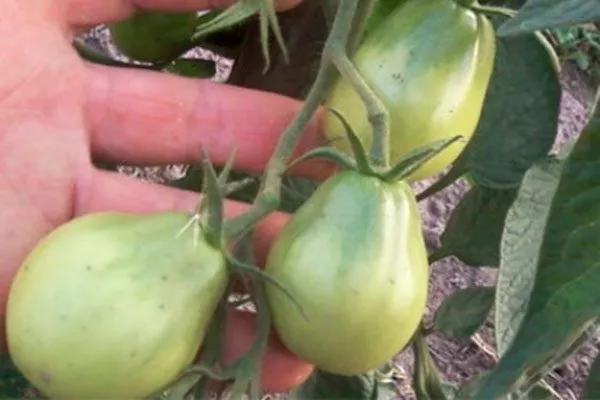
This vegetable variety belongs to the category of indeterminate cultivars. Its bushes are not limited in growth and are characterized by a vine-like structure. A description of their appearance includes:
- “height” – 1.3-1.5 m in an open bed, 1.8-2 m in protected ground;
- low degree of foliage;
- foliage: light green, typical tomato shape;
- fruit clusters consisting of 5-8 tomatoes.
Gardeners train plants into single or double stems, pinch out side shoots, and tie them to supports. Single-stem training involves removing shoots and lower leaves and pinching the growing point at the end of the growing season. The second method involves leaving the main shoot and one side shoot growing under the first cluster.
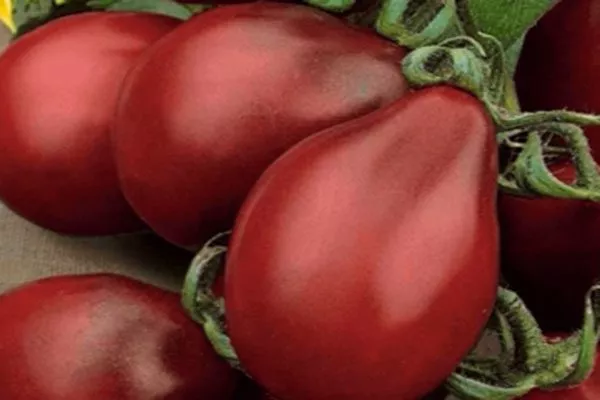
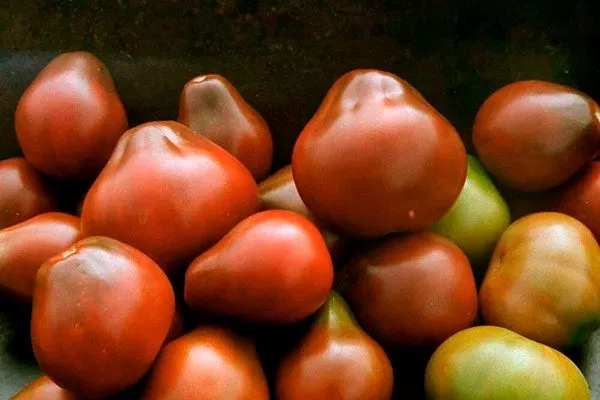
Tomatoes of this variety are small and beautiful. They surprise gardeners with their unique shape and color. They have high consumer qualities and the following characteristics:
- weight - 50-80 g (with enhanced agricultural technology it is possible to obtain fruits weighing 150 g);
- elongated teardrop shape, reminiscent of a pear;
- brown-burgundy color;
- smooth skin, quite strong, with a glossy sheen;
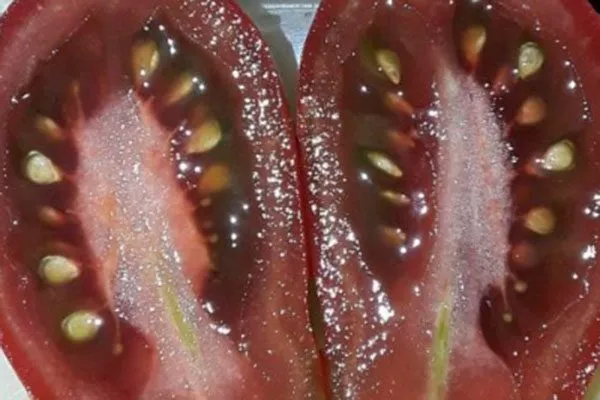
- pulp: dense, juicy, fleshy, aromatic, without voids, with many seed chambers and a small seed content.
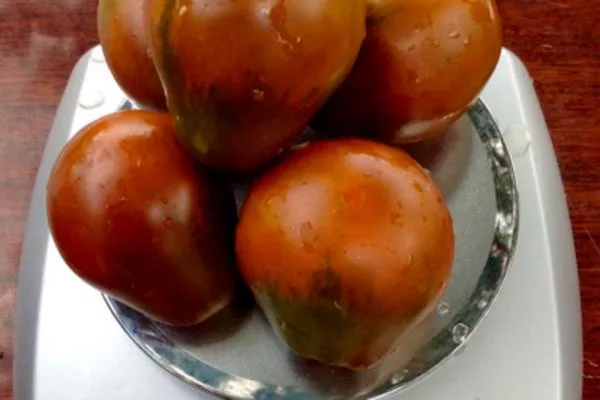
The Black Pear has excellent tasting qualities. The flesh of these miniature tomatoes is pleasant to the taste: intensely sweet and almost completely acid-free. It is rich in dry matter, carotene, vitamins, and minerals.
Main characteristics and history
The original variety is of Russian origin. The breeders have instilled in it many excellent qualities and technical characteristics. It is high-yielding, easy to care for, heat-tolerant, and has good resistance to late blight and other nightshade diseases.
Origin of the variety, varieties and planting region
This tomato is part of a series of varieties united by their unique fruit shape and other characteristics (yield, ripening time, disease resistance, etc.). Its components differ from each other only in color and size.
The group called "Pear" includes the following varieties:
- Black;
- Red;
- Pink;
- Orange;
- Yellow;
- Emerald.
The series of varieties was developed by the scientific and production corporation NK LTD and the agricultural firms Gavrish and Aelita. The varieties that comprise it were developed in the late 20th century. In the early 2000s, two of them were added to the state register: the Red Pear and the Pink Pear. The Black variety is not listed.
Varieties united by the pear-shaped form of the fruit can be cultivated almost everywhere in the country, since they are well adapted to the conditions of closed ground (film and glass greenhouses).
Summer residents successfully cultivate them in the regions and districts of the Russian Federation:
- Northern;
- North-West;
- Central;
- Volga-Vyatka;
- Central Black Earth Region;
- North Caucasian;
- Middle Volga;
- Lower Volga;
- Ural;
- West Siberian;
- East Siberian;
- Far Eastern.
Ripening, fruiting and productivity
Black pear belongs to the category of mid-season tomato varieties and hybrids. The crop ripens in 110-120 days after sprouting. Gardeners harvest it in July-August. The fruiting period is long.
This pear-shaped tomato variety delights gardeners with its fruitfulness. It yields at least 5.0-5.6 kg of high-quality fruit per square meter of planting. In greenhouse conditions, with enhanced cultivation practices, the yield increases to 8-9 kg/sq. m.
How to grow high-quality seedlings?
Grow tomatoes using seedlings. To obtain seedlings, sow the seeds in February-March, 60-70 days before transplanting them to their permanent location. Transplant them into a greenhouse in early May, and into an open garden bed closer to early summer, after the threat of frost has passed.
Working with seeds
Store-bought seeds are high-quality and fresh and do not require any pre-treatment before planting.
Be sure to treat seeds you've collected yourself. Follow these steps:
- Sort out the seeds, discard empty and damaged ones;
- treat the samples left for sowing by leaving them in a solution of potassium permanganate with a concentration of 1-2% for 1.5-2 hours;
- Soak the seed in water with honey added to it for better germination (it is also acceptable to use a commercial growth stimulant, such as Epin or Zircon).
Selection of soil and containers
If you plan to grow Black Pear seedlings by picking them at the stage of 1-2 true leaves, stock up on 2 types of planting containers:
- a spacious plastic or wooden box for sowing seeds in a row “like in a garden bed” (the height of its sides is 10 cm);
- individual cups or pots into which you will transplant the grown seedlings (the optimal container size is 250-400 ml).
If you prefer growing tomatoes without transplanting, sow the seeds directly into pots or peat pellets rather than into a box. Plant two seeds in each pot (the weaker of the two seedlings will need to be removed later). Transplant the mature seedling into the garden bed along with the pot it's in.
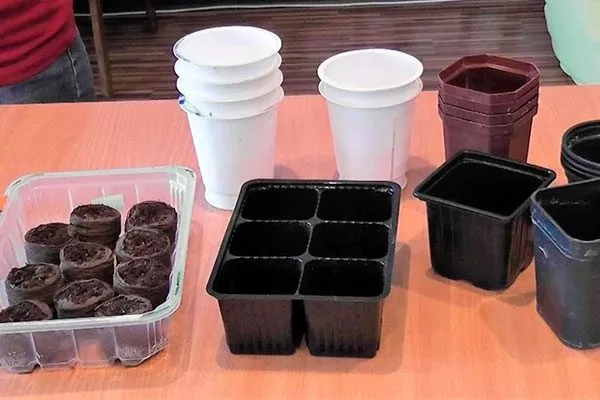
If purchasing disposable containers for tomato seedlings is beyond your means, feel free to use the first method. Young tomatoes tolerate transplanting well, unlike other crops, such as cucumbers. They are robust and can quickly recover from minor root damage.
Choose your growing medium wisely when growing Black Pear seedlings. The best soil for them is one that meets a number of requirements:
- easy;
- crumbly;
- well permeable to air and moisture;
- containing an abundance of nutrients;
- free from harmful insects, their larvae and eggs, as well as pathogenic microorganisms;
- having an acidity ranging from 5.5 to 6.5.
These characteristics are found in ready-made potting soil from flower shops, often labeled "universal" or "for vegetable seedlings." It's made from non-acidic peat, often with added coconut fiber.
Before sowing tomato seeds, combine your garden soil with sand or peat. Disinfect it using one of the following methods:
- by watering the homemade substrate with a saturated solution of potassium permanganate;
- by calcining the soil in the oven;
- by treating it with a fungicide solution such as Previcur;
- freezing.
By properly disinfecting your homemade soil mixture, you can prevent blackleg infestation in your seedlings. It will also reduce the risk of adult tomato plants becoming infected with various diseases in the future.
If you're creating your own soil for growing tomatoes at home, be sure to improve its fertility. Make it more nutritious by adding fertilizers:
- phosphorus-potassium compounds, such as Superphosphate;
- wood ash;
- preparations that promote rapid root growth;
- organomineral additives.
Before sowing seeds into the disinfected and enriched soil, warm it up to room temperature and moisten it thoroughly.
Sowing seeds in the usual way and in peat tablets
Plant the Black Pear variety seeds in a common box, following this sequence of steps:
- Fill the container with fertile soil, first making sure it has drainage holes and treating its interior surface with alcohol.
- Level the surface of the substrate. Use a stick or spoon to make furrows in it, 1-1.5 cm deep.
- Place the seeds in the furrows, spacing them a few centimeters apart. Cover them with soil. The optimal depth for planting the seeds is 1 cm.
- Moisten the seeds with lukewarm, settled water. Use a spray bottle to prevent the seeds from washing out of the soil.
- Cover the box with the crops with transparent thick film or glass.
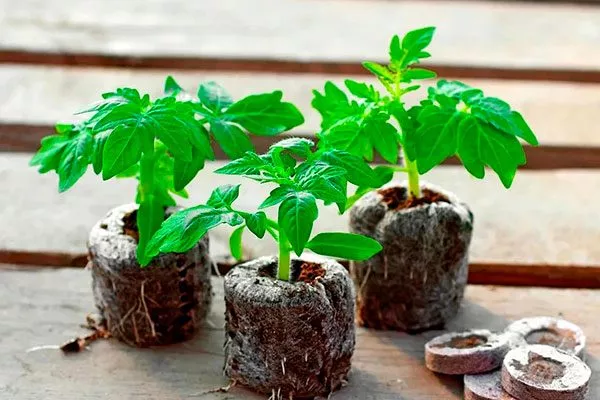
If you've decided to grow tomato seedlings without transplanting, purchase suitable peat molds. These individual containers offer many advantages over reusable plastic ones. Using them will provide you with numerous benefits:
- It will provide seedlings with additional nutrition, as it is made of natural material enriched with mineral fertilizers;
- plants in it rarely get sick, since it is thoroughly disinfected by the manufacturer;
- if there are no seedlings, you can reuse the tablets for sowing tomato seeds;
- transplanting seedlings to a permanent location is simplified; they are placed in holes directly in a peat “wrapper,” which decomposes perfectly in the garden soil and saturates it with additional nutrients;
- Tomatoes grown in pots or peat tablets are stronger, more viable and healthier.
After purchasing peat pellets from a flower shop, prepare them for sowing. Soak them in warm water and allow the pellets to swell. Then, place the pellets in a special container, leaving a few centimeters between them.
Carry out sowing work using swollen peat tablets as containers for growing tomatoes, following simple step-by-step instructions:
- Place one black pear seed in each tablet and place it in the designated depression.
- Using a toothpick, carefully push the seed into the peat-soil substrate from which the container is made.
- Cover the crops with plastic wrap or glass. If you placed the tablets in a store-bought container, cover them with the lid (included).
Leave the seeds in a box or peat container in a warm room. The optimal temperature for germination is 25-27˚C. Seedlings will emerge in 6-8 days. Once they appear, the plastic wrap can be removed.
Caring for seedlings
Once the sprouts emerge, move the container to a well-lit area. Ideally, leave it on a sunny windowsill in a room with a temperature between 20°C and 22°C. Create favorable conditions for the Black Pear seedlings and provide them with proper care:
- Make sure to maintain moderate substrate moisture.It shouldn't dry out completely or be overwatered. Otherwise, there's a high risk of plant death.
Water the black tomato plant sparingly with lukewarm, settled water. Before transplanting, water daily, using a syringe for convenience. After transplanting, water as needed from a watering can. Avoid dripping on the leaves and stems. - Provide at least 12 hours of daylightIn March, when there's still little sun and cloudy days are common, provide supplemental light to the seedlings with a grow light. Place it 60-70 cm from the plants.
Do not place boxes with tomato seedlings under regular incandescent light bulbs to prevent the crop from overheating.
On sunny days, turn the seedlings toward the light. Avoid allowing them to develop one-sidedly. To prevent the sun from scorching the sprouts, install a special light-diffusing screen on the window. This will prevent foliage burn. - Feed the seedling bushesApply fertilizer at least three times. Start doing this after the seedlings have developed 2-3 true leaves. Avoid using nitrogen-rich fertilizers, as this can result in elongated and stunted seedlings. Fertilize plants with mineral fertilizers (such as Green Guy AQUA Tomato) in an aqueous solution.
- Pick out the grown tomatoesAfter the plants have developed 2 true leaves, transplant them into peat pots or plastic cups (the optimal volume for individual containers is 400 ml).
- Harden off seedlingsBegin strengthening your tomatoes' immunity 10 days before moving them to the garden. For the first few days, leave the plants in an open, sunny window for 1-2 hours. Then gradually increase the amount of time they spend in the sun.
The last night before transplanting to a permanent location, the seedlings should spend on the balcony under film.
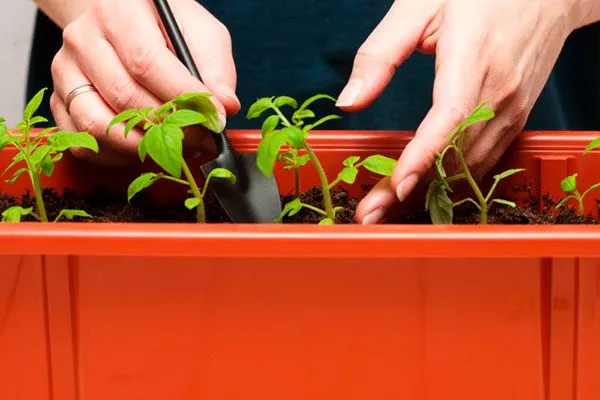
Transfer
Begin preparing the garden bed for growing black-fruited tomatoes in the fall. Select a sunny, wind-free area of the garden that's not prone to groundwater flooding. Dig the soil, clear it of weeds and their roots, and add organic matter.
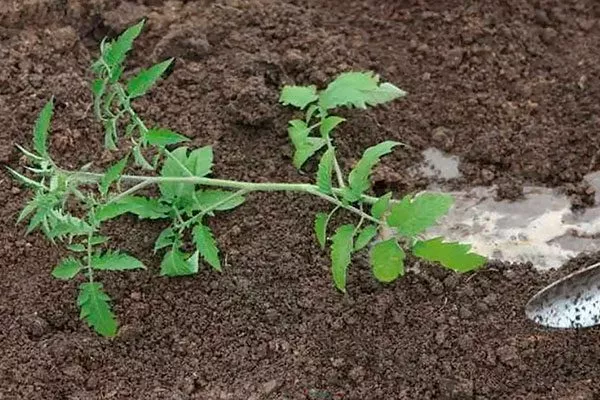
Plant tomato seedlings in an open garden bed in late May, once the soil in the garden has warmed to 15-18°C. Follow these step-by-step instructions:
- Dig planting holes 25 cm deep. Place them in a row or staggered pattern. Stick to a 40-50 x 60 cm pattern. You can plant no more than 4 plants per square meter.
- Water the holes. Add a handful of wood ash to each.
- Place the tomato seedlings, removed from the cups along with the root ball, into the holes. There's no need to break up the root ball. If the tomatoes are growing in peat pellets or pots, plant them directly in the "wrapper."
- Fill the holes with soil. Plant the plants deep enough to reach the cotyledons. Immediately install supports next to each seedling. They will need to be secured soon.
- ✓ Optimum soil temperature for planting seedlings: +15-18°C.
- ✓ Distance between plants when planting: 40-50 cm in a row, 60 cm between rows.
Care
To ensure your Black Pear trees remain disease-free and yield a bountiful harvest, care for them properly. Follow these agronomic practices:
- WateringImmediately after planting the seedlings, thoroughly moisten the soil beneath them with lukewarm, settled water. Avoid watering the tomatoes for the next 8–10 days. Allow them time to adapt to their new location and begin to grow.
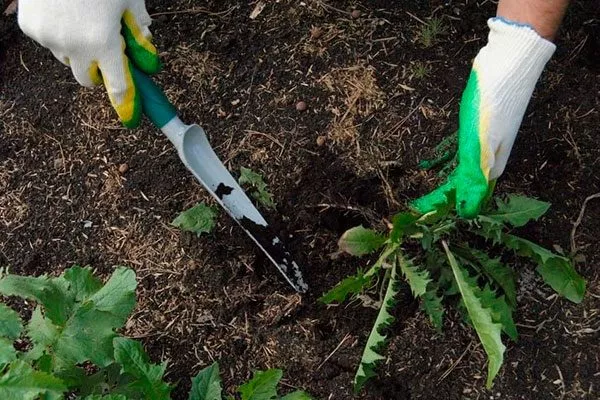
Then resume watering. It should be infrequent but deep. Apply water at the roots. Avoid getting it on the foliage. Don't allow the soil in the bed to dry out for long periods or become waterlogged. - Loosening and weed removalCarry out these procedures the day after watering the planting or after rain. Proceed carefully to avoid damaging the roots and stems. To retain moisture in the soil and suppress grass growth, apply a layer of organic mulch.

- Top dressingTen to fifteen days after transplanting the seedlings to the garden, water them with a solution of slurry, chicken manure, or a humic preparation. Fertilize the Black Pear a second time after the bushes begin to flower. Use superphosphate, either dry or in solution. When fruit set, fertilize the plants with potassium humate and spray them with a boric acid solution on the foliage.
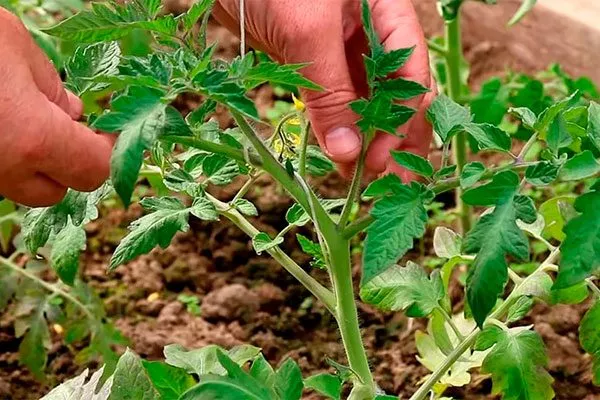
- Formation of the bush, garterFor full development and maximum productivity, train plants in single or double trunks. Pinch the stems after the 7th or 8th cluster. This technique promotes better ovary formation and fruit filling. Be sure to tie tall bushes to stakes or trellises. Don't neglect side-sonning.
Features of growing Black Pear
To successfully cultivate a varietal variety of the crop, a gardener who wants to get a rich harvest of black pear tomatoes will need to know some of the features of this process:
- This type of tomato grows well not only in film shelters, but also in glass greenhouses and in open-air garden plots;
- Black pear plants require mandatory gartering, which the gardener needs to start several days after transplanting the seedlings to a permanent location;
- bushes of the varietal variety need a lot of space to develop, they are placed per 1 sq. m in the amount of 3-4 pieces;
- the crop is demanding of soils; it does not tolerate heavy, dense, and acidic soils (do not neglect loosening, add sand or peat to the soil);
- Pear-shaped tomato plantings respond well to feeding with wood ash infusion (to obtain a nutrient solution, pour 100 g of ash into 10 liters of water and leave for 24 hours);
- To prevent disease and increase the yield of black chokeberry bushes, spray them with a solution of potassium permanganate (5 g of potassium permanganate per 10 liters of water);
- To increase crop productivity, accelerate fruit ripening and improve their taste, practice foliar feeding with a boric acid solution (10 g of the preparation per 10 liters of water).
Diseases and pests
Domestic gardeners love this variety for its strong immunity. Its bushes exhibit good resistance to the main diseases of nightshade crops:
- late blight;
- Cladosporiosis;
- rot.
Black pear plantings are most often affected by gardeners' failure to follow proper agricultural practices. Under poor care and unfavorable growing conditions, they can be susceptible to fusarium wilt. Young tomatoes grown indoors are particularly susceptible.
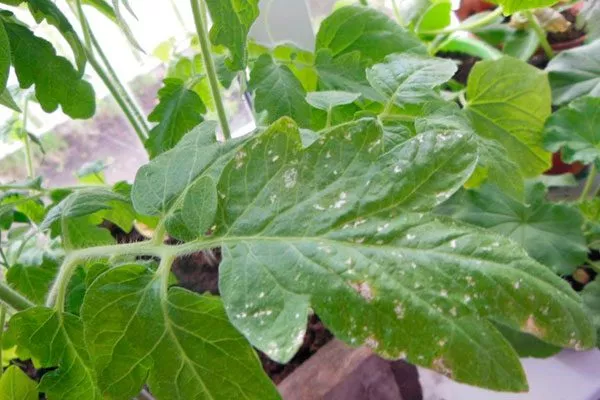
The development of tomato bushes by such a dangerous nightshade disease as Fusarium wilt is facilitated by environmental factors:
- high air temperature;
- lack of lighting.
If greenhouse tomatoes show signs of disease, take immediate action: remove infected plants from the garden bed along with the root ball, and spray their healthy neighbors with Fitosporin-M. This product is also suitable for preventative treatment of the vegetable crop, maintaining its health.
Pear-shaped tomatoes are also susceptible to pests such as cutworms, aphids, and whiteflies. To effectively control them, use insecticides such as Fitoverm, Actofit, and Akarin. These are compatible with fertilizers and fungicides.
How to grow Black Pear in protected and open ground?
Growing this varietal variety of the crop in open garden beds and greenhouses has some nuances that a gardener dreaming of a rich harvest of pear-shaped fruits should be aware of:
- Grow black tomatoes outdoors in the south of the country, while in the central and north regions, give preference to growing them in protected soil;
- Plant seedlings in a bed without cover only after the threat of frost has passed and the soil has warmed up to +15°C;
- Move seedlings to an open area of the garden during cloudy weather to reduce stress;
- do not neglect hardening off seedlings that you plan to grow outdoors;
- At first, shade young tomatoes growing outside of shelter to protect them from direct sunlight;
- tie tomato bushes planted in the garden to stakes;
- transfer dark-colored tomatoes to the greenhouse at the end of April or in the first days of May;
- dense planting of seedlings in protected soil is acceptable;
- Before “relocating” seedling bushes into the shelter, treat all its internal surfaces with Insectobacterin to avoid infection of the crop with fungi and pathogenic bacteria;
- Ventilate the greenhouse, monitor the air humidity and temperature inside it.
Harvesting and use of the crop
You'll be able to taste the first ripe tomatoes by the end of July. They're harvested en masse in early August. A deep chocolate coloration of the tomatoes' skin indicates they're ready to be picked.
Pear tomatoes are versatile. They're great for fresh consumption, salads, pizza, side dishes, ketchup and sauces, garnishing, drying, freezing, and pickling. These tomatoes are also suitable for whole-fruit canning. They don't crack during cooking.
If you plan to store some of your harvest, select fruits that are undamaged, unblemished, not overripe, and show no signs of spoilage. Place them in a clean container, wrapping each one in a paper towel. Store them in conditions that ensure good shelf life:
- temperature range: +7-14°С;
- air humidity level - no more than 80%;
- mandatory ventilation.
Pros and cons
The Black Pear is a unique variety with many qualities that have made it a favorite among Russian gardeners. Among its advantages are:
- high productivity;
- unpretentiousness and endurance of bushes, including their heat resistance;
- resistance to many nightshade diseases and especially late blight;
- the original appearance of the harvest, its beautiful chocolate color and interesting shape of the fruits;
- the pulp contains a large amount of carotene and anthocyanins;
- wonderful taste properties of tomatoes;
- their good shelf life and transportability;
- universal use of the crop.
The dark-fruited variety of the crop is not without its drawbacks. Its tall bushes require training and support. They are susceptible to pest attacks (whiteflies, cutworms, aphids). They do not grow well in acidic and heavy soils and do not tolerate drafts.
Reviews
The Black Pear is a mid-season, dark-colored tomato variety. Gardeners love it for its abundant fruit production, unique appearance, and exceptionally sweet flavor. They are eaten fresh as a summer dessert, used in sauces, canning, drying, and as a garnish.