
The Grozdevoy tomato is one of the most sought-after hybrids, deservedly gaining popularity thanks to its excellent characteristics. It's ideal for those who value good productivity, attractive fruit appearance, and low maintenance. With proper cultivation practices, you'll enjoy generous harvests throughout the season.
History of variety selection
Created in 2010, this hybrid was developed by Siberian breeders from the Semko company, under the leadership of Yu. B. Alekseev, who played a key role in its development.
General characteristics of the tomato Grozdevoy F1
The Grape Tomato is a cluster-type hybrid characterized by high disease resistance and adaptability to various climatic conditions. The tomatoes form and ripen in clusters, with the number of ovaries per cluster varying depending on the specific variety or hybrid.
Appearance of bushes
They are indeterminate, meaning they have no growth limit. Without pinching, the central shoots can reach 3 meters in height. However, vegetable growers most often pinch the tops at a height of about 2 meters, leaving a few leaves after the last cluster has formed.
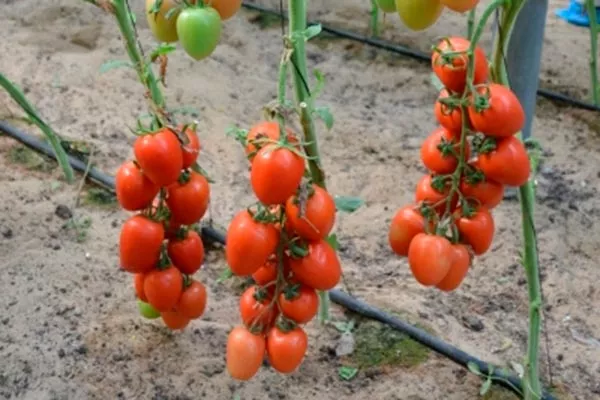
The leaves protect the bunch from the scorching sun and promote rapid ripening. The bushes are vigorous, with a moderate number of shoots and compact, oval-elongated leaves of a bright green color.
Description of the Grozdevoy tomato fruit with photos
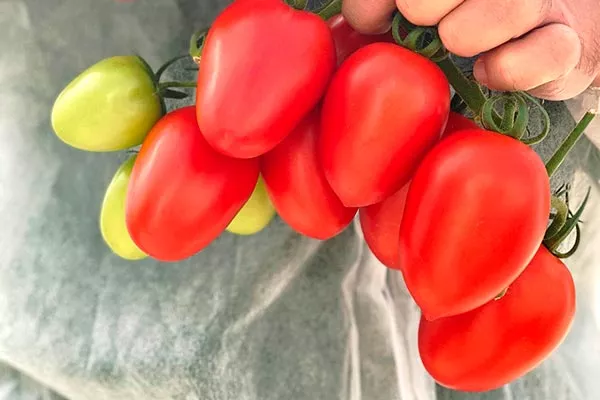
Ripe tomatoes are small and elliptical in shape, with an average weight of about 80g. They are of high quality and attractive in appearance.
Distinguishing characteristics:
- Peel - thin, smooth, with a characteristic shine and bright red hue.
- Pulp – dense, juicy, with two seed chambers containing underdeveloped seeds unsuitable for planting, since hybrid plants do not retain varietal characteristics.
- Taste - balanced, with pleasant sweetness and slight sourness.
- ✓ The fruits have high resistance to cracking due to their dense skin.
- ✓ The sugar content in the fruits reaches 5%, which provides their sweet taste.
Ripening time and yield
It's an early-ripening hybrid: about 3.5 months pass from germination to harvesting the first ripe fruits. When sowing seeds for seedlings in March, harvesting can begin as early as mid-July, subject to favorable weather and adherence to agricultural practices.
It is characterized by good productivity, allowing you to harvest up to 19-20 kg of ripe fruit from each square meter of planting.
Areas of application of fruits
Tomatoes are eaten fresh, used in salads, and added to various dishes. They are also successfully used for pickling, drying, and freezing for the winter.
Resistance to diseases and pests
Grozdevoy has strong immunity to most diseases common to other varieties, including cladosporiosis. Its bushes are rarely attacked by pests, with the exception of aphids and spider mites.
How to grow?
The Grozdevoy tomato hybrid is grown exclusively from seedlings. The key aspects of cultivating seedlings and transplanting them to their permanent locations will be described below.
Features of cluster tomatoes
Cluster tomatoes are varieties that produce fruit in clusters, allowing many tomatoes to ripen simultaneously in a single cluster. These tomatoes are less prone to cracking or overripening.
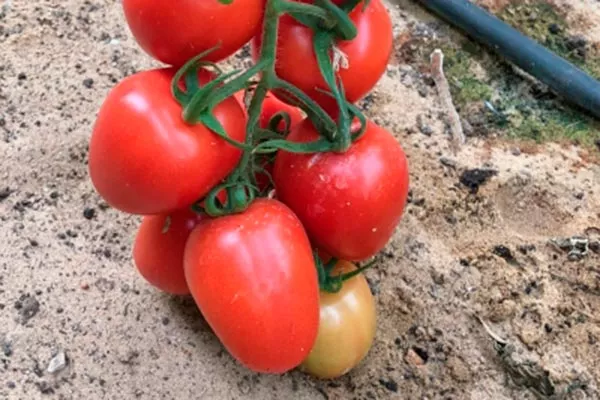
They are characterized by their low maintenance, resistance to most diseases, and high yields. The fruits are small, attractive, and have a pleasant taste. Thanks to these qualities, cluster tomatoes are very popular among Russian vegetable growers.
Preparing seedlings
When the seedlings have 2-3 true leaves, transplant them. Replant each plant in a separate container and place it in a dark place to prevent them from stretching.
Once the sprouts have grown stronger, begin the hardening process by moving them to a cool room with a temperature of about +8°C.
Soil preparation
When preparing a plot for the Grozdevoy tomato, consider crop rotation rules. The best predecessors for this variety are cabbage, garlic, legumes, cucumbers, onions, and carrots.
Avoid growing tomatoes after potatoes, bell peppers, eggplants, or beets—they are susceptible to the same diseases and pests. The area should be well-drained. Wind and drafts don't harm the plants; in fact, they promote better pollination and ventilation.
Prepare the soil for tomatoes in advance by adding equal parts of humus, river sand, rotted manure, as well as garden soil, nitrophoska, and wood ash.
- ✓ The optimal soil temperature for planting seedlings should be at least +15°C.
- ✓ The distance between plants should take into account their indeterminate growth, at least 60 cm.
Planting diagram
The distance between bushes should be 40-60 cm, and between rows – 70-100 cm. This promotes good air circulation and ease of plant care.
Transplanting seedlings into a greenhouse and open ground
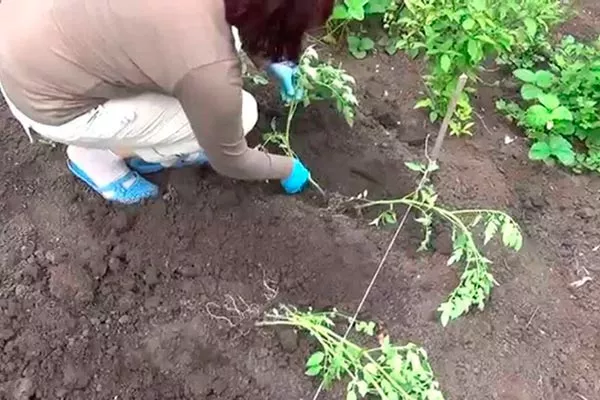
Transplant seedlings in the evening. Transfer the seedlings with the root ball, burying them up to the first true leaves. This method of transferring them into the ground helps avoid root damage and promotes faster adaptation of the plants to their new location.
Further care of tomatoes
To successfully grow the crop, it's important to adhere to certain requirements and rules. To achieve generous harvests, follow these simple agricultural practices:
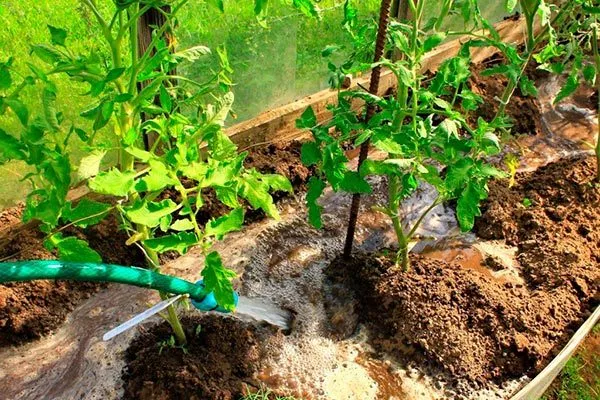
- Watering. Tomatoes don't like excess moisture, as it can lead to excessive vegetative growth instead of fruit formation. Water sparingly, only at the roots, to avoid water getting on the leaves and stems.
Water the bushes in the morning or evening with warm, settled water. In the first few days after transplanting the seedlings into the beds, stop watering for a week to stimulate root growth. Once the tomatoes emerge, water every 2-3 days, applying up to 5 liters of water per plant. - Loosening and mulching. After watering, loosen the soil around the roots and mulch it with a layer of straw or grass clippings. This will help retain moisture in the soil and prevent rapid evaporation.
- Fertilizers. When transplanting seedlings to their permanent location, apply a mixture of nitrogen and phosphorus. 12-14 days after the first feeding, when the first flower clusters open, apply nitrogen and potassium fertilizers. When ovaries are forming and tomatoes are ripening, apply a fertilizer containing superphosphate and potassium salt.
Prevention of diseases and pests
The crop is resistant to many diseases, but it's important to take preventative measures to avoid infections and pests. Here are the main ones and how to control them:
- Late blight. A dangerous fungal disease that can lead to plant death. Fruit becomes covered in brown rot, and the root system dies. To combat late blight, use Profit Gold and Abiga-Peak, following the instructions.
- Aphids and whiteflies. Insects feed on plant sap and can cause significant damage. They can destroy tomato plants even before they produce fruit. To control them, use insecticides such as Zubr, Iskra, Zolotoy, Komandor, Apache, and others.
After harvesting, burn the tops of all garden crops and dig the soil deeply (to a depth of 25-30 cm). This will help kill insect larvae and fungal spores. Avoid overwatering and dense plantings, as dense foliage can promote the development of diseases, including late blight.
Similar names
| Name | Growth type | Fruit shape | Fruit color |
|---|---|---|---|
| Siberian grape | Determinant | Oblong | Crimson red |
| Black grape | Indeterminate | Plum-shaped | Dark |
| French grape | Indeterminate | Oval | Red |
The Grozdevoy hybrid has several similar varieties, which are popular among gardeners due to their low maintenance, good productivity, and excellent taste. Popular varieties include:
- Siberian grape. A medium-sized, determinate variety growing up to 90 cm tall. Fruits average 150 g in weight, oblong in shape, crimson-red, and with sweet, fleshy flesh. The growing season lasts 120-130 days.
The crop is frost-resistant and has versatile uses: salads, preserves, and fresh dishes. Yields reach 7 kg per square meter in open ground and 10-12 kg in greenhouses. - Black grape. This tall, indeterminate variety (up to 3.5 m tall) requires pinching and shaping. The plum-shaped fruits are dark in color, weighing up to 80 g. The fruiting period is extended (until September when grown indoors). It responds well to fertilizing and requires regular watering. Yields 12-14 kg per square meter.
- French grape. This variety was developed by a Siberian breeder and produced by the Siberian Garden company. The bushes reach 1-1.7 m in height, producing 10-15 fruits per cluster. The tomatoes are fleshy and juicy, weighing 70-100 g, with a sweet and sour taste. The crop is resistant to late blight and other diseases.
When growing in northern regions, plastic covering is recommended. With proper care and planting 3-4 seedlings per square meter, yields can reach up to 10 kg per bush.
These varieties have excellent characteristics suitable for various growing conditions and can be a good alternative to Grozdev F1.
Similar varieties by characteristics
The Grozdevoy hybrid has similar varieties, which produce similarly medium-sized tomatoes with an elongated oval shape and a small nose. Among these, the following varieties stand out: Chudo Gollandii, Amulet, Stolypin, Agafya, and Pasta Amishei.
Pros and cons
Before growing the Grape tomato, it's important to carefully consider its advantages and disadvantages. Among its advantages are the following:
But there are some points that may cause dissatisfaction among gardeners, although they are not significant disadvantages: the need to purchase seeds every year.
Reviews
The Grozdevoy tomato combines disease resistance, tolerance to temperature fluctuations, and excellent flavor. This variety is suitable for both open ground and greenhouse cultivation, and its tomatoes are distinguished by their beautiful appearance and versatility. With proper and comprehensive care, you can produce high-quality vegetables all season long.