
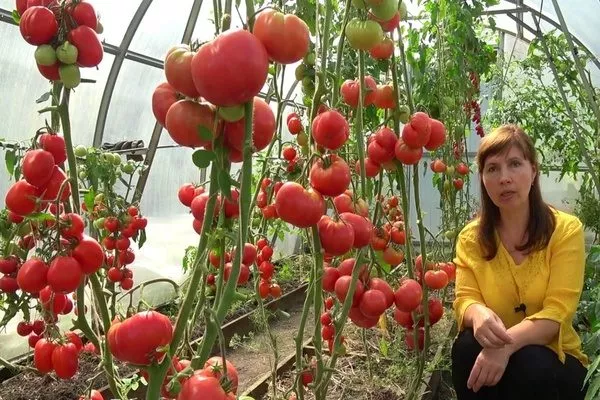
The "Pride of the Table" tomato has proven itself to be a productive vegetable for growing in the garden, especially in protected soil. This variety is highly disease-resistant and produces particularly large and tasty fruits. It's important to delve into the specifics of growing this tomato and take the time to study its characteristics.
History of variety selection
Pride of the Table is a first-class first-generation hybrid, as confirmed by the F1 abbreviation on the packaging. This variety was created by renowned breeder O. D. Kiramov. It successfully passed all required tests and was registered in the State Register of Breeding Achievements of the Russian Federation in 2017.
The tomato is ideally suited for cultivation in the following climatic zones:
- Northern;
- North-West;
- Central;
- Volga-Vyatka;
- Central Black Earth;
- North Caucasian;
- Middle Volga;
- Lower Volga;
- Ural;
- West Siberian;
- East Siberian;
- Far Eastern.
General characteristics of the tomato variety Pride of the Feast F1
The Partner agricultural firm produces an innovative tomato hybrid, Pride of the Table, which is ideal for growing both outdoors and in various types of greenhouses. Pride of the Table is a mid-early hybrid. It boasts high yields, making it attractive to both agricultural businesses and hobbyists.
Appearance of bushes
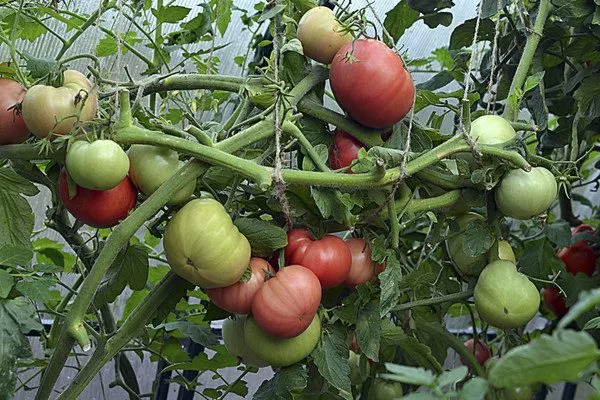
This variety has an indeterminate habit, allowing it to bear fruit continuously throughout the season. Staking is required for optimal growth and development.
Peculiarities:
- The plants grow to a height of 200 cm or more, possessing a powerful root system that penetrates the soil to a considerable depth.
- Their vine-like stems require support to support their own weight, along with the numerous fruits that grow in clusters of 3-5 on the intermediate inflorescences.
- The formation of the first fruiting brush occurs above the ninth leaf, and the subsequent ones appear every two leaves.
- The bushes are best grown in the form of a single trunk, but some gardeners prefer to grow the plant on two stems.
Description of the Pride of the Feast variety with photos
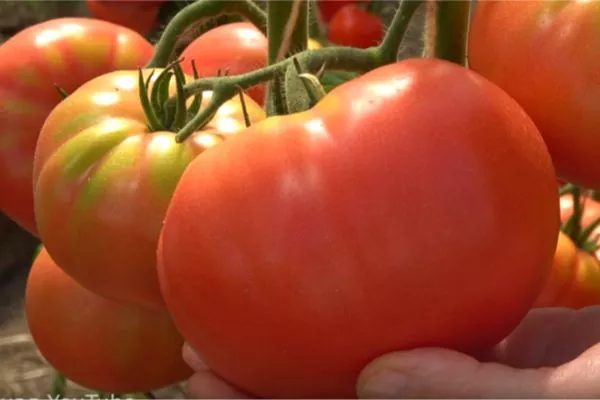
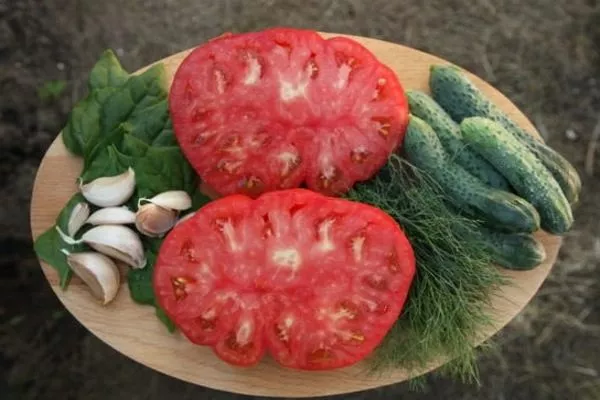
This hybrid tomato variety doesn't disappoint, living up to its name. The Pride of the Feast tomato is strikingly beautiful: large fruits with a vibrant crimson hue and a flat, round shape with ridges along the sides.
Other varietal characteristics:
- during the ripening period, the green tint remains around the stalk, and the rest of the fruit is a beautiful raspberry color;
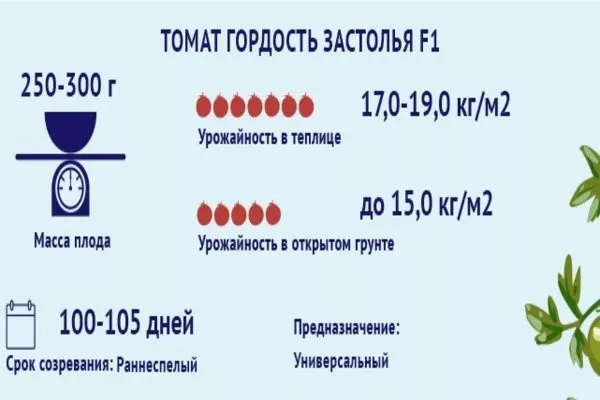
- the average weight of one fruit ranges from 320 to 330 g, but if agricultural technology is followed, it is possible to grow giant specimens weighing up to 700 g;
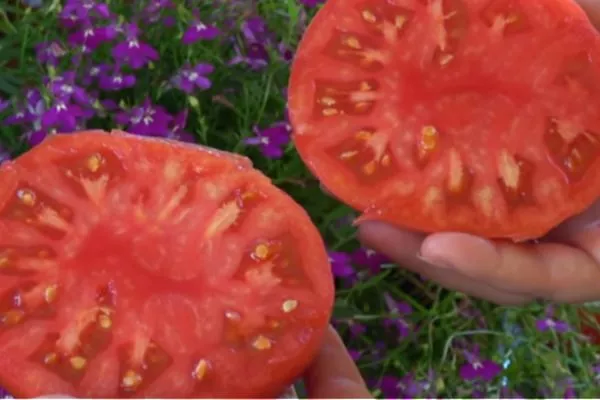
- when cut, juicy pulp with a small number of small seeds, of which there are 4 to 6, is visible;
- The pulp is characterized by a harmonious taste, high sugar content (up to 20%) and low acidity (you can read about other varieties of tomatoes characterized by excellent taste) Here).
Ripening time and yield
The Pride of the Table tomato is a mid-season variety. The first harvest can be expected 100-105 days after the seeds have sprouted. This period may vary depending on weather conditions and plant care.
Peculiarities:
- The peak of the harvest occurs in late July, when tomatoes are harvested in abundance. Fruiting continues until early autumn.
- Tomatoes should be harvested from the vine when they are fully colored. It's important to choose the right time so that the fruits separate easily from the stems. It's not recommended to harvest tomatoes that are ripe on only one side.
- If the bush is damaged or green fruits need to be picked, they can be ripened in a sunny spot, but not in direct sunlight. Green fruits typically ripen in 7-10 days, while one-sided fruits ripen in 2-3 days.
- This variety rightfully inspires pride not only for its tomato flavor and appearance, but also for its productivity: 12-19 kg of vegetables can be harvested from 1 square meter of soil. A single bush yields about 6 kg.
Areas of application of fruits
Large tomatoes aren't ideal for home canning and marinating. However, they're great for fresh salads, grilling, slicing, and more.
The hard shell helps preserve the appearance of the crop during transportation.
These pink, rich fruits can be used to make juices and sauces, and are also indispensable when preparing winter canned salads.
Resistance to diseases and pests
This hybrid shows amazing resistance to such diseases as:
- blossom-end rot;
- late blight;
- brown spot;
- Tomato mosaic virus.
However, don't neglect regular inspection of your crops. If diseases or pests are detected, tomatoes require treatment with Bordeaux mixture, calcium nitrate, or copper sulfate. These products are not only safe for seedlings but can also be used for watering mature plants.

To combat pests, you can use readily available home remedies, such as wormwood infusion, garlic, or a mild soap solution. A simple spray on the leaves, stems, and fruits will help repel the main pests.
Advantages and disadvantages of the Pride of the Table tomato
This young tomato variety has gained popularity due to a number of advantages:
To get a complete picture, it is worth mentioning some of the disadvantages:
To achieve maximum yield in northern and temperate latitudes, greenhouses are recommended; tomatoes produce good fruit in open ground only in southern regions.
Features of planting and growing
The Pride of the Table tomato is tolerant of a variety of growing conditions, making it an ideal choice for beginning gardeners. Only basic plant care skills are required. This variety prefers fertile, slightly acidic soil.
Planting tomato seeds for seedlings
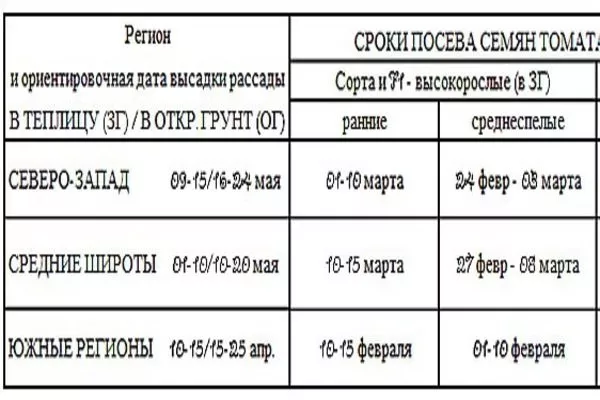
The start of sowing seeds for seedlings usually occurs in late February or early March. It's important to consider the climate of your region, the conditions in which the plants will grow (greenhouses, open ground), and the timing of transplanting to the garden.
Before starting work, it is necessary to complete the following preparatory steps:
- Buy a potting mix from a specialist store or prepare it yourself using the following ingredients:
- compost – 1 part;
- humus – 1 part;
- turf soil - 2 parts.
- Disinfect the soil mixture with a weak solution of potassium permanganate or leave it in the cold for 7-10 days.
- Soak seeds in fungicide to increase their resistance to diseases.
- Place the seeds in a growth stimulator (Kornevin, Epin, Zircon).
- Clean the planting containers (boxes, cassettes, etc.), rinse them with boiling water and treat them with potassium permanganate to kill bacteria on the surface.
The procedure for planting tomato seeds Pride of the Feast:
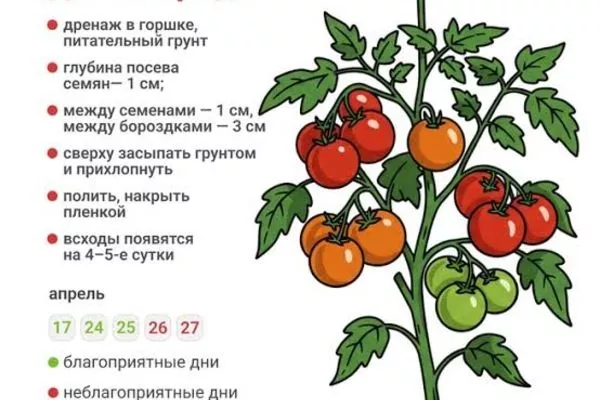
- Fill the planting containers with drainage material, then add the potting mix.
- Water the soil with warm water and wait until it is completely saturated.
- Make furrows on the surface and bury the seeds in them.
- Sprinkle a thin layer of loose soil on top.
- Moisten the soil with water from a spray bottle.
- Cover the containers with film or other material and place them in a warm place at a temperature of +24+26 degrees.
What to do next with the seedlings:
- After the first green leaves appear, remove the cover and move the containers to a cool room for a week to harden off.
- After two or three leaves have formed, transplant the seedlings into individual, larger containers to develop the root system.
- Seven days after transplanting, feed with a complex mineral fertilizer. You can find more information about fertilizing tomato seedlings here. Here.
- Two weeks before transplanting to their permanent location, begin hardening off the plants by placing them outside or on the balcony. Increase the amount of time spent outdoors each day.
Transplanting seedlings into a greenhouse or open ground
When the plants reach 60 days of age, it's time to move them to their permanent location. In May, they are transplanted into a greenhouse, and two weeks later, into the open ground. Fertilizer, such as dolomite flour, is added to the beds.
The Pride of the Feast tomato is distinguished by its tall growth and dense crown, so it is recommended to plant no more than three plants per square meter.
For best results, follow the following planting pattern:
- the distance between tomatoes is 50-60 cm;
- between rows – 70-80 cm.
It is necessary to carefully prepare a support or trellis next to each bush and mulch the root zone with straw or hay.
Further care of tomatoes
To develop a strong trunk in indeterminate tomatoes, it's important to regularly remove side shoots. No more than two main branches are allowed. To ensure a high yield, new shoots must be removed weekly. Failure to do so will result in small fruits and a significant reduction in yield.
Care activities include the following aspects:
- Hybrid tomatoes bloom especially profusely, but leaving all the flowers on the bush is a serious mistake. Experienced gardeners recommend leaving no more than three flowers per inflorescence and no more than five buds per cluster. It's also important to closely monitor the formation of the inflorescences and regularly remove old ones as new ones appear.
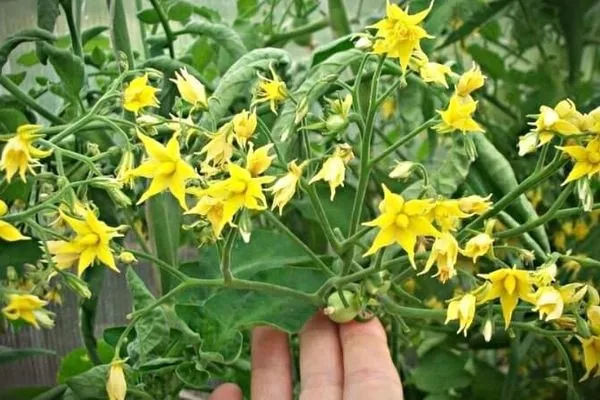
- Beginning in late June, gradually remove the leaves from the lower part of the plant. By the time the first tomato cluster ripens, all leaves below the main stem should be removed.
- Keep the soil around the main stem constantly loosened.
- Prevent weeds from growing as they will rob your tomatoes of nutrients, causing smaller fruit and poorer flavor.
- Hybrid tomatoes love the sun but don't tolerate being watered on hot days. Water only at the roots, avoiding contact with the leaves. The ideal water temperature is 22 to 25 degrees Celsius.
Moisten the soil early in the morning or after 7 p.m., twice a week. If there is no drought, moistening once a week is sufficient.

- Fertilize to ensure the soil has sufficient beneficial micronutrients. If the beds were well fertilized in the fall and spring, additional fertilizing is not necessary. In depleted soils, apply a mineral complex or a mullein solution two weeks after transplanting the tomatoes.
Important: - If the seedlings continue to suffer after transplanting, fertilizing should be stopped for 7-10 days;
- To stimulate the growth of bushes, apply nitrogen fertilizers (urea) - usually 3-4 weeks after planting the seedlings;
- The fertilizing procedure should be carried out twice throughout the entire growth period: at the beginning of flowering and during the period of fruit formation - at this time phosphorus and potassium are needed.
Disease prevention and pest control
Preventing the development of fungal, viral or bacterial infections in plants is much easier than curing them.
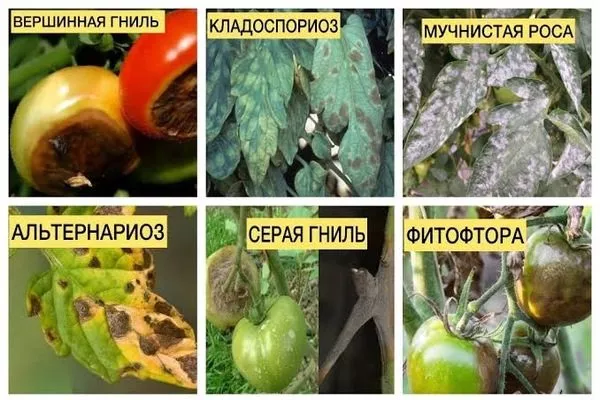
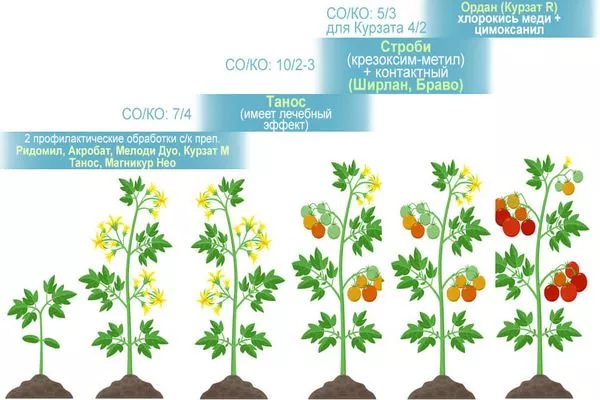
A week before transplanting seedlings into a greenhouse or open field, it is recommended to treat them with a fungicide. There are a wide range of options for protection:
- Quadris;
- Tattoo;
- Fitosporin;
- Maxim;
- Bordeaux mixture.
In summer, in June and July, plants can be attacked by aphids, spider mites, Colorado potato beetles, and other pests. Systemic insecticides are effective insecticides:
- Spark;
- Actellic;
- Colorado;
- Aktara;
- Decis;
- Biotlin;
- Fitoverm.

Folk remedies are no less effective. The following ingredients are used to prepare solutions:
- ammonia;
- soda;
- potato tops;
- mustard powder;
- wood ash;
- laundry soap;
- onion peel;
- garlic.
During preventative treatment of tomatoes, the weather should be dry and windless. If using chemicals, harvesting should be delayed for 2-3 days after treatment.
Reviews
The pride of the table is a tomato that truly deserves its proud name. It not only attracts attention with its bright color but also delights gourmets with its rich flavor. The fleshy texture of the fruit makes it ideal for salads. This variety stores well, allowing you to enjoy its flavor throughout the winter, making every feast truly festive.