
The tomato variety Gnome Shadow Fight is classified as determinate, meaning it grows at a limited height, consistent with the manufacturer's specifications. This variety is an excellent choice for plastic greenhouses or open-air cultivation, as it doesn't require any special conditions to ensure the quantity and quality of its harvest.
Features of the variety
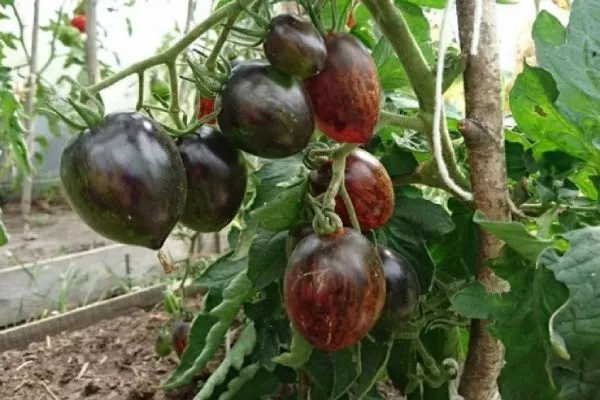
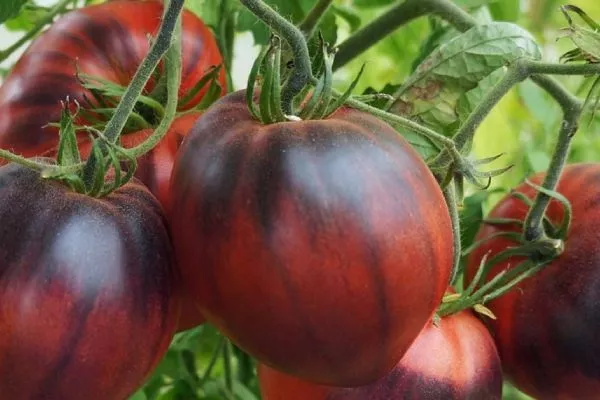
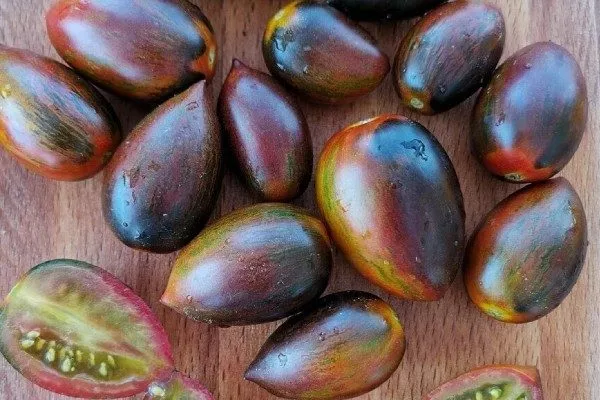
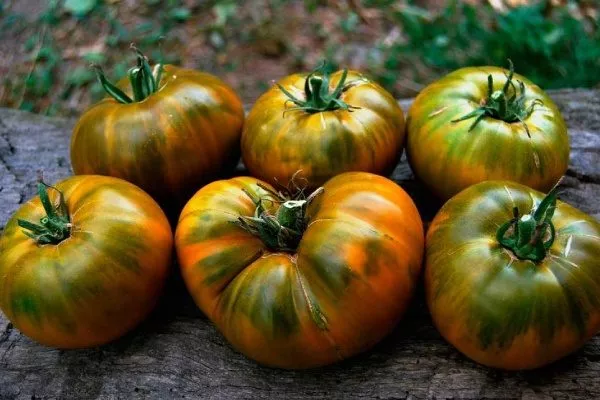
The "Boy s Teneny" tomato, a Gnome selection, stands out for its unique coloring: its fruits are decorated with vibrant stripes in a variety of shades—from orange to red and burgundy, crimson and greenish—graduating to a deep purple hue at the top. This rainbow tomato combines more than five vibrant color schemes.
Description of the bush
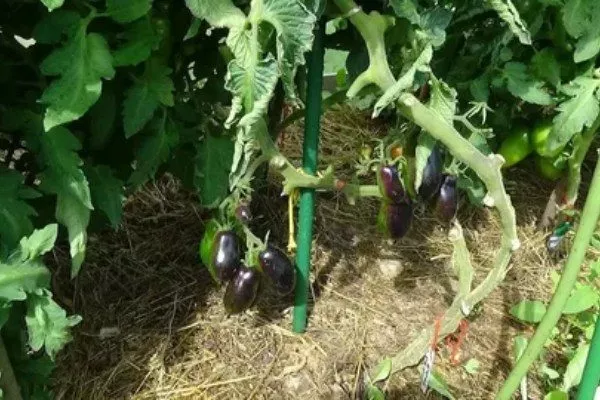
Determinate bushes do not exceed 100 cm in height and require constant attention: it is necessary to support branches overloaded with fruit, remove excess stems and harvest ripe tomatoes in a timely manner.
Characteristic features:
- Plants develop only two or three main trunks. These develop naturally, without human intervention.
- Tomato leaves are a rich green color and are characterized by wide blades with a wrinkled surface, reminiscent of potato leaves.
- The inflorescence is simple. The first fruit cluster appears above the sixth or seventh leaf, with subsequent clusters occurring every one or two leaves.
- The plant's crown is compact and requires little shaping. Each cluster typically bears four to six ripe fruits.
Description of fruits
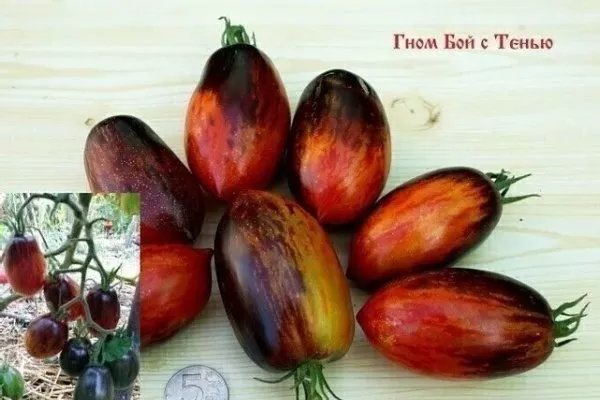
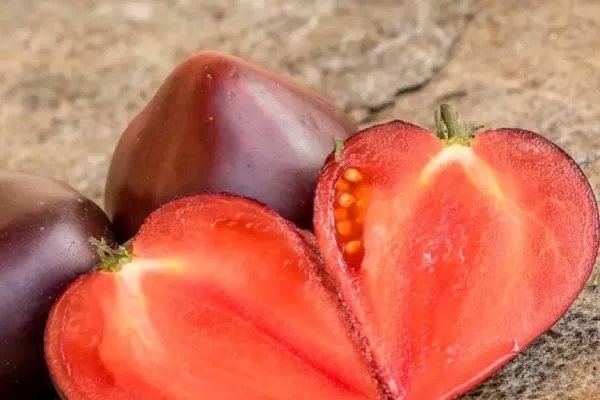
These tomatoes are unusual in appearance, reminiscent of a sweet pepper. They typically reach about 8 cm in size and produce above-average yields. A distinctive feature of these tomatoes is their unusual coloring, which stands out from other varieties.
The plant bears fruits with a bizarre range of colors:
- the top is painted in a bright golden-orange color with small spots;
- Along the stalk and skin there is an almost black anthocyanin, gradually turning into a dark burgundy shade;
- in the middle you can find crimson stripes with a brown tint;
- At the base of the fruit, the color can vary from purple to almost black, depending on the direction of the sun's rays.
Other varietal characteristics:
- medium-sized tomatoes, weighing no more than 100 g, have a smooth and shiny surface, free of wrinkles and protrusions;
- the fruits look organic and attractive on the bush, which makes them an excellent choice for decorating a garden or vegetable garden;
- vegetables are distinguished by moderate juice content and particularly firm pulp;
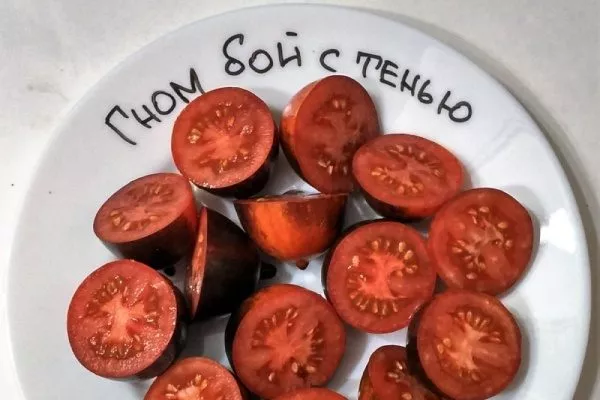
- When cut, you can see two seed chambers with a small number of seeds (this variety is natural, which allows everyone to collect material for planting next season);
- The taste of these tomatoes is a real pleasure for the eater: sweetness is combined with a delicate sour taste, but overall it feels soft;
- The aroma is pleasantly fruity, which is especially appreciated and noted by many.
Main characteristics
The "Shadow Fight" tomato variety offers an excellent opportunity for beginning gardeners, as it requires no specialized vegetable gardening knowledge. It is resistant to many dangerous diseases, including brown spot and macrosporiosis, making it especially valuable for experienced growers.
History, growing regions, durability
The Shadow Fight tomato is the result of collaborative research between scientists from the US and Australia. It is part of the Gnome series, which also includes other low-growing varieties. It was developed by renowned breeder Tom Wagner.
In 2013, Russian specialists made improvements to the variety to better adapt it to the conditions of the Russian climate zone. Although it is not included in the State Register of Breeding Achievements, there is evidence of its registration in the Volga-Vyatka region.
This variety is recommended for both greenhouse and open-air cultivation. In the Urals, Siberia, and Northwest, greenhouses are preferred for planting.
Ripening time and yield
Shadow Fight is a medium-early variety, reaching maturity in 100-105 days in a greenhouse and 110-115 days in an open garden. The fruits are ready for harvesting from June 12-16 and can be immediately placed in a dark place to ripen, but they can also be left on the vine until fully ripe.
It is characterized by good productivity – 15-18 kg of fruit can be harvested from 1 square meter, but this requires careful maintenance of the bushes and avoiding growing a large number of bushes in the same area, which can reduce the yield.
Uses of fruits
Ripe Shadow Fight tomatoes are excellent for eating raw; their sweet, slightly tart flavor is perfect. These tomatoes are great for canning alongside cucumbers and other vegetables, and their varied coloring adds a touch of exotic flavor to winter preserves.
These tomatoes make a wonderful table decoration as a standalone dish. Suggested uses:
- any salads;
- soups;
- sauces;
- gravy;
- tomato juice;
- canned vegetables (lecho, caviar, salad);
- whole fruit preservation (pickled, salted).
How to grow seedlings?
This variety is highly resistant to climate change and undemanding, allowing it to be grown both indoors and outdoors. However, in the more northern regions of the country, it is recommended to grow it exclusively in protected conditions, such as greenhouses.
Preparing seeds for sowing
To begin growing unusual tomatoes, sow them 60-70 days before transplanting them to their permanent location. You can use a special substrate or create your own mixture from the following ingredients:
- garden soil;
- peat;
- sand;
- compost/humus.
All components are mixed in equal proportions.
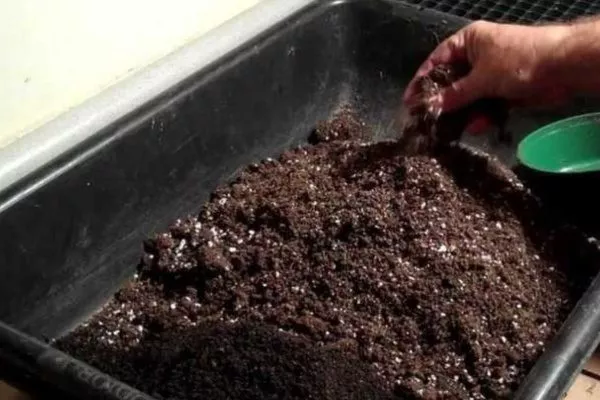
Seed preparation includes several stages:
- Calibration. This process helps select "live" seeds. To perform it, you need:
- take a glass of water (200 ml) at room temperature and add 0.5 tbsp. of salt to it;
- place the seeds in the resulting solution and leave them there for 8-10 minutes;
- remove and discard any floating specimens, as they are empty and will not germinate;
- The remaining seeds are ready for the next step.
- Disinfection. This manipulation helps destroy potential pathogens (fungi, infections) and improve the overall health of the future crop. Sequence of actions:
- dissolve 1 g of potassium permanganate in 1 liter of water;
- Place the seeds in the solution for 20 minutes (increasing the time spent in the solution may reduce germination).
- Stratification. This method is rarely used, but it can help improve yields. What to do:
- buy peat mixture at a gardening store and mix it with seeds;
- place the whole mass in the refrigerator for a month;
- After the time has elapsed, remove the mixture from the refrigerator, rinse the seeds and dry them.
- Stimulation. Skipping this step can increase the risk of under-healthy plants, which will lead to reduced productivity. What to do:
- dissolve 1.5 tablespoons of ash in a glass of 200 ml water;
- let the liquid steep for 24 hours;
- Place the seeds in the mixture, wrapping them in gauze beforehand, and leave for 5 hours;
- remove the seeds and dry thoroughly.
| Method | Processing time | Efficiency |
|---|---|---|
| Calibration | 8-10 minutes | High |
| Disinfection | 20 min | High |
| Stratification | 1 month | Average |
| Stimulation | 5 hours | High |
Sowing and care
The optimal method for sowing seeds that should be followed is:
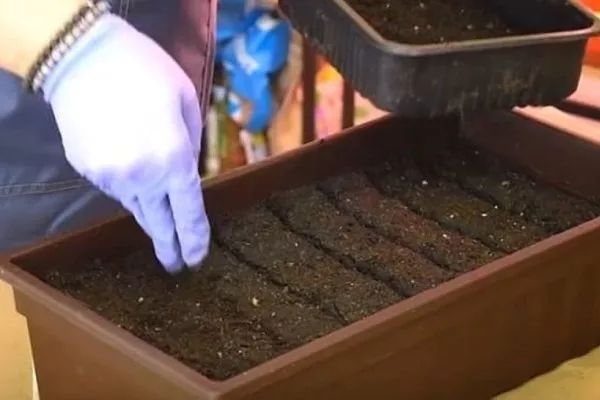
- Prepare suitable containers and fill them with rich soil substrate to 2/3 of their volume.
- Spray the soil with a small amount of warm water.
- Create depressions in the soil using a sharp object such as a stick, to a depth of about 1 cm.
- Place the seeds in these holes and cover them with a thin layer of soil.
- Spray generously with warm water again.
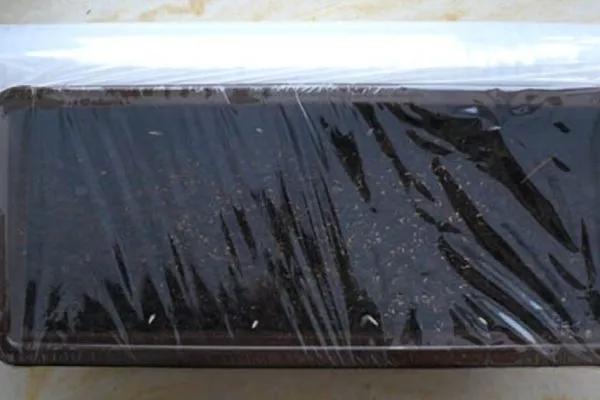
- Cover the boxes with the seed mixture with transparent film to create warm conditions and place them in a warm place - next to a radiator or in the kitchen at a temperature of +25°C to +30°C.
- ✓ Optimum temperature for seed germination: +25°C to +30°C.
- ✓ The required volume of the planting container after picking: not less than 500-700 ml.
Other growing rules:
- There's no need to moisten the seeds, as the film maintains moisture long enough to prevent the soil from drying out. However, if you notice the soil is dry, mist it with a spray bottle. If the soil moisture is too high, uncover the trays for a day to allow the soil to dry out a bit.
- Open the cover every day for ventilation to prevent the seeds from rotting.
- After the first green shoots appear, completely remove the film and move the seedlings to a cooler place with a temperature of +17+19°C for a week to prevent them from growing excessively.
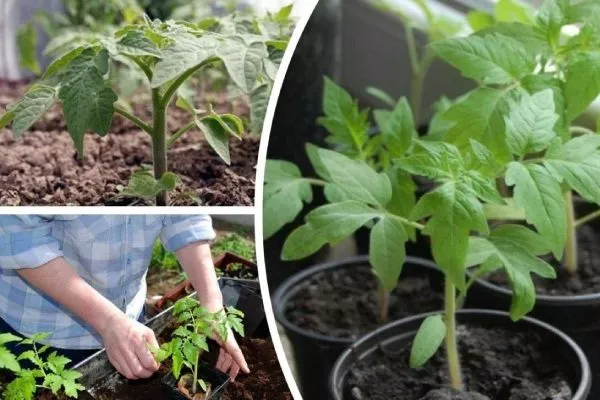
- Perform the transplanting procedure when 2-3 true leaves have formed. The root system of the Shadow Fight tomato requires a planting container volume of at least 500-700 ml.
- A week after picking, feed the seedlings with mineral fertilizer and reduce the temperature to 22°C.
- Two weeks before transplanting into the garden, begin the process of adaptation to external conditions.
Selecting seedlings
To guarantee a bountiful harvest, you need to start with high-quality seedlings. The most reliable way to get good seedlings is to grow them yourself from seeds. However, if you don't have the time or opportunity to do this, or you missed the sowing deadline, you'll have to buy ready-made seedlings from the market.
It's important to approach this issue responsibly, as the quality of seedlings directly impacts the performance of future mature plants and their yield. Therefore, when choosing seedlings, consider the following criteria:
- Avoid purchasing plants with already formed ovaries, even if they look attractive. Early ovaries can lead to their own death when planted outdoors, which can delay the first harvest.
- Avoid overly dense and overgrown bushes with thick trunks and abundant foliage. Such plants can be fertilized with nitrogen, which stimulates foliage growth but negatively impacts yield.
- The optimal stem thickness for a good seedling should be approximately the thickness of a pencil. Gnome seedlings should have approximately 7-8 leaves and one flower cluster.
- The lower leaves should be a uniform green color, with no signs of yellowing, browning, or darkening of the tips.
- Plants should not have any damage or pests.
- It's best to purchase already transplanted seedlings that have a well-branched and strong root system. This ensures the plant's viability and ability to thrive in open ground. A dense root ball is an indicator of a good root system.
Plants with underdeveloped root systems may require more time to acclimate, as their root mass is not yet fully formed. Therefore, such specimens should be avoided. - Choose hardened seedlings. They adapt quickly to new conditions, are more resilient to low nighttime temperatures, and tolerate temperature fluctuations more reliably.
These plants are distinguished by a rich, vibrant green hue. However, greenhouse seedlings, which are pale green, often suffer from temperature fluctuations when transplanted into open ground and are at high risk of dying.
Transfer
Two months after the first sprouts appear, you can move the tomatoes to open beds. The ideal location is a section of the garden protected from wind and drafts, where water doesn't accumulate after heavy rains, and where there's ample sunlight.
Due to their compact size, up to five or six plants can be planted in a 1 square meter area. To do this, dig holes 30-40 cm apart, leaving a 50-55 cm gap between rows.
Next steps:
- Before planting the seedlings, fertilize the holes. Add ash, compost, and mineral fertilizers to each hole.
- Then place the seedlings, cover with soil, compact lightly and water generously.
- Place stakes next to each bush to support the plants.
Care
Caring for tomatoes is standard. It involves several basic steps:
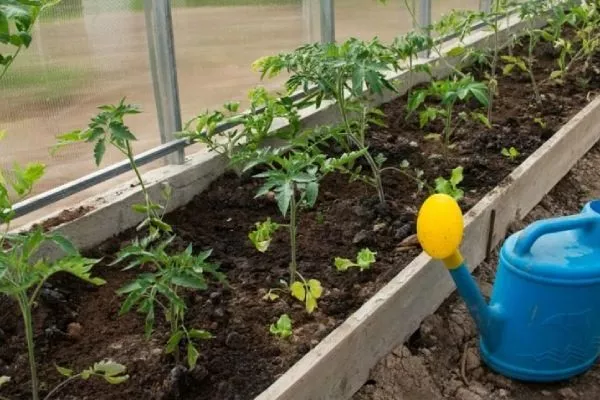
- Moisturizing. During May and June, each plant requires 1 liter of water. Ideally, water the plants 1-2 times a week, taking weather conditions into account. It's best to spray after sunset or during cloudy weather.
The amount of water is then increased until the fruits form and turn green. Once the tomatoes turn red, watering should be reduced. - Top dressing. To stimulate tomato growth, it's recommended to apply fertilizer twice a month, alternating between organic and complex mixtures. The Shadow Fight tomato doesn't require any special conditions, so any fertilizer will do.
- Soil loosening. This should be done after every watering or after heavy rainfall. Loosening the soil improves aeration and provides roots with oxygen for growth.
- Hilling. This procedure should be performed twice per season. It helps regulate soil temperature and stimulates additional root formation. Optimal timing:
- first - 9-12 days after transplanting seedlings into the soil;
- second - 15-20 days after the first procedure.
- Weed removal. Unwanted vegetation competes with tomatoes for the nutrients they need for healthy growth and development. It's best to remove weeds after watering so they can be pulled out of the soil more easily.
- Mulching. Covering the soil with straw, green manure, sawdust or peat helps retain moisture around the roots and prevents weed growth.
- Pinching out stepsons. Shadow Fight tomatoes produce a small number of lateral shoots, but these need to be removed to prevent the bush from growing excessively.
Harvesting and storage
The harvest ripens approximately three months after the seeds germinate. Fruiting begins in June, but this depends on when the seedlings were planted outdoors.
Gnome Shadow Fight tomatoes are characterized by a long and abundant fruiting season, allowing for harvesting throughout the summer. These tomatoes have a long shelf life – up to 30 days at room temperature and up to 50 days in the refrigerator.
Pest and disease control
Shadow Boxing has a natural resistance to common nightshade diseases. Mid-season ripening protects the bushes from late blight, but even with this level of protection, it's important to follow preventative measures:
- It is necessary to ensure moderate and not excessive irrigation of the beds, especially during the period of intensive ripening of fruits, in order to preserve the taste of the harvest;
- strictly follow the rules of greenhouse aeration;
- apply mulching to the base of plants with straw or peat;
- treat seedlings with any fungicide;
- Regularly check plantings for signs of pests that may be carriers of infections.
To boost immunity, it is recommended to carry out preventative treatment of seedlings before or immediately after planting. For this purpose, you can use any of the following fungicides:
- Topaz;
- Tattoo;
- Fast;
- Ordan;
- Fitosporin;
- Bordeaux mixture.
To protect the plant from insects, you can prepare an infusion of baking soda, wood ash, tobacco dust, ammonia, and garlic and onion peels. The effectiveness of this solution lies in its pungent odor, so it's best to wear protective clothing when spraying.
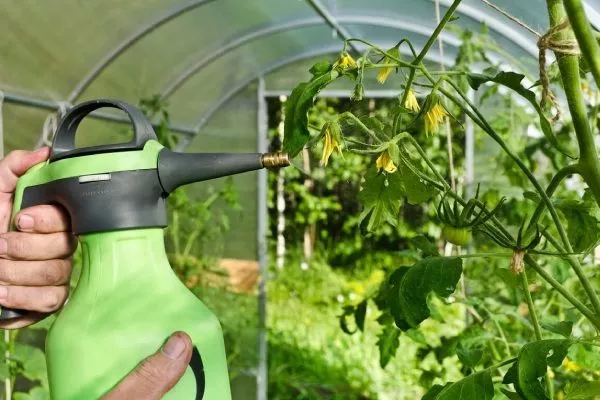
In case of a massive pest infestation, any insecticide from the following list will help:
- Fitoverm;
- Biotlin;
- Aktara;
- Decis;
- Karate;
- Fufanon.
Spraying should be done in dry, windless weather, preferably after sunset. Wait 5-7 days after spraying before harvesting.
Pros and cons
The Shadowboxing Gnome was a real discovery for gardening enthusiasts, attracting not only with its whimsical coloring. These tomatoes offer a number of additional benefits:
Among the disadvantages it is worth noting:
Similar varieties
| Name | Growth type | Fruit color | Disease resistance |
|---|---|---|---|
| Gnome Shadowboxing | Determinant | Multicolor | High |
| Black magic | Indeterminate | Dark | Average |
| Atomic grapes of Breda | Indeterminate | Multicolored | High |
| Malachite box | Indeterminate | Green with gold | Average |
| Orange strawberries | Indeterminate | Orange | High |
| Wild Fred | Determinant | Red | Average |
| Gargamel | Indeterminate | Orange with purple | High |
| Sergeant Pepper | Indeterminate | Pink-burgundy | High |
There are also other multi-colored fruits of medium to slightly larger size, decorated with purple, red and orange-yellow, reminiscent of the Dwarf Shadowfight variety:
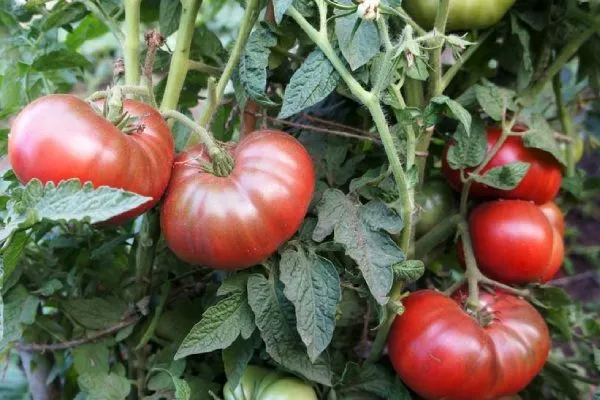
- Tomato Black Magic. This mid-season, indeterminate tomato grows well both in greenhouses and outdoors. Its compact bushes can reach a diameter of 80-90 cm.
The harvested fruits are heart-shaped and large. The average tomato weighs around 200 g, but the first fruits ripening on the lower branches can weigh between 500 and 600 g.
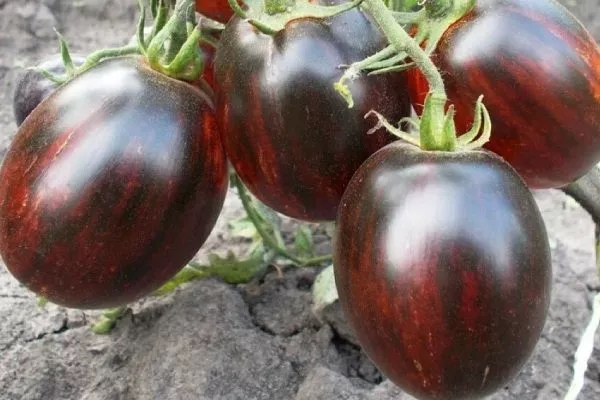
- Tomato Atomic grapes Breda. This unique variety is distinguished by its long, large cherry tomatoes, which grow in fairly large clusters. The tomatoes are distinguished by their unusual skin color and rich aroma.
Tomatoes grow on long, climbing vines that are green when young and turn dark purple with orange, red, and yellow veins as they mature. A single bush can yield up to 10 kg of these bright and delicious fruits. - Tomato Malachite Box. This delicious and captivating variety gets its name from its distinctive emerald-green coloring with golden veins, reminiscent of the famous Ural stone. This variety bears fruit for a long time, although the yield is modest – only 4-5 kg per standard 1 square meter garden plot.
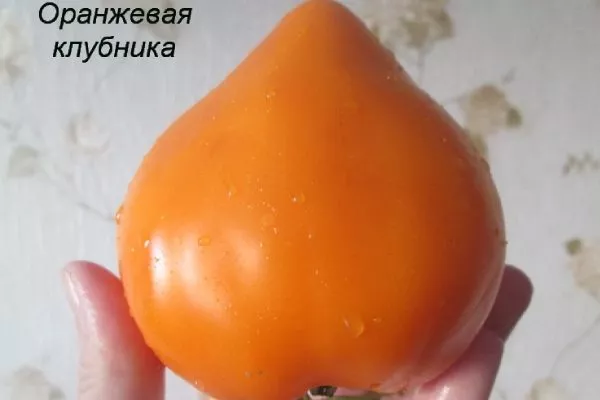
The average weight of a ripe fruit is 250-400 g, but under favorable weather conditions and proper care it can reach 700-900 g. - Orange strawberry. This tomato variety has successfully adapted to a variety of climates and is grown throughout the country. It requires little maintenance and is highly frost-resistant and productive.
If the tops are not pruned, greenhouse plants can reach a height of 400 cm, while garden bushes usually stop at 200 cm. The fruits are bright orange and weigh from 400 to 500 g. - Tomato Wild Fred. This compact variety grows up to 60 cm tall, ideal for salads. Fruits weighing 100 to 350 g yield up to 7-10 kg per bush with careful care.
Soil deterioration immediately impacts the yield. There is no precise information on this variety's resistance to diseases, so its vulnerability to pathogens is moderate. - Tomato Gargamel. The exotic coloring of its fruits is remarkable: purple spots and stripes stand out against an orange background. This variety boasts a pleasant flavor, high productivity, and low susceptibility to disease. This tomato grows tall and semi-spreading, reaching 200 cm in greenhouses and around 1,600 cm in open ground.
- Tomato Sergeant Pepper. Considered very low-maintenance and productive, this anthocyanin-rich variety has a unique chemical composition that promotes health. The bushes have a loose structure and few side shoots.
The fruits are heart-shaped with a pointed tip, flattening toward the base. They weigh 150-300 g, and the flesh is juicy, tender, pinkish-burgundy, and void-free, with a small number of bronze-colored seeds. A bush yields 3-5 kg of fruit.
Other interesting and similar species:
- Striped Gnome Ento (Anto);
- Damascus steel;
- Belief;
- Purple Dragon.
Reviews
The Gnome Shadowfight tomato is one of the most original and interesting varieties, which many include in their home collections. Even in a small space of 4 square meters, you can grow up to 20 plants and harvest 6-8 buckets of ripe tomatoes with an unusual flavor and color. The maximum yield can be obtained in a greenhouse. If the summer is warm, the bushes will also produce well in an open bed.