
The Gnome tomato is a popular Russian variety, very popular among gardeners and whole-fruit preservers. Gnome tomatoes are very easy to grow and resilient, making them easy to grow even for the most inexperienced gardener.
The history of the Gnome tomato
The Gnome variety was developed by Russian breeders A. S. Agapov, R. V. Skvortsov, I. Yu. Kondratyev, and L. K. Gurkina. This tomato was approved for cultivation in 1997 and immediately gained popularity among our gardeners. The cultivar's originator is VNIISSOK.
In addition to the Gnome variety, there is also a whole series of varieties developed as part of the American Dwarf Tomato Project. This variety does not belong to this series.
Description of the variety
The bush is a determinate plant (limited in growth). Its maximum height is 40-55 cm. It is not standard and is sparsely branched. The leaves are small, light green, and slightly glossy. The inflorescences are very small, forming above the sixth or seventh leaf, and then develop at intervals of one or two leaves.
Brief description of fruits:
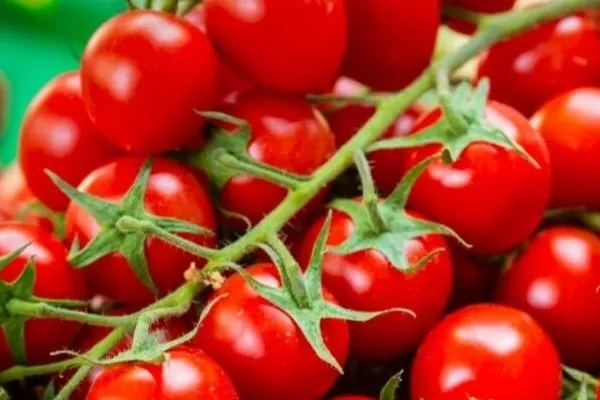
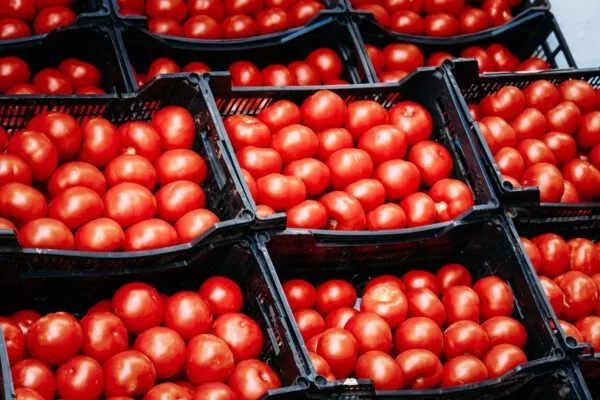
- Color: bright red.
- Form: rounded.
- Skin: smooth.
- Weight: 30-60 g.
Taste and use of fruits
The Gnome variety produces pleasantly sweet fruits with juicy flesh. These tomatoes are delicious fresh and are also ideal for whole canning.
Main characteristics
The Gnome tomato has excellent agronomic characteristics, allowing it to be successfully grown in a wide variety of conditions.
Average yield
The variety's high yield depends directly on the quality of care and growing conditions. It reaches 5-6 kg per square meter. A single bush yields 1 to 3 kg of tomatoes.
Frost and drought resistance
The Gnome tomato is quite hardy and undemanding. It tolerates moderate cold well and is resistant to heat and drought. However, moisture deficits are not recommended, as this will negatively impact the harvest.
Ripening time
The Gnome tomato is an early-ripening variety, with fruits ripening 90-100 days after planting. This variety has a long, extended fruiting period. The harvest is from July to August.
Disease resistance
The Gnome variety exhibits enviable resistance to macrosporiosis. Thanks to its early and abundant harvest, it is virtually immune to late blight.
Pros and cons of the Gnome tomato
The Gnome variety is rightfully popular among gardeners and summer residents. Although it has small fruits, it offers many advantages that appeal to tomato lovers, both fresh and canned.
Landing
To get a good harvest of the Gnome tomato, it's important to plant it correctly and at the right time. This variety is grown primarily from seedlings, but it can also be sown directly into the ground if desired. This growing method is suitable for the south, where summers are long and springs are early and warm.
Selecting a site
As befits a tomato, this variety thrives on light and heat. The more light, the brighter and more intense it is, the better and faster the fruit will develop. The site should be level and free of water accumulation. Drafts are not recommended for tomatoes.
Seed preparation
It is recommended to disinfect seeds before planting (if they were collected locally and not treated by the manufacturer). For disinfection, use a solution of potassium permanganate (1 g per 200 ml of water). A 2-3% hydrogen peroxide solution or chlorhexidine can also be used. This procedure will protect the seeds from infectious diseases and fungi.
Tomato seeds should also be tested for germination by immersing them in a salt solution—non-viable ones will float to the surface. They are then soaked in a nutrient solution, such as sodium humate or wood ash dissolved in water. Before planting, it is recommended to harden the seeds by periodically placing them in the refrigerator and germinate them by wrapping them in damp cheesecloth.
Soil preparation
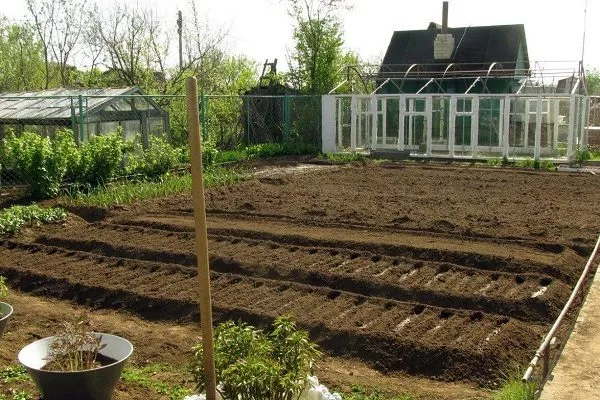
The Gnome tomato requires fertile, loose, and breathable soil with a neutral to slightly acidic pH (6-7). In the fall, the soil is dug over, adding peat, compost, and mineral fertilizers such as superphosphate and potassium salt. If the soil is highly acidic, add slaked lime at a rate of 500 g per square meter.
It is also recommended to treat the soil with biological preparations to kill pathogenic flora. For example, Fitosporin can be used. It is applied when the soil warms up to 12°C at a depth of 20 cm. A week before planting, cover the area with plastic film to allow it to warm up.
Growing from seeds
Direct sowing into the ground is suitable for early maturing and early varieties, which include the Gnome tomato.
- ✓ Optimum soil temperature for planting seeds: +12…+14 °C.
- ✓ Seeding depth: 1-2 cm.
Features of sowing tomato Gnome:
- Seeds are sown in open ground from late April to mid-May. The soil should warm to 12–14°C.
- The soil is prepared in the fall, and in the spring it is leveled with a rake, making holes 3-4 cm deep. The intervals between holes are 30 cm, and between rows – 60-70 cm.
- Place three seeds in each hole. Cover them with soil, compact them, and then water with warm, settled water. Plant the seeds 1-2 cm deep. Cover the seedlings with transparent film.
Growing from seedlings
Tomato seedlings are sown in late February or early March if planting outdoors. For greenhouse cultivation, tomatoes are sown from mid- to late February.
Features of growing tomato seedlings Gnome:
- Plants are sown in large containers or cups. The latter should have a capacity of 200 ml, which is enough for a month of growing season. The plants are then transplanted into larger pots—liter-sized ones—otherwise, the seedlings' root system will not develop properly.
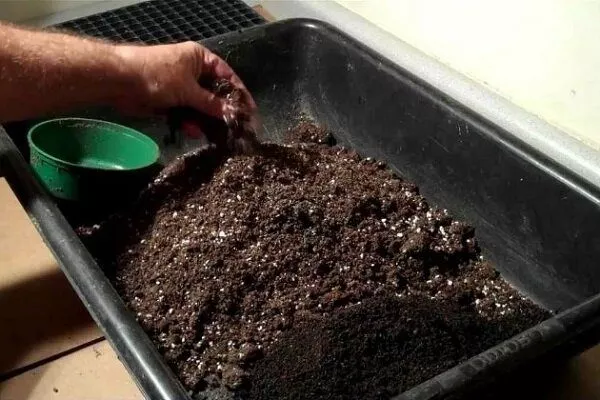
- Planting containers are filled with a nutrient-rich substrate. This can be purchased at a local garden supply store or prepared at home. For example, a potting mix can be made by mixing peat (1 kg), humus (250 g), rotted sawdust (500 g), ash (100 g), superphosphate (2 g), and potassium chloride (1 g). Pots, containers, and cups—all planting containers—must have drainage holes.
- The soil mixture is poured into containers, leveled, and watered. Seeds are placed on top at intervals of 1.5-2 cm, then covered with a thin layer of soil (up to 1 cm). Transparent film or glass is placed on top of the seeds. The optimal temperature for germination is 23–25°C.
- Once the seeds sprout, remove the cover, and move the boxes and pots containing the seedlings to a cooler room for 4-5 days. The temperature there should be approximately 18 to 20°C.
- After three true leaves appear, the seedlings are transplanted into individual containers and pricked out. 500 ml cups are suitable for planting. After three weeks, prick out the seedlings again, transplanting them into liter-sized pots.
- Additional lighting is recommended for seedlings. Using LED lamps reduces the growing time by one and a half to two weeks. The optimal daylight duration is 12 hours.
- Transplanting into open ground occurs after the risk of frost has passed. Otherwise, it's essential to cover the seedlings with plastic film. Planting is done using the standard technique: seedlings are moved into holes slightly larger than the containers in which they were grown. The roots are covered with soil, watered with warm water at the roots, and mulched.
- The optimal planting pattern is 40 cm between plants and 60 cm between rows. No more than 5-6 plants should fit per square meter.

Care instructions
The Gnome tomato requires standard care. It's easy to grow, and generally doesn't present any particular difficulties.
Watering mode
This variety requires moderate but regular watering. Overwatering is contraindicated. Avoid watering the above-ground parts of the plant. The best time to water is morning or evening, after sunset.
Fertilizing
Every two weeks, the tomatoes are fed with alternating mineral and organic fertilizers. Suitable organic matter includes wood ash, chicken manure, and compost.

Loosening and weeding
After watering, the soil in the beds is carefully loosened (to avoid damaging the roots and stems of the plant). Loosening the soil allows oxygen to reach the roots. Weeding is carried out simultaneously with loosening the soil. Tomatoes are hilled 3-4 times during the summer.
Once the seedlings have established themselves, support them. Regular wooden stakes are suitable for this purpose. They are driven into the ground on the north side, 30 cm deep.
Pest and disease control
The Gnome variety has a fairly strong immunity, but in adverse weather conditions and poor agricultural practices, there is a risk of fungal and bacterial infections. To combat these, use a 1% copper oxychloride solution or a 0.2% Fitosporin solution.
Bushes are regularly inspected for signs of disease and insect pests. If spider mites are detected, the plants are sprayed with Fitoverm.
In addition to pesticides, biological methods are used to combat pests, for example, releasing entomophages (predatory mites or ladybugs) into the beds to destroy insects that harm tomatoes.
Harvesting
The fruits are harvested as they ripen. While picking tomatoes, it's important to monitor the condition of the bushes and remove any damaged or dry leaves. This helps prevent the spread of infectious diseases.
It's best to pick the fruits when they're slightly unripe. Once harvested, transfer them to a warm place to ripen. If you plan to use the harvest immediately, you can pick the fruits when they're fully ripe.
How to store tomato crops?
Tomatoes harvested at technical maturity or simply unripe are stored in a basement or cellar, first stacked in shallow boxes. Each layer of tomatoes is lined with paper. No more than three layers are placed in a container.
Tomatoes can also be stored on the balcony or in the refrigerator. It's best to wrap each tomato in paper. Tomatoes will keep well for up to two weeks on the lower shelves of the refrigerator.
Reviews
The Gnome tomato is an ideal variety for winter preserves. Its small size makes it easy to preserve and is also delicious fresh. This early-ripening variety is a wonderful addition to any garden.