
The Giant tomato is a favorite among many gardeners across Russia. This is due to its large fruits, excellent flavor, and low maintenance requirements. This variety is ideal for growing in a variety of regions, including areas with variable climates. Careful care is essential to ensure bountiful harvests throughout the season.
Who developed the variety and when?
It was developed by breeder Danuta Jasinska and received approval for use in 2007. Since then, it has been grown throughout the country and abroad.
Description of the Giant tomato
This popular variety has received many positive reviews from both novice and experienced gardeners. It boasts numerous positive qualities.
Appearance of bushes
The plants are semi-determinate. In greenhouses and plastic hotbeds, they reach a height of up to 1.5 m. In open ground, the central shoots grow to 1.2-1.5 m.
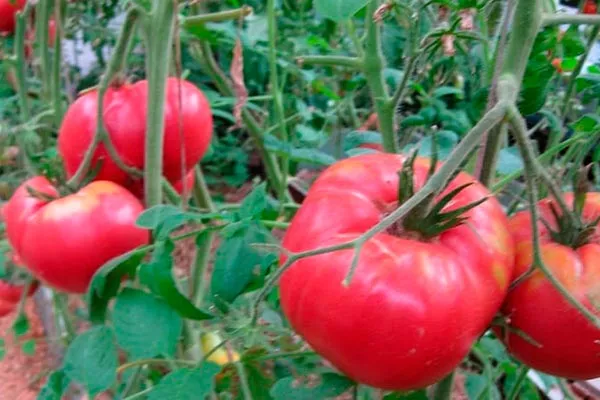
For such tall bushes, trellises are usually installed in greenhouses, and sturdy supports are used in open beds. It's essential to tie up the shoots bearing large tomatoes, otherwise they may break under the weight of the tomatoes. Regularly removing any side shoots is equally important.
The semi-spreading shoots bear narrow, elongated, slightly wrinkled, hairless leaves with large serrations along the edges. They are bright green. The inflorescences are simple, medium-sized flowers with yellow petals.
Description of fruits
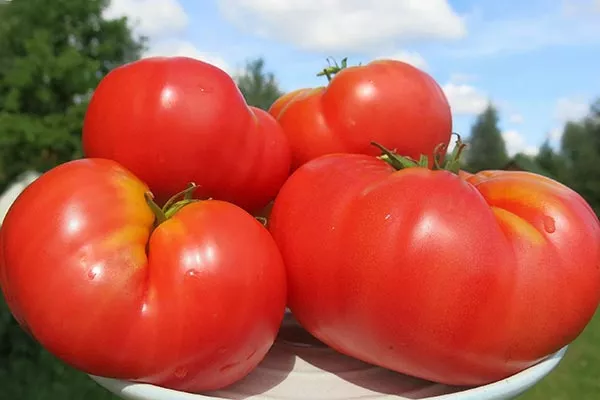
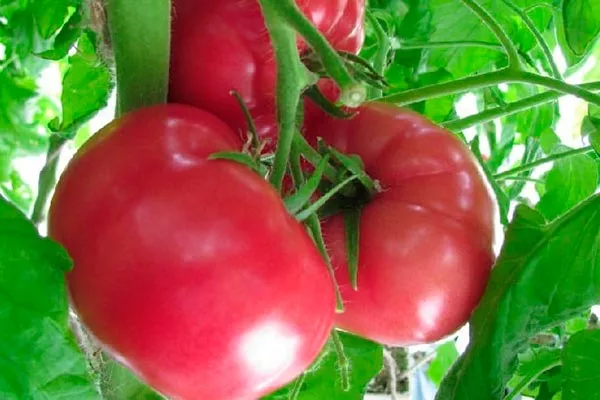
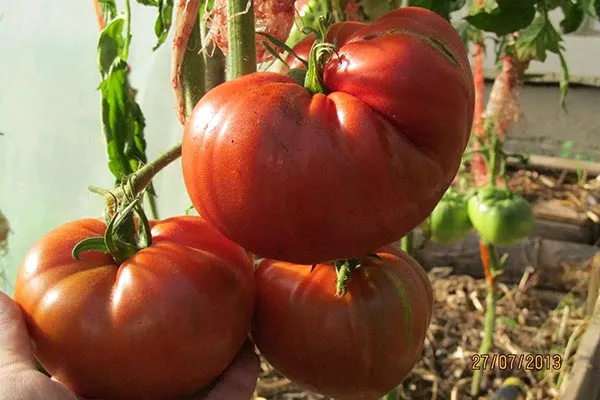
Ripe tomatoes are large, weighing between 500 and 600 g, and with good care, tomatoes ripening on the lower brushes can reach a weight of up to 1 kg.
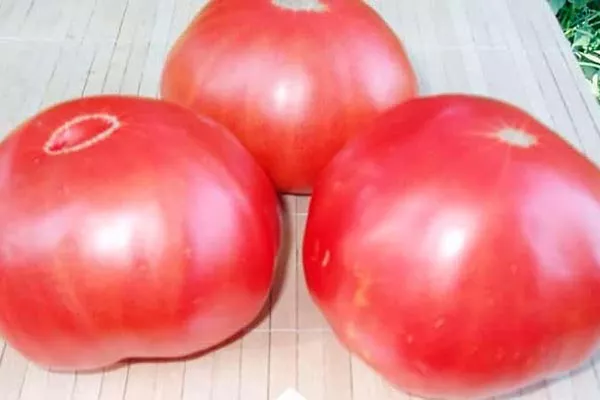
Distinctive characteristics of the fruits:
- Peel - dense, slightly ribbed, smooth and shiny, bright red with a raspberry hue.
- Pulp – elastic, contains up to 7 seed chambers with a small amount of seeds and seminal fluid.
- Taste - pleasant, sweet and sour taste.
- Aroma – rich, tomato-like.
The fruits are not prone to cracking. Since the variety is not a hybrid, seeds from ripe vegetables can be collected for future planting. The harvest transports well and stores well for several months in cool conditions.
Varietal qualities
The giant belongs to the group of determinate plants and is most often grown in plastic greenhouses. Its excellent characteristics make it prized by many gardeners.
Ripening time and yield
This is a mid-season variety: it takes at least four months from seed germination to harvest. Productivity is good – with proper care, each bush yields up to 6 kg of ripe fruit.
The planting density is approximately 3 seedlings per 1 square meter, which allows for a yield of approximately 16 kg.
Application areas
The fleshy, large fruits of this variety are perfect for summer salads and appetizers. They are often used to make tomato paste and juice, added to hot dishes, used to make winter ketchups and sauces, and dried in chunks.
Due to their large size, the fruits are not suitable for whole canning, but many housewives marinate them in pieces or pickle them.
Resistance to diseases and pests
The variety has a strong immune system, so the Giant resists common diseases typical of other varieties.
Pests that may appear on bushes include aphids and spider mites. To combat them, use folk remedies, such as washing with soapy water or spraying with peppermint infusion.
Advantages and disadvantages of the Giant tomato
Before planting a crop, it's important to carefully examine its positive and negative qualities to avoid potential difficulties during cultivation. This variety has many advantages:
What regions are best for growing?
The Giant tomato is suitable for cultivation in a variety of regions. In southern Russia, gardeners grow seedlings in open ground, while in temperate climates and regions with similar climates, they grow them in plastic tunnels. In the Urals and Siberia, the plants are planted in heated greenhouses.
Planting seedlings
Planting begins in early March. It's important to follow certain recommendations to ensure high-quality harvests and beautiful, undamaged tomatoes in the future.
- ✓ Optimum soil temperature for sowing seeds: +23…+25°С.
- ✓ It is necessary to use an aquarium compressor to bubble the seeds for at least 15 hours.
Seed preparation
First, calibrate the seeds, selecting large, smooth, and not hollow-feeling grains. Follow these recommendations:
- Place the selected seeds in a saline solution, dissolving 20 g of salt in a glass of water. After 15-20 minutes, check the container: select the seeds that sink to the bottom for planting.
- Spread the seeds on a cotton cloth and place in a warm place for 36-48 hours to warm up.
- After warming, disinfect the seeds in a 1% potassium permanganate solution. To do this, dissolve 5 g of potassium permanganate in 600 ml of water and soak the seeds for 15-20 minutes. Rinse them under running water.
If you don't have potassium permanganate, use hydrogen peroxide. Dissolve 20 ml of 3% hydrogen peroxide in 400 g of warm (40°C) water and soak the seeds for 12 hours. This method accelerates germination but is not suitable for seeds with a nutrient coating or encrusted seeds. - The next step is to oxygenate the seeds. To do this, immerse them in warm water (26–30°C) and stir them every hour for 15–18 hours. Use an aquarium air pump to create aeration. This process promotes germination and viability of the seedlings.
- Soak for 12 hours in water or a biostimulant solution such as Zircon, Epin, or Immunocytophyte. The water temperature should be at least 21°C.
- Hardening is an equally important step: wrap the seeds in cloth and plastic and place them in a place with a temperature of -2 to +3°C for 8 hours. Then return them to a warm place for 8 hours. Repeat this temperature cycle 5-6 times.
Container and soil
To plant seedlings, use plastic containers, cups, or cut-off PET bottles. You can purchase soil from a store or prepare it yourself.
The purchased mixture should contain:
- humus;
- peat;
- river sand.
If you want to prepare the soil for seedlings yourself, mix:
- 1 part garden soil (it is better to take it from a plot where cucumbers, zucchini, carrots or dill grew);
- 2 parts non-acidic peat (pH 6.5);
- 0.5 parts sand (river or washed);
- 1 part humus or mature sifted compost.
Additionally, add sifted wood ash (or dolomite flour), sphagnum moss, and fallen pine needles. Be sure to disinfect the containers and soil with boiling water or a potassium permanganate solution to prevent disease.
Sowing
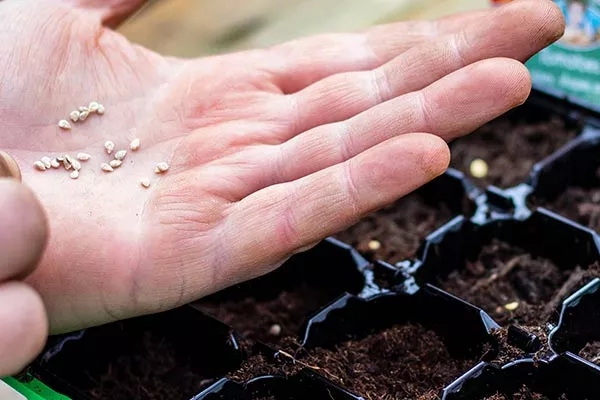
Giant tomatoes are not pricked out but planted directly into individual cups. Pricking out slows plant development, which delays fruit formation by 1-2 weeks.
Helpful tips:
- Place 3-4 seeds in each container, and after the cotyledon leaves appear, leave only the strongest sprout, removing the rest.
- Cover the seeds with soil to a depth of 1 cm and moisten with a spray bottle.
- Cover the containers with film and place them in a warm (+23°C) and bright place.
To improve root development in tall tomatoes, place crushed eggshells and dried banana peels at the bottom of the container. These ingredients promote strong roots.
Transplantation into open ground
When planting Giant seedlings, select a site that follows crop rotation. The best predecessors for this variety are watermelons, melons, pumpkins, carrots, or beets. The growing site should be well-lit, and the soil loose and fertile.
Features of growing in a greenhouse
To ensure the Giant tomato thrives and produces fruit in greenhouse conditions, several important conditions must be met. Follow these recommendations:
- In the fall, after harvesting, remove all plant debris, including roots, and burn them. Wash the greenhouse structures with a weak solution of potassium permanganate, and water the soil with a 1% Bordeaux mixture.
- Install trellises for tying.
- Ventilate the greenhouse regularly to avoid increased humidity, but protect the bushes from drafts, as they can damage the plants.
- Water the seedlings strictly at the roots, so that water does not get on the leaves.
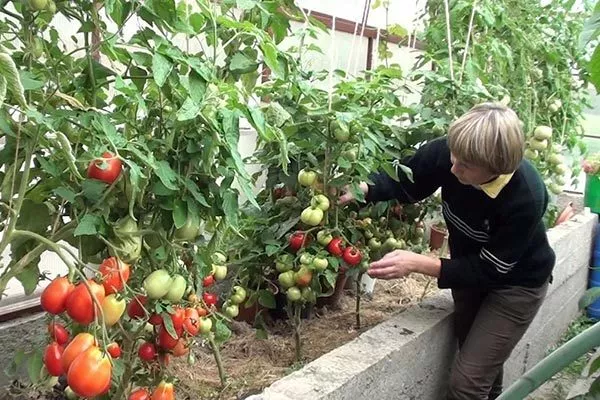
Train the bushes with 1-2 stems and remove side shoots in a timely manner.
Tomato care
To obtain a bountiful harvest, it's important to care for your plants and provide them with proper care. Follow standard agricultural practices:
- Apply water to the roots once every 3-4 days. The recommended rate per plant is 6 liters.
- After watering, mulch the root area with mown grass or straw.
- Apply fertilizer to the soil before planting seedlings, at the beginning of flowering, during the formation of ovaries and during the ripening period of fruits.
By following these recommendations, you can improve productivity and get high-quality fruits.
Diseases and pests
The crop is characterized by moderate disease resistance. In greenhouses, bushes may be susceptible to fungal infections. To prevent disease, regularly ventilate the shelters and treat them with the following products:
- Fitosporin;
- Ecosil;
- Quadris;
- Ridomil Gold.
| Method | Efficiency | Frequency of use |
|---|---|---|
| Fitosporin | High | Every 10 days |
| Ecosil | Average | Every 14 days |
| Quadris | High | Every 7 days |
| Ridomil Gold | Very high | Every 5 days |
To prevent late blight, use whey with a fat content of no more than 1%. After transplanting the seedlings into the ground, spray the bushes with the whey and repeat the procedure every 10 days.
Harvesting and storage
In most regions, tomatoes of this variety are harvested fully ripe. If you plan to store the harvest for a long time, place the fruits in boxes and store them in the refrigerator or cellar.
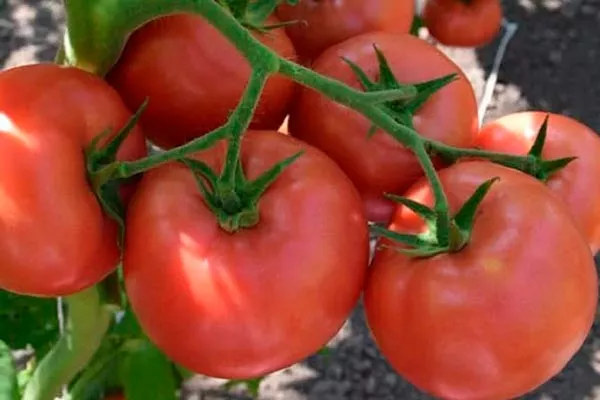
In areas with cold summers, it is recommended to harvest vegetables at the technical maturity stage and ripen them at home. This method helps preserve their appearance and excellent taste.
Similar varieties of the "Giant" series
| Name | Ripening period | Disease resistance | Recommended growing region |
|---|---|---|---|
| Raspberry Giant | Early | High | Southern regions |
| King of the Giants | Mid-season | High | Siberia, Southern regions |
| Sugar Giant | Mid-season | High | All regions |
| Ural Giant | Mid-season | High | Urals, Siberia |
| Yellow Giant | Mid-season | High | All regions |
| Pink Giant | Mid-season | High | All regions |
Large-fruited tomato varieties have become particularly popular among Russian vegetable growers due to their low-maintenance care, excellent yields, and tasty, fleshy fruits. Among them, the following varieties stand out:
- Raspberry Giant. Developed by breeders at the Russian agrofirm Sedek and added to the State Register in 2007, it is distinguished by its early ripening period—from germination to harvest, it takes no more than 110 days.
The yield is approximately 8 kg per square meter. The bushes are medium-sized, up to 1.5 m tall, and require staking and training. The fruits are raspberry-colored, with firm flesh, weighing 400-450 g.

- King of the Giants. Suitable for harsh Siberian conditions, it grows well in southern Russia. It is mid-season, with an intermittent growth pattern and no height restrictions. Ripening time is approximately four months. Yields approximately 8 kg per square meter.
The tomato is resistant to diseases and pests. The fruits are large, transport well, and have a long shelf life.
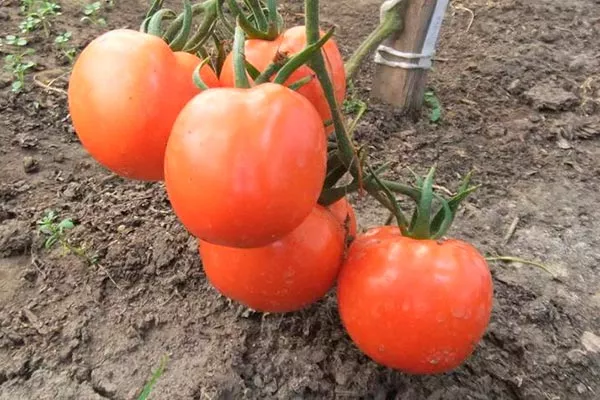
- Sugar Giant. An easy-to-grow variety with good productivity—up to 18 kg per square meter. The crop is resistant to sudden temperature changes and diseases. The large, red-colored fruits with a pinkish tint can weigh up to 500 g. Suitable for both open-field and greenhouse cultivation.
- Ural Giant. Developed specifically for the Urals and Siberia, it is successfully cultivated in other regions. The bushes are indeterminate, up to 1.7 m tall. Fruit ripens in 116-118 days, yielding up to 15 kg per square meter.
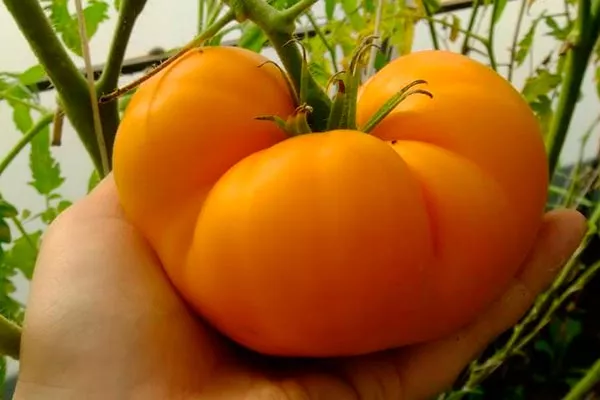
- Yellow Giant. A mid-season variety. The yellow fruits are hypoallergenic and recommended for baby food. The bushes are medium-sized, up to 1.5 m, and require shaping and support. This variety is highly productive – with proper care, it can yield approximately 15 kg per square meter during the season.
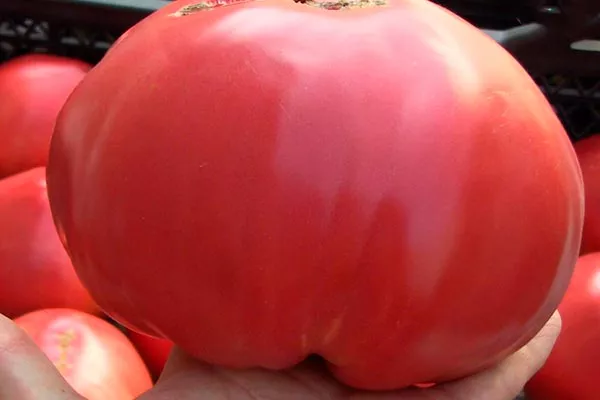
- Pink Giant. An indeterminate, mid-season variety with a ripening period of 105-115 days. The bushes are tall, up to 2 m, with large leaves. Yields are up to 12 kg per square meter, and the fruits have sweet, fleshy flesh. They can weigh up to 1 kg under certain conditions.

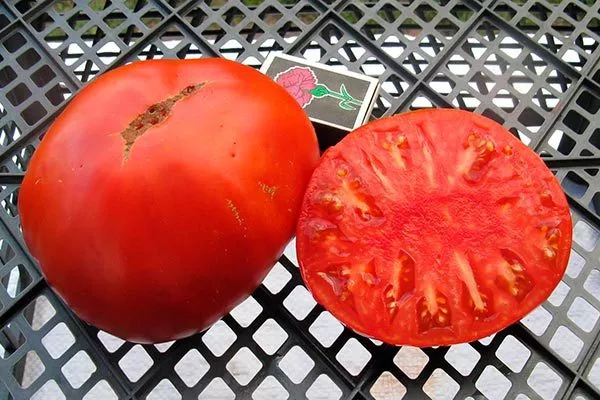
These varieties attract the attention of both novice and experienced gardeners. They can be safely grown in your garden to produce delicious vegetables.
Gardeners' reviews of the Giant tomato
The Giant tomato is an excellent choice for those who value not only the taste and appearance of its fruit, but also a stable harvest. This variety is characterized by rapid ripening, ease of cultivation, and numerous positive qualities. With proper care and adherence to agricultural recommendations, this variety will delight you with excellent results.