
The Gargamel tomato is an exotic variety with very unusual fruits. Its fruits contain anthocyanin, which gives them their dark color. This amazing variety is quite hardy and easy to grow; the main thing is to find its seeds, as large Russian agricultural companies do not sell this variety.
The history of the creation of the Garmagel tomato
The Gargamel variety was developed in Pennsylvania, USA, by Phil Seneca of Good Mind Seeds, a tomato breeder.
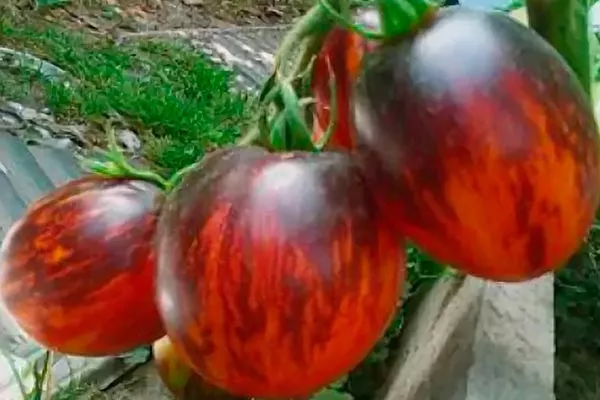
The variety owes its name to the character of the same name from the animated series "The Smurfs," who wears a black robe and red boots—this color scheme matches the color of the Gargamel tomato fruits.
Description of the variety
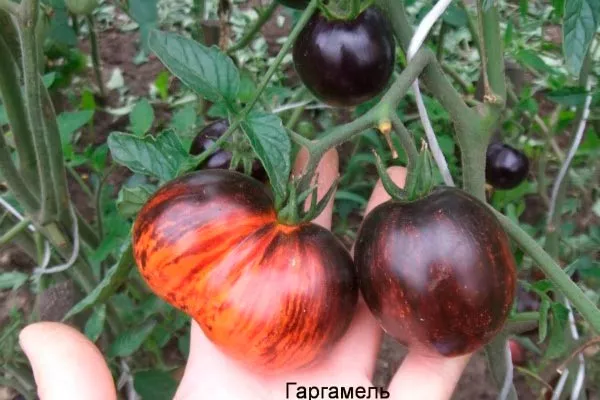
The Gargamelle variety produces vigorous, medium-sized, indeterminate bushes, reaching a height of 150-180 cm. The leaves are thin, medium-sized, slightly pubescent, and wrinkled. The stems are thick, purple-hued, and the flowers are simple. The bushes have sparse foliage. The peduncles are articulated.
Description of fruits
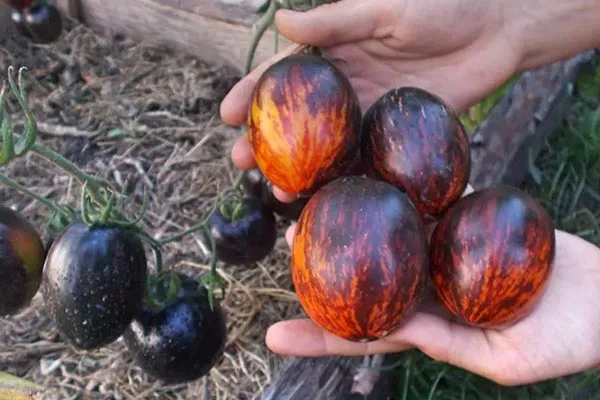
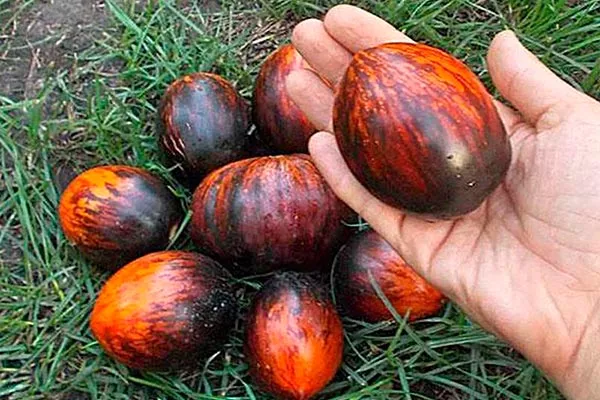
The Gargamel variety produces small, dense fruits with an unusual, even fantastical, coloration for tomatoes. The clusters produce 3-6 fruits each. The fruits contain 2-3 seed chambers.
Brief description of fruits:
- Unripe fruit color: green and blue striped
- Color of ripe fruit: red-blue, purple.
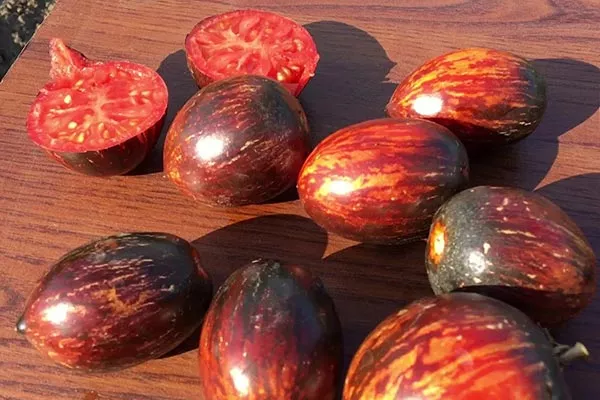
- Pulp color: cherry.
- Form: Elliptical, plum-shaped. There are specimens with a blunt spout.
- Skin: dense, smooth, glossy.
- Weight: from 100 to 200 g
Taste and purpose
Gargamel fruits have juicy, fleshy flesh with a pleasant taste. It has fruity notes and a hint of sweetness. Despite the juice, the fruit is easy to cut—it doesn't run. The fruit has a versatile use—it can be eaten fresh, sliced into salads, diced, or used for whole-fruit canning.
Characteristics
The Gargamel tomato is an ultra-early variety. It ripens in just 70-75 days from germination. Up to 9 kg of fruit can be harvested per square meter, and up to 5 kg per bush. This variety has the typical cold and drought tolerance for tomatoes.
Pros and cons
The American Gargamel variety, besides its unusual fruit appearance, has many advantages. Before planting this amazing variety in your garden, it's helpful to familiarize yourself with all its advantages and disadvantages.
Landing
The Gargamel variety, like most tomatoes, is grown primarily from seedlings. Before planting, it's important to prepare the seeds, potting soil, and garden or greenhouse beds—everything must be done correctly and within the timeframes specified by the farming guidelines.
- ✓ Optimum soil temperature for planting seedlings: +12..+14 °С.
- ✓ Required amount of sunlight per day: at least 8-10 hours.
Seed preparation
To grow good, strong, and healthy seedlings, you need high-quality planting material. To avoid planting unviable seeds, they are pre-sorted by immersing them in a salt solution—all defective ones float to the top.
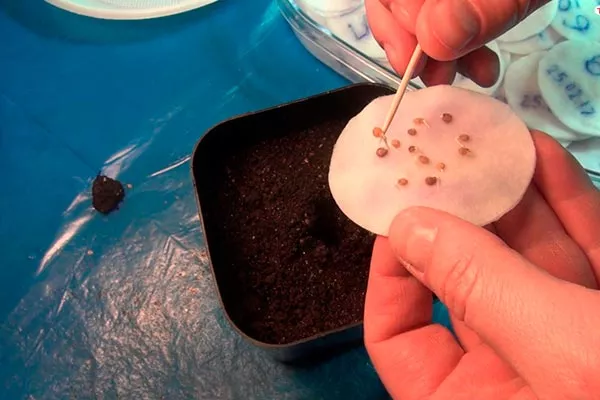
It's also recommended to disinfect the seeds, if they haven't been treated by the manufacturer. A solution of potassium permanganate or baking soda can be used for disinfection. It's equally important to treat the seeds with a growth stimulant, such as Zircon or Epin. The final step in preparation is germination in damp cheesecloth.
Growing seedlings
Seeds for seedlings are usually sown in March. They grow for approximately 1.5–2 months. The sowing time is calculated based on this period.
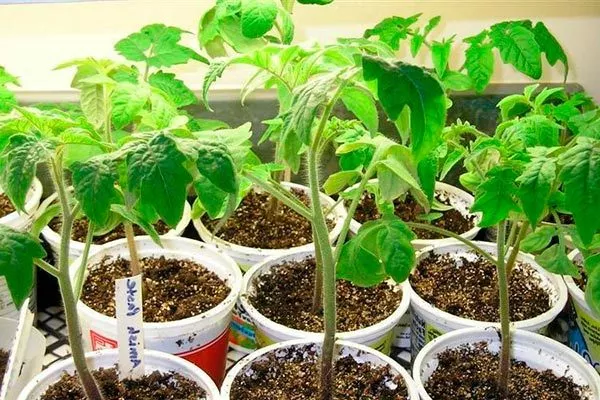
Features of growing seedlings:
- Planting containers—containers, cups, cassettes, or peat pots—are prepared for the seedlings. Plastic containers are always disinfected by rinsing with boiling water. They are then filled with a nutrient substrate, either store-bought or homemade.
- You can prepare a soil mixture for seedlings from turf, peat, cow manure, and sand. Add ammonium nitrate, potassium chloride, and phosphates to the mixture.
- Sow seeds in moistened soil using a spray bottle. Plant at a depth of no more than 1 cm. Space adjacent seeds 3-4 cm apart. Cover the seeds with soil and moisten gently, without compacting.
- The seeds are covered with a transparent material, such as plastic film, and placed in a warm room. When seedlings emerge, the cover is removed, and the seeds are moved to a cooler room or the temperature there is lowered, but it should not fall below 12°C.
- For watering seedlings, use settled, not cold, water. Water as the soil dries, but avoid overwatering, as this promotes the development of fungal diseases.
- Seedlings are fed once every two weeks. Liquid mineral fertilizers are used for this purpose. A week after transplanting (replanting into separate containers with pinching of the roots), a nutrient solution of 5 g of ammonium nitrate, 20 g of superphosphate, and 5 g of potassium salt, diluted in 5 liters of water, is applied to the roots.
Selecting a site
Gargamel tomatoes should be planted in sunny areas. This will allow the fruits to develop anthocyanin and acquire a dark color with violet-blue hues. The plants should receive at least 8-10 hours of sunlight per day. Dark tomatoes are the most beneficial for the body.
The best predecessors for the Gargamel tomato are legumes, oats, and mustard. These plants enrich the soil with nutrients essential for tomatoes. The site should be level and free of stagnant water. The site should have good drainage, otherwise the tomato plants will be susceptible to fungal diseases.
How to prepare the soil
It's recommended to prepare the tomato plot in the fall, or even better, a year before planting. Enrich the soil with organic matter by adding compost or humus during tillage—6-8 kg per square meter. If necessary, loosen the soil with sand, and add lime or wood ash to acidic soils. Adding peat to the soil is also recommended.
The landing process
It is planted in open ground only when a stable temperature has been established—at +18…+22°C. The soil should warm up to +12…+14°C.
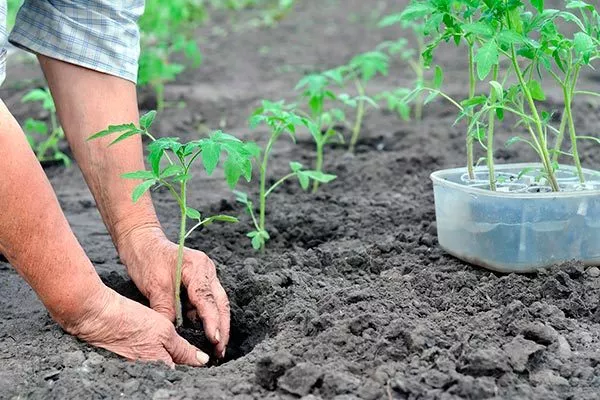
Features of planting seedlings of the Gargamel variety in the ground:
- Prepare planting holes. Three plants should grow per square meter. The optimal planting pattern is 50 cm between plants and 60 cm between rows.
- Add 1 tablespoon of wood ash to the holes and add 0.5 liters of water. In greenhouses, it is also recommended to add natural fertilizer, such as vermicompost, at a rate of 100 g per plant.
- The seedlings are transferred to the holes along with the root ball. To make removal from the planting containers easier, they are watered beforehand. The plants are placed in the holes so that their roots are centered.
- Cover the root system with soil, compact it lightly, and water again with warm, settled water. If desired, the soil can be mulched with hay, straw, peat, or other organic matter.
Care
The Gargamel tomato has a very unusual appearance, but it requires standard care. Along with watering and fertilizing, this variety also requires regular pinching, shaping, and staking.
Watering
Immediately after planting, water the seedlings, followed by a 7-10 day break. In open ground, tomatoes are watered in the evening, and in greenhouses, in the morning. Watering frequency is 1-3 times a week, depending on the weather and soil conditions. In hot weather, water twice as often.
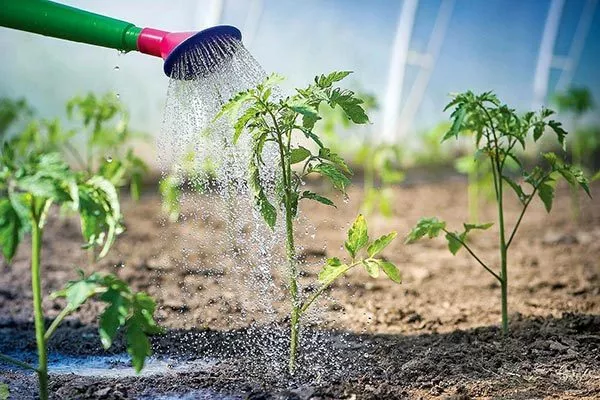
For watering, use only warm, sun-heated water, at a temperature of approximately 20°C. Stagnant water in the soil is strictly prohibited, and water should also be avoided on the leaves and stems, as this can cause sunburn.
Top dressing
Tomatoes are fertilized for the first time 20 days after planting. A high-nitrogen, complex vegetable fertilizer is recommended for fertilizing. Fertilize every two weeks. After the plants bloom, apply a fertilizer containing superphosphate and potassium salt.
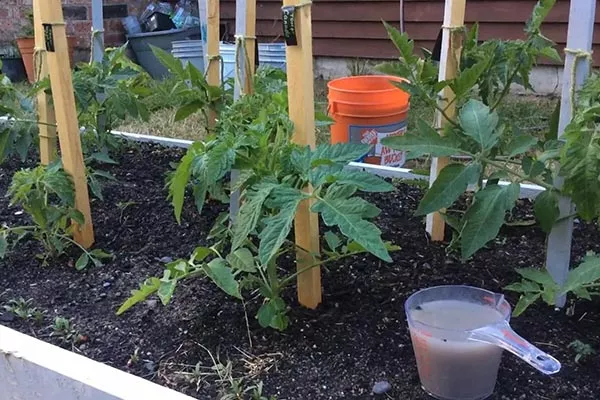
When growing the Gargamel tomato, alternate mineral and organic fertilizers, such as a 1:20 dilution of chicken manure. During budding, the bushes are sprayed with a boric acid solution or another fertilizer containing boron, which improves fruit set.
Loosening and weeding
After each moistening of the soil, tomatoes require loosening. This should be done carefully, without burying the hoe deeper than 4-6 cm. This agricultural practice ensures air flow to the roots, improving the growth and development of the plants.
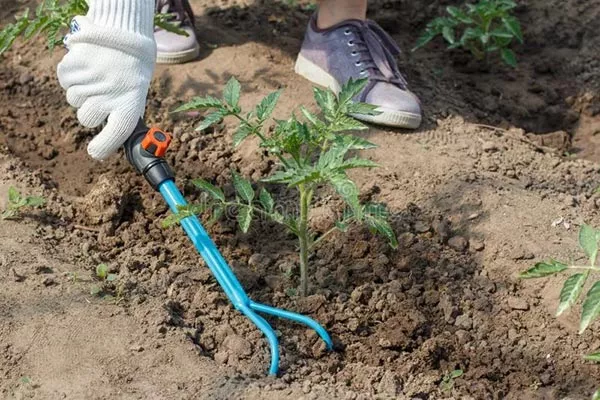
If additional roots appear on the stem, this means the plant needs additional nutrition. These should be covered with soil (hilling). Along with loosening, weed the soil, removing all weeds.
Formation
This variety requires training. The optimal height is 2-3 stems. It's important to remove excess and dry shoots and trim off dried leaves promptly. This promotes even light and nutrient distribution. It's important not to over-pruning, as this will result in watery fruits.
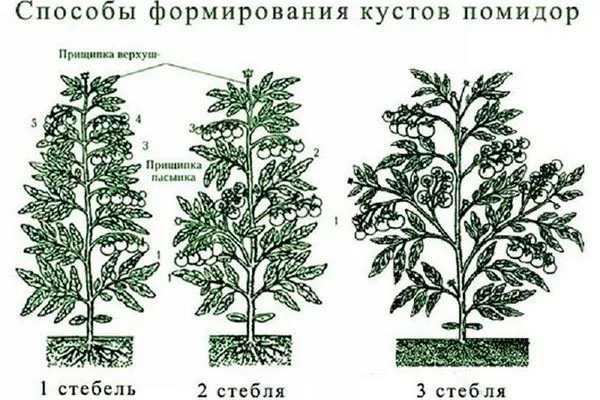
As the bushes grow, tie them to a nearby support. Stake the heaviest fruit clusters to prevent them from breaking. It's also important to regularly remove side shoots—shoots that grow in the leaf axils. For bushes 1.8–2 m tall, pinch off part of the top to encourage more active lateral growth.
Prevention of diseases and pests
The Gargamel variety is resistant to many common diseases. It's resistant to late blight, so it doesn't require preventative chemical spraying. Aphids and slugs can damage the bushes; these can be controlled by spraying with a solution of laundry soap.
Harvesting
Tomatoes are harvested as they ripen. They are picked by hand or cut off with a knife, stems included. It is not recommended to leave ripe tomatoes on the branches to prevent rotting, which attracts harmful insects. Fruits touching the ground are best picked while still green.
Fruits picked at technical maturity can be stored. In a cool, dark place, they can retain their flavor and marketability for 1-2 months.
Reviews
Lovers of exotic and unusual varieties will never pass by the Gargamel tomato. Its fruits not only look very attractive and interesting, but are also very healthy. Growing this amazing tomato is no more difficult than any other; it is hardy, undemanding, and disease-resistant.