
Flaschen is the name of a newly bred mid-season tomato variety. It hasn't achieved popularity in its short existence, but it has won the hearts of those gardeners who have dared to plant it in their gardens. Its bushes boast resistance to late blight and high productivity, while its fruits boast a unique shape and excellent flavor.
Historical background
Flaschentomaten, or Russian Flaschentomate, is the brainchild of professional breeder V. Sonn from Germany, born in 2022. To create it, the scientist improved the hybrid tomato Corianne F1. The variety owes its name to the bottle-shaped shape of its fruits.
This vegetable variety is not listed in the Russian state register. This doesn't stop it from gaining new fans among domestic gardeners and farmers, who appreciate its high yield and fruit quality.
Botanical description of the bush
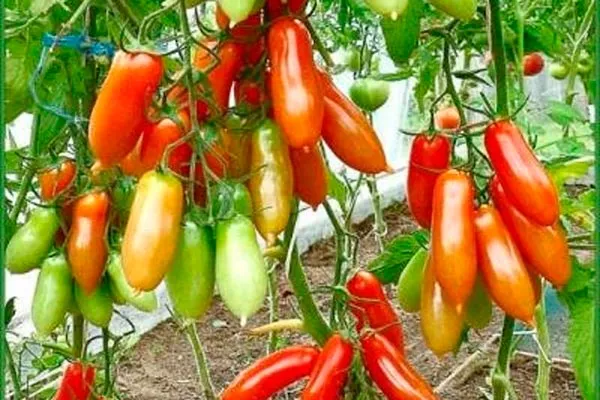
Plants of the Flaschen variety are indeterminate. They are characterized by the following external features:
- “height” - from 1.8 m to 3 m (due to their tallness, the bushes require mandatory tying to supports or trellises);
- spreading;
- thin, but strong and powerful stems;
- moderate foliage;
- leaves: narrow, grassy-green, quite large;
- flower brushes of simple or intermediate type.
Characteristics of Flaschentomaten fruits
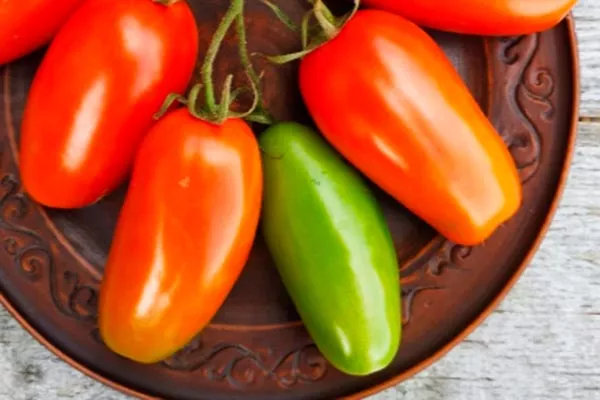
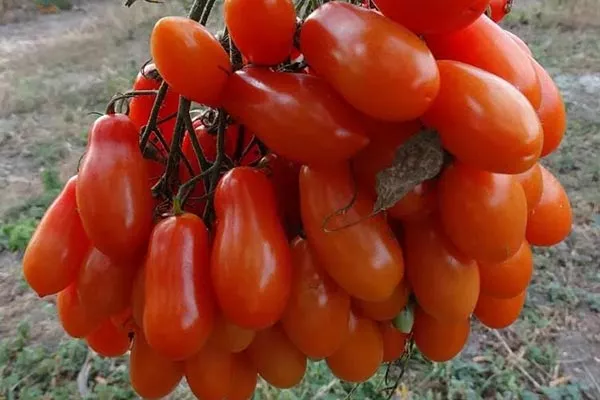
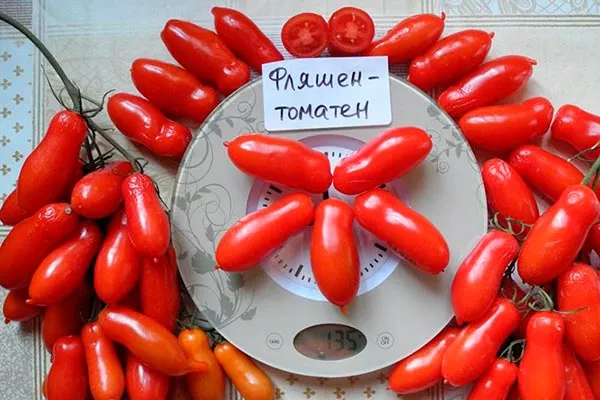
The main distinguishing feature of these tomatoes is their unusual cylindrical shape with a spout, reminiscent of a bottle or a pepper. They are of the cocktail type (slightly larger than cherry tomatoes). They have the following characteristics:
- weight - 30–60 g;
- length - 6-9 cm;
- bright red skin, strong, with a glossy sheen;
- dense red flesh with few seeds, meaty, moderately juicy, aromatic.
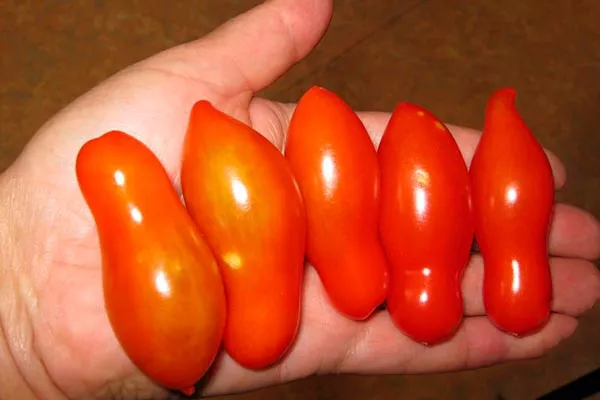
German-bred tomatoes are resistant to cracking. Their surface is neither ribbed nor wrinkled. They contain a high dry matter content. They are characterized by excellent shelf life and transportability, and retain their marketable appearance for a long time.
Key characteristics of the variety
Gardeners love Flashentomaten for its many excellent characteristics. It's high-yielding and resistant to late blight and other tomato diseases (except blossom-end rot). It quickly recovers from damage and tolerates adverse weather.
Taste and uses of tomatoes
Bottle tomatoes, while small and not particularly juicy, delight the eater with their wonderfully sweet flavor, which is clearly marked by the classic tomato note. Their tartness is barely perceptible. They have a versatile use:
- fresh consumption;
- canning, in particular whole fruits;
- pickling;
- drying;
- drying;
- adding to various dishes (salads, stews, side dishes, etc.) and decorating them.
Ripening, fruiting and productivity
The Flaschen variety is a mid-season vegetable. Its harvest matures 110-120 days after germination. It is characterized by a long fruiting period, lasting until frost.
The brainchild of German breeder Sonn, this variety is considered a high-yielding variety. Gardeners can get 6-7 kg of tomatoes from a single plant.
Features of reproduction
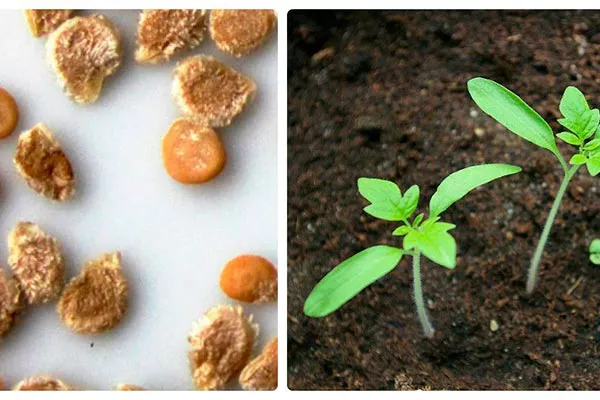
Gardeners growing Flaschen tomatoes note that they produce few seeds. These seeds have a poor germination rate. Proper seed preparation can solve this problem:
- select the most beautiful ripe fruits for seeds (it is best to use those that you will dry);
- remove the inside of the tomatoes using a teaspoon;
- leave the contents of the tomato along with the juice in a room at room temperature for 48 hours;
- then wash the seed material, spread it in a thin layer on a flat surface to dry;
- Do not remove the gelatin-like "capsule" that envelops the seeds (keeping it will increase the germination rate of the seeds).
Flaschen tomatoes can also be propagated by side shoots. They have excellent survival rates. Grow the first few shoots on the bush to the size of an index finger. Then root them in a store-bought soil mix intended for vegetable seedlings.
Rules for growing seedlings
Gardeners cultivate this vegetable variety using seedlings. The bushes yield well both in unprotected soil and in greenhouses. They are not grown in open beds in regions with cold and long winters (they won't have time to produce a harvest). They are grown without cover in the south of the country.
Timing of sowing seedlings depending on the region
Sow the seeds to obtain Flaschen tomato seedlings on dates that take into account the weather. Optimal timing varies across the country:
- the last days of March, the first week of April - for the north, as well as areas with a cold climate (some central regions);
- mid-March - for the Central Belt;
- The end of February, the first days of March – for summer residents in the south.
If you plan to transplant seedlings to an open bed, sow Flaschen seeds 7-14 days later than the indicated dates. The seedlings will take 6 to 9 weeks to develop, after which they can be transplanted to the garden.
Preparing seeds and soil
If you purchased your seeds from a reputable seller who guarantees their authenticity and high quality, there's no need to treat them before planting. The manufacturer has already taken care of this.
Home-collected Flaschen seeds require disinfection. Otherwise, there's a high risk of poor growth and disease. Soak them in a potassium permanganate solution for 30 minutes before sowing. It's a good idea to germinate the seeds and treat them with Epin to speed up germination.
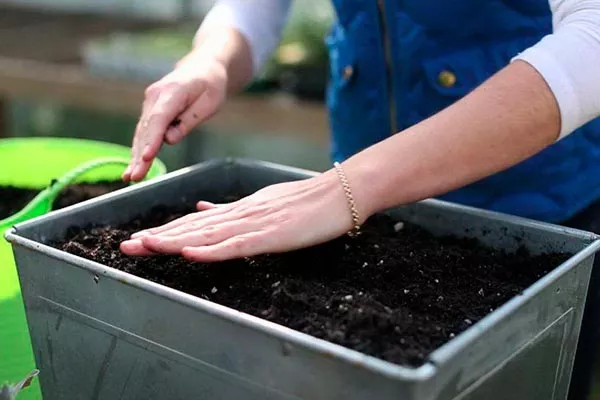
For growing tomato seedlings, use store-bought soil (universal substrate) or make your own from the following ingredients:
- peat - 7 parts;
- sawdust - 1 part;
- garden soil - 1 part.
Seedlings thrive in nutritious, loose soil that's moderately moist and warm. It should be free of parasites and pathogens. Store-bought soil is sterile, but homemade soil will need to be disinfected. Use boiling water, a potassium permanganate solution, or heat it in the oven.
Planting and caring for seedlings
Sow the Flaschentomaten seeds in trays filled with nutrient-rich substrate. Make sure they have drainage holes. Follow these step-by-step instructions for sowing:
- Level the soil in the box. Make furrows in it. They are 1.5 cm deep and spaced 5 cm apart.
- Place the seeds in furrows, keeping a sowing distance of 3 cm.
- Cover the seed with soil to a depth of 1-1.5 cm.
- Water the planting using a spray bottle.
- Cover it with film or glass to create greenhouse conditions for the crops.
Keep the Flaschen planting trays in a warm location (22–24°C). Avoid direct sunlight and protect them from drafts. Maintain moderate soil moisture, but do not allow the soil to dry out. Seedlings will appear in 7–9 days.
Provide the following care for the bottle tomato seedlings, bred in Germany:
- moderate moistening of the soil in which they grow with warm, settled water (watering frequency - once every 7 days);
- its loosening;
- fertilization (water the seedlings for the first time with a solution of complex fertilizer for nightshades 14 days after picking them, and apply superphosphate for the second time after another 2 weeks);
- additional illumination of seedlings with phytolamps to prevent them from stretching.
When the tomato seedlings develop their first two true leaves, transplant them into 500 ml cups or peat pots. Before transplanting them to the garden, harden them off for a week by taking them outdoors.
Transfer
Select a sunny, wind-free spot in the garden for growing tomatoes, protected from drafts. Make sure the groundwater level is not too low. Tomatoes do not tolerate dampness. Pay attention to the soil. Tomatoes require fertile, loose soil with a neutral pH.
Two weeks before transplanting the seedlings into the garden bed, dig over the area. Clear it of weeds. Add organic matter and mineral fertilizers to improve soil fertility. Add sand to make the soil looser and lighter. Add wood ash to reduce soil acidity and make it more nutritious.
Transplant the seedlings only after you are sure that the threat of frost has passed and the soil in the bed has had time to warm up well:
- up to +10°С — in a greenhouse;
- up to 15°C - in an open area of the garden.
- ✓ Optimum soil temperature for transplanting seedlings: +10°C in a greenhouse, +15°C in an open area.
- ✓ Distance between bushes when planting: no more than 3-4 per 1 sq. m.
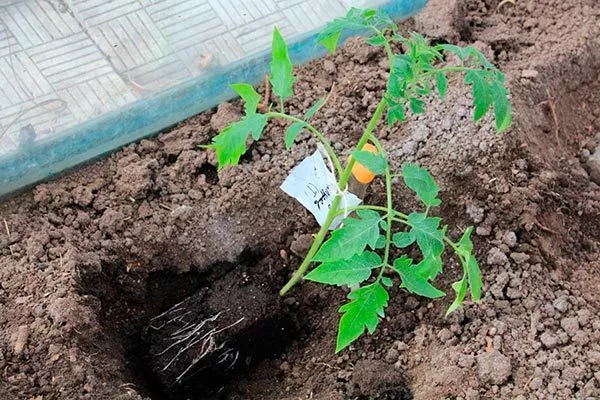
Plant the Flaschen seedlings in pre-dug holes, adding a small amount of mineral fertilizer rich in nitrogen and potassium. Also, sprinkle a few twigs of wood ash into each hole. If you grew tomatoes in peat pots, transfer them to the garden bed along with the containers. Do not disturb the root ball.
Don't plant more than 3-4 seedlings per square meter of garden bed. Don't overcrowd your tomato plants. Overcrowded spaces will cause disease due to poor air flow to the stems and excess moisture accumulation.
Care
To ensure abundant fruiting of your bottle tomato plants, care for them carefully. Water and fertilize regularly, and maintain optimal growing conditions.
Watering
This variety loves moisture but does not tolerate waterlogged soil. Adjust the amount of irrigation for its plantings:
- in dry weather, moisten the soil under the tomatoes once every 2 days;
- on damp and cool days - once every 5-7 days.
Use warm, settled water for watering. Watering your tomato beds with cold water more frequently than necessary will cause fungal infections. A moisture deficit is also detrimental to the plant, causing buds and flowers to fall off.
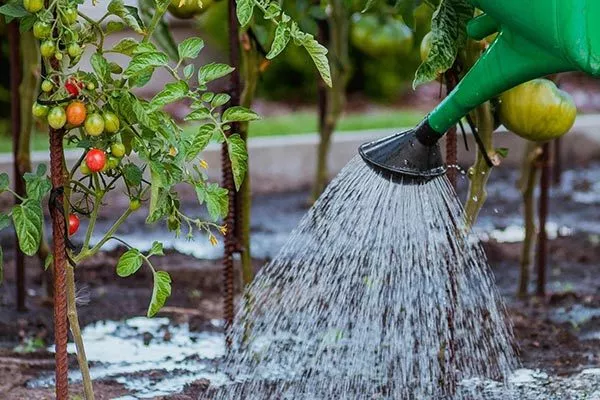
Don't forget to loosen the soil under your bottle tomato plants after watering and rain. They thrive only in light, loose soil. Loosening the soil will help the soil meet these requirements and ensure better oxygen and water access to the roots. Combine this with weeding.
Top dressing
Fertilize your Flaschen tomato plants with organic or mineral fertilizers weekly (once every 7 days) for more abundant and prolonged fruiting. Feed them with:
- Diammophoska. To make a nutrient solution, add 200 g of the substance to 5 liters of water. Water the plants at the roots. The liquid solution is rich in iron, sodium, and zinc.
- Universal products: Apion, Terracom, Ecost.
| Feeding method | Frequency | Efficiency |
|---|---|---|
| Diammophoska | Once every 7 days | High |
| Universal remedies | Once every 7 days | Average |
The variety is susceptible to blossom-end rot. The disease occurs because the plant is unable to fully absorb calcium from the soil. The problem is caused by a nutrient imbalance.
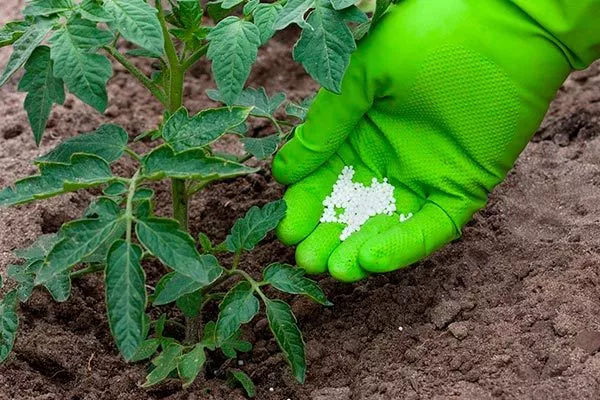
To solve this problem, first feed the bushes with a calcium-rich solution, and after three days, apply a fertilizer containing phosphorus and potassium. Maintain a potassium to calcium ratio of 10:7.
Pinching, pruning and garter
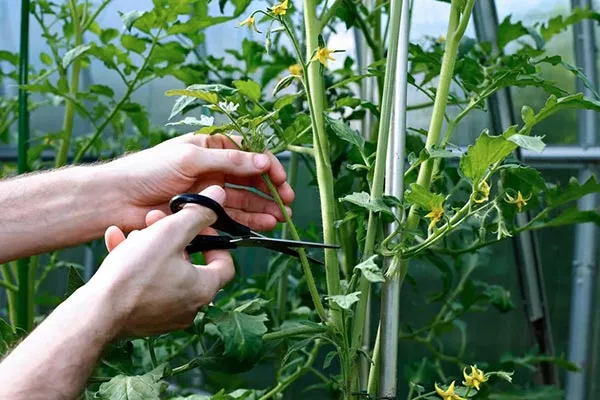
To prevent fungal diseases, properly care for the lower part of the Flaschen bush's stem. It should be dry, well-lit, and ventilated. Lower leaves and side shoots should also be regularly removed. Carefully break off any excess shoots, leaving stubs 1-2 cm long.
The bottle tomato produces a long, thin stem with heavy clusters. It requires sturdy support:
- high wooden stakes;
- trellis (rope or wire mesh can be used as a trellis).
When tying the shoots, do not pull them too tightly to avoid crushing them. Use garden twine. Secure the bushes to wooden stakes, keeping a 30 cm gap. Tie the end of the twine under the first true leaf, and then wrap it around the plant's trunk in a spiral.
The nuances of formation
Experienced gardeners who grow the Flaschen variety in their garden plots achieve maximum yield by growing the bush in one stem or in three trunks:
- First option Plant formation involves removing all lateral shoots from the main stem that form in the axils of each leaf, leaving 5-6 fruit clusters. The last flower cluster should be pinched off, leaving only 2-3 leaves above it.
- Second option This involves leaving two more shoots in addition to the main one: the one located under the first flower cluster and the most developed of those located below.
A properly formed bottle tomato bush has no more than 6 fruit clusters and 30-35 leaves.
Diseases and pests
The German variety Flaschen is popular with gardeners for its robust immunity. They rarely get sick and are not susceptible to late blight. Pests don't affect them more than other varieties. Blossom-end rot is the most common problem gardeners face with poor care.
Pest and disease control
Flaschentomaten bushes are resistant to late blight and other diseases that affect many vegetable crops, except blossom-end rot. To prevent these diseases, simply practice crop rotation, properly cultivate the soil in the greenhouse, and avoid mistakes in care.
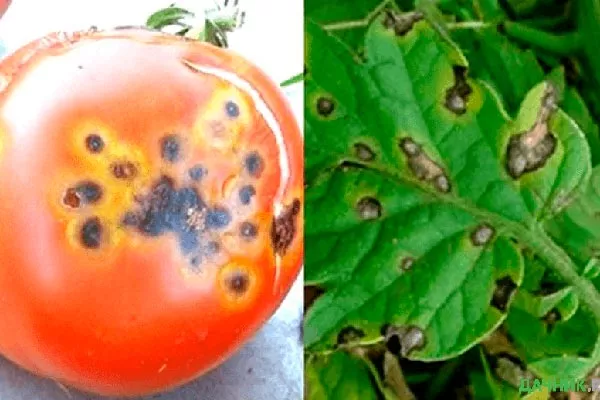
Experienced gardeners don't neglect preventative measures. A lack of them can cause the tops of the fruit to darken (this isn't a widespread phenomenon; brown spots appear only on individual tomatoes). As soon as signs of disease appear, the planting should be treated with fungicides immediately:
- Topsin-M;
- Quadris;
- Coming soon;
- Fundazol;
- Magnicur.
To get rid of blossom-end rot and other diseases, several treatments will be required, carried out at intervals of 14 days.
Bottle tomatoes are no more susceptible to pests than other vegetable varieties. If poorly cared for and under unfavorable growing conditions, they are at risk of insect infestations:
- aphids;
- Colorado potato beetle;
- whiteflies;
- thrips;
- scoops;
- spider mite.
Control pests promptly. At the first sign of their presence, treat the planting with insecticides such as Colorado, Actellic, Iskra, or Coragen.
If the damage to Flaschen tomatoes is minor, harvest them by hand. Try folk remedies:
- weak ammonia solution;
- baking soda;
- milk with iodine;
- garlic or ash infusion;
- laundry soap;
- Potato traps for Colorado beetles.
Spray tomato plants to get rid of insects on a dry, windless day. If using commercial insecticides, wait at least 10-20 days before harvesting.
Preventive treatment
To prevent disease in Flaschen plants, spray them with fungicides as a preventative measure. Apply them to tomato seedlings a few days before transplanting them to an open garden bed or greenhouse. Use one of the following products:
- Bordeaux mixture concentration 0.5%;
- Ordan;
- Tattoo;
- Profit.
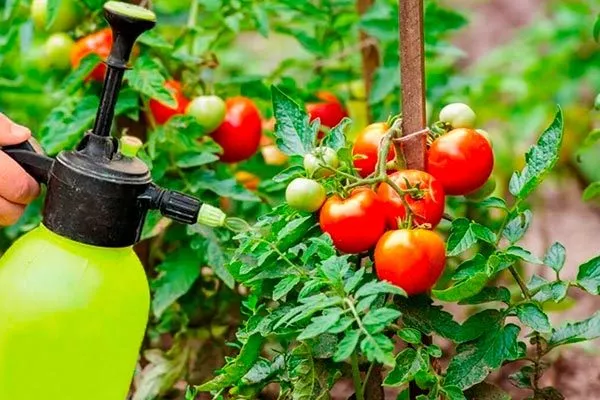
To prevent pest damage to tomato bushes, take the following measures:
- Use quality seeds for sowing;
- disinfect them in a solution of potassium permanganate;
- destroy weeds, remove plant debris from the area (they are a favorable environment for the reproduction of parasites);
- observe crop rotation;
- disinfect the greenhouse after harvesting;
- Plant plants on the site that repel harmful insects (basil, coriander, lemon balm, parsley, thyme, tarragon);
- Spray tomato plantings with garlic infusion to prevent pest attacks.
Pros and cons
Reviews
The Flaschen tomato is a new German-bred variety that is quickly winning the hearts of domestic gardeners and farmers. They are drawn to its excellent marketability and taste, its attractive appearance and sweet flavor, and the high productivity and resilience of its vines. It's an excellent choice for those growing the crop specifically for canning, pickling, and drying.