
Purple Heart tomatoes are eye-catching due to their unusual coloring, heart-shaped shape, and large size. They are characterized by their unrivaled flavor, meaty texture, and sweetness. This variety is ideal for both fresh vegetable lovers and those who preserve for the winter. It's the perfect choice for a variety of climates.
History of appearance, description of the bush and fruits
The variety was officially approved for use in 2021, although it was created back in 2019. The originator of the variety was Vasily Blokin-Mechtalin. It is registered in the State Register of the Russian Federation under number 8057733.
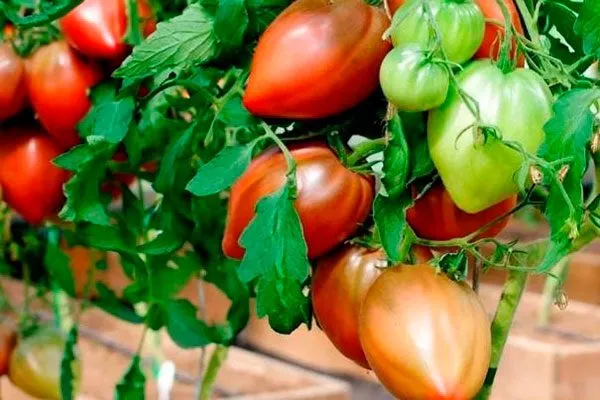
Distinctive characteristics of the culture:
- It is an indeterminate variety. The bushes are tall, reaching 1.8 m in height.
- The leaves are medium-sized and a standard green color. The inflorescences are compound, with articulated peduncles.
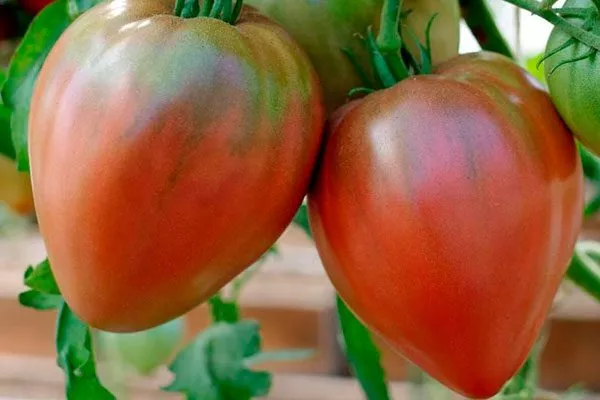
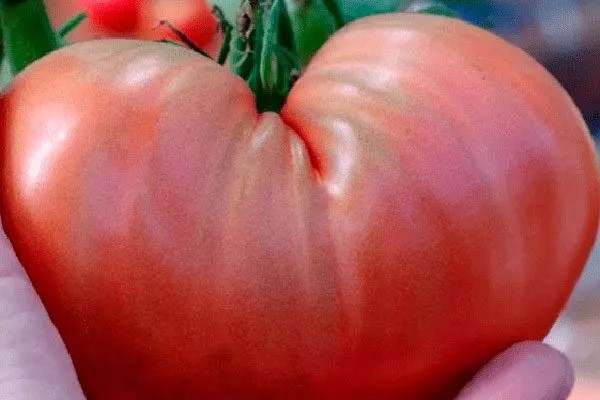
- The tomatoes are heart-shaped with moderate ribbing and are not particularly dense.
- When unripe, the vegetables are green with a dark green spot near the stem. As they ripen, they acquire a purple-red hue, which gradually deepens and darkens.
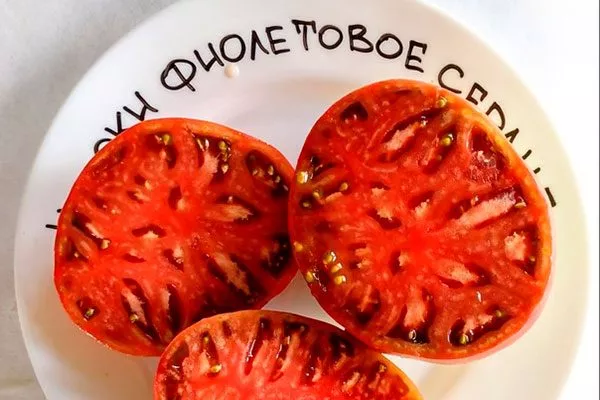
- Each tomato contains an average of six seed pods with a moderate number of seeds.
- The first inflorescence is formed above the 6-7th leaf, and the next ones appear every two leaves.
- ✓ The fruits change color from green to purple-red as they ripen, which is a unique characteristic of the variety.
- ✓ The variety requires the formation of a bush with 1-2 stems for optimal fruiting.
The flesh is firm and dense, with a sweet flavor. Each vegetable weighs between 200 and 350 g.
Characteristics of the Purple Heart tomato variety
Recently, gardeners have become increasingly interested in cultivars with unusually colored tomatoes. One such variety is the Purple Heart, which has received numerous positive reviews and is successfully grown in various regions of the country.
Ripening and fruiting, yield of the Purple Heart tomato
This is a mid-season variety. The tomatoes ripen 110-115 days after the first green shoots appear, although this timeframe may vary depending on weather conditions. Up to 10 tomatoes form on a single cluster.
This variety's yield is impressive, reaching 18 kg per square meter. However, productivity is highly dependent on growing conditions and the quality of care. In protected soil, yields can reach 25 kg per square meter.
Disease resistance and growing regions
The crop is highly resistant to common crop diseases and tolerates stressful conditions well. However, to maintain plant health, regularly carry out the preventative measures recommended for all tomato varieties.
This variety is successfully cultivated in a variety of conditions: in greenhouses, under plastic covers, and in open ground. It is adapted for cultivation in the North Caucasus, Western and Eastern Siberia, the Northern and Central Federal Districts of Russia, and the Far East, Lower Volga, and Middle Volga regions.
Directions for use and nutritional properties
Purple Heart tomatoes are primarily intended for fresh consumption. However, they are also excellent for processing and preserving, making delicious preserves, including juice, paste, and sauces. Canning them in their own juice preserves their rich flavor.
Useful properties of vegetables:
- Rich in antioxidants, which protect the body from the harmful effects of free radicals, helping to prevent the development of various diseases, including cancer.
- Contains vitamins A, C and K, which are important for healthy skin, vision and the immune system.
- They contain B vitamins, which support the functioning of the nervous and cardiovascular systems.
- Among the minerals they contain, potassium, magnesium and phosphorus are particularly prominent – they promote the health of the heart, muscles and nervous system.
This variety is low in calories and high in fiber, making it ideal for those watching their weight and overall health.
Planting times and rules
Before sowing seeds for seedlings, treat them to prevent diseases: soak them in a weak solution of potassium permanganate or Fitosporin for 20-30 minutes, then rinse with clean water.
Follow these recommendations:
- Sow the seeds into loose, fertile soil to a depth of 1-1.5 cm, moisten, and cover with plastic wrap. Place the trays in a warm location until germination occurs.
- When the seedlings have 2-3 true leaves, thin them out. Transplant them into individual containers with fertile soil, carefully spreading the roots to avoid damaging them.
- Harden off the seedlings 10-14 days before planting them in their permanent location to gradually acclimate them to the conditions of open ground or a greenhouse: reduce the temperature and move the containers with the plants outside, increasing the time they spend outside.
- Plant seedlings in their permanent location when the average daily temperature consistently exceeds 16°C. Depending on the region, the optimal time for planting is from late May to early June. The recommended planting density is no more than three plants per square meter, spaced 40x70 cm apart.
- Before transplanting, be sure to enrich the soil previously used for other crops. A week before transplanting, apply chicken manure fertilizer, which is an excellent substitute for mineral fertilizers.
- Immediately before the event, add superphosphate, and to prevent late blight, add about 60 g of crushed eggshells to each hole.
- In open ground, plant seedlings in well-lit areas. The optimal soil for growing is soft loam, rich in organic matter.
- ✓ The optimal soil temperature for planting seedlings should be at least +16°C at a depth of 10 cm.
- ✓ To prevent late blight, it is necessary to use mulching with a 5-7 cm layer of straw or sawdust.
Tomatoes will not produce fruit and may die in acidic or waterlogged soil. Good predecessors for tomatoes include cucumbers and onions. Avoid planting seedlings in areas previously occupied by strawberries, potatoes, or peppers.
How to care for it properly?
The Purple Heart tomato is characterized by good productivity and richly flavored fruit, but to achieve maximum results, it's important to take care of the plants. Regular cultivation will help the plants grow healthy and produce abundant fruit.
Watering
Provide the plant with moderate and frequent watering. Pour warm, settled water directly under the roots, avoiding contact with the leaves to prevent the development of fungal diseases.
During the early stages of growth, water 1-2 times a week, increasing the frequency as fruit develops and ripens. Ensure the soil is neither too dry nor too waterlogged.
Fertilizing
The crop requires the right fertilizers. Follow a specific feeding schedule:
- 10-14 days after transplantation add organic matter - infusion of mullein or chicken manure.
- During the period of flowering and fruit formation Use mineral fertilizers containing phosphorus and potassium.
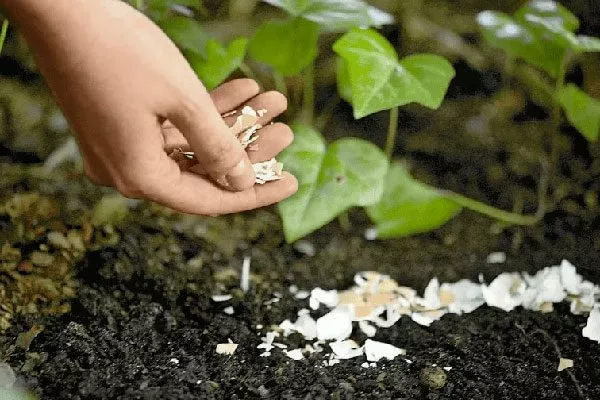
Additionally, use wood ash and herbal infusions. Alternate fertilizers every 2-3 weeks, taking into account the condition of the plants.
Pinching out and tying up
The Purple Heart tomato is an indeterminate variety, so it requires regular side shoot removal. Prune excess branches, leaving 1-2 main stems to structure the plant.
Tie the shoots to a support or trellis to support tall stems. This prevents damage and ensures even distribution of the vegetables.
Additional care
To maintain healthy plants, regularly loosen the soil around the bushes to improve oxygen access to the roots. Weeding helps eliminate weeds that compete with plants for nutrients.
Pest and disease control
Purple Heart tomatoes are resistant to most diseases, but preventative measures are still necessary. Follow these recommendations:
- When growing in a greenhouse, irrigate plants with sodium and potassium humate during bud and flower formation. This helps strengthen the plant's immune system and increase its productivity. Use fungicides to prevent fungal diseases.
- Ventilate greenhouses regularly. This improves pollination and prevents the growth of pathogenic bacteria.
- When growing outdoors, disinfect gardening tools regularly. After harvesting and removing plant debris, treat tools with a chloroethanol or malathion solution. Follow these same procedures in the garden as in the greenhouse.
Regardless of the cultivation method, disinfect tomato seeds before planting, as they are often the main source of disease transmission.
Similar tomato varieties
| Name | Growth type | Fruit color | Disease resistance |
|---|---|---|---|
| Purple Heart | Indeterminate | Violet-red | High |
| Indigo Rose | Indeterminate | Dark | High |
| Blue Beauty | Indeterminate | Purple, almost black | Average |
| Purple Fairy | Indeterminate | Violet | High |
For gardeners who appreciate unique vegetable colors, there are various varieties with purple skin. The Purple Heart tomato has several variations:
- Indigo Rose. This variety is characterized by the darkest skin and a mid-early ripening period. When grown in a greenhouse, the bushes reach 2 meters in height, and approximately 1 meter in open ground. The cultivar is resistant to major diseases, has excellent flavor, and produces good yields.
- Blue beauty. The fruits of this variety change color as they ripen. At the technical ripeness stage, tomatoes are green with bluish shoulders, while fully ripened ones turn purple, almost black.
- Purple Fairy. This variety is suitable for growing in greenhouses or open ground. To increase yield, the bushes are trained into 2-3 shoots. The tomatoes are oblong and have thick skin, making them resistant to cracking.
By cultivating several similar varieties on a plot at the same time, you will be able to obtain a large harvest of high-quality tomatoes.
Pros and cons
In addition to their unique flavor and beautiful color, Purple Heart tomatoes have many other advantages. Vegetable growers note the following:
The variety has only one drawback: for its flavor to fully develop, the tomatoes must ripen completely on the bush.
Reviews
Purple Heart combines a unique appearance with remarkable characteristics. High yields ensure consistent results. The excellent flavor and large size of the tomatoes allow for a wide variety of dishes. Timely cultivation will strengthen the plant's immunity and improve the quality of the vegetables.