
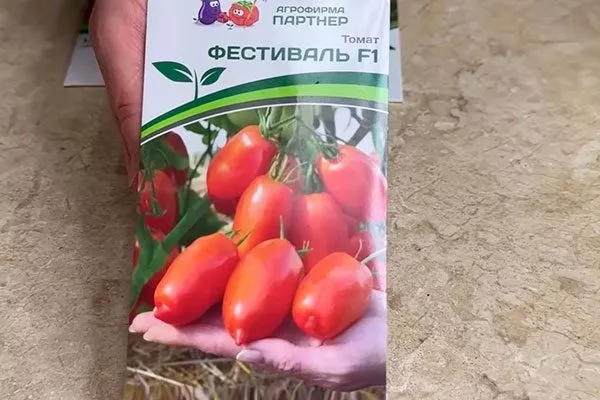
The Festival F1 tomato from Agrofirma Partner is a promising hybrid variety with excellent flavor and agronomic characteristics. This versatile variety offers high yields and is suitable for cultivation in all regions of the country, both in open ground and greenhouses.
Description of the plant and fruits
Festival tomato plants are determinate. The shoots are medium-sized and the inflorescences are simple, with the first inflorescence occurring above the sixth leaf, and subsequent inflorescences occurring between each leaf.
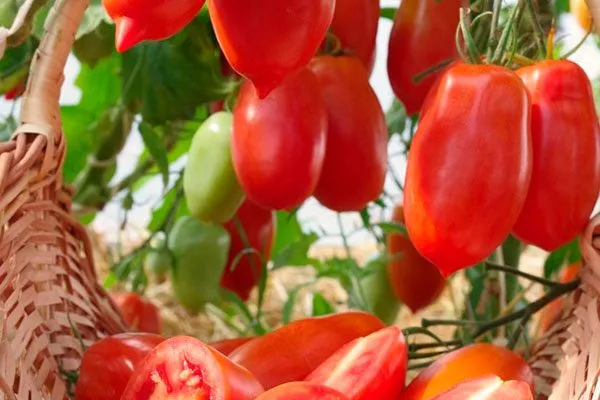
Brief description of fruits:
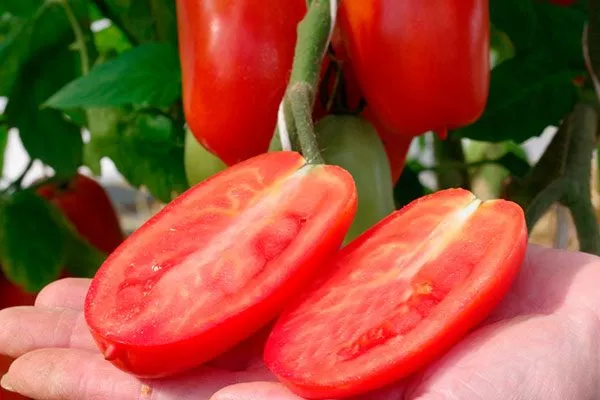
- Color of unripe fruits: green.
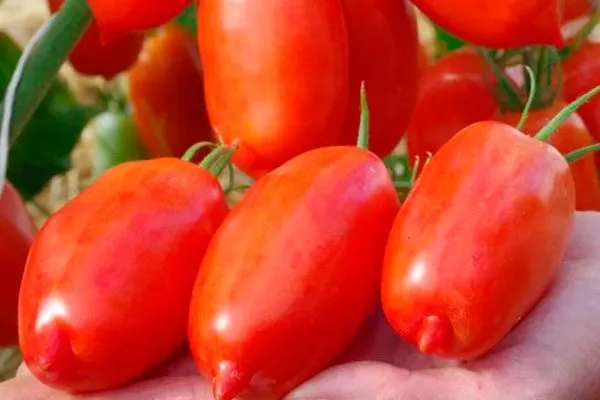
- Color of ripe fruits: deep red with washed out yellow stripes.
- Form: cylindrical with a small spout.
- Skin: durable, glossy.
- Weight: 70-100 g
Number of fruits in a bunch: 7-8 pcs.
The taste of fruits and their purpose
The fruit has a sweet, pleasant, and balanced flavor, with firm, juicy flesh. The Festival F1 variety is versatile: its fruits are great fresh, in salads, ketchup, tomato paste, and various culinary dishes, as well as for pickling, freezing, and whole-fruit canning.
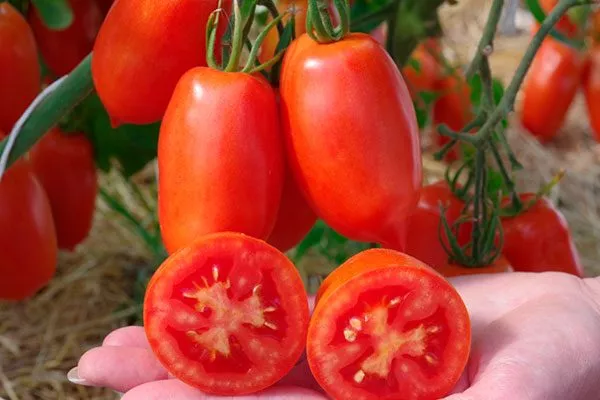
Characteristics of the Festival tomato
The hybrid variety Festival F1 boasts excellent agronomic characteristics, making it an enviable addition to any garden. This productive tomato is suitable for growing in all regions.
Ripening time
The Festival F1 tomato is an early-ripening variety. It takes 95-100 days from germination. Depending on the region's climate, soil type (open or closed), and planting time, the fruits ripen between July and September.
Productivity
The Festival hybrid is a high-yielding tomato. In both open and protected soil, it yields up to 15 kg per square meter. Experienced gardeners can harvest 4-4.5 kg of tomatoes from a single plant.
Cold resistance
The Festival tomato exhibits standard resistance to cold, drought, and temperature fluctuations. It also tolerates heat, humidity, and other weather conditions well.
Disease resistance
The Festival hybrid is resistant to bacterial diseases. It is virtually immune to verticillium wilt, tobacco mosaic virus, and fusarium wilt. This hybrid variety is also resistant to viral diseases.
Pros and cons
Before planting the Festival hybrid in your garden, open ground, or greenhouse, it's recommended to familiarize yourself with all of its advantages and find out if it has any disadvantages.
No disadvantages were found in this variety.
Landing features
The Festival hybrid can be grown in any type of soil—open air, greenhouse, or under plastic covers. In any case, seedling cultivation is preferred as it is more efficient and produces an early, high-quality, and abundant harvest.
Seed preparation
It's recommended to test seeds for germination before planting. Store-bought seeds are usually pre-treated with all necessary preparations, so all the gardener needs to do is soak and germinate the seeds.
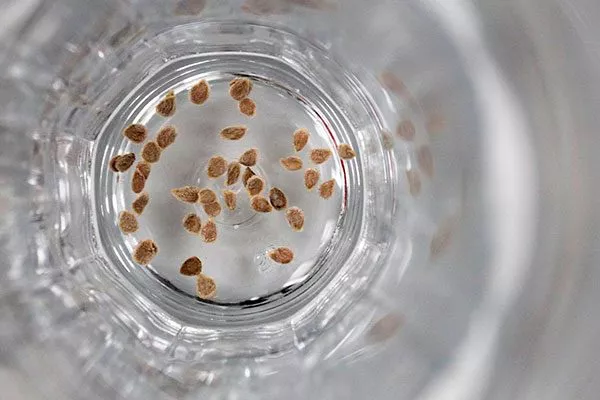
Seeds are tested for germination using a salt solution. It is prepared by mixing 2 tablespoons of table salt and 1 liter of water. Good seeds sink to the bottom, while bad ones float. This sorting increases seed germination. Seeds can also be soaked in a growth stimulator.
Preparing the planting container
For growing seedlings, you can use plastic cups with a capacity of 100, 200, and 500 ml, cassettes, peat pots, or tablets. Regular containers (not peat) should be scalded with boiling water or treated with a disinfectant solution (potassium permanganate or hydrogen peroxide).
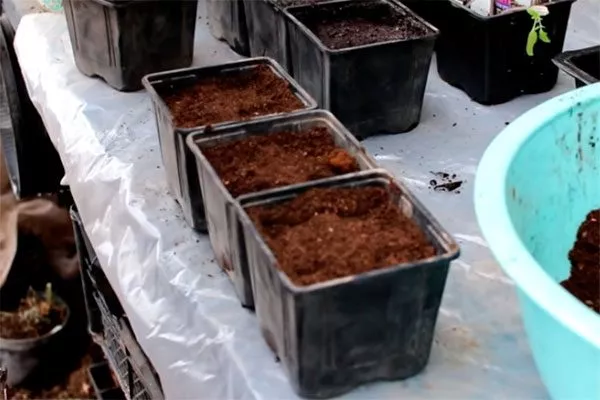
If containers or cups don't have drainage holes, they should be made, for example, using a hot awl. The planting container should be large enough, with opaque walls and low thermal conductivity.
Site selection and preparation
Tomatoes should be planted in a sunny, well-ventilated area, free from drafts and shade. Southeastern, southwestern, or southern exposures are ideal. Lowlands, swampy areas, and windswept areas are not recommended.
The nuances of growing seedlings
Seedlings are sown 45-60 days before planting in the ground, taking into account the approximate timing for a specific region. Tomato seedlings are transplanted into the greenhouse as soon as the greenhouse reaches the desired size and forms 6-7 leaves. Weather conditions are also taken into account when planting seedlings in the ground.
Features of growing seedlings:
- The easiest and most effective way to grow good seedlings is to buy ready-made soil mix. It contains everything necessary for tomato growth, is free of pathogens, pathogenic microflora, and infections, and requires no heating or disinfection.
- You can prepare your own soil mixture, for example, by mixing equal parts peat, humus, and garden soil. To add nutrients, add superphosphate, ammonium nitrate, and potassium chloride. For every 10 liters of soil mixture, add 250 ml of wood ash.
- The soil is poured into containers, compacted slightly, and watered with warm, settled water. Rows are made in the containers and the seeds are sown at a depth of 1 cm. The intervals between seeds are 2 cm, and between rows, 3-4 cm. Two or three seeds are placed per cup, keeping intervals of 3 cm. The seeds are covered with a thin layer of soil.
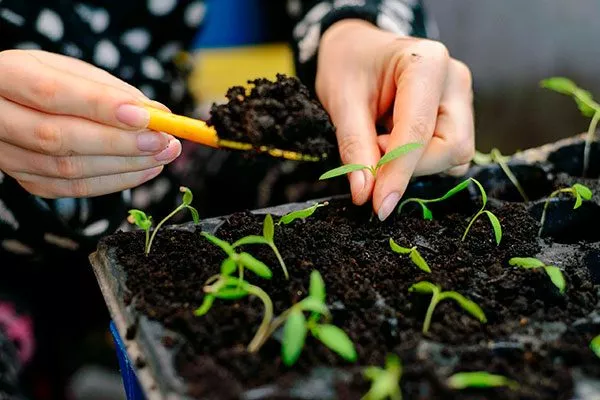
- At the two-true-leaf stage, the seedlings are pricked out and transplanted into individual containers, with the roots pinched. If the seedlings were sown in cups, the plants are transplanted into larger containers.
- The seeds are covered with plastic film to create a greenhouse effect, which accelerates germination. They should emerge in approximately 3-5 days. After this, the covering material is immediately removed, and the planting containers are moved closer to the sun. At the same time, the temperature is reduced from 22°C to 25°C to 14°C to 16°C. At night, the temperature should drop to 11°C to 12°C.
- After a week of "strict" temperature control, the seedlings are returned to warmth. This approach prevents the seedlings from stretching. They grow strong and healthy.
- For the first three weeks, seedlings are watered minimally—once a week. Then, watering is doubled to tripled. Sprinkler irrigation is recommended two to three times a week. A week before transplanting, the seedlings are watered daily. They are also hardened off daily by being taken outside.
- Feeding the seedlings begins after transplanting. Growth stimulants such as Kornevin or similar products can be used. Humic compounds diluted to a low concentration and wood ash are also suitable.
Planting seedlings in the ground
Tomato seedlings are transplanted into a greenhouse in April-May, and into the open ground a few weeks later. In regions with short, cold summers, planting occurs in early to mid-June.
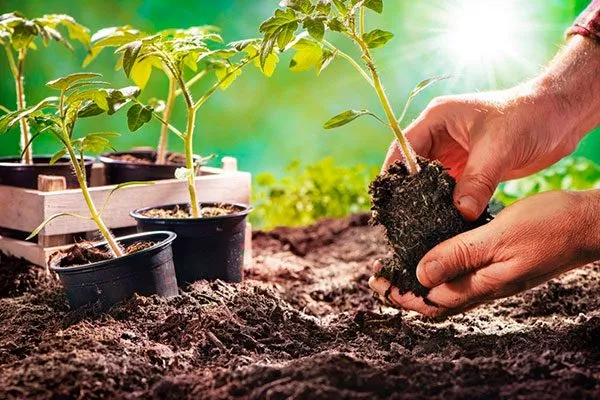
Features of planting tomato seedlings Festival:
- For planting, dig holes according to a 30 x 40 cm pattern. No more than 3-4 plants are planted per 1 square meter.
- The holes should be 15-20 cm deep. They should be wide and deep enough to accommodate the root system without bending. The approximate width of the holes is 20 cm.
- The seedlings are watered generously the day before so that they can be easily removed from the planting container the next day.
- If the soil is not fertile enough, you can add additional fertilizer to the holes - a handful of humus, the same amount of wood ash, 15-20 g of superphosphate, sprinkle the fertilizer on top with ordinary soil to protect the roots from burns.
- The holes are also watered about an hour before planting. Use warm, settled water.
- The seedlings are moved into the holes along with the root ball. They are planted deeper in the soil than they were in the pots. The roots are covered with loose soil, compacted, and watered again.
Care Features
The Festival tomato requires regular care, including fertilizing, watering, and preventative spraying. Bushes of this variety require shaping, tying, and pinching.
Watering and loosening
After planting, tomatoes are not watered for 10 days to allow for faster adaptation. Subsequently, water 2-3 times a week. Pour warm water under the roots, being careful not to get it on the leaves and stems.
The amount and frequency of watering depends on the weather and soil conditions. It should not dry out or become waterlogged. After watering and heavy rains, loosen the soil in the beds to a depth of 5-7 cm. Hilling should be done once, raking the soil upward. Weeding should be done simultaneously with loosening.
Top dressing
Fertilize the Festival F1 tomato every two weeks. Initially, apply high-nitrogen fertilizers to encourage foliage development.
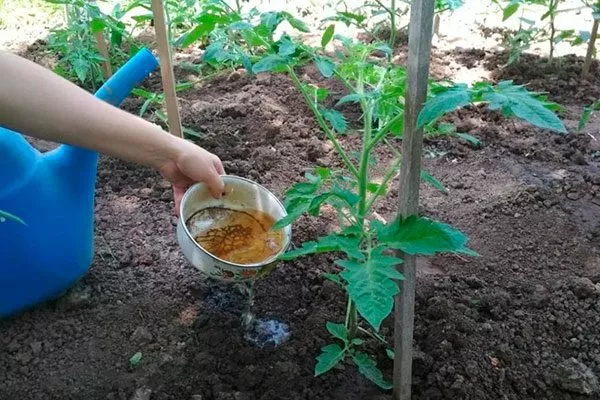
During fruiting, tomato bushes require more potassium, but they need phosphorus constantly.
Garter and shaping
The Festival F1 tomato has a fragile trunk that can break under the weight of ripening fruit. The bushes must be tied to supports, otherwise they will break or fall to the ground. Staking is done in stages: first, the main stem is tied to the support, and then, once the fruit begins to form, the fruiting branches are tied.
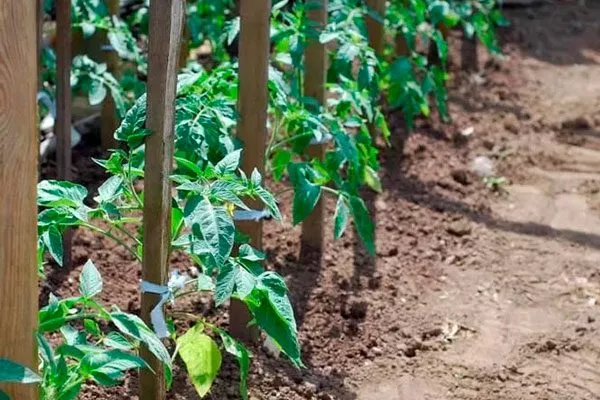
It's recommended to train bushes with 3-4 stems. The plants also require pinching—removing shoots that grow in the leaf axils. Removing side shoots is best done in the morning when the weather is warm, dry, and sunny.
Diseases and pests
The hybrid is resistant to most common diseases, but is not immune to infection under unfavorable conditions. At the initial stage, spraying the bushes with whey, salt, or ash solutions is helpful.
Tomatoes are sprayed with biological products, such as Fitosporin, when symptoms of disease appear, as well as for prevention. Effective fungicides, such as Skor, Hom, Abiga Peak, copper sulfate, Bordeaux mixture, Ridomil Gold, and others, are used for treatment.
Among pests, the greatest threat to the Festival hybrid is aphids, as well as whiteflies, cutworms, slugs, and mole crickets. Biotlin, Kleschevit, other insecticides, and folk remedies are used against them.
Harvesting and storage
The fruits are harvested when they turn a rich red with yellow stripes. They are not picked, but carefully cut off along with the stems using garden shears. Tomatoes harvested this way store better and do not rot.
The harvested tomatoes are placed in a single layer in a wide container. First, the tomatoes are rinsed with warm water, thoroughly dried, and each one is wrapped in paper. The tomatoes are sprinkled with peat shavings or birch sawdust.
The optimal storage temperature for tomatoes in the state of biological ripeness is +1…+2 °C, and in the milky ripeness state it is +10…+12 °C.
Reviews
The Festival F1 tomato is a very interesting variety with excellent characteristics and versatile uses. This tomato is suitable for a wide variety of purposes, appealing to gardeners, satisfying the demand of preserves enthusiasts, and can also be grown commercially.