
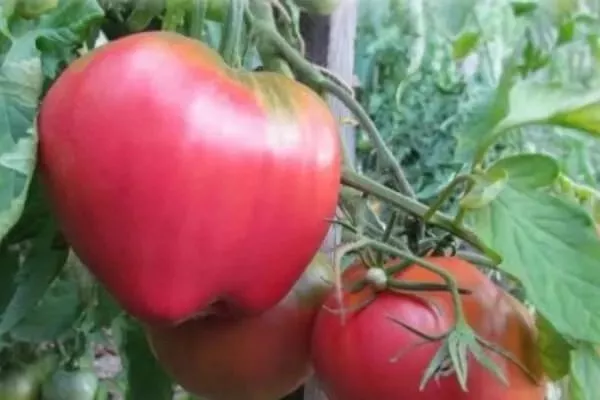
Fatima is an early-ripening tomato variety belonging to the "Bull's Heart" type. Its hallmark is a successful combination of late blight resistance and a long fruiting period. Gardeners appreciate the beautiful appearance, large size, and excellent flavor of these tomatoes. They are grown in open beds, under temporary plastic cover, and in greenhouses.
Origin and growing regions
This large-fruited pink tomato variety owes its origins to domestic breeders. It is believed to have been developed in the south less than 10 years ago. Fatima is not yet listed in the Russian Federation's state register. It is popular with gardeners not only in Russia but also in Ukraine.
You can find tomato seeds of this variety on sale, produced by various agricultural companies, such as:
- "Seeds of Crimea";
- "Our garden bed";
- GL Seeds
- Flora Market and others.
Gardeners successfully cultivate this variety in all regions of the country due to its good adaptation to greenhouse conditions. It is grown in protected ground in the Urals and Siberia. In the central part of the country, it thrives in open beds. In the south, it can be grown without seedlings.
Description of the variety
The pink tomato belongs to the "Bull's Heart" cultivar. It is classified as a determinate, large-fruited variety.
Bush
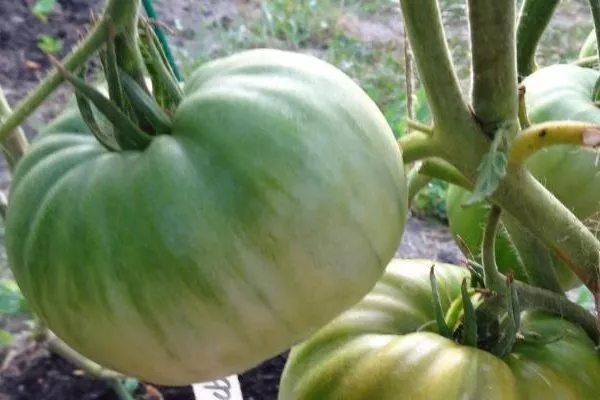
Fatima plants are short and compact, with a standard form. Their appearance is characterized by the following characteristics:
- “height” – 40-50 cm in an open bed, 70-100 cm in a greenhouse;
- powerful main stem;
- strong branching;
- not very strong lateral shoots;
- medium degree of foliage;
- fruit clusters of a simple type, consisting of 3-4 tomatoes (the first one is formed above the 6-7 leaf).
Gardeners say that an interesting feature of the Fatima bush is the formation at its top not of a flower cluster, but of a single bud, which produces a very large, deformed fruit.
- ✓ Formation of a single bud at the top of the bush, producing a very large, deformed fruit.
- ✓ Even low-growing bushes require gartering due to the fragility of the shoots.
Pink tomato plantings require support due to the shoots' tendency to break under the weight of the ripening crop. Shaping and pruning the plants is not necessary, but growing them into twin trunks promotes increased productivity.
Fruit
Fatima delights gardeners with its marketable appearance, large size, and high consumer quality. This varietal tomato variety has the following characteristics:
- weight - 250-500 g;
- a shape that has the outline of a heart;
- slightly noticeable ribbing;
- soft pink color;
- skin: smooth, with a glossy sheen, not thick, elastic, not prone to cracking;
- the pulp is distinguished by its meatiness, medium density, tender consistency, juicy and aromatic;
- low seed content.
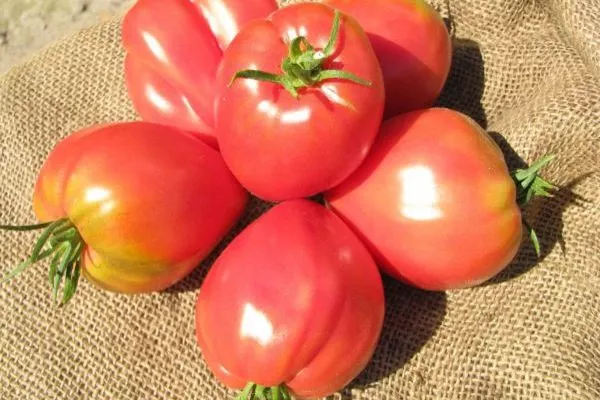
The tasting qualities of the fruits are excellent. They delight the eater with their pleasant sweet taste Without sourness, not watery or bland. Stores well and tolerates long-distance transportation.
Main characteristics
The southern variety Fatima has won the hearts of domestic gardeners and farmers growing vegetables for sale thanks to its many excellent qualities: high yield, resistance to disease and stress, and good tolerance to drought and heat, as well as temperature fluctuations.
Ripening and fruiting, productivity
This pink heart-shaped tomato variety is an early-ripening and productive vegetable crop. Its key technical characteristics are as follows:
- Tomato ripening period is 85-90 days after sprouting;
- harvest time is from July to early autumn;
- productivity indicators of 1 bush - from 2 kg (maximum value - 5 kg, at least 11 fruits);
- yield - 10 kg per 1 sq. m of planting.
In regions with short, cold summers, Fatima doesn't reach its full potential. Its productivity under such conditions is low: the bushes produce only a small number of fruit clusters, and only the first few fruits ripen before the cold weather sets in (the rest are harvested unripe and ripened at home).
Scope of application
The southern variety's harvest is versatile. Its main use is fresh eating (slicing, summer salads). Uncooked, these tomatoes are especially delicious and healthful. Their wonderfully sweet flavor makes them a true summer dessert.
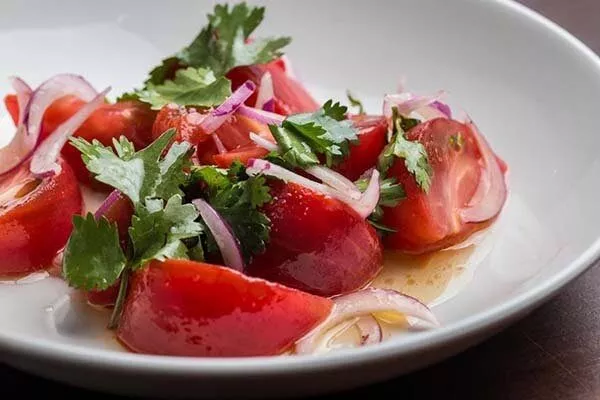
Large, fleshy pink tomatoes are widely used in home cooking. Here's how to prepare them:
- added to hot first and second courses, pizza, casseroles, stuffed;
- they make sauces and ketchup from them;
- processed into juice, puree and tomato paste;
- canned, frozen in sliced form.
Resistance to diseases and pests
The variety was bred to be resistant to late blight, a dangerous nightshade disease. The plants have strong immune defenses against fungal infections. They are also resistant to many other infections that affect tomatoes.
Fatima bushes don't have good resistance to insect attacks. Preventative measures can help gardeners avoid the problem:
- preventive use of insecticidal preparations;
- using folk remedies to repel pests from tomato beds.
Possible problems
This southern tomato variety is considered easy to grow and requires little attention from the gardener. Despite its low maintenance requirements, novice gardeners may encounter the following complications:
- Breaking off shootsAlthough Fatima bushes are short, their stems are not particularly strong, and the weight of large, fleshy tomatoes puts a lot of strain on them. Staking or using special forked supports for the fruit clusters can help avoid this problem.
- Developmental delayThe crop loves moisture but does not tolerate dampness. For good growth, it requires proper irrigation. Overwatering and prolonged drying of the soil in the garden bed are factors that slow down this process and contribute to plant diseases.
Follow the rules for watering tomatoes to avoid such difficulties. - Damage by rotDespite the variety's resistance to fungal infections, the bushes can suffer from them if not properly cared for. This is especially true for tomatoes grown in greenhouses.
To prevent this problem, do not let the soil in the garden bed become waterlogged, ventilate it regularly, and control the humidity and temperature of the air in the shelter. - Low yieldThis southern variety won't reach its full productivity potential if fertilizing is neglected. Apply fertilizer during the growing season to maximize the harvest of large, tasty fruits.
Apply organic and mineral fertilizers according to the needs of plants at different stages of their development.
Growing rules
Cultivation of the variety Pink tomatoes can be grown using either direct sowing of seeds into the soil or seedlings. The first method is used by gardeners in the south (planting in early June), while the second method is used throughout Russia (planting in late February or March, transplanting the seedlings to the garden in May or June).
- ✓ Optimum soil temperature for sowing seeds: +25°С.
- ✓ Critical soil moisture level: do not allow the top layer to dry out more than 1 cm.
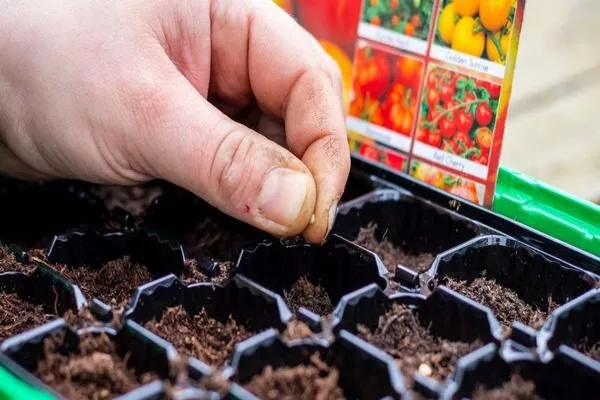
Fatima thrives when grown without seedlings, which produces stronger plants and reduces fruit ripening time. The tomatoes are not subjected to stress from being transplanted into the garden. They are better adapted to open-ground conditions.
Preparatory activities
To grow heart-shaped tomato seedlings, developed in the south of the country, stock up on suitable planting containers:
- spacious drawers made of plastic or wood (the optimal height of their sides is 10 cm);
- glasses with a capacity of 400-500 ml or peat pots.
Containers intended for seedlings should have drainage holes in the bottom. If they are reusable, be sure to wash them before use and wipe the inside with rubbing alcohol before sowing.
Tomatoes require light, loose, and nutritious soil with a pH of 6 to 6.5 for good growth and proper development. Use a universal, store-bought soil that fully meets these requirements.
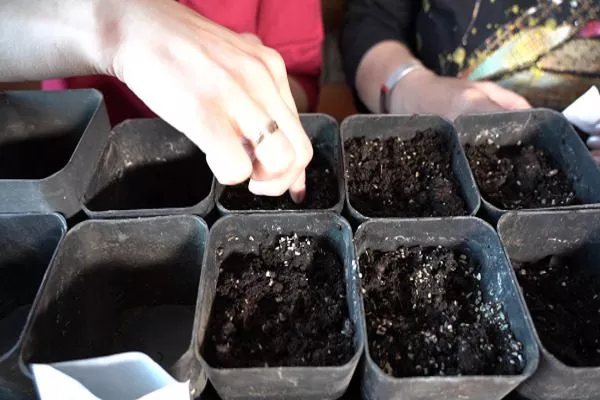
If store-bought potting soil isn't affordable, make your own. To make it, combine the following ingredients in the indicated parts:
- garden soil - 30%;
- coarse sand - 20%;
- peat - 20%;
- humus - 30%.
Before use, disinfect your homemade substrate by baking it in the oven or watering it with a potassium permanganate solution. This will eliminate pathogens and parasites.
Vegetable seeds, especially those collected at home, also require preparation for sowing. This involves the following procedures:
- hardening (keep the seed material in a cool place for 3 days);
- etching (use a solution of potassium permanganate with a concentration of 1-2%, and then rinse the seeds in clean water);
- germination (leave the seeds on a saucer with damp gauze in a warm room to allow the sprouts to emerge).
Planting and growing seedlings
After filling the containers with a suitable substrate and preparing the seeds, begin sowing. Follow these step-by-step instructions:
- Make furrows in the substrate. The depth should be 1.5 cm. The width between rows should be 5 cm.
- Place the seeds in the furrows, leaving a distance of 3 cm between them.
- Cover them with fine-grained soil, planting them to a depth of 1-1.5 cm.
- Water the crops carefully using a spray bottle.
- Cover them with plastic wrap to create greenhouse conditions.
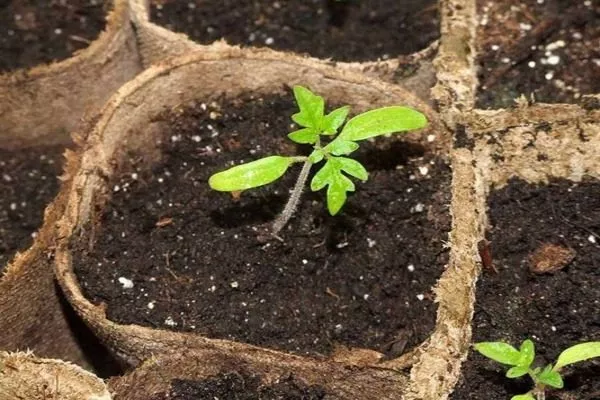
Keep the container with the sown Fatima seeds warm (+25°C). Make sure it's not exposed to direct sunlight. Keep the substrate moderately moist, but don't let it dry out. Sprouts will appear in 7-8 days. Remove the plastic wrap immediately.
Move the box with tomato seedlings to a sunny window. Reduce the room temperature to 20°C. Provide proper care for the seedlings, including the following:
- moderate irrigation of plantings slightly warm settled water (the procedure should be carried out once every 7 days, as the substrate dries out);
- careful loosening of the soil;
- picking (replant the plants from the common box into individual containers after the first 2 true leaves appear);
- application of fertilizers (start feeding the seedlings with Agricola on the 14th day after picking, repeat the application of the nutrient composition 1-2 more times with an interval of 10-14 days).
- hardening (devote the last week before “relocating” the seedlings to the garden to this activity; take the plants out into the fresh air for several hours every day).
Transfer

Transplant the southern Fatima tomato variety to its permanent location after they reach 50-60 days of age. Plant the seedlings in a sunny, wind-free area of the garden with loose, fertile, and well-drained soil. Plant 3-4 plants per square meter (25-40 per 10 square meters). Maintain a 50x30 cm pattern.
Aftercare
After transplanting the southern tomato seedlings to their permanent location, provide them with proper care. Follow standard agricultural practices for Fatima's plants:
- WateringMoisten the soil under the tomatoes for the first time immediately after transplanting them to the garden bed. Repeat this procedure regularly during the flowering period, at the beginning of fruit set, and during the fruiting phase (frequency: 1-2 times per week).
Maintain a consistent watering rate of 30-40 liters per square meter of pink tomato planting. Use settled, sun-warmed water. Apply it to the roots, avoiding splashing onto the foliage.
Adjust the watering regime taking into account the weather and the amount of precipitation. - Soil careThe day after watering or rain, loosen the soil under the tomato bushes and between the rows to prevent an air-impermeable crust from forming on the surface.
At the same time, remove weeds that deprive the crop of nutrients and increase the risk of disease and insect damage.
Mulch the soil in the garden bed with organic matter (sawdust, straw, peat) to better retain moisture and suppress the growth of harmful plants. - Top dressingFertilize the vegetable crop every 12-20 days. Apply the first fertilizer two weeks after transplanting the seedlings to their permanent location. Water the tomatoes with a nutrient solution made by dissolving 10 g of urea, 40-50 g of superphosphate, and 10-15 g of potassium sulfate in 10 liters of water. Use 1-1.5 liters of liquid per plant.
During the tomato formation phase, use a different fertilizer in the same quantity. To prepare it, use the following ingredients: water (10 l), ammonium nitrate (10-15 g), superphosphate (50-60 g), and potassium sulfate (30-40 g). Fertilize Fatima plants with this fertilizer during the fruiting phase, increasing the ammonium nitrate dosage to 30 g and the potassium sulfate to 60 g.
Apply foliar feeding to improve fruit set. Use a urea solution (10 g per 10 l) fortified with boric acid (5 g). This can be replaced with ready-made preparations (such as Bud). Spray the plants with them in cold weather (below 13°C at night) and in hot weather (above 32°C). - Bush formation and garterStandard plants don't require mandatory staking. Whether or not to do so is entirely up to you. If your tomato plant has grown tall (this often happens in greenhouses), train it into 1-2 trunks, removing any excess side shoots. Be sure to secure the stems to supports to prevent them from breaking.
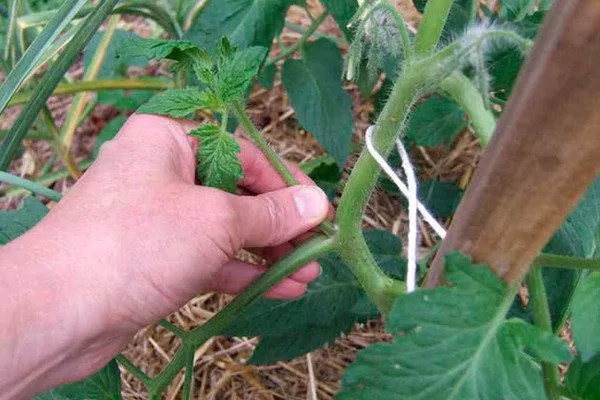
To ensure large, high-quality fruits that will ripen before the cold weather sets in, limit the number of clusters. For open-bed plants, leave no more than 5 of the first to set fruit. For greenhouse plants, leave 8 clusters. Pick off any flowers that appear later than 30 days before the expected cold weather.
Pest and disease control
The Fatima vegetable variety boasts strong immunity. The bushes are rarely affected by major tomato diseases. Due to their early maturity, they are resistant to late blight, producing a harvest before the infection spreads widely.
Health problems in this variety can occur if poorly cared for and grown in unfavorable conditions. Strict adherence to agricultural practices and preventative measures can help prevent complications:
- periodic inspection of plants in order to promptly identify symptoms of infection;
- treating the bushes with antifungal preparations (10-15 days after transferring the seedlings to the garden bed, spray them with a solution of copper oxychloride with a concentration of 0.4% or 1% Bordeaux mixture, repeat the application of the same compositions when rainy weather sets in).
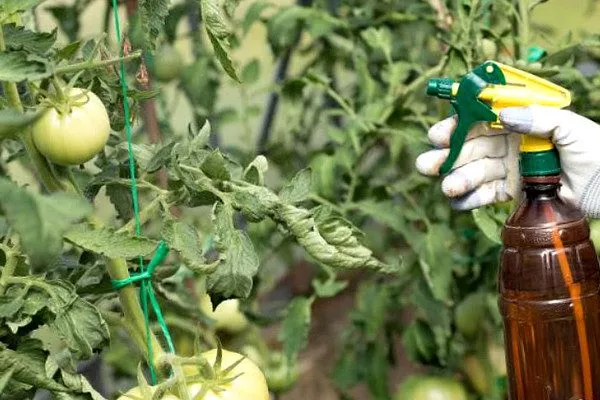
The Fatima tomato is not particularly resistant to pest attacks. Plants suffer from pests when the soil in the garden is too dry or waterlogged, when it is overgrown with weeds, or due to inadequate nutrition. Damage to the crop is caused by aphids, whiteflies, thrips, and spider mites.
Regularly inspecting your bushes will help you spot insects and their larvae early. If you spot any, use the bioinsecticide Fitoverm. Spray twice, 1 week apart. Set sticky traps. To repel pests from your garden, grow the following plants:
- basil;
- mint;
- marigold.
Harvesting and storage
Begin harvesting in July. Pick tomatoes by hand as they ripen. Due to its early ripening, this southern variety is popular with farmers and gardeners who dream of getting their first tomatoes as early as midsummer.
Harvest fruits intended for transport or storage slightly underripe. They can be ripened further at home.
If you're growing heart-shaped tomatoes outdoors, harvest them in the morning during dry, warm weather. Pick greenhouse tomatoes from the garden at any time of day. To ensure good shelf life, follow these picking guidelines:
- use scissors instead of ripping it off with your hands;
- cut the tomato together with the stem;
- do not allow the skin to become damaged;
- Collect overripe and cracked specimens in a separate container (they won’t keep, you’ll have to eat them right away or make juice/puree).
To ensure the best storage conditions for pink tomatoes, store them in a well-ventilated room with a temperature of 5-12°C. Place them in paper-lined boxes, in a single layer. Refrigerate overripe tomatoes. Process or eat them before they start to spoil.
Similar varieties
| Name | Ripening period (days) | Disease resistance | Growth type |
|---|---|---|---|
| Fatima | 85-90 | High | Determinant |
| Anna Russian | 100-110 | Average | Semi-determinate |
| Fidelio | 95-105 | High | Medium height |
| Abakan pink | 100-110 | Average | Determinant |
| Dad | 85-95 | High | Indeterminate |
| Shuriks | 80-90 | Average | Tall |
You'll find many heart-shaped tomato alternatives available. These varieties, like the southern Fatima, will delight you with their large size and sweet-tasting harvest:
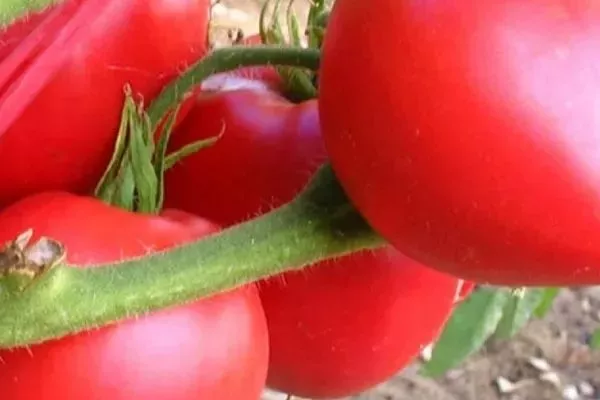
- Anna RussianThis is a mid-season tomato. The bushes are semi-determinate. They grow well both in open beds and greenhouses. They produce large, pink, heart-shaped fruits (weighing 250 g) with juicy, tender, and aromatic flesh.
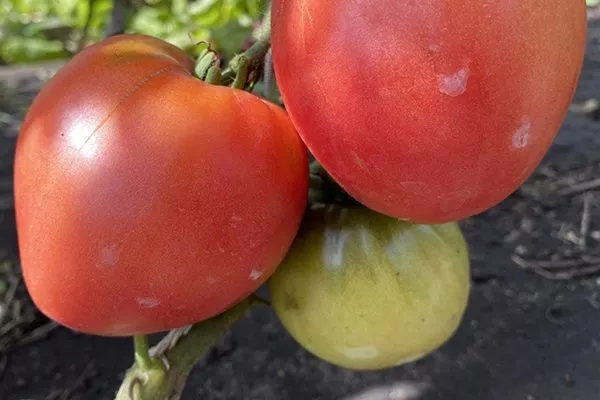
- FidelioThis mid-season, medium-sized, and high-yielding vegetable variety produces heart-shaped fruits with fleshy, sweet, pinkish-red flesh. They weigh 200-400 g. This variety is suitable for both open and protected cultivation.
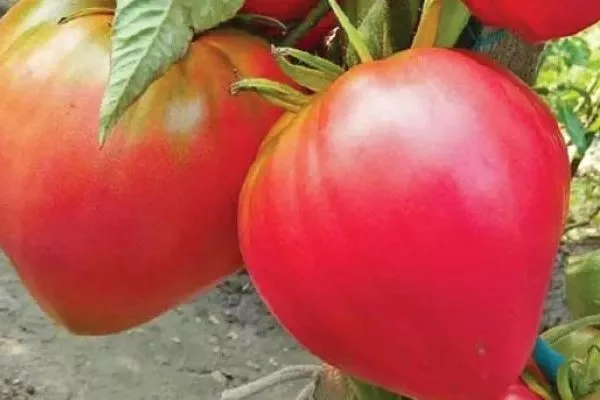
- Abakan pinkThis is a mid-season determinate tomato variety that delights gardeners with its high yields. Suitable for both open beds and greenhouses, it produces large fruits (200-500 g) of the "Bull's Heart" variety, which are sweet with a hint of tartness, fleshy, juicy, and medium-dense.
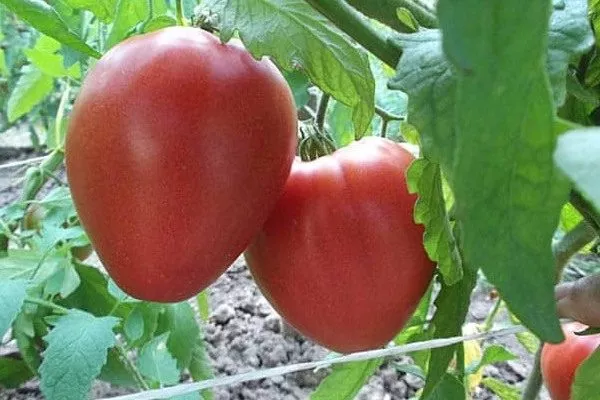
- DadThis early-ripening, highly productive variety is characterized by good yield. The bushes are indeterminate. The harvest is heart-shaped, large (200-500 g), raspberry-red, and has juicy, sweet flesh. Cultivation is possible both indoors and outdoors.
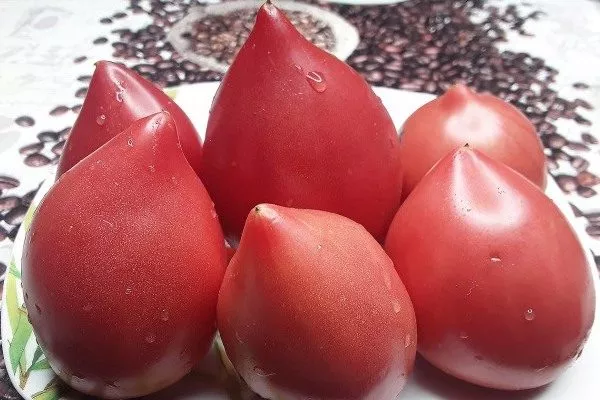
- ShuriksThis is an early, productive variety. The bushes are tall. They produce pearly-pink tomatoes, heart-shaped with a pointed tip. They weigh 150-300 g. Their flesh is juicy, and the flavor is sweet with a hint of tartness.
Pros and cons
The southern tomato variety Fatima boasts many advantages that distinguish it from similar vegetable varieties. It's attractive to gardeners for its many benefits:
Cons:
Reviews
Fatima is a southern variety of heart-shaped pink tomatoes, beloved by gardeners for its early maturity, large fruits, good yield, and resistance to late blight, stress, and heat. These fleshy and sweet tomatoes are eaten fresh, used in salads and other dishes, processed into juice, and canned.