
The Faradenza f1 tomato, developed by specialists at the Partner agricultural firm, attracted attention with its unique shape, reminiscent of a large bunch of grapes. This hybrid boasts increased productivity and is ideal for canning. Growing Faradenza requires no special knowledge or difficult growing conditions, making it accessible to novice gardeners.
Description of the bush and fruits
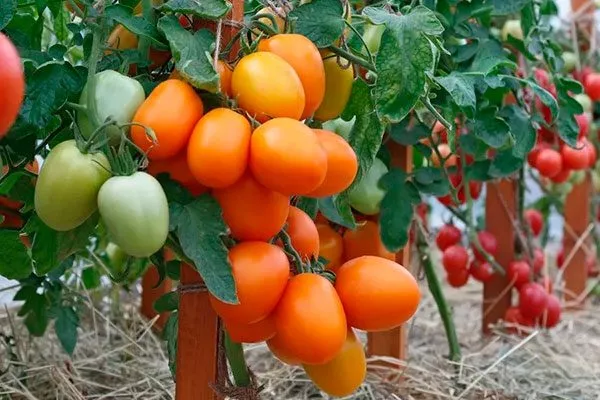
Faradenza bushes reach a height of 100-110 cm and are classified as determinate varieties. The inflorescence is simple, with the first forming on the seventh leaf, and subsequent inflorescences appearing two leaves apart.
Other varietal characteristics:
- A shrub with fairly well-developed branching and medium foliage.
- The leaves are large, semi-deepened, oval-shaped and have rounded edges, a light green tone and a matte sheen.
- The tomatoes are small in size (weight about 150 g), with the same width and an elongated-oval shape, and have a strong, slightly thickened and elastic skin of a yellow-orange color.
- The inside is soft, juicy, with small, almost invisible seeds, and has a sweet and sour taste.
- One Faradenza brush, which has a simple shape, can contain up to seven fruits.
Main characteristics
This tomato is versatile and can be grown both outdoors and indoors. Its excellent productivity allows for a bountiful harvest: 15 to 16 kg per square meter in an open garden and up to 17-18 kg in a greenhouse.
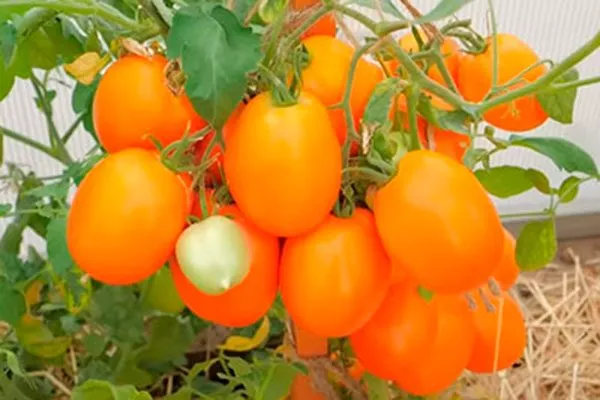
This tomato has a delicious flavor. Its pulp is rich in liquid and sweet, with a pleasant tartness. Its rich, thick-walled texture makes this variety ideal for a variety of culinary dishes, from fresh salads to hot sauces.
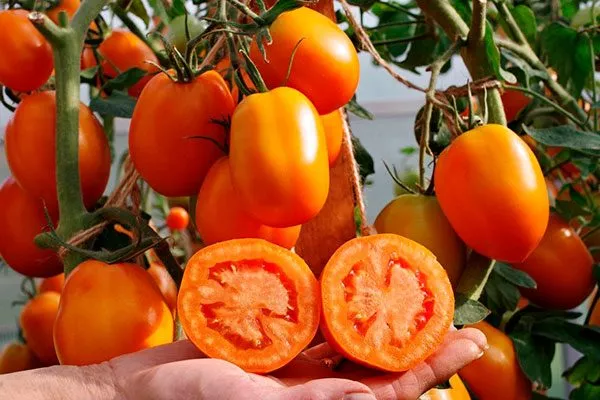
This hybrid is mid-season, with its fruits ripening approximately 100-110 days after the first shoots appear. Harvesting takes place from July to October.
Aspects of the landing
Faradenza adapts to various soil types, but the highest yields are achieved in black soil. For cultivation, choose a site on the southeast side of the garden, ensuring at least three-way sunlight.
Preparatory pre-planting work
To prepare the soil for Faradenza, begin working in the previous season, after harvesting the previous crops:
- Dig up the soil with a shovel to the depth of its bayonet;
- treat with the fungicide Trichopol;
- Apply organic fertilizers, including manure and calcium nitrate.
Two days before transplanting, clear the beds of weeds, plow them with a pitchfork, and enrich them with wood ash and crushed oak bark, as tomatoes prefer fertile soil with a high organic content.
Sowing and growing seedlings
Faradenza seedlings are sown for seedlings starting on February 20th. Initially, the seeds are soaked in a Zircon solution for 2-3 days. Each seed is placed on top of a substrate consisting of a humus mixture, ash, peat, and sand, covered with a 6-8 mm layer of soil. The seedlings are then placed in partial shade and maintained at a temperature of 27-28°C.
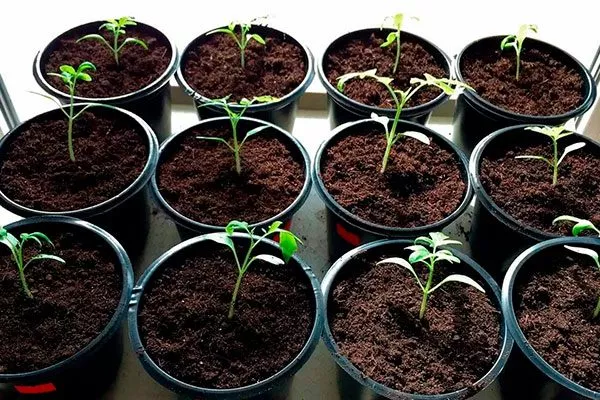
After the seedlings emerge, the pots with the seedlings are moved to a window covered with a window shade and the temperature is lowered to 22-23°C. Ten to 12 days before the main work, an acclimatization procedure is performed. This involves briefly placing the plants on the balcony or outside for 25-35 minutes at first, gradually increasing the time.
Transplantation to a permanent location
Seedlings should be planted after May 15-17 and until the end of the month, when the soil temperature reaches 16-18°C. Follow these instructions for planting these tomatoes:
- Dig holes 12-15 cm deep.
- Disinfect them using copper chloride.
- Remove the seedlings from the container with pre-moistened soil.
- Transfer to the holes and install to a depth up to the root collar, maintaining a strictly vertical position of the bush.
Basics of care
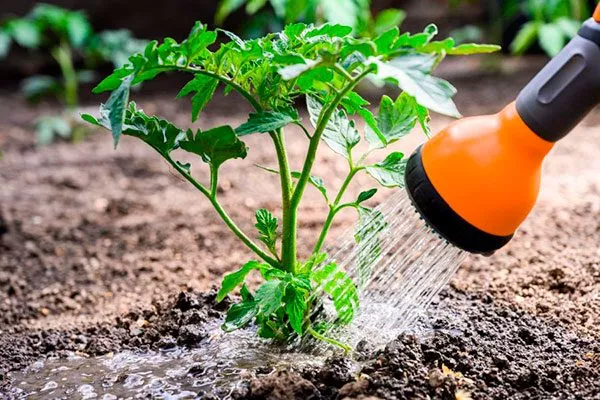
The key aspects of Faradenza care are regular and careful watering, as well as fertilizing to ensure the plants receive sufficient, but not excessive, nutrition. Additionally, the hybrid requires periodic soil loosening and weed control.
Irrigation criteria
Try to avoid overwatering Faradenza, but drought is also dangerous for it – the soil layer around the roots should remain moist at a depth of 26-30 cm. Other rules:
- Watering is carried out after sunset, at intervals of 5-7 days.
- One growing bush requires 3.5-4 liters of water.
- When flower stalks appear, the volume of liquid is reduced to 3 liters.
- During fruiting, it increases to 4.5-5 liters of warm and purified water.
Fertilization stages
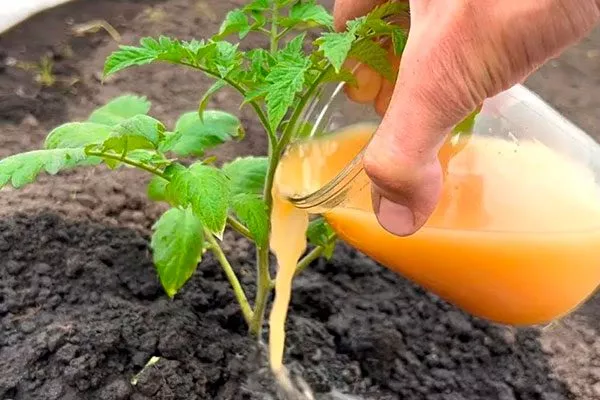
To ensure tomatoes achieve their maximum flavor and visual appeal, proper fertilizing is essential. Typically, these are applied in the following order:
- Two weeks after the tomato bushes have taken root in the beds, it is recommended to use ammophoska enriched with urea and ash.
- As soon as the buds begin to bloom on the plants, a solution of monopotassium phosphate and bird droppings is introduced.
- When the tomatoes are fully ripe, potassium nitrate mixed with superphosphate and liquid compost is suitable.
Diseases and pests
Thanks to meticulous farming practices, Faradenza tomatoes have developed increased disease resistance. This variety is resistant to diseases such as viral infections that cause leaf curl, cladosporiosis, verticillium wilt, and fusarium wilt, significantly reducing the risk of infection and increasing yields.
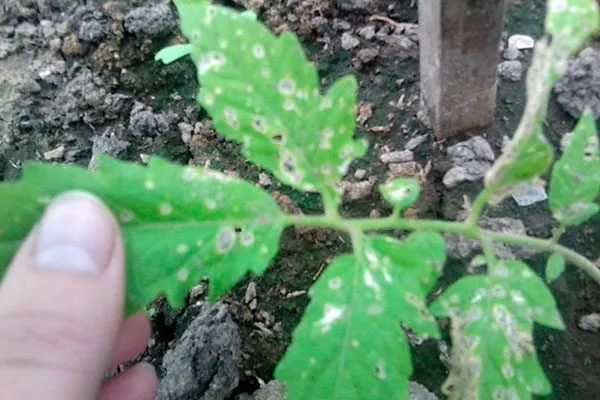
However, cool or heavy rains and lack of sunlight can lead to problems with black rot. And in hot weather, moths and aphids can cause crop losses:
- Blackleg. In wet and damp soil conditions, tomatoes are susceptible to damage by the microorganism Rhizoctonia solani, which causes the appearance of black ulcers on the stem and root system, resembling a sponge.
To combat this disease, you can use chemicals such as Planriz or Gamair, which are applied as a solution to spray the affected plants. - Frothy spittlebug. A small, flat-bodied insect with gray and black markings, known as Philaenus spumarius, hides on the largest leaves of the Faradenza plant, devouring them and laying eggs. This insect leaves its mark on tomatoes in the form of rough layers of fluffy foam on the leaf blades and petioles.
To get rid of it, spray the variety with agents such as Komandor or Karbofos. - Whitefly. Curruca communis, a small, iridescent white butterfly, attacks plants in greenhouses. This is caused by high humidity and densely packed shrubs. Its presence on plants can be detected by the whitish midge larvae.
To get rid of whiteflies, it is recommended to spray with Talstar or Actellic.
Harvesting times and methods
Tomatoes of this variety ripen quickly; it's recommended to pick them in the morning and evening. To prolong their shelf life, it's best to cut and store them in whole bunches, without removing the stems. Harvest the fruits only after they've reached the desired size and acquired their characteristic color.
The harvested crop of the Faradenza variety can be stored for up to 8-9 days at a temperature of about +2-5°C, in a shaded bag, which should not be completely and tightly closed.
Pros and cons
Faradenza boasts a number of advantages, including ease of cultivation and high-quality produce. Key benefits of this tomato variety include:
Reviews
The Faradenza f1 tomato is a small-fruited variety with a high yield, rapid growth, and versatile culinary applications. It is classified as a mid-early variety. This hybrid grows successfully both in open ground and in light greenhouses. Its fruiting is so abundant that the leaves of this variety are practically invisible beneath the numerous fruits.