
Jackpot is the name of a newly developed, super-early tomato hybrid. It has quickly gained a large following among gardeners and farmers producing vegetables on an industrial scale. Its value lies in its high yield, strong immunity, and good adaptability to various weather conditions.
Origin of the variety
This tomato variety was developed in 2019 by renowned Russian breeder V. I. Blokin-Mechtalin, founder of the seed company "Partner." It was approved for commercial use in 2021. It received its name due to its high yield.
Botanical description
Jackpot is a representative of determinate hybrids and varieties of vegetable crops. These tomato plants exhibit a generative development pattern. All their energy is directed toward flowering and fruiting, rather than toward the growth of foliage.
Distinctive features of the bushes
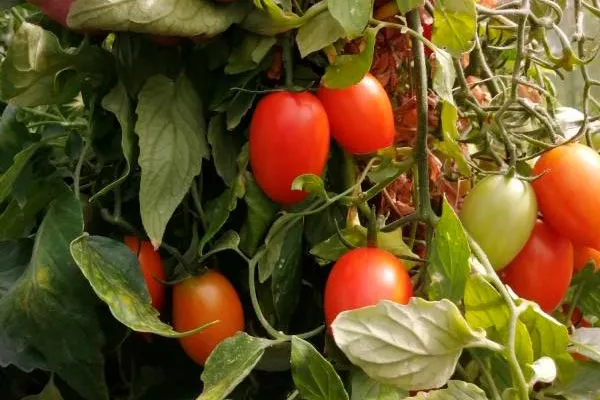
Plants of the hybrid variety have the following external features:
- short stature, not exceeding 1.2 m;
- strong shoots;
- Foliage: green, medium or large in size.
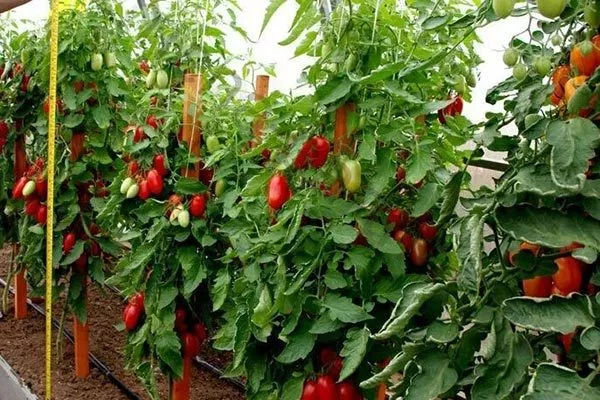
After planting, the Jackpot bush actively develops its main stem. When it reaches a height of 1.1-1.2 m, lateral shoots begin to grow. The plant flowers and fruits in clusters. It produces simple inflorescences, the first of which appears above the 6th or 7th leaf. The clusters contain 7-8 fruits, alternately arranged every 1-2 leaves.
Fruit characteristics
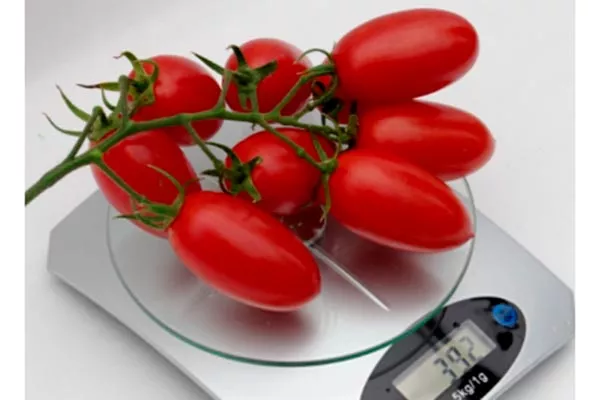
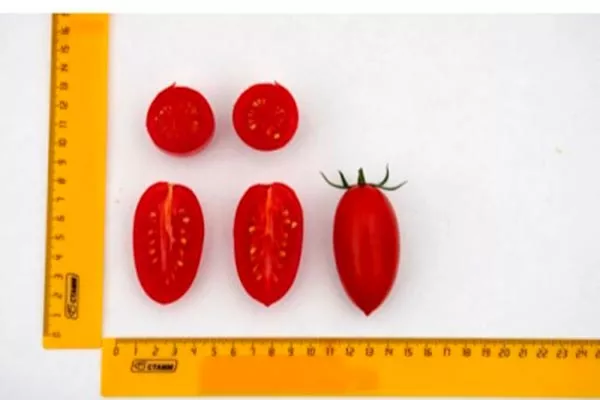
The hybrid's harvest is uniform and attractive. The tomatoes are miniature, with a neat cylindrical shape and a pointed tip. Their characteristics include:
- weight - 40-50 g;
- slightly pronounced ribbing;
- rich red color of the skin;
- medium-thick walls;
- number of seed nests inside the fruit - 2 pcs.;
- good filling of internal chambers;
- pleasant consistency and juiciness of the pulp.
Peculiarities
Check out the technical specifications and other features of this tomato hybrid if you plan to grow it in your garden.
Taste qualities of fruits
Jackpot tomatoes delight the eater with their harmonious, good taste, which is dominated by sweetness and has a slight refreshing sourness.
Scope of use
The purpose of the hybrid tomato crop is universal:
- the fruits are eaten fresh;
- add them to salads;
- used for preparing first and second courses, appetizers;
- freeze;
- canned.
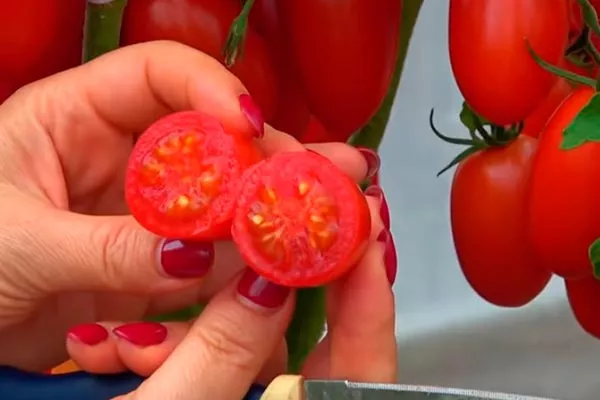
These small, firm fruits with tough skins are ideal for pickling and salting. They don't crack during cooking, hold their shape well, don't soften, and look beautiful in a jar. They taste excellent when preserved.
Growing regions
This tomato hybrid is suitable for cultivation in open gardens and greenhouses. Domestic gardeners successfully grow it everywhere, thanks to the plants' low maintenance and strong immunity.
The jackpot is intended for cultivation in the regions of the Russian Federation:
- Northern;
- North-West;
- Central;
- Volga-Vyatka;
- Central Black Earth Region;
- North Caucasian;
- Middle Volga;
- Lower Volga;
- Ural;
- West Siberian;
- East Siberian;
- Far Eastern.
Productivity and fruiting
Ultra-early harvest maturity is the hallmark of this vegetable variety. The fruits ripen 85-90 days after the first shoots emerge.
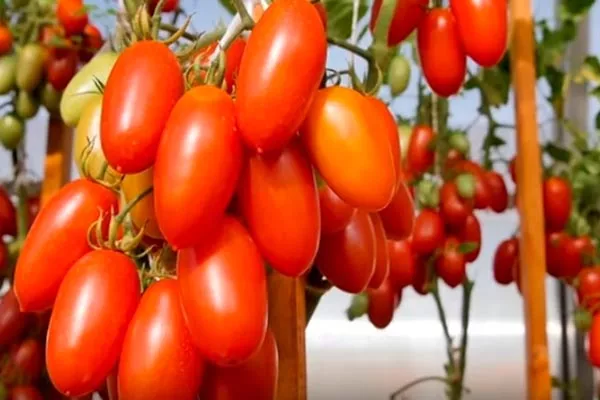
The hybrid owes its name to the high yield inherent in its bushes. These are:
- 10-11.5 kg per 1 sq. m is the minimum amount of harvest that farmers collect when cultivating Jackpot plants in the field;
- 20-22 kg per 1 sq. m of planting is the maximum productivity of bushes when grown in greenhouse conditions and with enhanced agricultural technology (the indicator stated by the originator).
The fruits of this hybrid tomato are easy to store and transport. They hang on the tree for a long time when ripe, making them easy to harvest in whole bunches.
Growing the Jackpot tomato
Growing vegetables is easy. Follow the timing and rules for sowing seeds to ensure strong seedlings, transplant them to the garden promptly, and provide favorable growing conditions and proper care. With this approach, you're sure to get a bountiful tomato harvest.
- ✓ Optimum soil temperature for planting seedlings: +15-16°С.
- ✓ Recommended age of seedlings for transplanting: 45-55 days.
When and how to plant Jackpot tomato seedlings?
Grow this tomato variety using seedlings. Sow seeds to obtain seedlings within the following timeframes:
- the second half of March - for the Middle Belt;
- the first ten days of April - for regions with cold climates (Urals, Siberia).
Grow tomato seedlings at home, following these rules:
- Prepare suitable containers. Use boxes or individual containers (plastic cups, peat pots). In the former case, seedlings will need to be transplanted.
- To grow tomatoes, stock up on a general-purpose nutrient substrate (available at a flower shop) or create your own soil mix using ingredients such as garden soil, humus, peat, and sand (2:1:1:1). Disinfect the homemade soil by baking it in the oven or watering it with a potassium permanganate solution.
- Pre-treat the hybrid seeds. Soak them in warm water for 12 hours to speed up germination. You can add a growth stimulant such as Epin.
- Sow the seeds in a tray filled with the growing medium, in rows. Plant them 1 cm deep, leaving 4 cm between them.
- Spray the crops with warm, settled water. Use a spray bottle for convenience.
- Cover them with plastic wrap to create a greenhouse effect. Keep them in a warm place. The room temperature should be no lower than 22°C. Keeping the seeds in a cooler place will prevent the sprouts from sprouting.
Jackpot seedlings can be grown not only at home in boxes, but also in a heated greenhouse, where it is possible to maintain the temperature required for seed germination.
Conditions for growing seedlings
For the first 7-10 days before sprouts appear, maintain the temperature in the room where the seedlings are kept at 22-25°C. Immediately after sprouts appear, reduce the temperature to 16°C (at night, it should not drop below 10°C). Failure to do this will slow the seedlings' development.
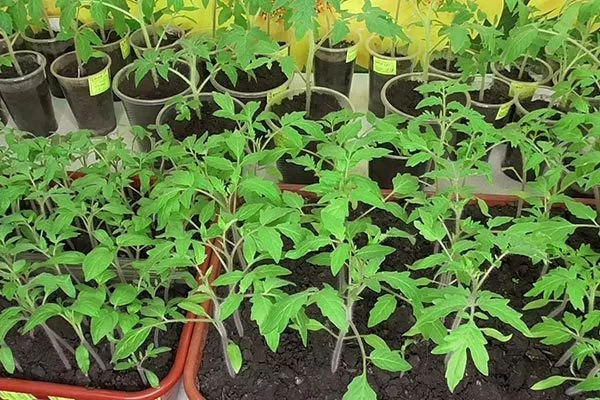
Care for Jackpot seedlings by following these steps:
- water them moderately (they do not require frequent irrigation);
- provide them with plenty of light (if necessary, supplement the plants with phytolamps);
- carefully loosen the soil under the seedlings, trying not to damage their roots;
- After the formation of 2 true leaves, transplant the plants into separate cups or peat pots if you sowed the seeds in a common box (do not use large individual containers so as not to slow down the development of the root system and the above-ground part of the seedling bush);
- Fertilize tomatoes: water them for the first time with a solution of complex mineral fertilizer 2 weeks after picking, and repeat the feeding again after 14 days.
Ten to fourteen days before transplanting the seedlings into the garden, begin hardening them off. Move the plants outdoors, gradually increasing the time they spend outdoors. Reduce watering during this time. A few days before transplanting, stop watering completely.
Transplantation into open and closed ground
Transfer hardened seedlings to the garden bed within the following timeframes:
- mid-May - for the Central Belt;
- the last week of May - for areas with cold climates.
Make sure the threat of frost has passed. The soil in the open area should be warmed to 15-16°C. By the time of transplanting, the seedlings should be 45-55 days old and have 6 true leaves.
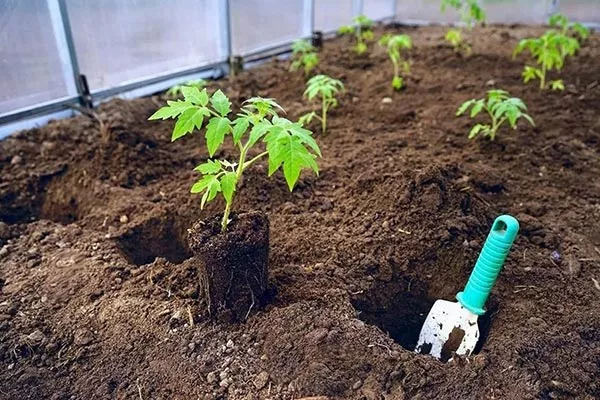
If you plan to transplant Jackpot seedlings to the garden to grow tomatoes outdoors, select a location for the bed that meets the following requirements:
- well-lit by the sun;
- windless, protected from drafts;
- without close groundwater table;
- not used last season for growing nightshade crops: tomatoes, potatoes, peppers, eggplants;
- which previously served as a bed for such vegetable crops as beets, cabbage, radishes, garlic, pumpkin, basil;
- with loose, light, air- and water-permeable soil, moderately moist, well-warmed, neutral or slightly acidic, fertile, loam or chernozem.
Begin preparing the plot in the fall: dig it up, clear away weeds and their roots, and add river sand (if the soil is heavy) and wood ash or chalk (if the soil is acidic). Fertilize it with cow manure, using 4-5 kg per square meter.
In the spring, add mineral compounds to the garden soil intended for growing Jackpot tomatoes:
- Superphosphate or monopotassium phosphate (20 g/sq. m);
- ammonium nitrate (consumption - 30 g/sq. m).
One week before planting the seedlings, loosen the soil again and remove weeds. Two days before, water the soil with a solution of copper sulfate or potassium permanganate to kill any pathogens.
If you plan to transplant tomato seedlings to a greenhouse, ensure the soil there is at least 10°C. For good growth and fruiting of Jackpot plants, maintain a temperature of 17-19°C during the day. At night, it should not drop below 12-14°C. Humidity should be 60-75%.
Increase the fertility of greenhouse soil by adding organic and mineral compounds:
- manure or humus (consumption rate - 4-6 kg/sq. m);
- ammonium nitrate (8 g/sq. m);
- Superphosphate (30 g/sq.m);
- potassium magnesium sulfate (10 g/m2).
Plant hybrid tomato seedlings in an open bed or protected soil, using a 60x40 cm pattern. Place no more than four plants per square meter. Plant them to the depth of the first true leaf. Make the planting holes 10-15 cm deep. Don't forget to add some ash, eggshells, or humus.
How to care for Jackpot tomatoes?
Caring for the Jackpot tomato is standard. Follow proper vegetable cultivation practices to ensure maximum yield.
Fertilizing
Fertilize the hybrid tomato planting with a complex fertilizer a few days after transplanting the seedlings into the garden bed. Then, apply fertilizer every 10 days. Provide Jackpot plants with sufficient phosphorus and potassium. Use the following nutrients and mixtures:
- organic matter (cow manure, bird droppings, humus);
- mineral compositions and complex preparations intended for tomatoes;
- wood ash;
- boric acid;
- iodine.
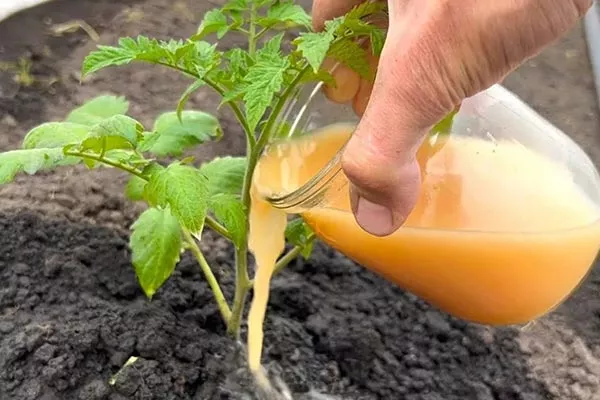
Apply ash when planting seedlings and during the formation of fruit ovaries on the bushes. For foliar feeding, use a boric acid solution (1 g per 1 liter of hot water). Spray the plantings with it during flowering and fruiting. Fertilizing tomato bushes with superphosphate is also recommended.
Tomato formation
This procedure is recommended for hybrid tomato plants to increase their yield. Train them into 2 or 3 trunks, each with 7-8 clusters. To prevent the shoots from sagging under the weight of the fruit, tie them up.
Don't neglect side shoots. The more extra shoots you leave on the bush, the fewer large fruits you'll get. Perform this procedure for the first time 14 days after planting the seedlings in a greenhouse or open ground. Break off any overgrown shoots at the base. Top pinching is also recommended for the hybrid.
Irrigation regime
Jackpot tomatoes don't tolerate overwatering, but infrequent watering also negatively impacts productivity. Water them according to these guidelines:
- Water the plants regularly and moderately, avoiding stagnant moisture or drying out the soil;
- water tomatoes growing in an open bed 1-2 times every 7 days;
- use 5 liters of warm, settled water per bush;
- For greenhouse planting, arrange drip irrigation;
- Water the plants at the roots, avoiding water droplets getting on the leaves and stems.
After moistening the soil under your tomato plants, loosen it to improve air circulation. Work the soil carefully, being careful not to damage the roots. Don't neglect weeding. Mulch the bed with organic matter. This will reduce the frequency of watering and suppress weed growth.
Resistance to diseases and pests
Jackpot is popular with domestic gardeners for its bushes' strong immunity. They exhibit good resistance to infections:
- brown spot;
- verticillium wilt;
- tomato mosaic virus;
- Fusarium wilt.
- ✓ Resistance to brown spot, verticillium wilt, tomato mosaic virus, fusarium wilt.
- ✓ Ultra-early ripening period: 85-90 days.
The hybrid is also resistant to late blight due to its ultra-early ripening period. You'll have time to pick ripe fruit from the bushes before the fungal season begins.
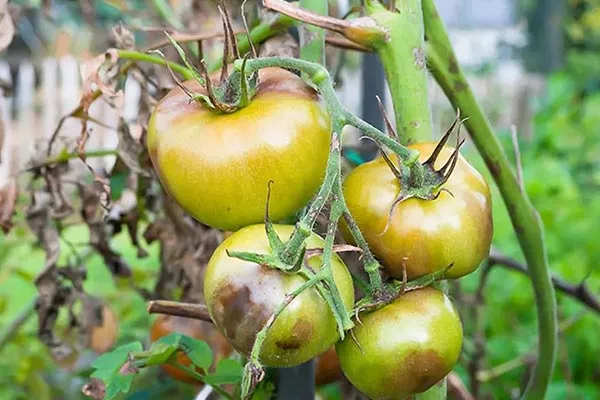
If the soil is overwatered, tomato plants may suffer from rot. They may also be attacked by pests such as aphids, cutworms, whiteflies, slugs, and other pests of garden crops. To avoid such complications, inspect your Jackpot plants regularly.
If you notice signs of unhealthy tomato bushes, spray them with medicinal substances:
- fungicides;
- insecticides;
- folk remedies.
Treatment and prevention of diseases and pests
To protect your hybrid tomato plants from disease, remove the affected parts of the bush at the first signs of disease and resort to using fungicides:
- Fitosporin-M;
- Fundazol;
- Ridomila Gold.
Don't neglect disease prevention for your vegetable crop. Although it exhibits resistance to many infections, it's impossible to completely eliminate them. Spraying with the following products will help prevent the problem:
- Bordeaux mixture;
- HOM;
- Profit;
- Maxim;
- Ordan.
If Jackpot plants are attacked by aphids, spider mites or other harmful insects, treat them with folk remedies:
- infusion of tobacco dust, onion peel;
- decoction of wormwood or celandine;
- garlic water.
In case of a massive infestation, spray once with Decis, Vermitek, or Biotlin insecticide. This is only an option when the infestation is severe. You can also try to solve the problem by using the biological product Fitoverm.
Harvesting and storage
Pick tomatoes from the vine as they ripen for eating, cooking, pickling, and canning. If desired, you can harvest them in clusters until all the fruits in the bunch are ripe. They can hang for a long time without spoiling. There's no need to ripen them.
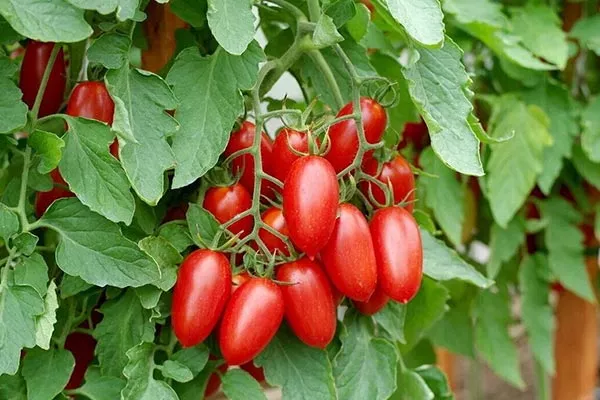
Store your harvested Jackpot at 12-15°C. You can ensure maximum shelf life by storing the fruit in suitable conditions:
- leave them in a dark place, away from sunlight;
- Place the tomatoes in a single layer on a flat surface (box, tray);
- provide them with free access to air;
- store tomatoes separately from other vegetables and fruits;
- wrap them in paper towels to prevent condensation and rotting;
- Keep tomatoes in the refrigerator (in the vegetable compartment) or in boxes on a cool balcony.
Advantages and disadvantages of the variety
The Jackpot Hybrid has numerous advantages, including:
Gardeners consider the inability to independently collect seeds for further planting as a disadvantage of this vegetable crop variety.
Similar varieties
| Name | Ripening period (days) | Fruit shape | Fruit color | Fruit weight (g) |
|---|---|---|---|---|
| Kibits | 65-70 | Elongated | Red | 55-65 |
| De Barao Red | 110-120 | Plum-shaped | Red | 30-50 |
| Bingo F1 | 100-105 | Plum | Red | 50-55 |
| Briscolino F1 | 88-94 | Plum-shaped | Red | 30-45 |
| Cherrypalchiki F1 | 85 | Cylindrical | Red | 20 |
Jackpot is a productive, early-season tomato hybrid with small, attractively shaped fruits, ideal for pickling and canning. It has several similar varieties that boast similar characteristics:
- Kibits — an ultra-early variety, with the harvest ripening in 65-70 days. Its fruits are characterized by an elongated shape (popularly called finger-shaped), a rich red color, and excellent flavor. They weigh 55-65 g and are excellent for canning. The yield per bush is 3.5 kg.
- De Barao RedThe harvest ripens in 110-120 days. The fruits are plum-shaped, with red skin and flesh. They weigh no more than 30-50 g. The bushes are grown under plastic or in greenhouses. Yield is 6 kg/sq. m.
- Bingo F1 — an early hybrid, the harvest ripens in 100-105 days. The fruits are plum-shaped, have a rich red color, and a pleasant flavor. They weigh 50-55 g and are suitable for canning and pickling. This variety is suitable for outdoor cultivation. Yield is 23 kg/m2.
- Briscolino F1 — an early hybrid that yields in 88-94 days. The fruits are plum-shaped, red, and small, weighing 30-45 g. This variety is grown both outdoors and indoors. Yields up to 6 kg/sq. m.
- Cherrypalchiki F1 — an early hybrid, the harvest ripens in 85 days. The fruits are distinguished by their miniature size, cylindrical shape, and red skin and flesh. They weigh 20 g and are suitable for whole-fruit canning. This variety is grown in plastic greenhouses. Yield is 2.8 kg/sq. m.
Reviews from gardeners
Jackpot F1 is a new variety bred in Russia that is quickly winning the hearts of gardeners and farmers. They are attracted by its ultra-early ripening, excellent marketability and taste, high productivity, and vine resilience. It is an excellent choice for those growing tomatoes specifically for canning and pickling.