
Don Juan tomatoes will appeal to those who love vegetables with unique colors and attractive shapes. These medium-sized tomatoes are great for fresh eating and winter preserves. This early-ripening variety allows for a quick harvest. They are weather-resistant, rarely susceptible to diseases and pests, and are suitable for beginners.
Description of the plant and fruits, taste characteristics
This variety is determinate: growth ceases after flower clusters form at the tops of the stems. Other distinctive characteristics:
- Racemose inflorescences appear between the 6th and 7th full leaf blades, and subsequent racemes are formed at intervals of two leaves.
- Compact, low-growing bushes, 60-70 cm tall, are densely covered with miniature, dense fruits and rich emerald leaves.
- The leaves are large, matte, covered with soft pubescence on both sides, and sparse medium-sized teeth are visible along the edges.
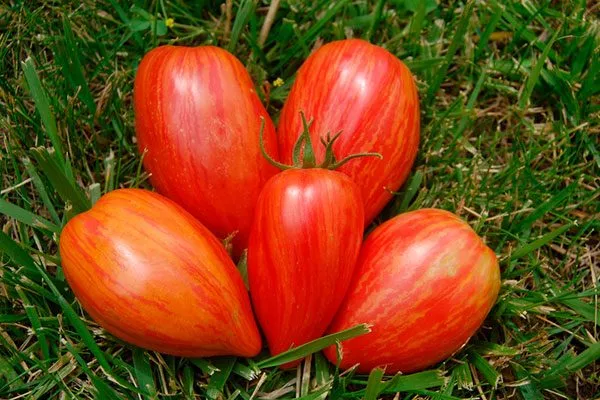
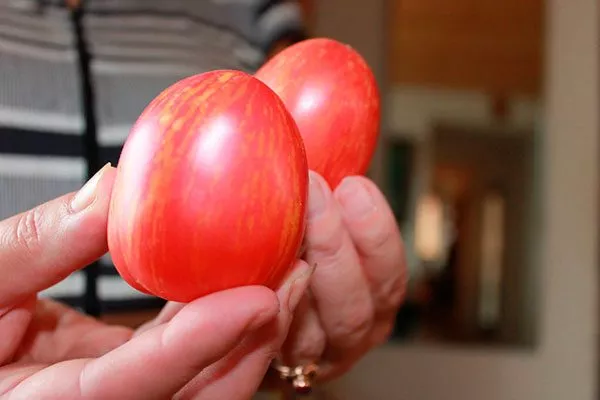
- Typically, four to five small striped fruits ripen on a single cluster. These small, slightly elongated tomatoes with a distinctive "nose" weigh between 70 and 80 g.
- Beneath the tough, smooth skin of these vegetables lies a soft, sweet flesh. Each fruit contains 2-3 seed clusters.
- The tomato skin is decorated with stripes reminiscent of watermelon rind. Unripe tomatoes are especially reminiscent of small berries: the light green base of the skin is complemented by sparse longitudinal lines of a dark green hue.
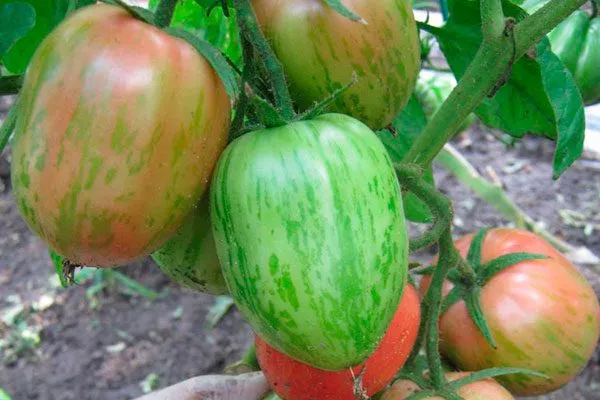
Ripe tomatoes acquire a bright crimson color, and their surface is decorated with golden stripes.
Characteristics
The Don Juan tomato was bred quite a while ago, but it has not yet been included in the State Register of Breeding Achievements. Experts recommend growing this variety in open ground in southern regions, while plastic greenhouses are recommended for central Russia.
Productivity, ripening
This early-ripening tomato variety is characterized by good productivity. The fruits ripen 100-110 days after the first shoots emerge, usually in early to mid-July, depending on the region's climate.
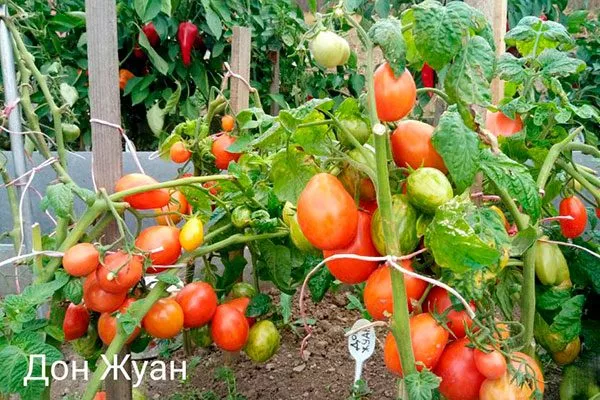
Thanks to its long fruiting period, a single bush can yield 5-8 kg of fruit with proper care. In greenhouse conditions, the crop yields even more abundantly, yielding up to 10-12 kg of "striped" fruit per plant.
Immunity, weather resistance and growing regions
This cultivar is suitable for cultivation in most regions, with the exception of northern areas. This variety prefers warm soil and does not tolerate even light frosts. In the central and southern regions, the crop thrives particularly well, producing a bountiful harvest.
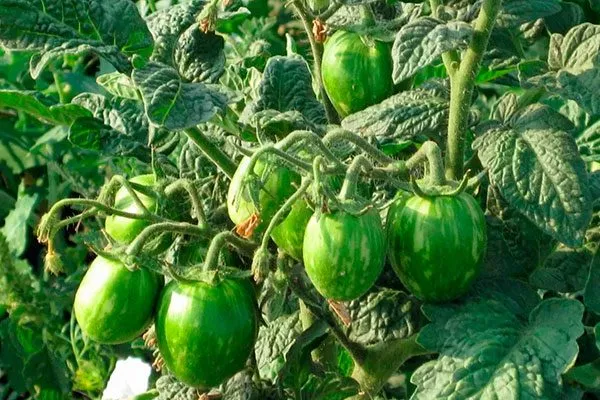
The determinate Don Juan variety has a high immunity, which allows it to effectively resist most diseases typical of the nightshade family, and successfully resist pests, including beetles.
Methods of application
Tomatoes of this variety are widely used for various preserves. They are used to make delicious tomato juices, pastes, ketchups, and sauces. Thanks to their compact size, the fruits are ideal for whole canning.
Pickled and salted fruits retain their shape and vibrant color. Gardeners recommend using slightly unripe vegetables for home canning to achieve the best results.
- ✓ The optimal soil temperature for planting should not be below +15°C to avoid stress on plants.
- ✓ To prevent diseases, it is necessary to ensure a distance of at least 40 cm between bushes to improve ventilation.
Landing
Don Juan, like most other varieties and hybrids, is usually grown from seedlings. Seedlings of this variety are robust and hardy, making them well-suited for transplanting.
Sowing and growing seedlings
Sowing seeds to obtain high-quality seedlings is an important step in tomato cultivation, requiring certain requirements. Prepare the planting material beforehand:
- Harden off the seeds to increase their resistance to cold and adverse conditions. To do this, first place the seeds in hot water (50°C for 15-20 minutes), then in cold water (5-7°C for 1-2 minutes). This will help them germinate faster and become stronger.
- Before sowing, soak the seeds in warm water (about 25-30°C) for 2-3 hours to speed up opening and emergence of sprouts.
- To prevent diseases, treat the grains with a weak solution of potassium permanganate or special agents to improve their immunity.
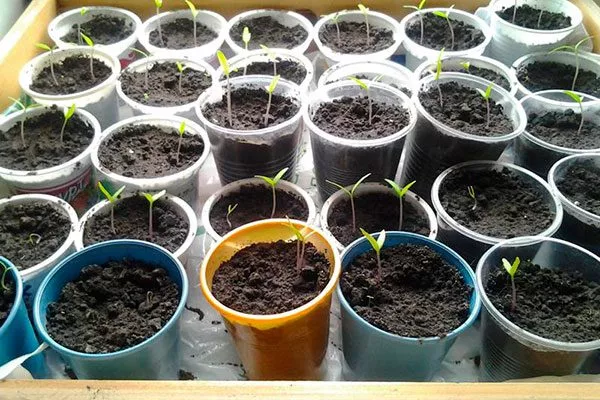
To sow seeds, use light, nutritious, and breathable soil. You can buy a ready-made seedling mix or prepare the soil yourself:
- 2 parts humus or compost;
- 1 part peat;
- 1 part sand or perlite to improve drainage.
Add a little wood ash or lime to regulate the acidity. Before use, disinfect the mixture to prevent disease. To do this, bake it in the oven or pour a weak solution of potassium permanganate over it.
Use plastic or wooden boxes—they provide ample space for root growth. Peat pots or pellets are an excellent option—you won't have to transplant the seedlings. Individual pots and seedling trays are also popular.
Sowing process:
- Fill the container 2/3 full with prepared soil. The soil should be slightly compacted, but not too dense.
- Place tomato seeds on the soil surface, spacing them about 2 cm apart. Don't plant them more than 1 cm deep, as they germinate best when lightly covered with soil.
- Lightly moisten the soil with a spray bottle to avoid washing away the seeds. Water carefully to avoid creating air pockets.
- Cover the container with plastic or glass to create a greenhouse effect. The room temperature should be around 23-25°C until the seeds germinate. Once the seeds have sprouted, provide 12-14 hours of light per day.
When the first shoots appear, remove the film or glass and move the seedlings to a brighter place.
Provide the seedlings with adequate conditions:
- Keep the soil moist regularly, never allowing it to dry out. Water moderately with warm, settled water to prevent root rot.
- Ten to fourteen days after germination, apply the first fertilizer using a weak solution of organic fertilizer or a complex mineral fertilizer. Continue feeding the seedlings as they grow, typically two to three times before transplanting.
- When the seedlings have two true leaves, transplant them into separate containers to avoid crowding and provide the plants with better access to light and nutrients.
Before planting in open ground, gradually acclimate the seedlings to outdoor conditions by exposing the containers to fresh air for several hours a day at first, then increasing the time spent outdoors.
Transplanting seedlings
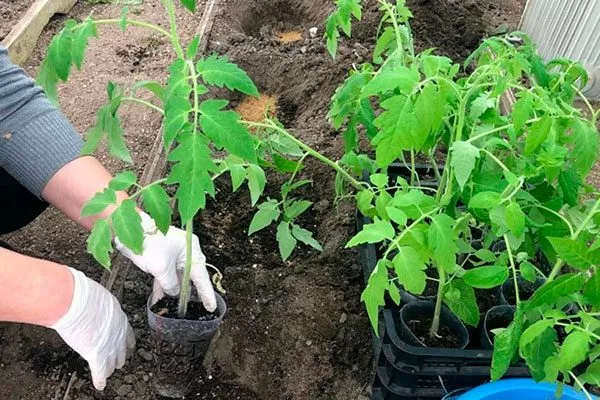
Before transplanting plants into the ground, prepare the area. Follow these recommendations:
- Remove plant debris, dig over and loosen the soil.
- A day before planting, dig planting holes about 15 cm deep, moisten them and put a layer of ammonium nitrate or nitroammophoska on the bottom, sprinkling with garden soil on top.
- Place holes in a row at intervals of 40 cm, and the width between rows should be 60 cm.
Further care
After planting the seedlings in the ground, ensure they establish and thrive. Standard care includes the following:
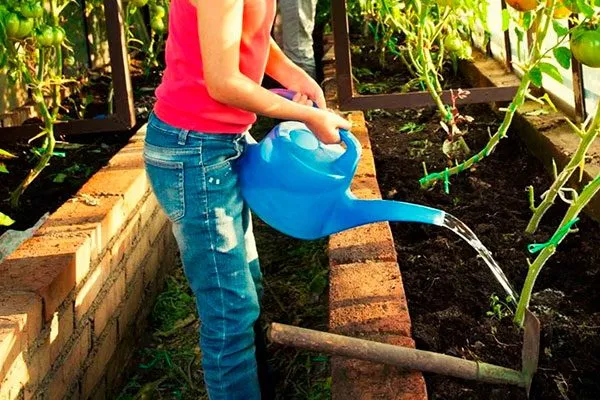
- Water early in the morning or evening, using settled water. A mature plant requires 3 liters of water.
- Tie the stems to pegs up to 1 m high.
- Feed the plants 4-6 times per season using fertilizers containing nitrogen, potassium, phosphorus, magnesium and magnesium sulfate.
- Once every 2 weeks, loosen the soil between the bushes, simultaneously removing weeds.
- Prune out side shoots from tomatoes as needed, and trim off large leaves if they begin to shade the plants.
- Mulch the root zone with hay or sawdust to retain moisture.
With proper care, Don Juan tomatoes will delight you with a bountiful harvest of delicious fruits.
Pest and disease control
The Don Juan determinate tomato variety is resistant to late blight, but can be susceptible to gray mold if side shoots aren't removed and overwatering occurs. At the first sign of disease, treat the plants with a soap solution or boric acid.
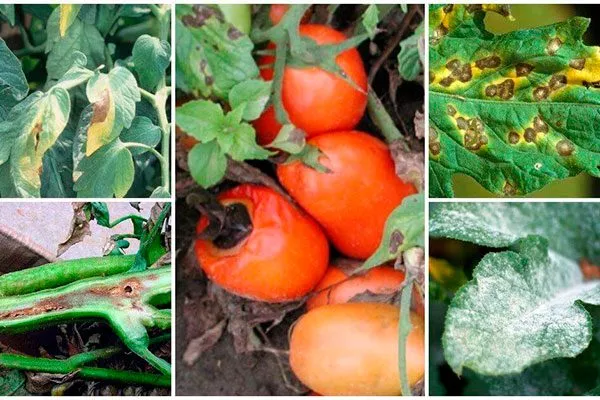
Plant pests that can attack plants include the Colorado potato beetle, aphids, and spider mites. To control them, use insecticides according to the package instructions. Effective products include Actellic, Aktara, Fitoverm, and Antikleshch.
Pros and cons
Tomatoes contain numerous vitamins and nutrients. Don Juan also has many other benefits:
The plant does not tolerate subzero temperatures well, so residents of northern regions are advised to grow it in greenhouses. This is the only drawback of this variety.
Reviews
The Don Juan tomato is an excellent choice for those who appreciate delicious, sweet, and easy-to-grow fruits. This variety is characterized by early maturity, disease resistance, and excellent yields. Despite its sensitivity to cold, it adapts well to various conditions and, with proper care, produces generous harvests.