
Long-legged Sally is a tomato that combines excellent flavor and excellent productivity. These large tomatoes are perfect for both fresh salads and winter preserves. Despite the need for regular care, this variety is well worth the effort and yields a decent harvest even with a moderate investment of time.
Description of the plant and fruits
Belongs to the determinate type. The variety was developed by American breeder Blaine Horton and introduced in 2018.
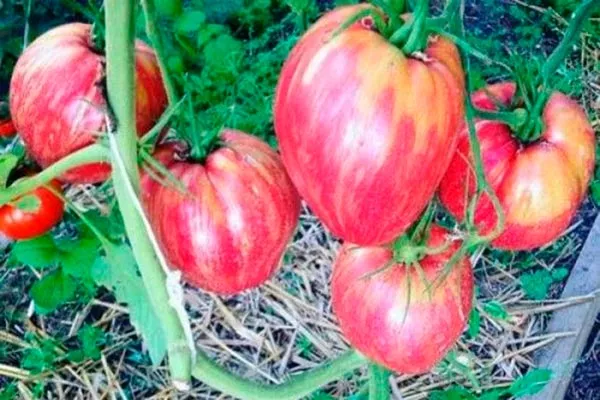
Distinguishing characteristics:
- The bush has an elegant shape, with thin, drooping, light green leaves.
- The plant reaches a height of up to 2.5 m, so it requires garter and regular shaping for optimal growth.
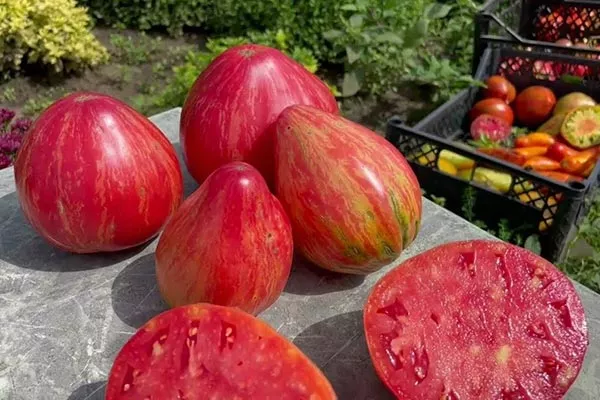
- The tomatoes are heart-shaped and weigh between 250 and 500 g.
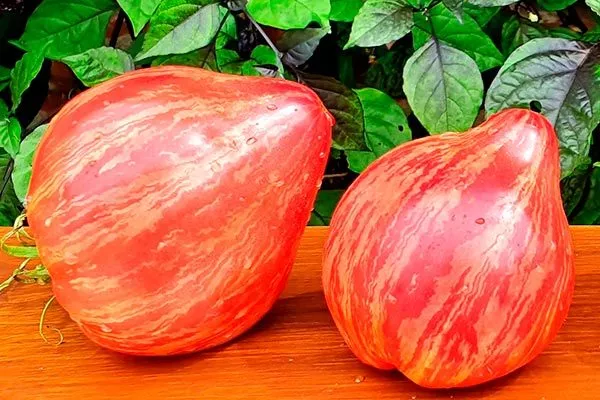
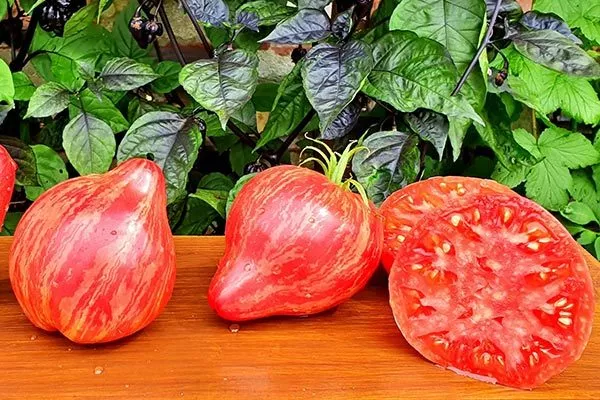
Ripe tomatoes are raspberry-pink with golden stripes or red-raspberry with thin golden veins.
Taste and purpose
One of the main advantages of the Long Sally tomato is its exceptional flavor. The fruits are sweet, with a light berry aftertaste. The flesh is dense, juicy, and meaty, with a uniform color and thick, dark burgundy walls.
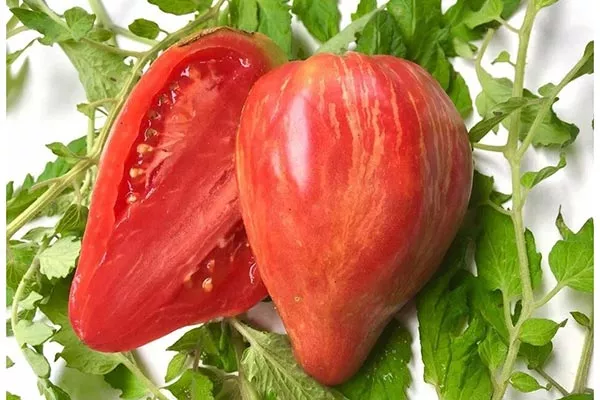
These vegetables are ideal for a variety of dishes, including salads, sauces, and canning. They also make delicious fresh tomato juice.
Characteristics
The crop ripens in 105-110 days. This variety has many positive qualities:
- Fruiting is long-lasting, which allows you to harvest fresh and juicy tomatoes throughout the season.
- Vegetables are picked from the bushes from July to October.
- Tomato yields reach 7-8 kg per plant with proper care and adherence to agricultural conditions.
The Long-legged Sally tomato has good resistance to major fungal diseases. To prevent potential problems, it's important to monitor the soil and regularly treat the plants.
Growing seedlings
To obtain a bountiful harvest, it's important to grow strong seedlings. Seeds are usually sown 60-70 days before planting. To successfully grow seedlings, it's important to follow several recommendations.
Requirements and conditions
After seedlings emerge, provide 24-hour supplemental lighting for 3-5 days, then reduce the duration to 18-20 hours. By the fourth or fifth day, provide 11-12 hours of light.
Follow these other recommendations:
- Water 1-2 times a week for the first three weeks, then increase to 3-4 times a week until planting in open ground.
- To ensure proper humidity, spray the bushes 2-3 times a week using a regular sprayer.
Sowing seeds
When sowing from seedlings, use containers with drainage holes, at least 400 g. Then follow the instructions:
- Pour a layer of fertile soil into the container and moisten it.
- Mark a grid with 1-2 cm cells on the surface. Place the seeds where the lines intersect.
- Cover the grains with a layer of soil about 1 cm thick and moisten again.
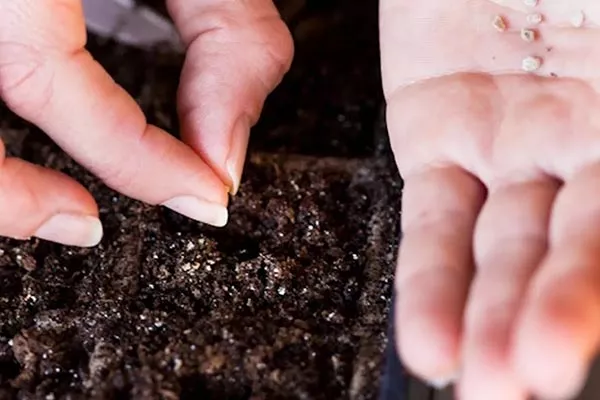
When sowing directly, fill the pot 2/3 full with soil and moisten. Make a small hole, place the seed in it, water lightly, then cover with soil and moisten again. To prevent the soil from drying out before germination, cover the container with plastic wrap.
Transplanting
For tall varieties, the distance between bushes should be 40-60 cm, and between rows – 60-70 cm. Follow these steps:
- Dig holes in the bed and water them thoroughly with 3-5 liters of water. Wait 1 hour for the soil to settle.
- Carefully remove the seedlings from the cups, first watering the soil generously so that it is well saturated with moisture and does not damage the roots.
- Place the seedling in the hole, lightly compact the soil around it, and cover it with soil to form a small depression around the trunk. This will help ensure that you water the plant at the root, rather than around the bed.
- ✓ The optimal soil temperature for planting seedlings should be at least 15°C.
- ✓ The distance between plants should be at least 60 cm to ensure sufficient air flow and prevent diseases.
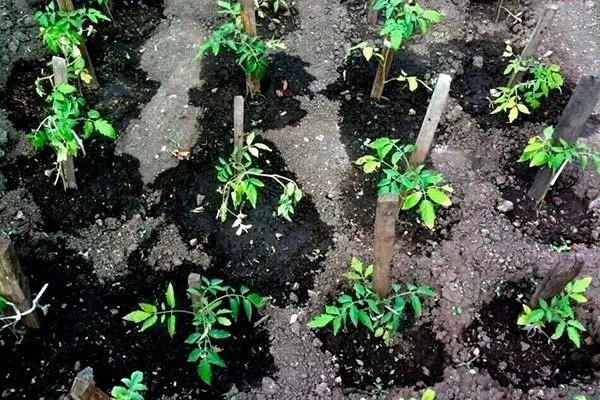
After planting, water again, but do not wet the seedlings for the next 10-12 days, except in cases of abnormal heat.
Plant care and formation
The Long-legged Sally tomato is a tall variety that requires proper care to produce a high-quality harvest. Pinching, shaping, and staking play an important role in successfully growing this variety:
- Remove lateral shoots (side shoots) growing in the leaf axils. This helps the plant properly allocate energy to fruit production and improves air circulation within the bushes.
Prune out side shoots regularly, starting in the first few weeks after planting, when the seedlings begin to grow actively. Pinch off unwanted shoots before they become too large to avoid disrupting the plant's growth. - For 'Long-Legged Sally,' training with one or two stems is preferable. This allows the bush to focus its energy on developing the main trunk and large fruits. Experienced gardeners recommend training with a single stem, leaving only the main shoot and removing all side branches and shoots.
If you decide to form two stems, then grow the second stem from one of the strongest shoots. - Tie the bushes to vertical supports (trellises, stakes, or netting) so that the stems point upward. Secure the bushes as they grow to prevent damage to the stems. Use soft materials (such as twine or special ties) to prevent damage to the stems.
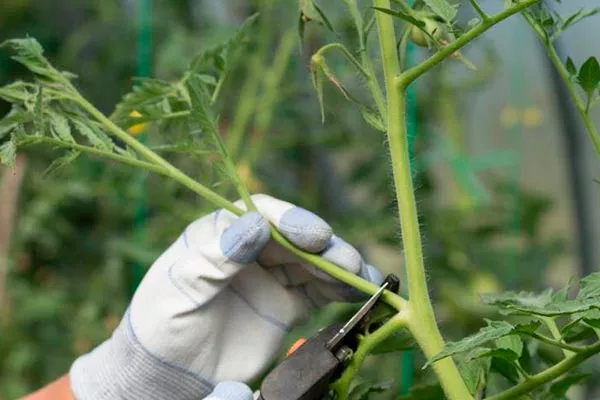
Fix the plant at a height of about 40-50 cm from the ground and continue tying it as it grows, fixing the stem at a height of up to 1.5-2 m.
Pros and cons
Before planting a crop, carefully consider its advantages and disadvantages to avoid potential difficulties. The Long-legged Sally variety has many advantages:
Among the disadvantages, gardeners note the need for tying and regular shaping to prevent excessive growth, the need for regular plant treatment to prevent diseases, and a high need for sunlight and heat, which limits its cultivation in cool regions.
Reviews
The Dolgovyazaya Sally tomato is a tall variety characterized by large, fleshy fruits and an excellent flavor with a berry-like aftertaste. It is temperature-tolerant and has strong resistance to diseases and pests. With simple cultivation practices, you can reap bountiful harvests throughout the season.