
The Wild Fred tomato is a low-growing, high-yielding variety with good temperature tolerance. It easily tolerates light frosts. The fruits have a sweet, slightly tart flavor and are ideal for fresh salads and sauces. Plant care is minimal, and a harvest can be harvested even with limited watering.
Description of the bush and fruits
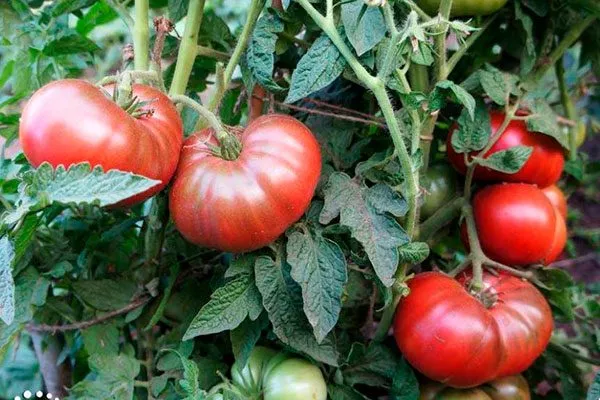
Wild Fred is a mid-season dwarf variety with a determinate type. Compact plants, 50-70 cm tall, form 1-2 stems with wrinkled, potato-like leaves.
Other distinctive features:
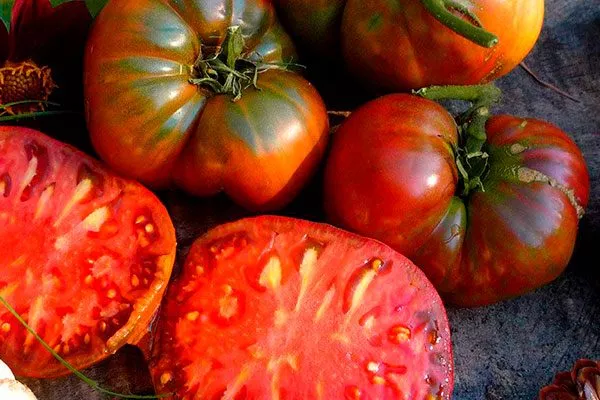
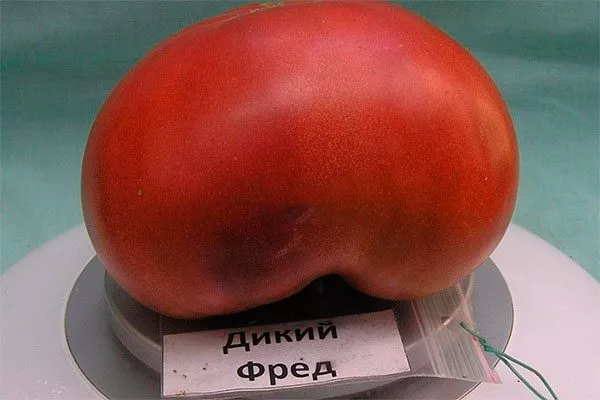
- Medium-sized tomatoes have a sweet taste and an original red-chocolate color with a purple tint.
- At the initial stage, tomatoes are dark pink in color, then they turn brownish-purple, and a dark green “crown” forms at the stem.
- The vegetables are flattened and round in shape and weigh from 80 to 200 g, rarely reaching 300 g, with an average weight of about 150 g.
When cut, it is clear that the fruit has dense walls, a minimal number of seeds, and juicy, oily flesh.
Main characteristics and history
Wild Fred has earned numerous positive reviews and is very popular among both novice and experienced gardeners. To ensure a bountiful harvest, it's important to follow basic gardening guidelines.
Details of origin
This variety was developed by American breeder Bruce Bradshaw and introduced to the market in 2010 by Tomato Growers Supply Company. It was created by crossing two varieties—New Big Dwarf and Carbon—and, due to its unusual coloring, was included in the "Slug" (or "Sloppy") family.
Wild Fred became part of the large-scale Dwarf Tomato Project, initiated by Craig LeHullier (USA) and Patrina Nuske-Small (Australia). Their goal was to create high-yielding and resilient dwarf tomatoes for small gardens, balconies, and container growing.
The first varieties were named after the dwarves from the Snow White fairy tale, and by 2019, the collection included over 100 varieties. The name Dwarf Wild Fred is a tribute to Craig LeHullier's father, who inspired him to breed from childhood.
Ripening and fruiting, productivity
This mid-season variety produces fruit 115-130 days after sowing. It forms a strong, spreading bush, producing 6-7 clusters of 3-6 tomatoes each. The main harvest period is mid- to late August.
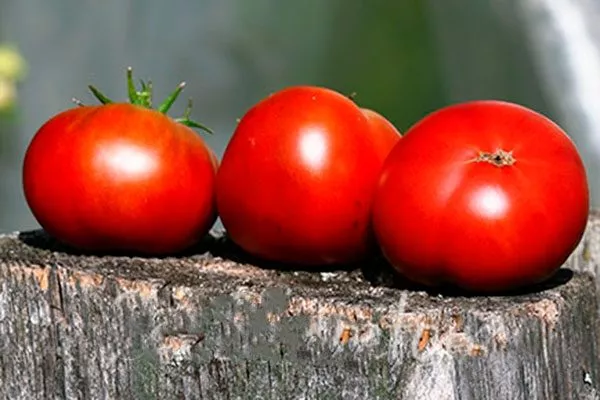
This variety is characterized by high yields. Gardeners can harvest up to 12-15 kg of tomatoes from a 1 square meter plot.
Scope of application
Tomatoes have a rich aroma and a balanced flavor—sweet with a hint of tartness. They're great for making sauces, lecho, ketchup, and juice, but they're best enjoyed fresh, in vegetable slices, and in salads.
Features of agricultural technology
Growing tomatoes requires certain techniques to ensure a bountiful and high-quality harvest. Cultivating tomatoes can be challenging at first, but with time, you'll achieve maximum results.
Preparing seeds for sowing
Before planting, carefully cultivate the seeds to ensure strong, high-quality seedlings. Follow these recommendations:
- Check the seeds for germination by placing them in a salt solution (5 g salt per 200 ml water). Remove any that float to the surface, and rinse and use any that sink to the bottom for planting.
- Disinfect in a weak mixture of potassium permanganate or hydrogen peroxide for 20-30 minutes.
- For better germination, use growth stimulants: soak the seeds for several hours in Epin or potassium humate.
Sowing
To grow seedlings, use light, nutritious soil. You can make your own by mixing garden soil with humus and adding a little peat or sand to improve the structure.
Next, follow the instructions:
- Before planting, pour boiling water or a solution of Fitosporin onto the soil to kill any possible pathogens.
- Place the seeds in moistened soil to a depth of 0.5-1 cm, leaving a distance of 2-3 cm between them.
- Cover the containers with film or glass to create a greenhouse effect and place them in a warm place with a temperature of +22-25°C.
The seedlings will appear in 5-7 days, after which remove the cover and provide the seedlings with good lighting.
- ✓ The air temperature after germination should be reduced to +16-18°C during the day and +14-16°C at night to prevent the seedlings from stretching.
- ✓ Use phytolamps with a light spectrum of 400-500 nm and 600-700 nm for optimal photosynthesis.
Caring for seedlings
Once sprouts appear, move the containers to a cooler location with a temperature of 18-20°C to prevent the seedlings from stretching. Create favorable conditions for the seedlings:
- Lighting should be intense, at least 12-14 hours a day, so if there is not enough natural light, install phytolamps.
- Water moderately, using warm, settled water and avoiding over-watering the soil.
- When the seedlings develop 2-3 true leaves, transplant them into separate containers, burying them down to the cotyledon leaves to form a strong root system.
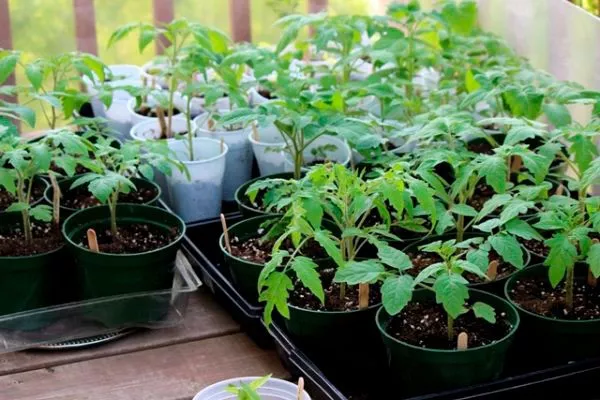
A week before transplanting into the ground, begin hardening off the seedlings by exposing them to fresh air daily for short periods at first, gradually increasing the duration. This process will help the plants adapt to outdoor or greenhouse conditions and reduce transplant stress.
Planting in open ground
When the seedlings reach 50-60 days of age and the air temperature stabilizes at a level of at least +15°C, move them to the beds.
Follow the rules:
- Choose a well-lit area, protected from cold winds.
- Prepare the site in advance: add humus and ash in the fall, and in the spring before planting, loosen the soil, then disinfect it with a weak solution of potassium permanganate.
- Add a little compost or wood ash to the holes, carefully plant the seedlings up to the first true leaves, compact the soil and water well.
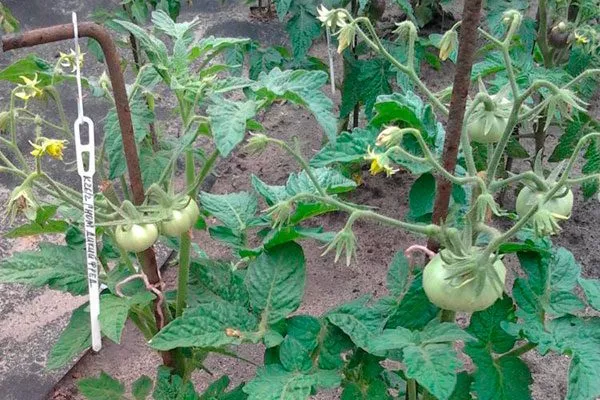
The optimal planting pattern is 50x50 cm, so that the plants do not shade each other.
Caring for tomatoes in open ground
To ensure proper growth and development of your bushes, it's essential to ensure proper agricultural practices. Follow standard care procedures:
- Water with moderately warm, settled water, directing it at the roots—this method will help prevent fungal diseases. In hot weather, water the plants in the morning or evening to prevent moisture from evaporating too quickly.
- Fertilize three to four times per season. Two weeks after planting, apply nitrogen fertilizers (mullein or bird droppings infusion), during flowering, apply phosphorus-potassium compounds (ash, superphosphate), and during fruiting, use complex minerals or a potassium humate solution.
- Since Wild Fred forms compact bushes, staking is only necessary during heavy fruiting to prevent branches from breaking under the weight of the tomatoes. To structure the plant, remove side shoots, leaving 1-2 main stems.
By following these rules, you can get a bountiful harvest of vegetables that will delight you with their unusual color, aroma, and rich flavor.
Pest and disease control
Wild Fred tomatoes, like other varieties, are susceptible to various challenges. However, thanks to their resilience, proper care and prevention can significantly reduce the risk of disease.
It is important to detect the problem in a timely manner:
- Aphid may cause leaf deformation, and whitefly – the appearance of sticky spots on the green mass and weakening of the plants. To combat insects, use garlic or tobacco infusions, or pyrethroid-based insecticides.
- Spider mite It appears when humidity is insufficient, so maintain optimal levels in the greenhouse or garden. If an infestation does occur, use acaricides.
- Colorado beetle It is rarely found on tomatoes, but when it appears, biological preparations such as Bitoxibacillin or Castor Oil Plant are effective.
- Fusarium wilt manifests itself as yellowing and drying of the lower leaves, and powdery mildew – white coating also on the stems.
To prevent these diseases, practice crop rotation, do not plant tomatoes in the same area for several years in a row, and regularly treat the plants with fungicides, such as Topsin or Previkur. - Late blight is the most dangerous disease, developing most often during rainy summers. It attacks vegetables and leaves, causing them to rot. To prevent this, ensure good air circulation, especially in a greenhouse.
Preventative treatment with copper-containing agents, such as Bordeaux mixture or copper sulfate, and pruning of affected parts will help prevent the spread of infection.
Inspect the bushes regularly, remove damaged areas, and treat with biological products and fungicides. To protect against fungal diseases, mulch the soil with straw or hay. Avoid overwatering, as this promotes the development of infections.
Harvesting and storage
Wild Fred tomatoes ripen in mid- to late August. Pick them when they're fully ripe, turning their characteristic chocolate-red color with a purple tint and feeling soft to the touch.
Tomatoes of this variety don't have a long shelf life or are easy to transport, so eat them within a few days or use them for processing. The optimal temperature for storing fresh tomatoes is 8-10°C. Store them in a single layer in baskets or crates to prevent damage.
Pros and cons
Those who have already grown the Wild Fred tomato in their gardens highlight several key advantages over other varieties. Gardeners note the following key benefits:
- Unpretentiousness. It produces fruit even with irregular watering, making it an excellent choice for gardeners who only visit their plot on weekends.
- Endurance. It can tolerate temperature fluctuations and recurrent frosts in June. Covering the bushes with agrofibre is sufficient to protect them.
- High yield. With proper care, one plant can produce up to 4-5 kg of tomatoes.
- Good transportability. Vegetables withstand transportation well if they are picked at the technical ripeness stage. The skin is resistant to cracking.
- Easy care. The bushes are compact and don't require shaping. Side shoots grow slowly, but the main stems require staking.
- Possibility of growing in closed ground. The plant bears fruit even in home conditions, for example, on a balcony or loggia.
Among the negative qualities, vegetable growers note a low shelf life, the need for tying up, and the high cost of seed material.
Reviews
Wild Fred is an excellent choice for both beginner and experienced gardeners. Its consistent productivity, attractive appearance, and ability to grow in limited spaces make it a popular choice. With proper care, you can harvest high-quality tomatoes throughout the season. They are ideal for fresh salads and processing.