
The Derevensky tomato has gained popularity thanks to its majestic size and unique coloring. Russian gardeners are just learning about this variety, and its seeds are rarely available for sale, even in specialized stores. However, those gardeners who have already tried growing Derevensky from Partner have no plans to switch to other varieties.
Description of the bush and fruits
The Derevenskiy variety is a large-fruited beefsteak tomato. The first inflorescences appear on the sixth leaf, with subsequent inflorescences appearing 2-3 leaves later. The inflorescences can be either simple or semi-compound.
Other indicators and signs:
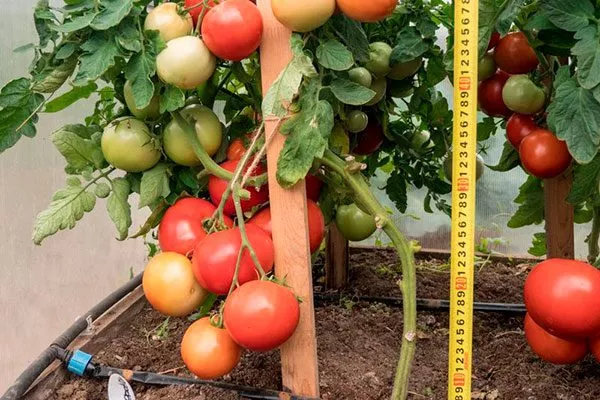
- Derevensky belongs to the category of determinate hybrids and is ideal for greenhouse cultivation. The plant reaches a height of approximately 140-460 cm, although sometimes bushes can reach 200 cm. With proper care, the bush will reach a width of 30-40 cm.

- The leaves, which have a dark green tint, cover the stem in a dense mass.
- To achieve maximum yield, it is recommended to structure the bushes on two or three stems, which will ensure powerful development.
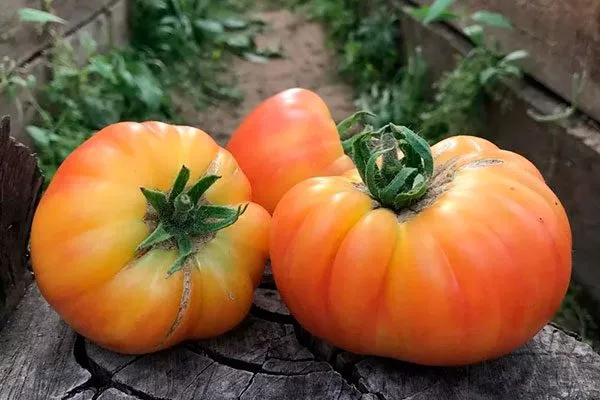
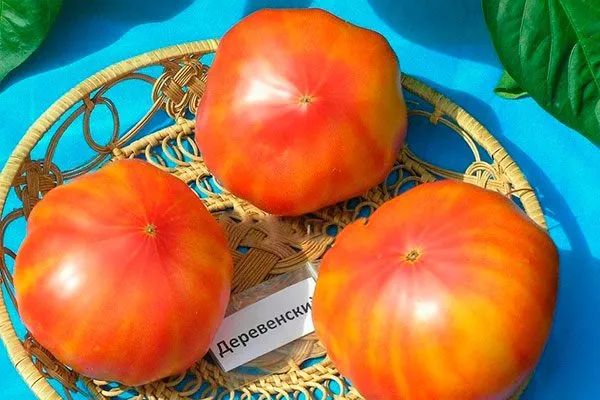
- The Derevenskiy tomato variety is characterized by round fruits with flat sides, weighing from 300 to 600 g, although sometimes there are specimens weighing up to 800-900 g.
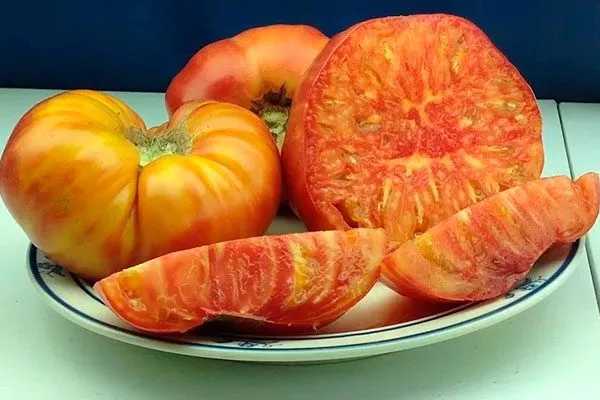
- The color of ripe vegetables is yellow-orange with bright red longitudinal stripes and spots radiating from the top to the base.
- The number of seeds in the chambers is minimal.
Main characteristics and history
The village variety impresses with its many virtues – gardeners appreciate its fruits for their weight, unique coloring, and harmoniously sweet taste.
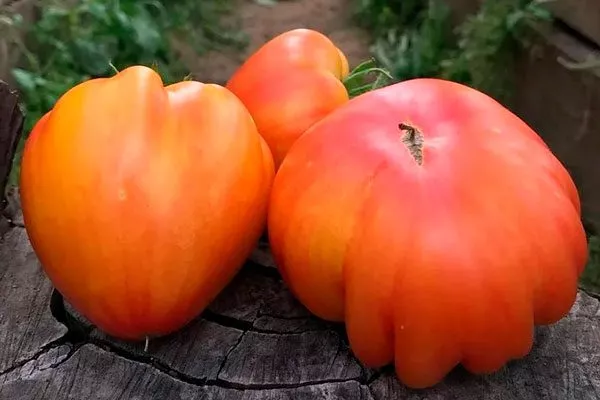
It is important to remember that achieving the best results in growing a hybrid requires a lot of work, as the wrong approach can lead to cracks in the skin and a decrease in taste.
Origin, regions, climate
This hybrid tomato variety has already gained popularity among gardening enthusiasts, despite its relative youth—it was created in 2018. Breeders spent three years developing the new tomato. Its founder, V. I. Blokin-Mechtalin, head of the agricultural firm "Partner," was its founder. The variety was registered in 2019.
The rustic variety can grow in a wide range of climates across the country, but it can only be cultivated in a greenhouse. The cultivar does not tolerate low temperatures and can be killed by light frosts. It is sensitive to direct sunlight and high temperatures. A greenhouse, however, is much easier to provide the necessary conditions for its growth.
The plant prefers warmth, so it is recommended to grow it in open ground in southern regions, but away from direct sunlight. In the rest of Russia, protected cultivation is optimal for successful cultivation.
Ripening and fruiting, productivity
The Derevensky hybrid is known for its high yield. A single plant typically produces up to 40-45 large tomatoes. The total weight of tomatoes per plant can reach up to 6 kg.
Peculiarities:
- Considering that three to four tomato plants are planted per square meter, the yield is truly impressive, provided that proper cultivation practices are followed. Up to 17.8 kg of tomatoes can be harvested from one square meter of greenhouse space.
- Derevenskiy tomatoes reach maturity 110 days after sowing. Harvest occurs in early to mid-July.
Taste, purpose and use
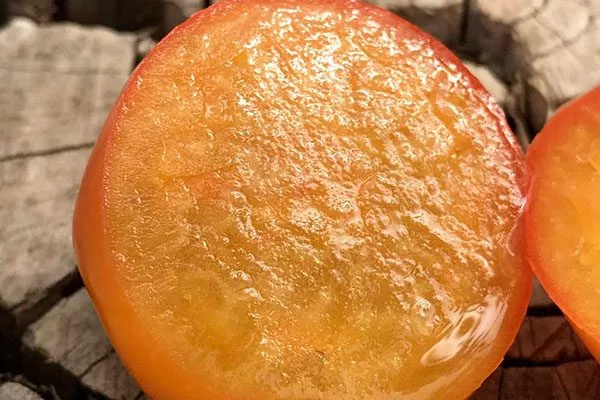
The orange flesh inside offers the perfect balance of acidity and sweetness. The aroma is marked by fruity notes. Many consumers claim that the tomatoes are distinguished by their lack of acidity, which makes them very sweet (due to their high sugar content).
Subtleties of application:
- Tomatoes are a wonderful addition to fresh salads, adding rich color and freshness, and are also used to make tomato juice, paste, or ketchup.
- Country tomatoes are an excellent ingredient for frying, casseroles and stews.
- Due to their large size, these vegetables are not suitable for whole-fruit canning, as they don't fit into jars. However, a winter salad of Derevenskogo pieces with onions and other vegetables is an excellent way to use this variety.
Sowing seeds for seedlings
Derevenskie tomatoes are typically grown using seedlings due to their long ripening period. This method is especially suitable for gardeners in areas with a limited growing season.
Preparing containers and soil
For growing seedlings, you can choose from a variety of containers, including individual cups, peat pots, cassettes, etc. If using used containers, wash them thoroughly with laundry soap and rinse with boiling water to disinfect.
As a substrate, you can use garden soil enriched with humus, compost, or wood ash, or purchase a ready-made all-purpose soil. To prevent fungal and other infections, it is recommended to treat the soil with boiling water and potassium permanganate.
Seed preparation
First, you need to prepare the seeds. The process is fairly simple, as store-bought planting material has already been treated by the manufacturer (you can't use your own seeds, as Derevenskiy, being a hybrid, doesn't retain the characteristics of the mother plant):
- You can additionally moisten and disinfect them in a solution of potassium permanganate at a concentration of 1% for 20-30 minutes, after which rinse them thoroughly in running water.
- It is also permissible to use Fitosporin, following the instructions on the packaging.
- Before sowing, the seeds should be slightly dried.
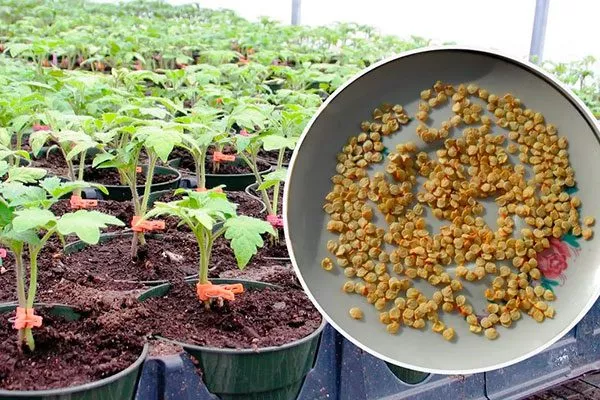
If desired, it's possible to germinate the seedlings in advance, which can help achieve germination a little earlier. This is done in the standard manner.
Sowing seeds and caring for seedlings
Sowing operations are almost no different from traditional methods, but it is important to take into account some nuances:
- After filling the container with the substrate, lightly moisten the soil using a spray bottle, adding water at room temperature, and then make furrows up to 2 cm deep at intervals of 3-4 cm.
- After planting the planting material, cover the containers with glass or plastic film and place them in a bright, cool place with a temperature of about 23 degrees Celsius.
- Throughout the entire period until germination, regularly monitor the moisture level of the top layer of soil and, if necessary, carefully spray it with a spray bottle so as not to wash away the seeds.
- When the first sprouts appear, remove the protective covering completely and move the seedlings to a room with a temperature of 16-17 degrees Celsius for a couple of days, making sure to provide good lighting. This will prevent the seedlings from growing too tall.
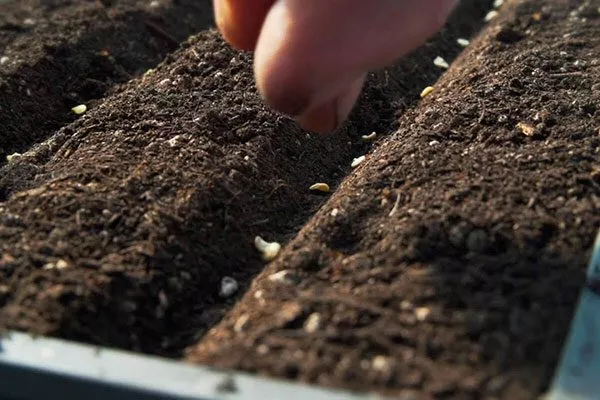
After watering, lightly loosen the top layer of the soil mixture to a shallow depth (no more than 0.5 cm). It's important not to allow the soil to dry out to a depth of more than 1 cm, as this can slow down root development, leading to uneven plant growth.
Picking and hardening
When growing seedlings in individual cups, pricking out is not necessary. Typically, 2-3 seeds are placed in each cup. Therefore, when the tomatoes have 2-3 true leaves, the strongest plants are selected, discarding the weak and underdeveloped ones. After this, the soil surface in the cup is loosened and fresh soil is added up to the level of the cotyledon leaves.
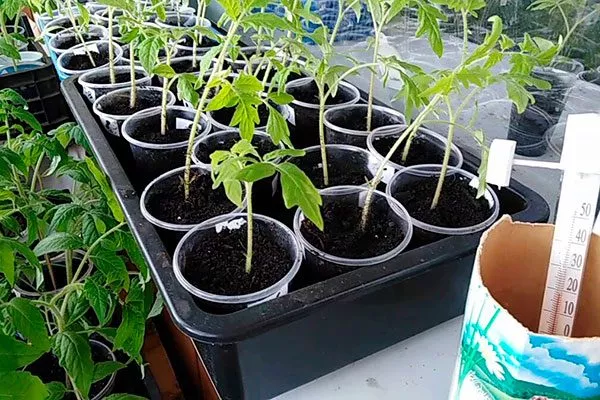
When using common containers for seedlings, each plant should be transplanted into separate cups along with the root ball:
- Soil preparation is similar to that done before sowing seeds; changing its composition is not recommended.
- Soil is poured into individual containers, a small funnel is formed in the center and the seedlings are carefully inserted into it, covering them to the level of the cotyledon leaves.
- Before removing the plants, the substrate must be thoroughly moistened so that the root system is not damaged during transplantation.
Transplanting seedlings
The timing of transplanting seedlings outdoors or indoors depends on the climate in your area. Based on current weather forecasts, choose the optimal date yourself. This is easier in a greenhouse, while in a vegetable garden, you'll need to wait until the danger of cool spring weather has passed.
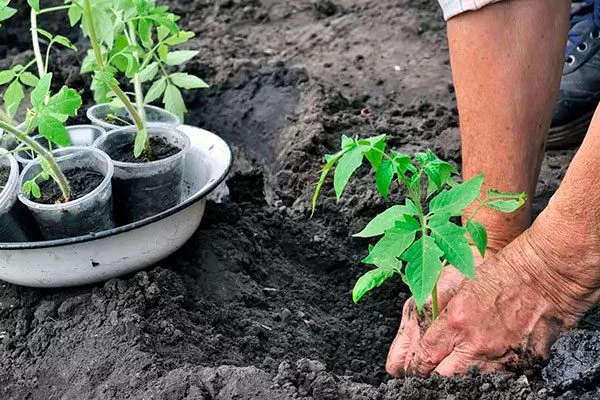
Algorithm of actions:
- Before planting, dig over the area and enrich it with compost, humus, and wood ash. Add 8-10 kg of organic matter and 200-300 g of ash per square meter.
- Dig holes. Their size should correspond to the root system of the plant being transplanted.
- To prevent rotting and combat diseases, fill the tomato holes with hot water with added potassium permanganate.
- After absorption, place the seedlings inside, sprinkle them with nutritious soil and compact them lightly.
- Water the plantings thoroughly and cover the trunk area with mulch.
Caring for tomatoes
Growing the Derevenskiy tomato variety doesn't require complex agricultural practices, according to gardeners. The key requirements are moderate watering and regular fertilizing, as each plant must effectively extract essential nutrients from the soil.
Watering
It's important to monitor soil moisture levels, preventing it from drying out or becoming overwatered. Particular attention should be paid to irrigation during harvesting and ripening, as excessive moisture can cause tomatoes to crack.
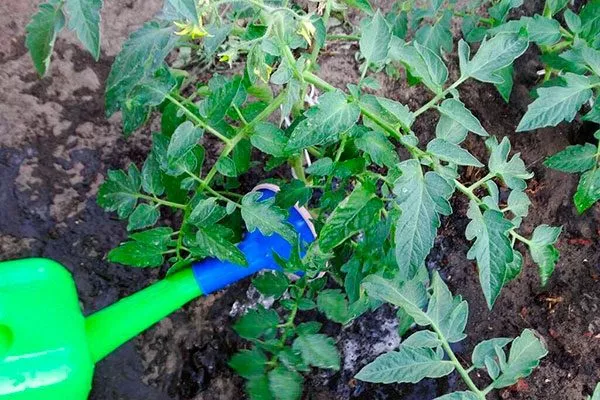
Recommendations:
- In order to properly moisten plants, you should use water that has been heated and settled;
- Apply the liquid only under the root system of the bush, avoiding water getting on the leaves and fruits, which can lead to the development of diseases;
- After the procedure, be sure to loosen the soil around the bush;
- It is best to use a drip irrigation system for this variety to avoid many problems;
- Water no more than once a week. In this case, it is recommended to cover the bushes with a layer of mulch to slow down water evaporation. Peat, sawdust, and other materials are suitable for this purpose.
Top dressing
When growing the Derevenskiy hybrid, be careful with fertilizing and apply it primarily to moist soil. Rules:
- two weeks after transplantation, apply saltpeter in the amount of 80-90 g per 1 sq. m;
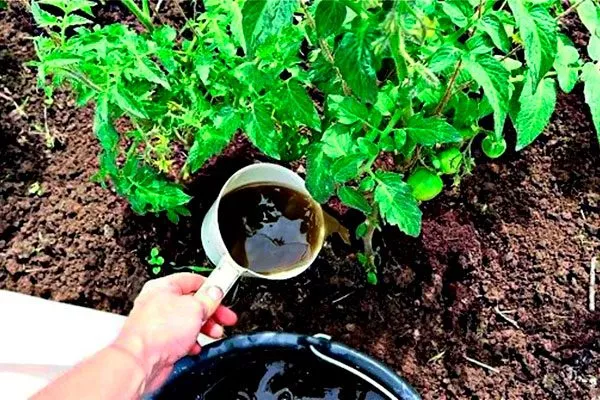
- in subsequent periods, it is preferable to use organic mixtures: infusions of herbs or mullein, but this must be done before the fruits begin to form;
- To improve growth and fruiting, it will be effective to use slurry and chicken manure;
- Phosphorus fertilizers should be applied after tomatoes begin to bloom.
Pinching out and tying up
To ensure the hybrid produces a bountiful harvest, be sure to support the bushes and stems upright. This applies not only to the shoots but also to the fruiting clusters, so that the weight of the ripened fruits doesn't cause them to break off.
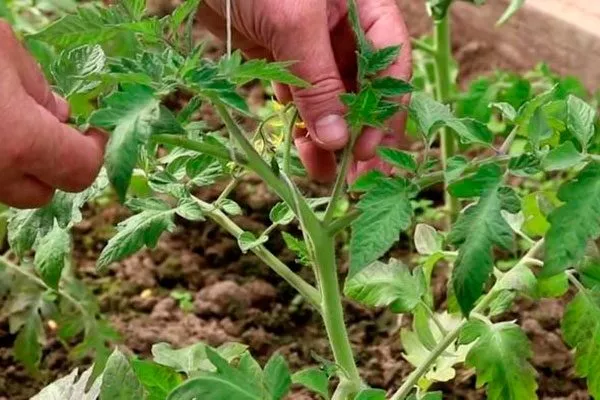
Tomatoes are formed into groups of two or three stems, while all excess shoots are cut off at a height of 2 cm.
Try to follow some plant care recommendations:
- The lowest leaves should be removed periodically so that they do not come into contact with the ground;
- securely fasten the bushes to special supports;
- Check plants regularly for side shoots and remove them promptly.
Pest and disease control
Being a hybrid, Derevensky is resistant to most diseases typical of this crop. However, it is sometimes impossible to completely prevent the development of late blight and spotting, which can significantly reduce the productivity and quality of tomatoes.
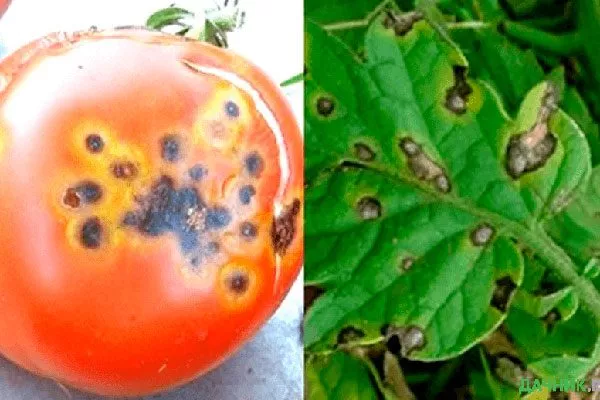
Therefore, experts strongly recommend treating the soil with fungicides before planting, as well as systematically spraying bushes in open ground conditions and especially in greenhouses using preparations such as:
- Ridomil Gold;
- Fitosporin;
- Quadris.
To protect tomatoes from moths, cicadas and aphids, purchase specialized insecticides.
Pros and cons
Each cultivated plant species has unique characteristics, including both advantages and disadvantages. During the breeding process, specialists strive to enhance these positive traits in new varieties, which is why the Derevenskiy tomato hybrid boasts a number of advantages.
Reviews
The Derevenskiy variety is economical, producing a substantial and reliable harvest in a small garden space. The fruits are transportable and store well, but careful care is essential throughout the growing season.