
The De Barao Black tomato variety attracts gardeners with its unique characteristics, including its striking skin color and excellent flavor. These tomatoes have a rich flavor, a meaty texture, and a firm skin, making them ideal for a variety of culinary uses, from salads to canning.
Description of the culture
Developed by a group of breeders: M. Ushakova, S. Nazina, E. Andreeva, E. Sysina, and K. Bogdanov. The variety was included in the State Register in 1999. It is suitable for both open-air and indoor cultivation and is adapted to various regions. Various agricultural companies are engaged in seed production.
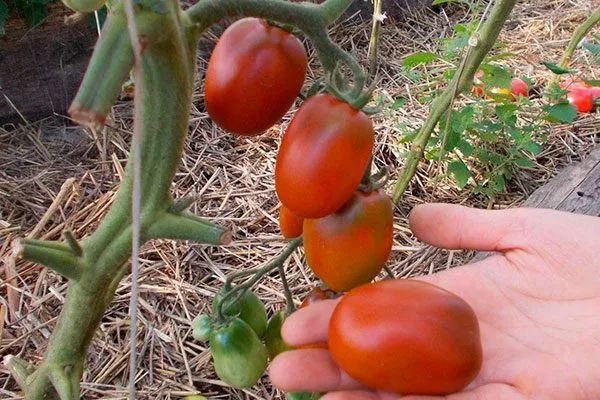
Distinguishing characteristics:
- The plant belongs to the indeterminate types, it has a tall growth – the stems grow more than 2 m.
- The bush has medium branching and foliage, the shoots are green, and the leaves are of a darker shade.
- Simple inflorescences appear above the 9th to 11th leaf, then form at intervals of three leaves. The peduncle is articulated.
- Ripe tomatoes have a distinctive purple-brown color, an ovoid shape, and are small in size. They weigh between 50 and 58 g. The skin is smooth, revealing firm flesh.
This cultivar is prized for its excellent flavor. It's used in salads and a variety of dishes, and thanks to its compact size, it's also canned whole. Its high sugar content gives the fruit a sweet taste.
Ripening period, productivity
It is a late-ripening variety, maturing in 115 to 130 days, depending on climate and weather factors. In regions with short summers and harsh climates, it is best grown in greenhouses. It produces fruit for a long time and is abundant. Harvesting usually begins in August and ends in September.
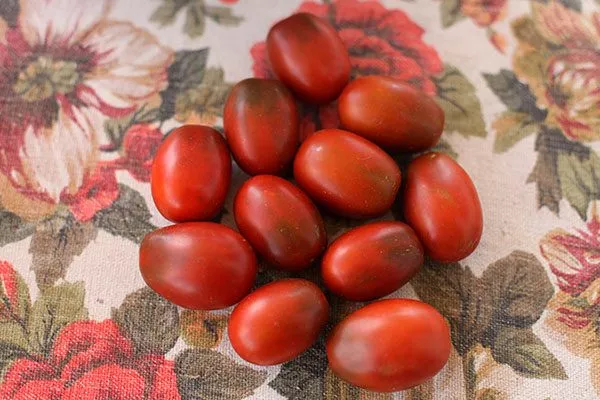
This variety is characterized by high yields—a single bush can yield approximately 8 kg of fruit, but with proper cultivation practices, productivity can be significantly higher. The fruit ripens gradually, as the clusters are located throughout the bush. The harvest continues until the first frost.
Resistance to external factors, diseases and pests
The plant is tall and requires regular watering. However, overwatering can lead to root rot, so water only after the soil has dried out.
Tomatoes don't tolerate drafts and low temperatures well. This makes them unsuitable for outdoor cultivation in regions with short, cool summers.
The variety is resistant to most diseases common to tomatoes. However, poor agricultural practices or a calcium deficiency in the soil can lead to blossom-end rot or spotting, caused by viruses and fungi. Plants are also susceptible to pests such as beetles and slugs.
Regions for growing, required climate
The crop is cultivated in various parts of Russia, including the Caucasus, Crimea, Krasnodar Krai, and Rostov Oblast. The black De Barao tomato prefers a warm and moderately humid climate. For full growth and fruiting, it requires stable temperatures ranging from 22°C to 28°C.
This variety does not tolerate cold, drafts, or sudden temperature changes well. In regions with mild, long summers, it is grown outdoors. However, in areas with a short warm season or harsh conditions (central and northern Russia), greenhouse cultivation is recommended.
How to sow seeds?
Proper seedling cultivation is key to achieving a high yield. Pre-treatment and sowing of the planting material is crucial to ensure high-quality seedlings.
Seed preparation
For planting, purchase ready-to-use seeds. These seeds are often already disinfected and treated with growth stimulants, which can be identified by their colored shell. If you're using home-collected seeds, prepare them first:
- Cut the bandage into strips up to 20 cm long. Place the seeds in the center of the strip and roll the fabric into a tube.
- Place the bundles in a potassium permanganate solution for 15 minutes. Remove them, rinse under running water, and place them in a growth stimulator solution, following the package instructions.
- After treatment with the stimulant, immerse the seed material in a container with clean water and leave it in a warm place for 48 hours, maintaining the moisture of the bandages.
- Place the bundles in the refrigerator at a temperature of +3-5°C for 12 hours to harden.
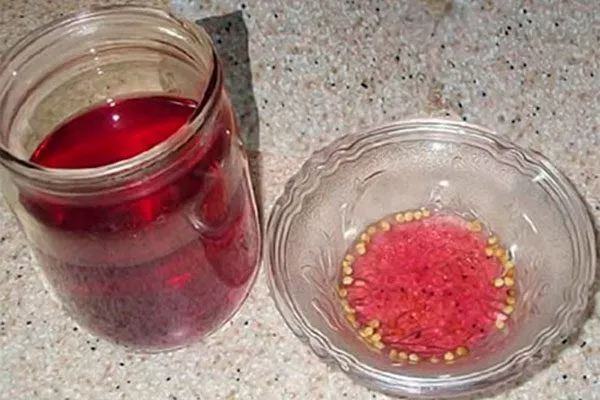
After these preparatory steps, the seeds are ready for sowing.
Container and soil
To plant seeds, begin by preparing the seedling tray and soil. You can buy ready-made soil at the store, but you can easily make your own if you prefer. To do this, mix equal parts soil and compost, add 30 g of superphosphate and 200 g of wood ash.
Helpful tips:
- Place a film with holes punched into it at the bottom of the box to allow excess water to drain.
- Place a drainage layer of river sand and gravel on top.
- Fill with prepared soil, leaving about 2 cm to the top edge of the container.
Before use, water the soil with a potassium permanganate solution to disinfect it and leave it indoors for 2 days. The soil should be moist, loose, and ready for planting.
Sowing
Sow seeds in early March. Follow these guidelines:
- Place the seeds in boxes with prepared soil, spacing them 1–3 cm apart. After sowing, cover them with a thin layer of soil, cover the boxes with plastic wrap, and place them in a warm place.
- Once the seeds have sprouted, remove the plastic wrap. If the seedlings are too close together, transplant them into separate containers, such as cups. Do this when 2-3 true leaves appear. If you sowed sparsely, delay transplanting until 5-6 leaves appear.
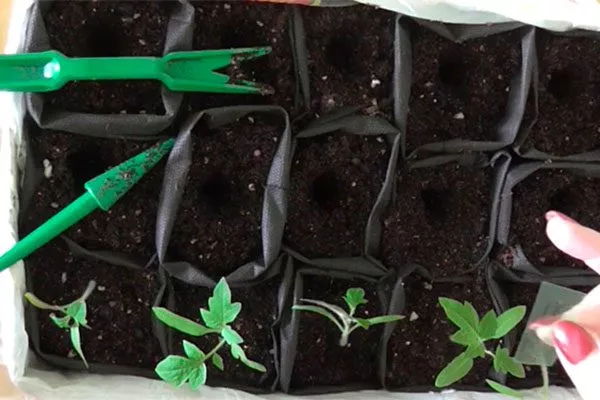
Make sure the soil stays moist, but avoid overwatering. Water the growing seedlings at the roots using a spray bottle to avoid damaging the tender shoots.
How to grow tomatoes?
De Barao performs well both in open ground and in greenhouses. When choosing a planting site, several important factors should be considered.
Seedling
Until the seeds germinate, maintain the temperature in the room containing the boxes at 20-25°C. After germination, reduce the temperature to 15°C during the day and 10°C at night.
Provide the seedlings with suitable conditions:
- Ventilate the seedlings regularly to avoid air stagnation and make sure the sprouts do not freeze.
- Water the sprouted plants with warm, settled water using a spray bottle. Once they have 5-6 leaves, water them every 3-4 days.
- Place the boxes with seedlings in a bright room to ensure sufficient lighting.
If sunlight is insufficient, feed the seedlings with a weak solution of potassium fertilizer. Every two weeks, apply a solution containing superphosphate (20 g per 10 liters of water).
Planting in a greenhouse
For transplanting, select tomatoes that have reached a height of 30-35 cm. Follow these steps:
- Before planting, inspect the plants, remove yellowed, damaged and cotyledon leaves.
- Water the seedlings in the containers and moisten the soil in the greenhouse.
- Using a hoe or other convenient tool, form holes 15-20 cm deep at a distance of 45-50 cm from each other.
- Add a little humus or manure to each hole if the soil is not fertile enough, although De barao grows well even in ordinary soils.
- Carefully remove the seedling from the container and place it in the hole so that it stands upright. Fill with soil, lightly compact it, and moisten it.
- Mulch the beds around each bush.
Transplantation into open ground
Planting seedlings in beds is no different from planting in a greenhouse, except for time.
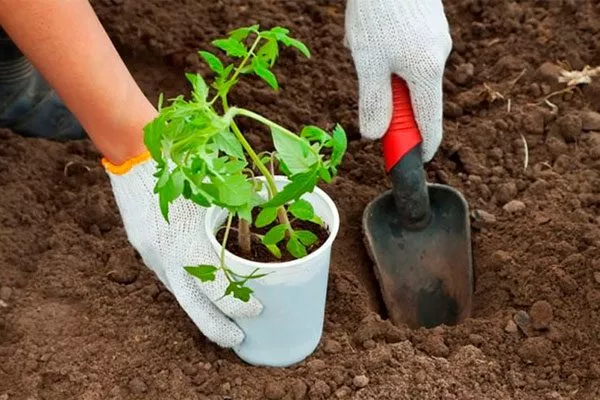
Open field cultivation:
- for southern regions – from mid-April;
- for the Middle Belt – at the end of April-beginning of May;
- for the northern and Far Eastern regions – from mid to late May.
Peculiarities of planting overgrown seedlings
If tomato seedlings are too tall, they have a harder time establishing themselves, so follow a few guidelines when planting. This depends on the height of the seedlings.
When growing plants taller than 40 cm, follow these recommendations:
- Dig a wide but shallow hole (10-13 cm).
- In the center of the hole, make a depression corresponding to the size of the seedling's root ball.
- Fill only the holes where the plants are located with soil, lightly compact the soil and moisten it.
After 10-14 days, when the seedlings have taken root, fill in the first part of the hole formed during planting.
Cultivation of meter-long seedlings is carried out somewhat differently:
- A few days before planting, cut off the upper leaves, starting at a height of 70 cm.
- Make a furrow 7-10 cm deep in the soil. Form a depression for the root at one end of the bed.
- Place the root ball in the prepared hole, bury it and lightly compact the soil.
Place the stem along the furrow, leaving 30-35 cm long shoots at the top. If the plant is strong and tall, secure it with wire. Bury it in the trench and compact the soil.
Watering and fertilizing, soil care
To keep your bushes moist, it's important to follow several principles. Follow these recommendations:
- Carry out the procedure early in the morning. This prevents condensation, which can lead to fungal diseases.
- Water only with warm, settled water. Use large containers, such as barrels, to allow the water to warm up throughout the day. Cold water can stress plants and slow their growth.
- Pour water at the roots to avoid moisture getting on the leaves, flowers, or fruit. This will prevent disease.
- Tomatoes don't like frequent watering. Provide ample moisture 1-2 times a week, depending on weather conditions. On cloudy days, watering once every 10 days is sufficient.
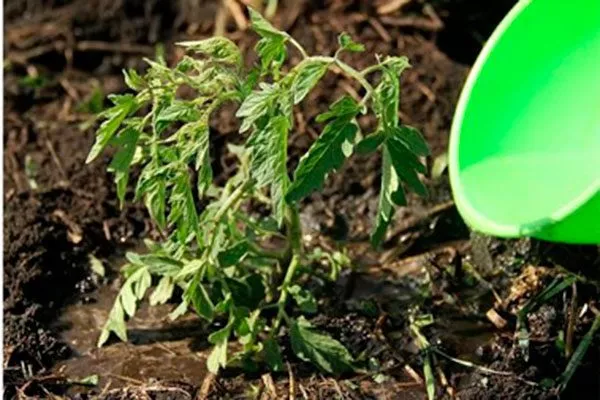
After planting the seedlings in their permanent location, feed them with nitrogen-containing fertilizers. This stimulates vigorous foliar growth and strengthens the root system. During flowering, apply mineral fertilizers containing potassium and phosphorus—they promote fruit set and improve crop quality.
Fertilize at least twice:
- during flowering;
- at the beginning of fruiting.
This way you will provide the crop with all the necessary nutrients.
Combine weeding and loosening. Shallow loosening will not damage the roots, but will break up the surface crust, making it easier to remove weeds by hand. Loosen the soil after watering, closer to midday, as this is when weeds dry out faster.
Garter and pinching out side shoots
For the De Barao Black tomato variety, staking is essential, as the robust bushes can grow up to 4 meters in height. Begin staking by installing small supports next to each plant, and tie the short seedlings to these.
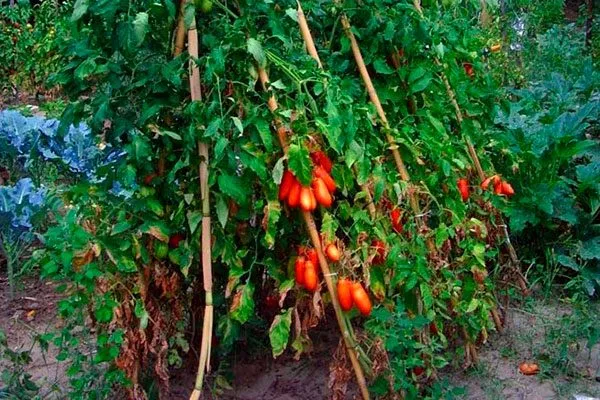
When the bushes outgrow the height of the supports, attach ropes or twine to them (thick enough not to damage the stems) and secure them by tying them to the upper structures of the greenhouse.
In open ground, higher supports are required. Suitable options include:
- Wooden pegs more than 2 m high with wire stretched between them (up to 200-300 bushes can be placed on the trellis).
- Metal rods or reinforcement.
- Frames made of wooden slats.
- Thick reeds used as temporary supports.
If you don't tie up the seedlings early on, the stems may break under the weight of the branches, and the adult tomatoes will end up on the ground.
Pinching involves removing excess shoots growing in the leaf axils. Follow these recommendations:
- Train the bushes into one or two stems. The plant is vigorous, but won't support more than two trunks.
- Without side shoots, the plant will develop numerous extra shoots, which will drain nutrients, shade the plants, reduce yield, and delay ripening. Remove these extra shoots regularly, every 3-5 days.
Remove lower leaves. After the first set of leaves appears, trim them off before they reach the ovary, as they become useless, create shade, and increase humidity, which can promote disease.
Diseases and pests
Late blight is considered the most dangerous tomato disease. Although the De Barao variety is resistant to it, preventative treatment with garlic solution or chemicals is recommended during adverse weather conditions.
Tomatoes are also susceptible to fungal diseases:
- white spot;
- gray rot.
If they appear, immediately remove the affected plant parts and burn them. Then, treat the bushes with chemicals such as Fundazol or Fitosporin-M.
Tomatoes can be affected by various pests:
- whitefly;
- slugs;
- spider mite;
- mole cricket;
- wireworm.
To combat mole crickets and wireworms, place poisoned baits between rows. Otherwise, if fruit hasn't yet begun to form, treat the plants with insecticides such as Aktara, Confidor, or Fufanon.
Harvesting, storage
Tomatoes begin bearing fruit in mid-July and continue until frost. Under these conditions, harvest all the fruits, including unripe ones. The cultivar's yield is not dependent on weather conditions, especially if grown in a greenhouse, where the vegetables can be stored and ripened much longer.
The fruits of the De Barao Black variety store well. To do this, select firm, undamaged specimens and store them in a cool, dry place, such as in boxes or other containers lined with straw, sawdust, or dry cloth. Under these conditions, the harvest can last for several months.
Tomatoes are divided into several groups based on shelf life, and the De Barao Black variety falls into this category with a shelf life of approximately two months. Interesting points:
- If you pick the tomatoes at the milky stage of ripeness (when they've reached marketable weight and have gained shape, but haven't yet developed color), you can store them on a clean cloth in a cool, dark place. However, after trying these tomatoes in season, many might say they're "not very good." By New Year's, however, they might seem quite good.
- For the best flavor, pick tomatoes that have begun to change color but still have a greenish tint. Arrange these tomatoes in layers, separating them with paper to prevent them from touching.
Another option is to wrap each fruit in newspaper. Store the harvest in the same conditions as green specimens: cool and dark.
Pros and cons
This variety has many characteristics, including advantages and disadvantages. The main advantages are:
Among the disadvantages of the crop, gardeners note the importance of careful care and growing in a greenhouse or hotbed to obtain maximum yields.
Reviews
De Barao Noir is a tomato variety that produces excellent results with proper care. Its high yield and disease resistance make it an indispensable choice for those who value quality and reliability. This cultivar will become a favorite for any gardener, providing a stable harvest even in variable climates.