
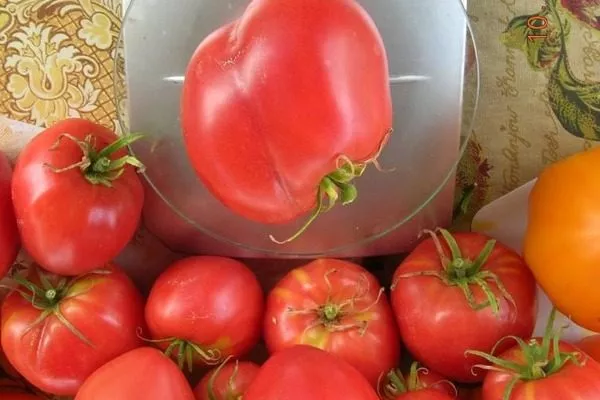
The Danko tomato is a mid-season determinate variety with large, heart-shaped, richly colored fruits. It attracts gardeners with its consistent yield, excellent flavor, and versatility for both open-field and greenhouse cultivation. It is disease-resistant and adaptable to a variety of climates.
History of creation
This unique variety was developed through years of fruitful work by leading scientists at the Siberian Research Institute of Plant Growing and Breeding. Development began in the mid-20th century and was aimed at producing tasty and attractive tomatoes for fresh consumption, primarily for salads.
Interesting facts:
- Such prominent specialists in Russian science as V. N. Gubko, V. F. Zalivakina, A. A. Kamanin and others participated in the creation of the variety.
- When developing the variety, various methods were used: hybridization, as well as individual and mass selection of the best plants in order to consolidate the valuable qualities of the original varieties.
- The parent varieties used were Talalikhin 186, which is early maturing but has small and slightly sour fruits, and Bychye Serdtse, which has large fruits, is fleshy, but late maturing and has a less intense taste.
- Danko became one of the most successful achievements of SibNIISR, combining the best qualities of the original varieties: large fruits with a harmonious sweet and sour flavor. According to a comprehensive assessment, it was ranked among the top five varieties. You can read about other sweetest tomato varieties. Here.
- After registering the variety in the State Register and receiving a patent, Danko became widespread throughout Russia, although even before official recognition it was popular among gardeners for its productivity, determinacy, and excellent taste.
Description
Those who have planted the Danko tomato in their gardens are sure to return again. This variety isn't known for its exceptional yield, but it does provide consistent fruiting regardless of climate conditions and other external factors.
What does the bush look like?
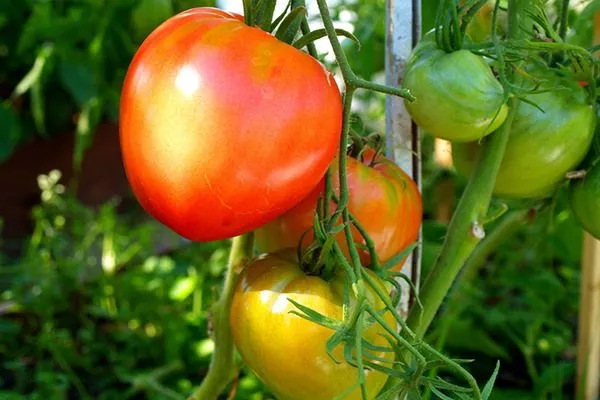
The plant's moderate foliage is an advantage—there's no need to remove excess foliage, and all its energy is focused on fruit production. It's usually trained into four stems, which increases yield.
Distinguishing characteristics:
- plant - reaches a height of about 70 cm, but sometimes it is a little lower - 50-60 cm;
- leaves - medium size, rich green color, with slight corrugation;
- stems – strong;
- inflorescences – complex.
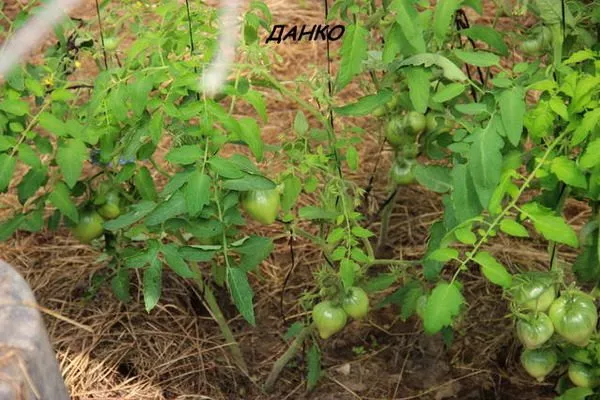
The first inflorescences appear after the formation of 7 leaves, and then are laid every 2 leaves.
Fruit characteristics
Breeders' work has resulted in a high-yielding variety in which the largest tomatoes form on the lower trusses. As fruiting continues, the tomatoes' size decreases, but they still weigh an excellent 100-300 grams.
Fruit characteristics:
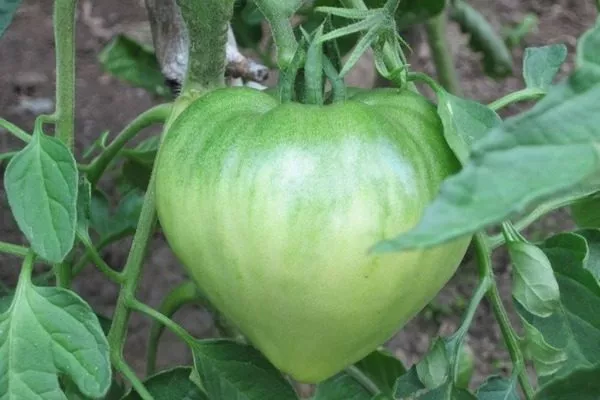
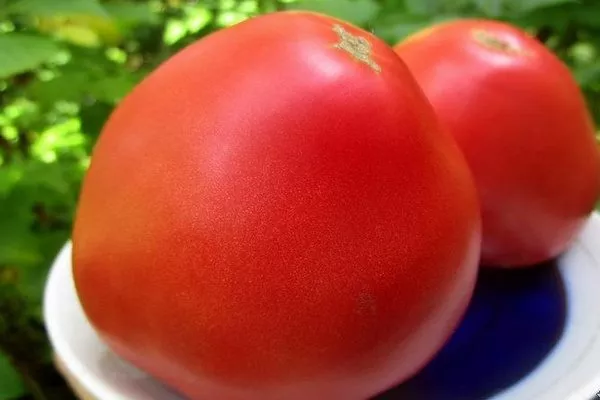
- bright pink, heart-shaped;
- juicy, with a harmonious sweet and sour taste and a distinct tomato note;
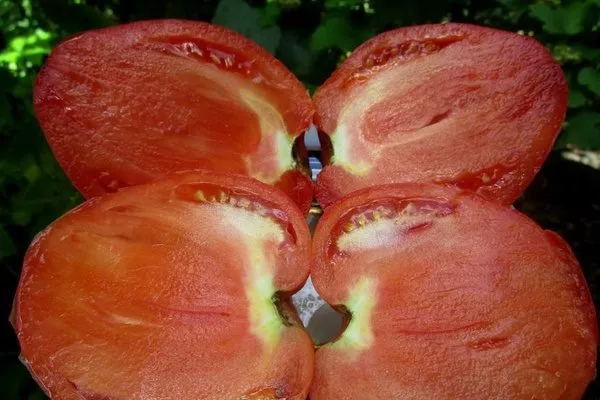
- The pulp is sugary, with a small number of seeds, and consists of four chambers.
The thin skin makes the vegetables convenient for fresh consumption, but it reduces their durability during long-distance transportation and complicates commercialization. Growing the Danko variety for large-scale sales is not recommended.
Productivity and ripening time
The careful work of breeders, combining the early-ripening Talalikhin 186 and the late-ripening Bull's Heart, has resulted in a tomato bush with a medium ripening period: the first fruits begin to form as early as 118 days after full germination.
Productivity is average – up to 4 kg per bush when planted at a rate of 4 per square meter. However, proper plant training and sound agricultural practices can double this yield, and methods developed by experienced farmers allow for slightly smaller but impressively sized fruits.
Harvesting and use of the crop
The fruits can be harvested as early as 110-120 days after planting. Connoisseurs believe that the Danko tomato is best eaten fresh, in single- or mixed salads. The variety is also perfect for summer vegetable appetizers.
It's often used for canning—to make tomato juice with pulp, paste, appetizer sauces, and homemade ketchup. Danko deserves a top 5 out of 5 stars in tasting reviews.
Growing and care
The cultivation techniques for the Danko tomato are no different from those generally accepted. However, timely and proper care helps increase the yield of marketable fruits.
For private farms, such indicators are not so important - minor defects, such as tops or cracks on tomatoes, do not affect their taste.
Sowing time
Sow seeds 60-65 days before transplanting. This timeframe depends on the region, climate, and weather forecast. Germination typically takes another 5-7 days.
Seedling
First, warm the tomato seeds, then treat them with a dressing and soak them until they swell. Then, begin sowing:
- during mass sowing – in rows with an interval of about 4 cm;
- when planting for seedlings - less often, one seed every 2 cm.
When seedlings appear, harden them off to avoid the hypocotyl stretching and to obtain compact plants.
Optimal conditions for seedlings:
- daytime temperature – +14-16°C;
- night – +10-12°C;
- bright 24-hour lighting.

After 5-7 days, move the seedlings to a warmer room with a temperature of 20-24°C and reduce the light to 12-14 hours per day. When they reach 2-3 true leaves, transplant them into individual trays or plastic cups with holes in the bottom.
About 10-14 days after picking, when the plants have a new leaf, feed them with a complex fertilizer with a high nitrogen content (for more information on what and how to properly fertilize tomato seedlings, read Here). Harden off the seedlings a week before planting them in open ground.
Landing at a permanent location
Transplant seedlings into open ground when the soil temperature at a depth of 10 cm reaches +15°C. Plant in a 40x50 cm pattern. Some gardeners prefer dense planting in trenches, spacing plants 20-25 cm apart.
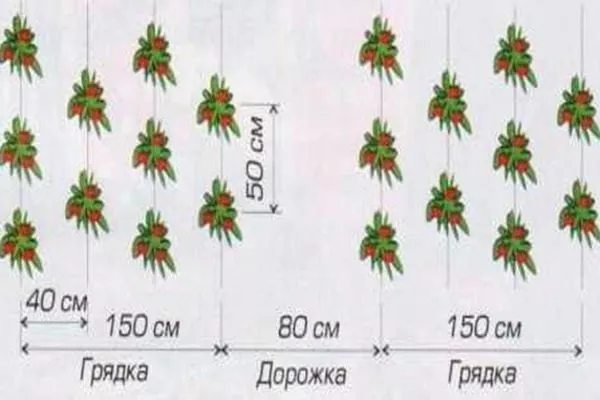
In this case, tomatoes don't require staking, as they support each other. However, keep row spacing no more than 1.5 meters to ensure easy maintenance and good ventilation.
How to care?
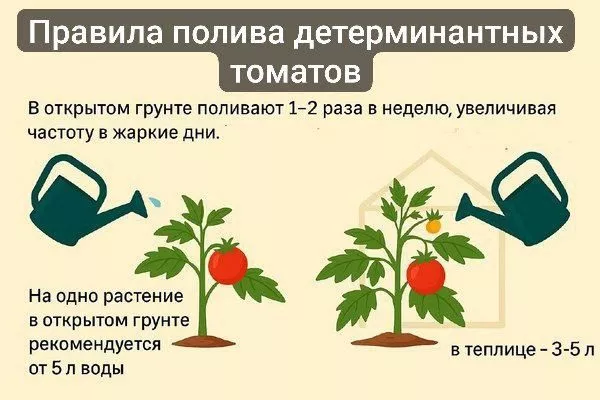
For Danko tomatoes, uniform but moderate watering is especially important. The soil should remain moist but not waterlogged, with the top few centimeters of soil allowed to dry out between waterings. Regularly loosen the beds and clear them of weeds.
Top up at least three times:
- nitrogen fertilizers two weeks after planting;
- a complete mineral complex with a predominance of phosphorus and potassium when the second flower brush appears;
- repeated feeding during the period of mass formation of ovaries.
Bushes planted in a square nest pattern require support—they are quite weak and may collapse under the weight of the fruit. It is recommended to train the bush into 3-4 stems.
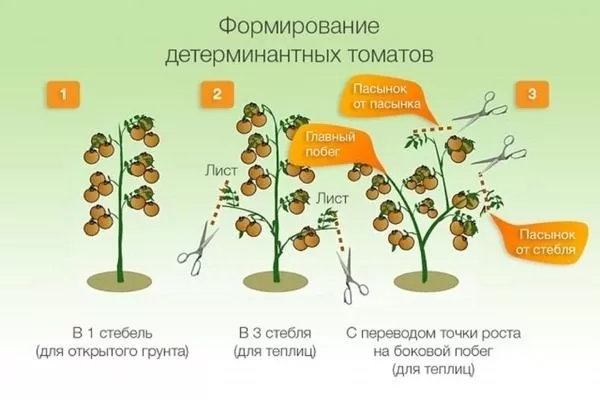
A distinctive feature of this variety is that the fruits ripen quickly after harvesting. Therefore, unripe tomatoes can be removed from the bush to speed up the development of new ovaries.
Potential problems, diseases and pests
Danko tolerates temperature fluctuations, short-term drought and even light daytime shade.
Other difficulties:
- This variety tends to produce double flowers, especially on the first, most productive clusters. If you don't mind the deformed fruits, you don't need to remove the buds.
- The culture is characterized by good immunity, but preventive treatments must be carried out - the tomato is mid-season and susceptible late blight.
- The bushes are susceptible to blossom-end rot and fruit cracking, which is why the yield of marketable tomatoes is only about 34%.
Advantages and disadvantages
Reviews of the Danko tomato are mostly positive. Its main advantage is its versatility: it is successfully grown outdoors throughout Russia, from the southern regions to the Urals. It is also suitable for greenhouse cultivation and does not require much light or heat for full development.
The variety has a number of important advantages:
The ability of tomatoes to ripen at room temperature is especially valued, which helps preserve the harvest in northern regions with short summers.
However, the variety also has its disadvantages:
Similar varieties
Red, large, heart-shaped fruits and determinate bushes are characteristic of some tomatoes. Danko has the following similar varieties:
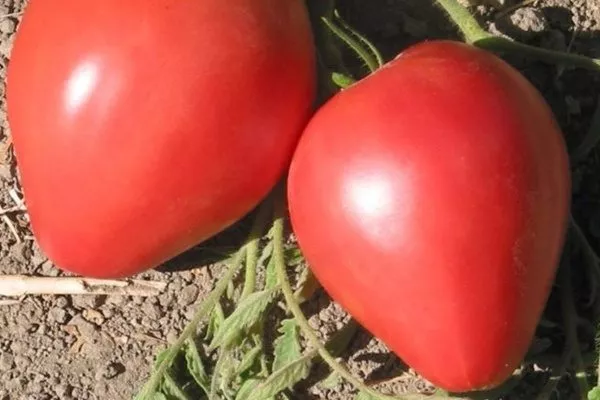
- Lazy. The plant height reaches 55-60 cm. Tomatoes typically weigh 160 g, but individual fruits often reach 200-400 g. The skin is dense and smooth, which ensures good preservation and ease of transportation.
From germination to harvesting the first ripe vegetables, it takes only 95-100 days. This variety is characterized by early and uniform ripening, as well as high yields – with proper care, up to 5.4 kg can be obtained per square meter.
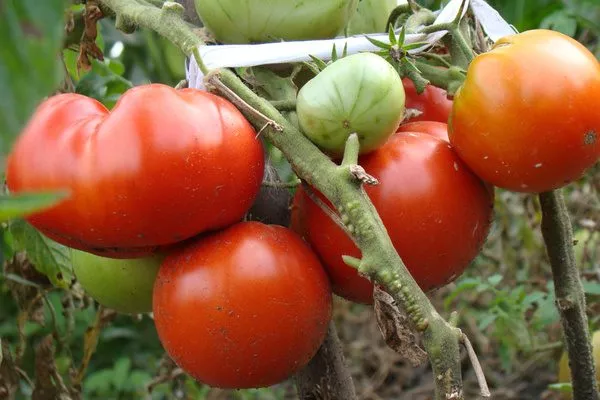
- Favorite. The bushes grow up to 60 cm in height. The tomatoes are round in shape and weigh between 220 and 260 g. Each tomato contains 4 to 6 seed chambers. The flesh is dense, juicy, and meaty.
Suitable for growing both outdoors and in greenhouses, both plastic and permanent. The crop yields 4-6 kg per square meter.
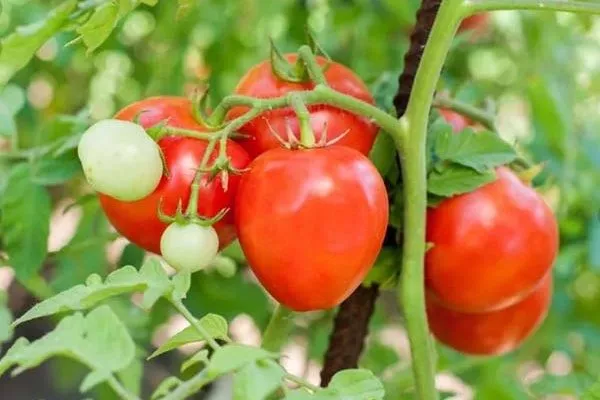
- Heart kiss. In open ground, the bush grows up to 70 cm, and in greenhouses, it reaches 120 cm. The plant has a spreading habit, which promotes good light and ventilation. The fruits are heart-shaped, neat, weighing approximately 124 g, with six or more seed chambers.
This mid-season variety ripens 110-120 days after planting. The yield is approximately 2.8 kg per square meter.
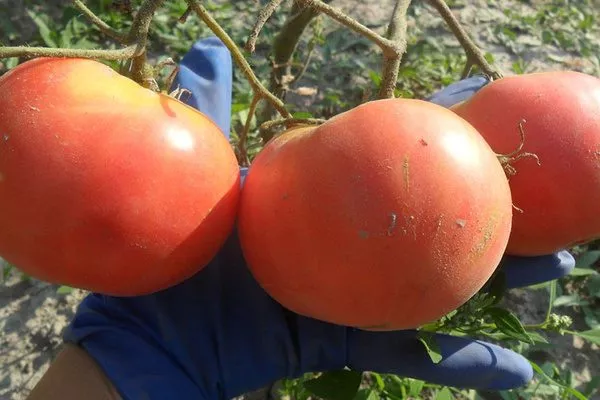
- Tsar Bell. A determinate standard tomato that stops growing after all flower clusters have formed. The bushes are compact: outdoors they reach 80-100 cm, and in greenhouses they grow up to 1.5 m.
The main feature of the variety is its large fruits weighing up to 600 g, although the average weight is 211-350 g. The shape of the fruits varies from heart-shaped to pear-shaped, with a pointed or rounded top.
The ripening period is 100-110 days from sowing. With proper care, the harvest can be collected as early as July. Productivity is high – from 8.6 to 18 kg per square meter.
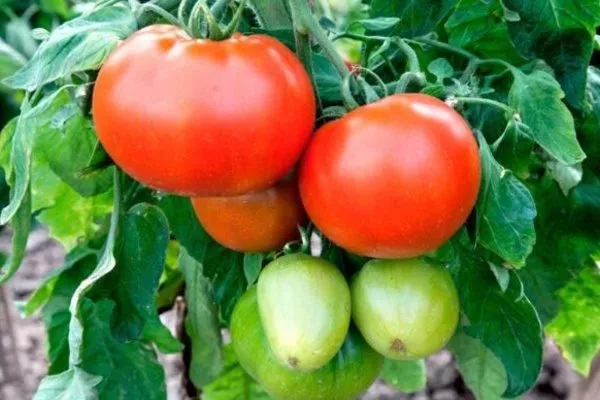
- EM Champion. The bushes are low-growing, reaching an average height of 50-55 cm, although they can reach up to 70 cm under favorable conditions. The tomatoes are heart-shaped, slightly flattened, and medium-sized. They typically weigh between 126 and 134 g, but with proper care, larger tomatoes can yield up to 400 g.
This variety is considered mid-season, with germination and ripening taking 100-110 days. It is prized for its high yield: 6.8-10 kg per square meter, and up to 7 kg per bush. Marketable fruit accounts for up to 68%.
Reviews
The Danko tomato is prized for its juicy, sweet-tart fruits with thin skin, quick ripening, and low maintenance. Despite its tendency to crack, this variety is popular among gardeners for its uniform yield and excellent flavor. With proper and timely care, this variety will reward you with generous harvests and high quality.