
Experienced gardeners are well-versed in the most popular varieties and have learned from experience which tomatoes are worth considering and which should be avoided. It's no surprise that the "Ladies' Man" variety is a popular choice, boasting numerous advantages over its competitors. Its fruit quality, ease of care, and ability to grow in a wide range of climates make it practically indispensable when it comes to tomatoes.
The origin of tomatoes
The variety's history begins in 2008, when the Aelita agrofirm decided to diversify its product range and delight lovers of a good harvest with new tomatoes. That same year, "Ladies' Man" was added to the state register, after which cultivation of this tomato, remarkable for its qualities, began throughout the country.
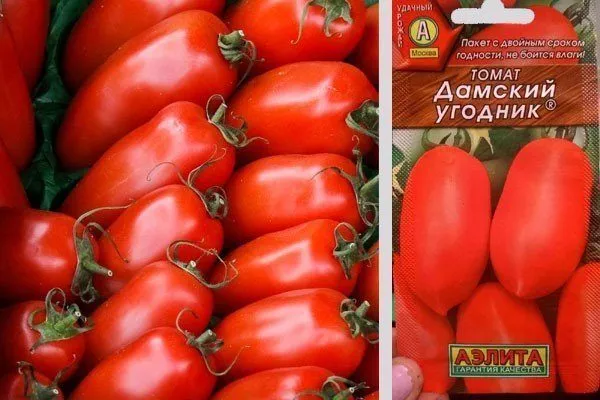
Ladies' Man pepper: seeds and fruits
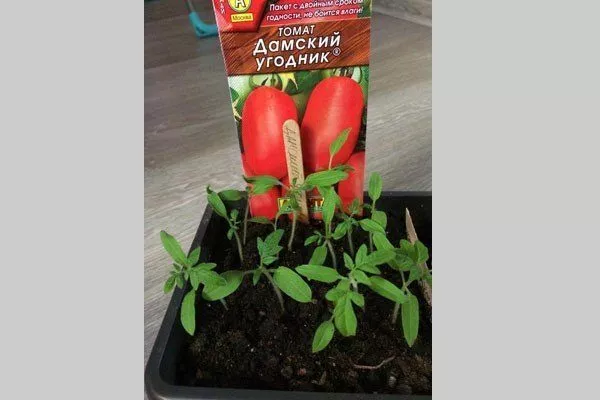
Pepper seedlings "Ladies' Man"
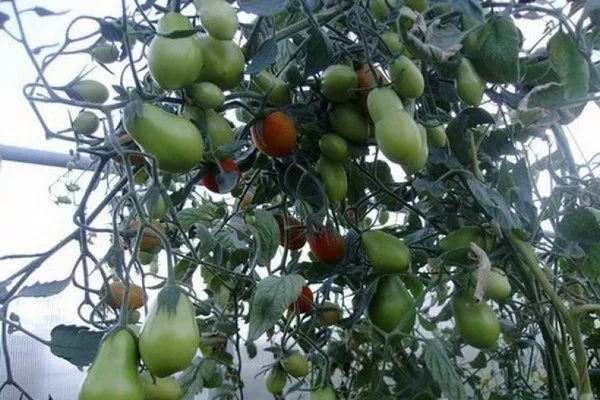
Ripening pepper 'Ladies' Man' on the bush
Description and characteristics of the Ladies' Man
Before choosing this variety for planting in your garden, it's important to study its description and characteristics. We'll discuss these further.
Description of fruits
The fruits are always elongated and cylindrical in shape, which tomato growers simply call "pepper-shaped," with a distinct "nose." The skin is smooth, thin, and has a beautiful glossy finish, making these tomatoes truly attractive.
A ripe tomato has a bright red color without any extra spots or iridescence, but an unripe fruit will simply be green without the spot near the stem that is typical for many tomatoes.
The pulp itself is soft, tender and quite meaty.
Main qualities of fruits
Due to its low dry matter content, the "Ladies' Man" retains its juices and original shape when sliced and does not release excess liquid, making it suitable for both salads and canning.
The flavor is such that sweetness is combined with a slight tartness. The tomato has only two seed chambers, which are not particularly large or contain a significant number of seeds.
The "Ladies' Man" cannot be called a large-fruited one, since its standard parameters are 45-60 g.
Their resistance to cracking is quite high, so they cope well with transportation, maintaining their original shape even after a long journey.
Productivity
"Ladies' Man" is known for its high yield. According to expert statistics, the typical yield per square meter is at least 10 kg. However, such results can only be achieved with proper planting techniques and timely, and most importantly, competent, care.
Advantages and disadvantages
Like any other variety, "Ladies' Man" has both certain advantages and significant disadvantages that should be considered during the research and selection process. The following are among the key advantages:
- high yield - with the right approach, you can get the maximum amount of fruit (approximately 10 kg per 1 sq. m);
- resistance to temperature changes - the variety can be grown in different climatic zones, since it is universal in this regard;
- according to GOST, the taste qualities of the fruit are excellent;
- Tomatoes are actively used for fresh consumption and for canning;
- Tomatoes do not crack and withstand long-distance transportation well, making them suitable for growing on farms;
- when cut, tomatoes do not release excess juice;
- Compared to competitors, they are quite easy to care for.
If we talk about the disadvantages, the main ones are these characteristics:
- the presence of voids - they are small, but for some this is a problem;
- doesn't really like a lot of sunlight.
Seedling method of cultivation
Purchasing seedlings is quite an expensive process, and no one can be sure whether the seeds were grown properly or whether all care instructions were followed. When time permits, gardeners prefer to grow their own seedlings, but it's important to understand that the "Ladies' Man" requires a serious approach and meticulous care.
Seed preparation
The first step toward a bountiful harvest is seed preparation. If they were purchased directly from the manufacturer, disinfection is not required. Otherwise, this preparation step is essential before planting.
To do this, prepare a solution of potassium permanganate and water at a ratio of 1 g per 100 ml. Wrap the seeds in gauze or a piece of bandage and soak them in the resulting solution for 15 minutes. Experts recommend adhering to this time frame, as the seed's viability may be significantly affected after planting.
Next, the seeds need to be rinsed with plain running water. Many believe that a soda solution significantly increases fruiting.
In addition to manganese, you can use baking soda in a ratio of 0.5 g per 100 ml, but the material will have to be kept there for 24 hours.
Fitosporin is also used for disinfection; it is diluted with water in a ratio of 1 drop (half a teaspoon if powder is used) per 100 ml, after which the seeds are kept in it for one to two hours.
Experienced gardeners recommend using a 1:1 aloe vera solution, as it not only disinfects but also significantly boosts the immunity of future plants. You can use store-bought aloe vera juice or homemade aloe vera juice. The seeds should be soaked in it for at least 24 hours.
Contents and location
Place the seedling trays in the southern part of the room, preferably on a windowsill, where the plants will receive sufficient natural light. If this is not possible, you will need to consider purchasing phytolamps, which will replace sunlight.
It's recommended to combine two light sources (sun during the day and lamps in the evening) so that the plant receives light throughout the day for the first 3-4 days. On the fifth day, you can reduce the amount of time spent in the light to 16 hours per day.
Seedlings require temperatures between 18 and 25 degrees Celsius during the day and between 12 and 15% at night. To avoid temperature concerns, it's best to place the seedlings near a radiator. This will prevent them from freezing.
The process of planting seeds
Before planting you need to disinfect the soilTo do this, bake it in the oven for 10 minutes at 200 degrees Celsius or disinfect it with boiling water. After disinfection, wait at least 12 days before planting.
Any container can be used for planting, whether peat pots or trays. Fill half the container with soil, then water the soil, and then make small furrows 1 cm deep.
Leave a distance of approximately 1-2 cm between the furrows. If the container is quite large (say, a box), then the distance can be increased to 3-4 cm. Further plant the seeds, add some soil and moisten the soil again.
There's another planting method. It involves laying the seeds in rows and then covering them with soil. It's important to moisten the soil before and after planting, but be careful not to overdo it.
After these steps, cover the seedlings with cling film, a cut-up plastic bag, or glass, appropriate for the container's size. This will maintain high humidity and a favorable microclimate, while the film will allow light to pass through.
Learn about the pros and cons of planting seedlings in peat pots in the video below:
Watering
Maintain high humidity, but do this with a spray bottle rather than watering. Misting should be done twice a day, but if you're short on time, you can use a humidifier.
It is important that the humidity level is at 80 or 90%.
Caring for seedlings
The seedlings shouldn't drown in water, but avoid allowing the container to dry out. If there's excess moisture, open the container and allow it to dry to the desired level.
Mold may occasionally appear on the surface, but it's easy to combat. Simply remove it and then treat the soil with a potassium permanganate solution or antifungal agents.
The temperature should be moderate, without significant fluctuations or sudden changes. Excessively high temperatures can kill the plants. The plastic wrap is removed two weeks after planting. By this time, the stems should already have two or three leaves.
As the seedlings grow, you need to increase the amount of watering, temperature and light.
Transplanting seedlings into the ground
When the plant stem becomes thick and strong and reaches 30 cm in height, it's time to transplant the seedlings into the ground. It's important that at this stage, the seedlings have 6-7 leaves, short internodes, and flower clusters.
- ✓ Optimum soil temperature for planting seeds: 18-25°C during the day, 12-15°C at night.
- ✓ The required distance between plants when transplanting into the ground: 30-40 cm.
The transplanting process should be postponed during strong winds or excessive sun exposure. Experts recommend transplanting seedlings on a calm, cloudy day.
The holes are spaced 30-40 cm apart and 2-3 cm deep to allow the root system to establish. The soil is fertilized with peat beforehand, and after planting, each seedling is watered with warm water under the stem.
Seedless cultivation method
To grow the "Ladies' Man" you don't have to use seedlings, but plant seeds in open groundWith the right approach and care, it is quite possible to get a luxurious harvest.
Open ground conditions
It's best to choose a planting location that isn't shaded by other plants or buildings, and that gets plenty of warmth. In open ground, water more frequently than would be necessary in a greenhouse.
It's important to understand that in a greenhouse, plants sometimes don't receive enough light, resulting in a small harvest. It's important to fertilize the soil with peat fertilizer in a 1:1 ratio before planting.
Planting seeds in the ground
As a preparatory step, it's advisable to place the seeds in a growth stimulator for 8-12 hours. This step will cut the wait for germination in half, and the first seedlings will emerge within 3-4 days.
Leave 60 to 80 cm between rows and 30 to 40 cm between seedlings, with the hole no deeper than 3 to 4 cm. When sowing, keep the soil thoroughly moist and place no more than 3 to 4 seeds per hole. After planting, cover the seeds with soil.
This video shows how to grow tomatoes without seedlings – by sowing them in the ground:
Watering
The first watering of seedlings is carried out only after the first shoots emerge. During the first two weeks, seedlings are watered under the stem, which ensures good nutrition for the root system.
If the soil dries out, the seedlings will wilt and eventually die. Avoid daily watering, as waterlogging can lead to fungal growth. Use 3 liters of water per square meter, and regularly spray the bushes with an EM solution during the first week.
To make watering easier, it is advisable to use a drip system.
Planting technology
To achieve a good harvest, proper planting technology is essential. Every step must be carefully considered to ensure the seeds produce a truly worthy seedling and delight the gardener with excellent results.
Selecting seedlings
If you can't grow your own seedlings, you can easily purchase them at the market. This process should be approached with particular care, as both the market and stores often feature unscrupulous sellers who mislead customers not only about the quality of the seedlings but even the variety.
Buy plants that are already 45-60 days old, and the seedlings should be the same age as the beds, as this will make care much easier. They should be at least 30 cm tall, have 11 leaves on each stem, be a vibrant green, have pencil-thin stems, and be stored in containers.
Before purchasing, carefully inspect the leaves: if they are curled downwards, this indicates an excess of nitrogen fertilizers.
What should the soil and ground be like?
The soil must be prepared in advance. It should be loose and enriched with peat. Soil previously used for growing cabbage, carrots, onions, cucumbers, or legumes is ideal for growing tomatoes.
Avoid planting seedlings where eggplant, potatoes, or peppers were grown, as they deplete the soil's nutrients. Neutral soil is essential, although slightly acidic soil is acceptable if other options are unavailable.
Planting tips
When planting, avoid shade, as the plants will not receive sufficient light and will eventually wither. This variety is highly resistant to wind and cold, but prefers light and sunny conditions.
Maintenance and care of plants
It is preparation, combined with proper care, that produces good fruits that every gardener and vegetable grower can be proud of.
Loosening the soil and weeding
Like most tomato varieties, the "Ladies' Man" requires loose, light soil, so this procedure should be carried out after each watering. If this isn't possible, loosen the soil once every two weeks.
Loosening primarily affects the spaces between rows, with weeding carried out simultaneously to remove weeds. During the first month, the loosening depth reaches 10-12 cm, but after a while, it should be reduced by 5-8 cm to avoid damaging the seedling roots.
Pinching out stepsons
Too many side shoots overload the bush, distributing nutrients throughout all branches, and depriving the fruit of sufficient nutrients. To prevent a decrease in fruit quantity and deterioration in quality, prune excess stems promptly, leaving only the main stems.
The step-sonning procedure is carried out after watering if excess stems become noticeable.
Garter
To ensure a bountiful harvest, staking is essential. It allows the upper stems to be properly positioned, making it easier to spray and ensuring they receive sufficient light. This will keep the fruit at the top and prevent damage from mechanical weeding or excess moisture in the planting hole.
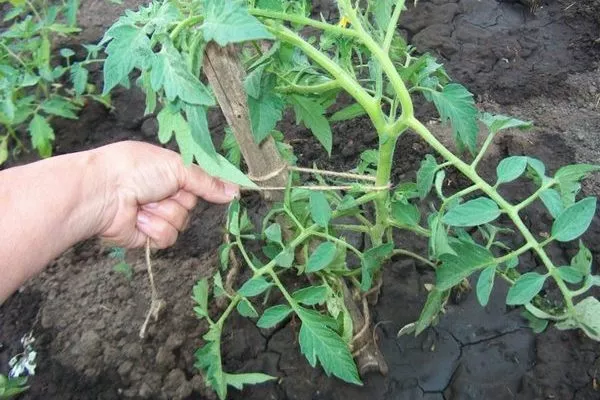
This procedure is first performed after 2-3 weeks. For this, stakes 2-2.5 meters high, wooden cages of the same height, and caps made from scrap materials are used.
- First feeding: 3 weeks after planting, mullein or bird droppings.
- Second feeding: during the flowering period, ammonium nitrate and potassium sulfate.
- Third feeding: 2 weeks after the second, mineral fertilizers.
- Fourth feeding: during the fruiting period, superphosphate.
Top dressing
Fertilize in sunny weather, but if this is not possible, foliar feeding should be done. growing season Three to four treatments are required. Three weeks after planting, the first treatment is with mullein or bird droppings; the second, during flowering, is with ammonium nitrate and potassium sulfate; the third, two weeks later, is with mineral fertilizers; and the fourth, during fruiting, is with superphosphate sprayed onto the plants.
How to fertilize tomatoes at the seedling stage, read here.
Features of harvest storage
Store the tomatoes in a cool, dry place with limited sunlight. Store them in closed containers, but be sure to carefully sort them out periodically to eliminate any spoiled tomatoes.
Pest and disease control
The "Ladies' Man" is susceptible to late blight, which causes the leaves and fruit to turn black. It occurs due to excess moisture or low temperatures.
It's impossible to cure this disease, so preventative measures are necessary (after planting and as it grows). Ash, Trichopolum, copper sulfate, milk with honey, Fitosporin, and Ecosil are used for this purpose. If the disease occurs, the entire crop and seedlings are destroyed, and the soil is thoroughly cultivated.
Mole crickets, ticks and whiteflies may also appear, but this can be avoided if agricultural technologies are followed.
Problems and recommendations
This variety is highly resilient, tolerates frost well, and responds well to fertilizer. If watered improperly, leaves and fruits may wilt, and fungal diseases may develop. Careful monitoring of growth is essential, removing leaves at the base of the stem, and fertilizing the seedlings.
Reviews of the variety
All gardeners and ordinary consumers have positive reviews of the variety, noting its excellent taste, high yield, and resistance to diseases and temperature fluctuations.