
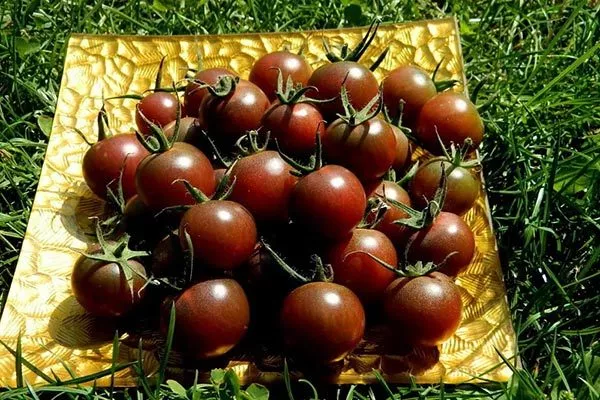
Dark Chocolate tomatoes attract gardeners with their unique appearance and rich flavor. They are a deep purple-brown color and have sweet, fleshy flesh with minimal acidity. The bushes are strong, disease-resistant, and produce a high yield. The tomatoes retain their juiciness, imparting a pleasant flavor and aroma to dishes.
History and regions of cultivation
It is an indeterminate variety. Domestic breeders from Agrofirma Poisk worked on developing the variety. They were assisted by N. S. Gorshkova, A. N. Khovrin, S. V. Maksimov, and T. A. Tereshonkova.
Work on this variety began in 2010, and in 2015, after the necessary testing, it was registered in the State Register. The crop is successfully cultivated in all regions of Russia, including the Urals and Siberia.
Description of the variety
The Dark Chocolate tomato is a cherry tomato characterized by its small fruit size, uniform ripening, and excellent flavor. This variety is particularly popular due to its numerous positive qualities.
Appearance of the bush and fruits
The bush grows indefinitely, reaching 150-200 cm in height. Distinguishing characteristics of the plant:
- Stem – Vigorous, well-developed, dark green, it becomes woody over time. Lower branches are often removed as they are of no use.
- Leaves - medium size, standard shape, green.
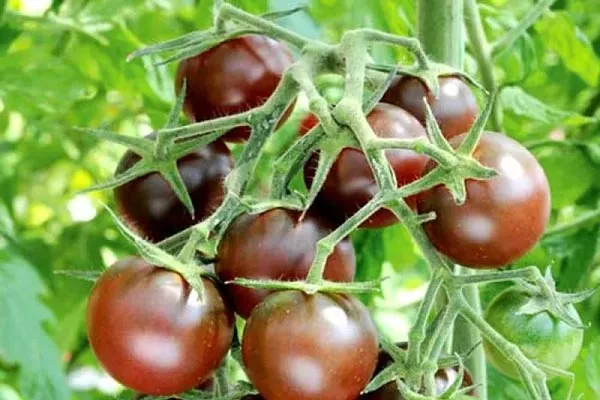
- Inflorescence – A simple variety with self-pollinating, yellowish flowers. Fruits form in clusters of 10-12, ripen simultaneously, and are uniform in shape. There are fewer fruits on the upper branches. There are no sterile flowers.
- Tomatoes - Small, round tomatoes, often called cocktail tomatoes, weighing about 25 g each. Ripe tomatoes are purple-brown; unripe ones are green with a slight light spot near the stem. The skin is smooth, dense, and does not crack.
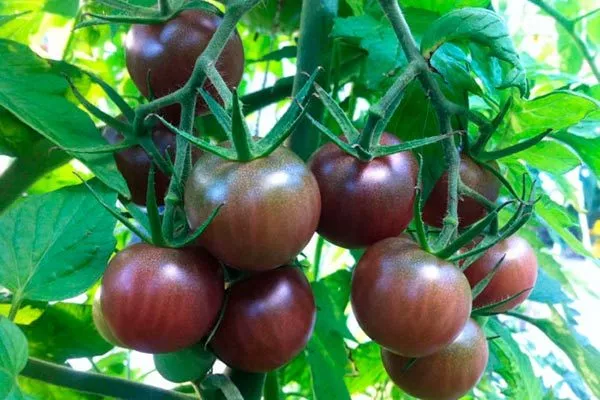
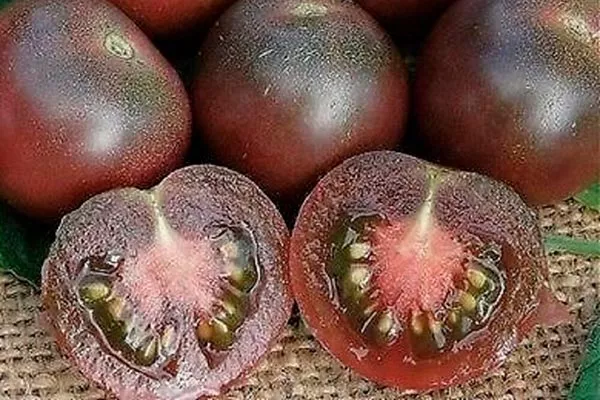
The flesh is juicy and soft, with minimal juice. Inside are two seed pockets containing a small number of seeds.
Taste and scope of application
Dark Chocolate tomatoes have distinct flavor characteristics. These vary depending on their ripeness:
- Milk ripeness: Sweet fruity flavour with a distinctive tomato aroma, ideal for fresh consumption.
- Full maturity: The taste becomes more classic, with a noticeable but harmonious acidity that gives the fruit a piquant flavor.
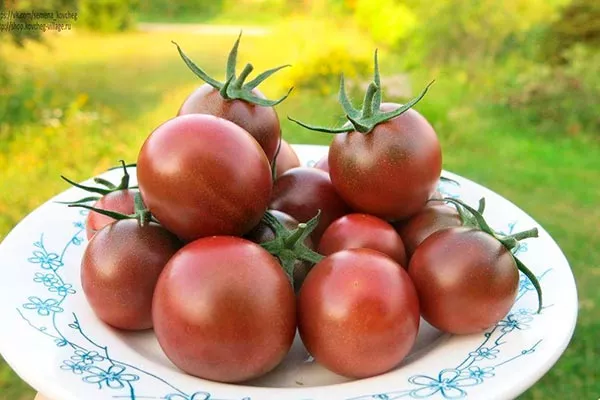
Thanks to their vibrant color and unique shape, tomatoes are used in salads, appetizers, and as a garnish for dishes. They are less commonly used for canning, but their firm skin and small size make them ideal for pickling and whole-fruit canning.
Dark chocolate is prized for its versatility, allowing it to be used in both culinary experiments and for preparing everyday dishes.
Ripening and yield
It's an early-ripening crop. Ripening time averages 100-105 days from germination, but can vary depending on weather conditions. Fruiting begins in mid-July.
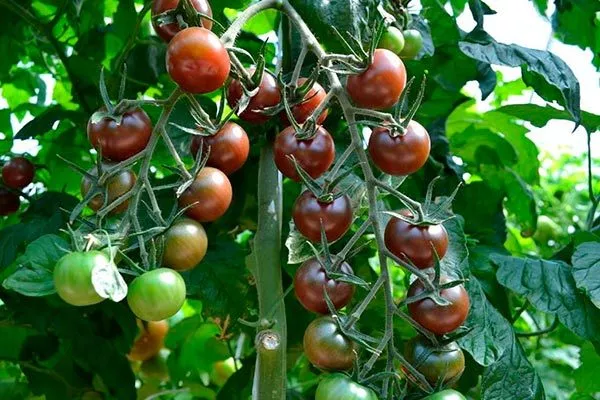
This variety has average productivity, yielding approximately 4.7 kg per square meter. It is prized for its early ripening, consistent fruiting, and excellent taste.
Resistance to adverse conditions, diseases and pests
Dark chocolate has moderate tolerance to adverse conditions. The bushes adapt well to temperature and humidity fluctuations, making them suitable for growing in most regions of Russia.
The variety is resistant to most diseases typical of greenhouse conditions, including late blight and cladosporiosis, but the risk of infection increases with poor agricultural practices. To increase resistance, it is recommended:
- maintain a watering regime, avoiding over-watering;
- regularly ventilate greenhouses to prevent stagnation of moist air;
- remove lower leaves to improve air circulation.
The crop requires moderate care to maintain consistent fruiting. Plants are generally resistant to diseases and pests, but preventative treatments with fungicides, insecticides, or folk remedies are important one week before transplanting the seedlings into the greenhouse or seven days after.
Growing seedlings yourself
Growing seedlings at home is a fun and cost-effective process that produces healthy, strong plants. This approach allows you to control every step of the way, from seed selection to planting. To ensure success, it's important to consider a few key points.
Sowing time, soil and container preparation
The timing of this procedure depends on the regional climate. Sow the seeds for seedlings 55-60 days before transplanting them into the open ground or greenhouse. For heat-loving tomatoes, this is late February to early March.
For tomato seedlings, choose containers with good ventilation and drainage to avoid waterlogging and disease development. The best options are:
- Peat pots – They decompose easily in the soil, do not damage the roots when transplanted, and do not require additional replanting.
- Plastic or wooden containers – Can be used for multiple plants if they have drainage holes.
- Cells or cassettes – They are well suited for growing seedlings with one plant per cell, which helps to minimize root damage when moving them to open ground.
Use light, well-aerated soil rich in organic matter. Suitable options include:
- A mixture of peat, sand and humus – Creates a good structure, does not become acidic, and retains moisture well. Proportions: 2 parts peat, 1 part sand, 1 part humus.
- Ready-made mixtures for seedlings – are sold in stores and are already nutritionally balanced.
- Coconut substrate - light and loose, with good water-retaining properties, it is a good basis for seedlings.
Disinfect the soil with a weak solution of potassium permanganate to prevent disease. Add mineral fertilizers or compost to improve plant nutrition.
Seed preparation, sowing and seedling care
Before sowing, treat the seeds to improve germination and protect against diseases. Follow these recommendations:
- Soak the seeds in a growth stimulator or a weak solution of potassium permanganate for 20-30 minutes.
- To harden, place the grains in the refrigerator for 1-2 days, then warm them at room temperature.
- Sow the seeds in moist soil, burying them 1-2 cm deep. The distance between rows should be 3-4 cm to prevent seedlings from interfering with each other.
- After sowing, lightly compact the soil and cover with plastic or glass to create a greenhouse effect. Place the containers in a warm, bright location.
- After the seedlings appear, remove the cover and move the plants to a cooler place with a temperature of +18-20°C.
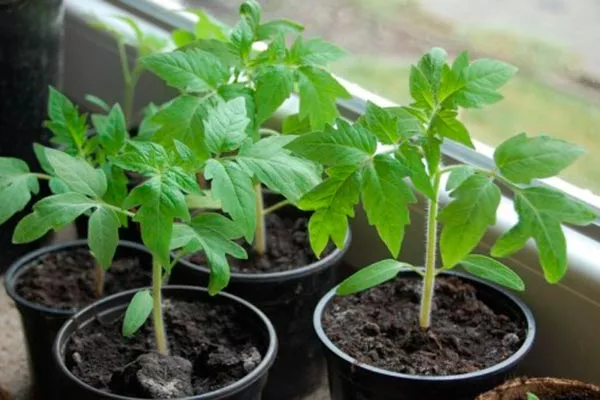
Water the seedlings regularly with warm water, but avoid overwatering. Provide adequate lighting, especially during winter and early spring, using grow lights. As the seedlings grow, feed them with a complete fertilizer.
Hardening off seedlings and transplanting
Before transplanting seedlings into the ground, begin hardening them off, gradually acclimating them to new conditions. 10-14 days before planting, move the seedling containers outside or open the windows, starting with 1-2 hours a day and gradually increasing the time. This will help strengthen the plants' immune system and reduce stress during transplantation.
- ✓ Optimum soil temperature for planting seedlings: not lower than +15°C.
- ✓ Plant spacing: 45-50 cm to ensure sufficient space for growth.
Move the tomatoes into the greenhouse in mid-May, once the soil has warmed up sufficiently. The optimal planting pattern is 3 plants per square meter, with a distance of 45-50 cm between plants.
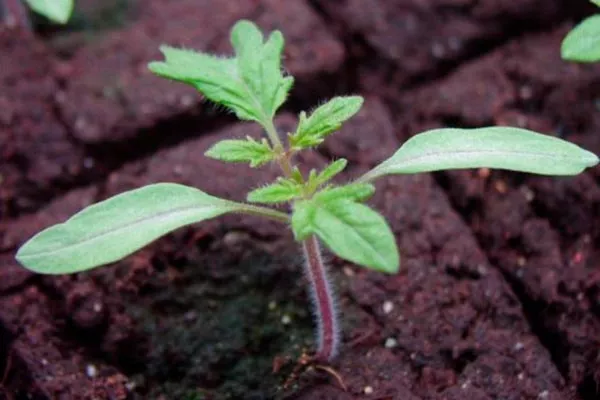
Avoid planting too densely, as too much planting will quickly deplete the soil, resulting in reduced fruit quality—they will become smaller and lose sugar content. Insufficient light will slow plant growth.
The process of planting seedlings is as follows:
- Using a garden shovel, dig shallow holes.
- Place no more than 1 teaspoon of fertilizer, such as nitrophoska, at the bottom of each hole. Mix it thoroughly with the soil and moisten.
- On one side of the hole, install a support 1-1.5 m high to avoid damaging the roots during subsequent driving.
- Carefully remove the seedlings from the containers, holding the root ball.
- Place the seedling in the hole and cover with soil. Improve the soil by adding peat, humus, and sand.
Subtleties of agricultural technology
Proper seedling care plays a key role in their development, ensuring strong and healthy plants. Following all stages of care helps strengthen the seedlings' immunity, increase their resilience to adverse conditions, and lay the foundation for a future harvest.
Watering and fertilizing
Cherry tomatoes require more frequent watering, but overwatering can negatively impact their development. Ideally, water the soil every 3 days. Mulch the beds to retain moisture until the next watering.
The bushes require regular fertilization. The Dark Chocolate variety responds well to foliar feeding with ash infusion and superphosphate. However, avoid using fresh organic mixtures and mullein, as these can harm the plants.
To stimulate growth and ovaries, prepare your own fertilizer from the following components:
- 10 liters of water;
- 1 l of whey;
- 15 drops of iodine.
Mix all ingredients thoroughly and spray the bushes in the evening.
Pinching, tying and shaping
Dark Chocolate tomatoes are recommended for growing on trellises. Follow these recommendations:
- Stake the central stem to prevent the leaves from touching the ground, as this can lead to rot, late blight, and blossom-end rot. Additionally, secure the fruit branches, especially if they contain many tomatoes, as they may break under the weight.
- Remove side shoots located above the flower brush regularly.
- Trim back lower leaves to prevent excessive foliage and side shoots from growing, which can slow down flowering and vegetable production.
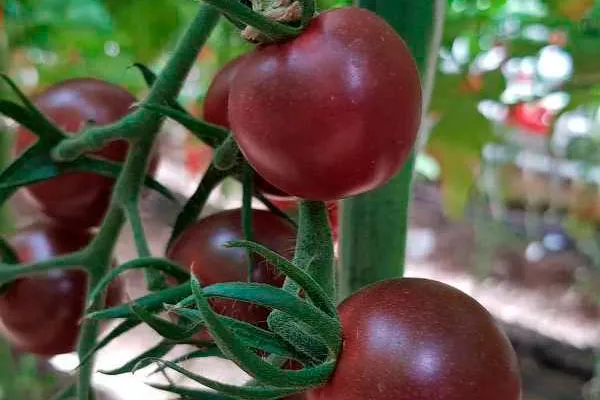
Bushes of this variety require training. To do this, grow plants with 1-2 stems, leaving the strongest side shoot and removing the others. This will increase the yield and improve the quality of the tomatoes.
Protection from diseases and pests
To prevent fungal diseases, treat the Dark Chocolate variety bushes with a fungicide at the end of May. The most effective treatments are:
- Bordeaux mixture;
- Topaz;
- Ordan;
- Tattoo.
Use a universal remedy that helps fight both infections and insects:
- Take a packet of dry yeast or 2 tablespoons of regular yeast (50 g) and dissolve in 10 liters of water.
- Add 2 tablespoons of sugar and leave for several hours in a warm place.
- Treat the plantings with the resulting solution 1-2 times a month.
If the pest infestation is too severe, use effective insecticides:
- Fitoverm;
- Aktara;
- Confidor;
- Green soap.
Folk remedies include solutions of baking soda, soap shavings, wood ash, onion peel infusion, garlic infusion, and other remedies. Apply late in the evening, when there is no rain or wind.
Collection and storage
Pick tomatoes as they ripen, starting in mid-July. Harvest carefully, being careful not to damage the vines. Store tomatoes in a cool, dry, well-ventilated place.
Place vegetables in boxes in a single layer. Keep them at a temperature of 10-15°C. For long-term storage, place tomatoes in the freezer or use them for winter preserves.
Pros and cons
Before planting seedlings, it's important to carefully consider the advantages and disadvantages of the crop. The Dark Chocolate variety has many advantages:
Reviews
The Dark Chocolate tomato attracts attention not only with its exotic appearance but also with its excellent taste. This variety is characterized by a sweet, fruity flavor and a pleasant aroma. It is characterized by high yields, disease resistance, and ease of cultivation. To achieve maximum results, it requires proper care.