
Black Goddess is an indeterminate variety with an exotic appearance and unique flavor. It attracts attention with its dark, almost black, tomatoes. This variety is renowned for its high yields, excellent shelf life, and suitability for long-distance transportation. These vegetables are suitable for all-purpose use.
Breeding history, regions
The black-fruited tomato was developed by renowned breeder V. I. Blokin-Mechtalin. In 2017, an application for approval was submitted, and a couple of years later, the variety was officially added to the State Register.
Black Goddess is successfully grown in the following regions and districts of Russia:
- Volga-Vyatka;
- Northern;
- Central;
- Central Black Earth;
- Northwestern;
- North Caucasian;
- Far Eastern;
- Ural.
The bushes show excellent results in the Middle Volga and Lower Volga regions. In each of these regions, the tomato yields fruit when grown in greenhouses or garden beds.
Description of the bush and fruits
The plants are tall. In a garden, they typically reach 150-180 cm, rarely exceeding 2 m. Indoors, they grow to an average height of 220 cm.
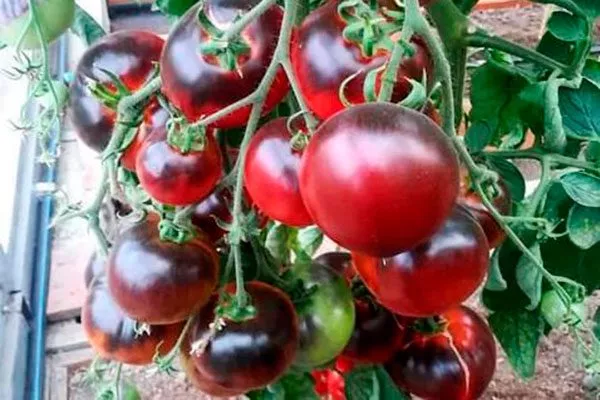
Distinctive features of the culture:
- shoots – straight, with short internodes;
- inflorescences – simple, the first one is formed above the 7th leaf, and the subsequent ones - every 3 leaves;
- leaves - They grow moderately, are of medium size and green color, they have narrow plates with pointed tips and a serrated edge, slightly corrugated;
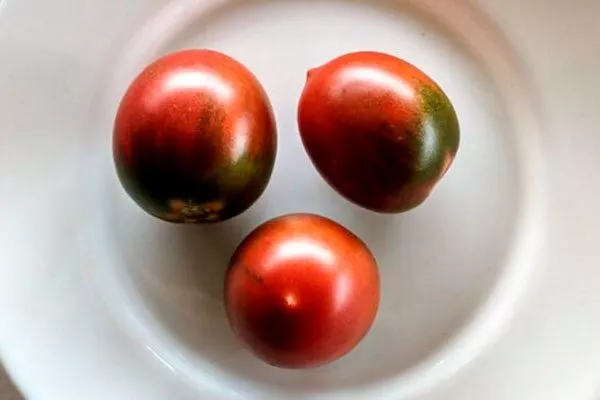
- color - At the initial stages of ripening, tomatoes are green, with a dark spot near the stem, and as they grow, they acquire an unusual purple-red hue;
- weight - the vegetables are medium-sized, their weight varies from 150 to 180 g, and the first specimens can reach 300 g;
- form - rounded, with slightly defined ribs;
- skin – durable;
- pulp – dense, with a cherry hue and a slight crunch, which is rare in tomatoes.
- ✓ The fruits turn purple-red as they ripen.
- ✓ The pulp has a cherry hue and a slight crunch.
The taste is sweet, with delicate fruity notes.
Main characteristics
Fruits with unusual colors invariably attract the attention of farmers. Among them, the Black Goddess variety stands out, with its catchy name and equally striking appearance.
Ripening and fruiting, productivity
Tomatoes are ready for harvest in just 105-115 days. This timeframe is typical for early varieties, although this variety is sometimes considered mid-season. The fruits reach maturity in July, allowing fresh vegetables to be consumed until August and beyond.
The average yield is 4.2 kg per square meter. However, if planted in a sunny area and maintaining optimal humidity and temperature, this figure can be significantly increased.
Scope of application
Tomatoes are best eaten fresh. However, they are often added to dishes such as:
- salads;
- cuttings;
- sandwiches.
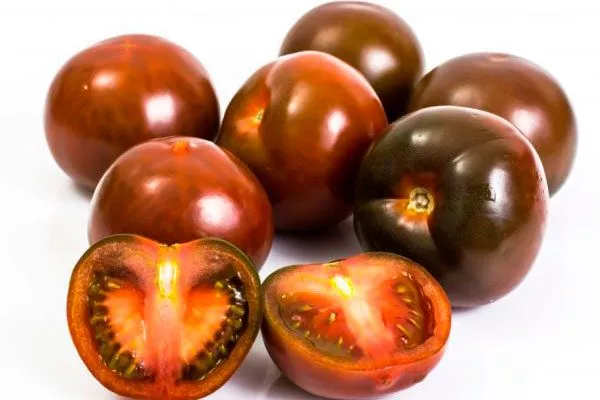
Their unique color makes these tomatoes a stunning addition to pizza and stewed vegetables. They make a great garnish and are also suitable for canning and pickling.
Resistance to diseases and pests
Gardeners note that the Black Goddess is a hardy variety, but if improperly cared for and exposed to adverse weather, the plants are susceptible to disease. Despite early fruiting, the bushes can be susceptible to late blight.
Pests appear when weeding is infrequent and there are strong winds. The main ones are aphids, wireworms, mole crickets, spider mites, and Colorado potato beetles.
Optimal fit
The planting schedule begins with the seedlings taking root in the soil, when the soil warms to 15°C. To improve germination, it is recommended to pre-soak the planting material in growth stimulants.
- ✓ Optimum soil temperature for planting: +15°C.
- ✓ Recommended row spacing: 70-140 cm.
Preparation and germination of seeds
Before sowing seeds, thoroughly clear the beds of weeds. The optimal row spacing is 70-140 cm, which provides comfortable conditions for plant growth and development.
For greenhouse tomato cultivation, sow seeds in early March; for outdoor cultivation, sow at the end of the month. Pre-treat them with Fitosporin.
Sowing and growing
Moisten the soil and enrich it with a mineral complex containing potassium, nitrogen, and phosphorus (20 g per 10 kg of soil). Prepare the planting material:
- Calibration. Select the grains, discarding any empty ones: place them in a salt solution (5 g of salt per 200 ml of water). Discard any that float to the surface.
- Disinfection. Soak the seeds in a mixture of potassium permanganate (1 g per 100 ml of water) for 20-30 minutes to kill bacteria and fungi.
- Hardening. To increase resistance to temperature changes, immerse the seeds in warm water (50-55°C) for 15-20 minutes, and then immediately transfer them to cold liquid for a few minutes.
- Germination. Place the planting material in water with the addition of growth stimulants - Epin or Zircon - for 12-24 hours.
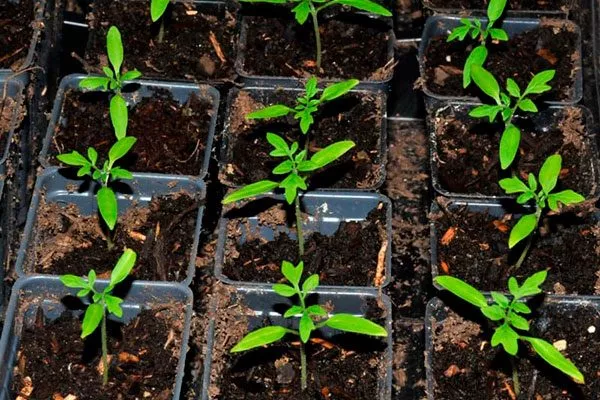
Next, follow the recommendations of experienced gardeners:
- Use light, loose, and nutritious soil. A store-bought mix will do, or you can make your own by mixing turf, humus, and sand.
- Fill the container with soil and sow the seeds to a depth of 1-1.5 cm, keeping a spacing of 2-3 cm. After sowing, gently moisten the soil with warm water.
- Place the containers in a warm location until the seedlings emerge. The room should be well-lit, preferably with 12-14 hours of light per day. Use grow lights during the winter.
- The optimal temperature during the day is +22-25, at night – +18-20°C.
- When the seedlings have 2-3 true leaves, transplant them into separate cups or other containers.
Seven to 10 days before planting, the seedlings should undergo a hardening process. Take them outside, gradually increasing the time spent outdoors to acclimate them to the changing temperatures.
How and when to transplant into a greenhouse or open ground?
Move tomato plants once the soil warms to 15°C and the danger of frost has passed. This usually happens in late May or early June, depending on the regional climate.
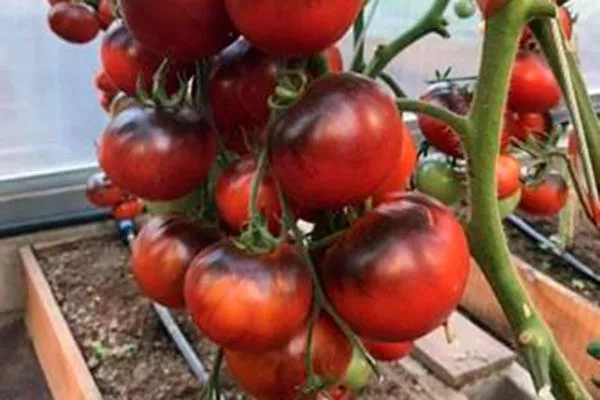
When transplanting to a greenhouse, you can plant the seedlings a little earlier if the room temperature is stable and favorable for growth. Transfer the tomatoes to the open ground when the soil has warmed sufficiently and at least five true leaves and one flower cluster have appeared.
Rules for caring for tomatoes
Caring for the Black Goddess variety will ensure a bountiful harvest and prevent disease. Regularly following standard agricultural practices guarantees high-quality vegetables in large quantities.
Watering
The plant is undemanding when it comes to moisture. Thanks to the properties of its green mass, the bushes are able to absorb moisture from the air. Young leaves are located at the base, while older leaves are located at the top. Drops of dew or rain run off, creating an optimal microclimate for the plants throughout the day.
During prolonged droughts, tomatoes can suffer from water deprivation, which manifests itself as dry and curled leaves. Water seedlings twice a week. One liter of water is sufficient for them, while mature plants require twice that amount.
Top dressing
During the season, the Black Goddess requires several applications of a special fertilizer solution (500 ml of mullein infusion and 20 g of superphosphate per 5 liters of water). Apply the fertilizer at the following times:
- 2 weeks after planting seedlings;
- at the stage of formation of flower ovaries;
- during fruiting.
Soil care
Loosening, weeding, and mulching are three important steps that will help ensure healthy plant growth and avoid many problems. Follow these recommendations:
- Loosening the soil improves its structure and promotes air and moisture penetration to the roots. After watering or rain, be sure to loosen the soil to prevent a crust from forming, which would impede normal oxygen access. This is especially important for tomatoes, as their root system requires good aeration.
- Weeding helps remove weeds, which can rob plants of nutrients and moisture. Weeds also encourage pest attacks and spread diseases, so remove them regularly.
- Mulch protects the soil from drying out and overheating, helps retain moisture, and suppresses weed growth. Use organic materials such as straw, hay, compost, or sawdust to cover the beds. Apply mulch after the soil has warmed up, but before the plants begin to actively develop.
The complex use of procedures significantly facilitates the care of the Black Goddess.
Common mistakes when growing tomatoes
Gardeners often encounter difficulties when cultivating their crops. The following shortcomings are possible:
- When growing in a greenhouse, gardeners do not monitor the soil moisture level and temperature, which can lead to fungal diseases.
- Planting more than 4 plants per square meter results in dense plantings and reduced yields.
- Untimely picking of closely planted bushes at the seedling stage, irregular watering and lack of fertilizing.
- Insufficient light for seedlings, which leads to their elongation.
- Delays in planting seedlings in a permanent location result in the seedlings overgrowing and becoming difficult to transplant.
It is important for beginning vegetable growers to be aware of these mistakes and avoid them to successfully grow Black Goddess tomatoes.
Diseases and pests of the variety
This variety is resistant to many fungal diseases, but without proper care it can become vulnerable. Common problems:
- Fusarium. To prevent the disease, regularly ventilate the greenhouse and monitor humidity levels. If an infestation occurs, treat the plants with copper sulfate.
- Late blight. It appears as brown spots on fruits, stems, and leaves. Fungicides or Bordeaux mixture are effective for control.
- Gray rot. Often occurs in late summer when temperatures drop and humidity increases. Remove reddish spots on fruit with Barrier or Zaslon.
The following pests may be found on bushes:
- mole crickets;
- slugs;
- aphid;
- whiteflies;
- spider mites.
To combat mole crickets, watering with a vinegar solution or Grom will help. Spider mites, aphids, and whiteflies are effectively controlled with Malathion, Confidor, or a soap solution. Slugs can be collected by hand or set out with beer traps.
Harvesting and storage
Pick tomatoes from the vines when they reach their characteristic dark color but are still slightly firm. Pick them in the morning or evening, when temperatures are not too high, to minimize the risk of skin damage.
Tomatoes have excellent shelf life, but prolonged storage can cause them to become sour, especially at low temperatures. To prolong freshness and prevent loss of flavor, store the harvest in a cool, dry place at temperatures between 10 and 15°C.
Place the fruit in cardboard boxes, wooden crates, or on shelves, placing them in a single layer to avoid squashing them. Check them regularly for damage and rot.
Pros and cons
Black Goddess is an indeterminate variety ideal for both open ground and under plastic. It is popular among gardeners across the country due to the following advantages:
Cold snaps and sudden temperature fluctuations can weaken the plants' immunity, requiring increased care, and overly sour vegetables develop during prolonged storage. These are the variety's main drawbacks.
Reviews
The Black Goddess tomato is an excellent choice for gardeners who appreciate unusual varieties with excellent flavor and good productivity. The fruits impress with their beautiful color, crisp flesh, and sweetness. With proper care, you can guarantee improved health and bountiful harvests.