
Lazy Man's Miracle is a true find for those who prefer a low-effort approach but still want abundant harvests without much labor. This variety is the result of years of scientific research, which has resulted in the achievement of maximum positive characteristics.
History and regions
The "Lazy Man's Miracle" tomato was developed by a group of breeders from the Siberian Agrarian Institute, who succeeded in creating a versatile variety. Thanks to genetic modification of the base seed, it requires little maintenance while producing a harvest with high marketability and flavor, expanding its range of uses.
- ✓ Optimum temperature for growth and fruiting: +18 to +25 degrees.
- ✓ Maximum temperature at which the formation of flower cobs stops: +33 degrees.
Being a member of the "Ural Vegetables" group allows for a satisfactory harvest even in risky farming conditions. However, in southern regions, growing the "Lazy Miracle" can be challenging—the plant does not tolerate hot temperatures, and at 33 degrees Celsius (93 degrees Fahrenheit), the stalks stop producing flower cobs.
Description of the bush and fruits
The "Lazy Miracle" tomato is a low-growing "tree" that belongs to the determinate group. It grows no more than 50 cm, eliminating the need for staking until the fruit is fully ripe. This variety is characterized by a compact bush and limited height.

Other varietal characteristics:
- A bush with a small amount of foliage and a moderate rate of shoot emergence, which allows for the minimization of thinning processes.
- The leaves are dark green in color and have a typical tomato-like structure.
- The distinctive feature of the Lazy Miracle is its strong, straight stems and active formation of fruit ovaries on the lateral branches.
Tomatoes have a plum-like shape. The average fruit weight is 60-65 g. Additional characteristics include:
- bright red color, smooth surface and rich tomato aroma;
- dense, fleshy pulp structure with a small amount of seeds;
- sweetish taste with a slight sourness;
- uniformity in size and weight, which allows for the collection of even and attractive bunches that have commercial appeal;
- thickened peel, which facilitates long-term storage and transportation of fruits;
- the level of dry matter can exceed 5-6%, sugars are in the amount of 4.5-5%.

The ease of transportation and firm fruit structure make them an ideal choice for farmers seeking to grow tomatoes commercially. The crop can survive long journeys without damage, ensuring customer satisfaction and minimizing financial losses.
Main characteristics
This variety is part of the "Ural Dacha" seed line, which boasts increased resistance to fungal diseases, the ability to withstand extreme temperature fluctuations, and hardiness in harsh climates. Despite unfavorable conditions that might hinder other crops, "Lazy Man's Miracle" produces an excellent harvest.
Ripening and fruiting, productivity
Vegetables ripen gradually, allowing you to either pick a few vegetables to make a fresh salad, or wait until a whole bunch ripens for further processing or sale.

The "Lazy Miracle" tomato variety has a unique characteristic: its fruits reach maturity 85-95 days after the first green shoots appear. Harvesting occurs from July to September, under favorable weather conditions.
- ✓ Drought resistance: lack of moisture does not affect productivity.
- ✓ The dense skin of the fruit facilitates long-term storage and transportation.
The "Lazy Miracle" tomato variety is quite productive. This variety requires little care and averages 6 kg (13 lbs). If you plant tomatoes densely, you can harvest at least 8-9 kg (18-20 lbs) per square meter. Keep a few things in mind:
- Lack of moisture does not affect the productivity of this variety, which makes it resistant to dry periods;
- with a severe lack of moisture, the tomato pulp may become slightly dry, compared to the state with sufficient moisture;
- If you overwater the tomatoes, their skins will not tear, which is a positive feature for their transportation.
Based on the above factors, to increase yields, it is only necessary to feed the bushes in a timely manner, but not too often.
Scope of application
Lazy Miracle tomatoes delight with their exquisite flavor: sweet with a subtle tartness and a pleasant tomato aftertaste. Exposure to plenty of sunlight will enhance their sweetness. They're ideal for salads and appetizers; they're easy to cut, retain their shape, and don't run.
You can use any method of using the Lazy Man's Miracle:
- preservation for the winter;
- storing them in a cool place;
- freezing;
- drying;
- drying;
- tomato paste;
- lecho.
How to grow seedlings?
When choosing the optimal time to sow seeds, consider the date of transplanting into open ground—June in the Urals and Siberia, and May in greenhouses. In central Russia, this process begins a month earlier.
Seed preparation
First, focus on quality seeds—they should be large, smooth, and not hollow to the touch. Then follow these tips:
- To discard the collected seeds, place them in a salt solution: add 1 tablespoon of salt to 200 ml of water. Check after 20 minutes: discard any seeds that float to the surface, and keep those that sink to the bottom for planting.
- To stimulate growth, seeds are heated by placing them in a cotton cloth on a radiator for up to 48 hours.
- The next step is disinfecting the seeds. Soak them in a 1% potassium permanganate solution for 15 minutes, then rinse with warm running water.
- The seeds undergo a process called bubbling to saturate with oxygen. Place the seeds in water preheated to 30 degrees Celsius (86 degrees Fahrenheit), stirring every hour, and leave for 18 hours. Bubbling is complete when embryos appear on the seeds.
- To improve germination, seeds are hardened: wrapped in cotton cloth and a paper bag, place them in a cool place with a temperature between +3 and -2 degrees Celsius (37 to -28 degrees Fahrenheit). This can be a refrigerator, balcony, or veranda. The procedure involves storing the seeds in the cold for 8 hours, after which they are placed in a warm place for the same amount of time. Repeat this cycle 5-6 times.
Container and soil
For growing seedlings, you can use a variety of plastic containers—standard gardening ones, food-grade ones, even cut-down plastic bottles and yogurt containers. Before use, they should be disinfected with a concentrated solution of potassium permanganate.
For sowing, you can purchase a ready-made soil mixture from a specialty store or create your own. The first should contain:
- humus;
- peat;
- sand from the river.
If you decide to create the soil yourself, take:
- garden soil – 1 part;
- non-acidic peat – 2 parts;
- sand – 0.5 parts;
- humus or sifted mature compost – 1 part.
You can add wood ash (or dolomite flour), sphagnum moss, and fallen pine needles. The soil should be treated with boiling water or a potassium permanganate solution to kill fungal spores.
Sowing and growing seedlings
To sow, distribute the soil evenly among the containers, place the seeds on the surface, and then carefully cover with a 7 mm layer of soil. Next, use a spray bottle to moisten the soil, cover the containers with plastic wrap, and place them in a warm, bright location out of direct sunlight.
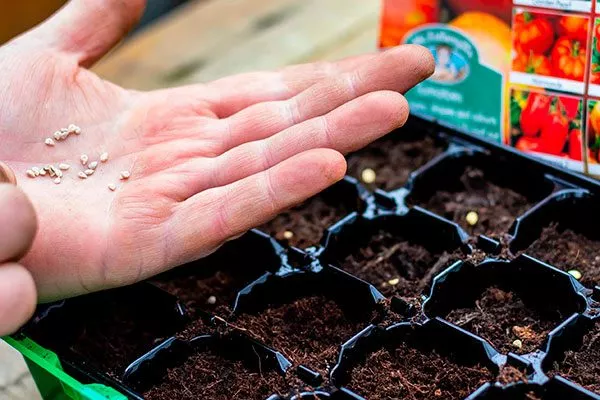
What's next:
- As the seedlings grow, the film is removed.
- When the first true leaves appear, the tomatoes are pricked out. They are transplanted into individual pots with holes to allow excess moisture to drain. Mineral fertilizer is added to the soil at a rate of 2 tablespoons per 10 kg of soil mixture.
- Two weeks after picking, tomatoes are fed with complex fertilizer, repeating this every 10-14 days.
- Water the seedlings as the soil under the roots dries out.
- 2-3 weeks before planting in the garden, begin hardening off the tomatoes, gradually increasing the time they spend outdoors, exposing the plants to direct sunlight and cool temperatures.
Transfer
Experienced gardeners carefully prepare the soil for tomatoes in advance: at the end of the season, they enrich it with compost and mineral fertilizers. Before planting, they treat the soil with a potassium permanganate solution.

The transplant process is standard, but it is important to take into account some nuances:
- distance between plants – 30 cm;
- the interval between rows is 50 cm.
To avoid damaging the plants, they are carefully removed from their containers along with the root ball. Then, they are carefully covered with soil up to the first leaves.
Care
This tomato variety requires little effort, as it grows without intervention. However, to increase the volume and quality of the fruit, it's worth taking some measures:
- Apply minerals and organic matter several times during the season, but do not overdo it with nitrogen;
- Protect plants from pests and diseases by treating them with special chemicals, which should be done before fruiting begins;
- During dry periods, Lazy Miracle requires frequent moistening with warm water;
- in case of very abundant fruiting, it is worth strengthening the bushes so that the branches do not break under the weight of numerous vegetables;
- It is necessary to regularly clean the beds and get rid of weeds so that they do not absorb nutrients.

Lazy Miracle doesn't require pinching; its bushes form compactly and harmoniously. Experience shows that this variety produces sweeter and more aromatic fruits when the plant receives sufficient sunlight.
The nuances of growing in open ground and in a greenhouse, possible difficulties
This tomato is ideal for outdoor gardening. Trying to grow it in greenhouses isn't worth it, as the 45 cm tall bushes won't make efficient use of the space.
If you do decide to do this, remember to ensure good airflow. In Siberia and the Urals, after planting the seedlings in open beds, tomatoes are covered with plastic film for 2-3 weeks.
Please note some difficulties that may arise:
- Careful watering is a key aspect in caring for tomatoes - not enough water makes the flesh too dry, while too much leads to watery fruits and a loss of their characteristic tomato flavor and aroma.
- This variety prefers areas with good sunlight and warmth, otherwise the pulp will be predominantly sour.
- Some gardeners remove side shoots and leaves, which allows the fruits to receive more light and absorb nutrients, thereby reducing ripening time.
Pest and disease control
Lazy Miracle has good resistance to common diseases because the fruits reach maturity before the first outbreaks of fungal infections occur. However, cool and humid weather conditions increase the risk of infection, so protective measures such as Fitosporin, Ecosil, and Quadris are used.

Colorado potato beetles are a pest threat to the Chudo Lentya variety. Therefore, to prevent damage, regularly inspect the bushes and, if any beetles are found, collect them in a jar for disposal. Chemical pest control products such as Komandor, Typhoon, Bombardir, and Bankol have proven effective.
Collection and storage
Tomatoes are harvested from the vines as they ripen. The fruits have a long shelf life and are resistant to cracking. Strict adherence to harvesting times is recommended, as tomatoes are highly perishable and should be stored immediately in a room with a temperature just below room temperature.

Pros and cons
Selecting vegetable varieties requires careful preparation and is key to achieving the expected harvest. Before choosing a specific variety, agricultural experts advise carefully analyzing its characteristics and comparing them with the climate and soil conditions of the growing site.
Similar varieties
| Name | Ripening period (days) | Bush height (cm) | Yield per bush (kg) |
|---|---|---|---|
| Lazybones | 95-100 | 60 | 4 |
| A lazy person's dream | 93 | 35-45 | 4.5 |
There are varieties that resemble each other. The Lazy Man's Miracle has two direct analogues:
- Lazy - Reaches maturity within 95-100 days after planting. The plant can reach a height of 60 cm. Bushes require shaping after the first flower stalk appears and pruning the top at a height of 40 cm.
For optimal growth, ample watering is critical, as insufficient moisture can lead to reduced yields. Each bush can yield up to 4 kg of bright red or crimson-red heart-shaped fruits, weighing an average of 300 g. - A lazy person's dream is The bushes reach a height of 35-45 cm. This variety is ready for harvesting 93 days after planting. It is disease-resistant and requires no special shaping, staking, or pinching.
One square meter can yield up to 4.5 kg of delicious, round, bright red fruits, with an average weight of 130 g. Compared to the Lazy Man's Miracle, the Lazy Man's Dream fruits are juicier and sweeter.
Reviews
The "Lazy Miracle" variety will be a real discovery for beginners, less active, or overly busy gardeners, as it doesn't require constant attention. This tomato yields a bountiful harvest even in unfavorable, cool, and rainy summer conditions. Thanks to its early ripening, it is resistant to fungal diseases.