
Garlic tomatoes attract gardeners with their unusual shape and excellent taste. This interesting variety will appeal to connoisseurs of exclusive vegetables. Their name comes from their shape, resembling large garlic cloves. These tomatoes are ideal for fresh salads and garnishing dishes, and have excellent shelf life.
Description of the bush and fruits
This indeterminate plant can be grown both outdoors and in greenhouses. Distinguishing characteristics:
- The bushes reach 2 m in height, have strong stems and large leaves up to 15 cm long.
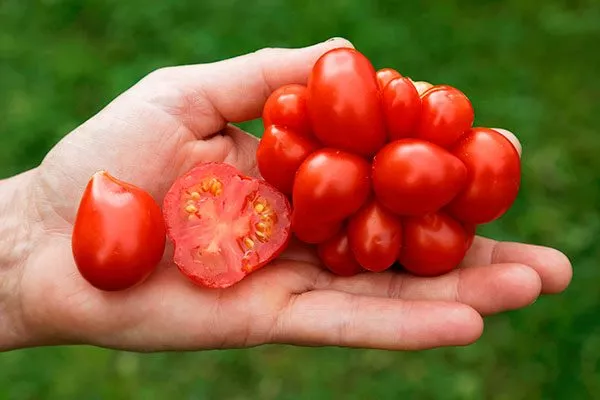
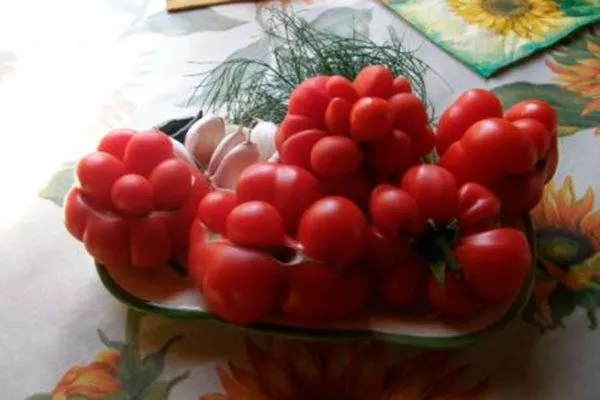
- Ripe tomatoes are a deep red color and have an unusual configuration—they consist of several fused segments, reminiscent of garlic cloves.
- The size of tomatoes varies: the average weight is 90-100 g, but individual specimens can weigh 120-300 g.
- The flesh is dense and juicy, with a pleasant sweet and sour flavor. Three to six seed chambers form inside the fruit.
Characteristics of the variety
Garlic is a unique variety with a distinctive vegetable shape. It is renowned for its high productivity, excellent flavor, and resistance to major diseases, making it popular among gardeners.
Ripening period, yield
This is a mid-early variety—it takes 108-110 days from sowing to full ripening. Each fruit ripens approximately two weeks after setting. Harvesting begins from mid-summer to late autumn.
The crop is characterized by long-term fruiting and excellent productivity. Gardeners harvest at least 10 kg of tomatoes per square meter.
Scope of application
Tomatoes are primarily intended for fresh consumption. They are added to salads, used for baking, and as a garnish, but are not suitable for whole-fruit canning. Due to their strong acidity, they are not suitable for juice or paste.
Resistance to adverse factors
Garlic, being a relic variety (not a hybrid and characterized by its unique shape), has high immunity to diseases and pests. The bushes are resistant to fusarium, spotting, late blight, and various types of rot.
- ✓ Resistance to fusarium, spotting, late blight and various types of rot.
- ✓ Low frost resistance, requires cultivation in greenhouses in regions with cool climates.
However, preventative treatment against common nightshade diseases is still recommended. This variety has low frost resistance, so in cooler climates, it is best grown in greenhouses.
Where is it grown?
Tomatoes grow well both outdoors and indoors. They even produce fruit in greenhouses in Siberia, and in mild climates, such as the Leningrad Region and the Moscow region, they are grown without cover.
In regions with little frost, this variety grows successfully in garden beds, demonstrating stable growth and yield.
Features of cultivation
Proper seedling cultivation and subsequent planting in the ground play a crucial role in the process. It may seem complicated, but in reality, even beginners can easily handle it.
Seed preparation
Select whole, healthy grains without visible damage. You can check their quality by submerging them in a 5% salt solution: discard any that float to the surface, and rinse and dry any that settle.
Follow these recommendations:
- To kill fungi and viruses, soak the seeds in a 1% potassium permanganate solution for 20-30 minutes, then rinse with clean water. Alternatively, treat with Fitosporin or Trichopolum.
- To increase germination and uniform sprouts, warm dry seeds for 48 hours at a temperature of +30°C, then for another 72 hours, increasing the temperature to +50°C, for example, on a radiator.
- Before planting, place the seeds in warm water or a growth stimulator (Epin, Zircon) for 10-12 hours to activate the germination process.
- To speed germination, wrap the seedlings in damp cheesecloth and leave them in a warm place (25°C) for 1-2 days. Wet the cloth regularly.
To increase resistance to temperature changes, alternate the processes: keep in the refrigerator for 12 hours (+2…+5°C), then for the same period of time at about +16°C. Repeat the procedure 2-3 times.
Recommendations for correct seed sowing
Plastic containers or special trays are suitable for growing seedlings; disinfect them before sowing. Follow the recommendations of experienced gardeners:
- Place the seeds in a prepared universal substrate or a soil mixture of equal parts peat and sand. The optimal time is mid-March. Plant them to a depth of 1 cm. Seeding too densely may cause the seedlings to stretch.
- To speed up germination, cover the containers with plastic wrap and keep them at 23°C until sprouts appear. Then remove the cover.
- Water the seedlings using a spray bottle to avoid overwatering.
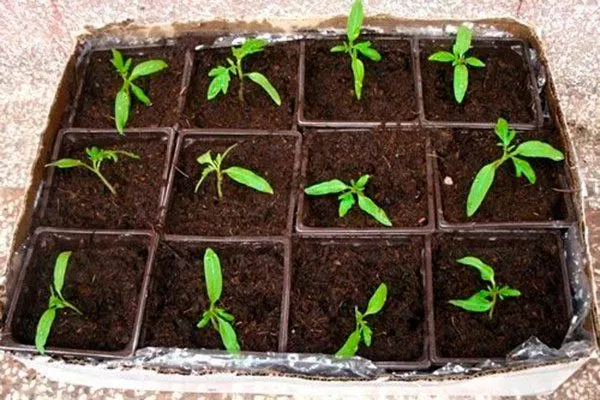
When sprouts appear, perform initial hardening: for three days, reduce the night temperature to +8…+10°C and the daytime temperature to +10…+15°C. Continue this process until the plants are moved to their permanent location.
Rules for planting seedlings
Transplant seedlings to the garden beds after June 10, when the threat of frost has passed. Basic recommendations:
- Choose a sunny, draft-free area. Avoid planting tomatoes after nightshades (potatoes, peppers, and eggplants), as they are susceptible to the same diseases.
- In autumn or spring, dig the soil to a depth of 25-30 cm, remove weed roots and plant debris.
- Loosen clay soil, add sand and humus, and improve overly light sandy soils with peat and compost.
- 10-14 days before planting, water the area with a solution of potassium permanganate, Fitosporin or copper sulfate (20 g per 10 liters of water).
- Add 5-6 kg of humus or compost, 30 g of superphosphate, and 20 g of potassium sulfate per square meter. If the soil is acidic, add 200-300 g of wood ash or dolomite flour.
- For better soil warming, make beds 20–25 cm high and 80–90 cm wide. The recommended distance between rows is 30–40 cm.
- The day before planting, water the soil with warm water (not below +20°C) to create comfortable conditions for the seedlings.
- Dig planting holes in the area, pour 1 liter of water into each, then cover them with soil.
- ✓ Optimum soil temperature for planting seedlings: not lower than +15°C.
- ✓ Distance between bushes when planting: at least 50 cm to ensure sufficient ventilation and lighting.
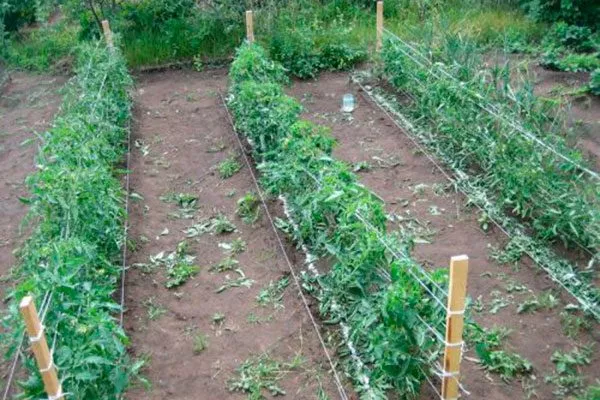
After planting, fill the holes with dry soil and moisten.
Care
Tall tomato varieties will not thrive without regular feeding, as intensive growth requires a large amount of nutrients.
Follow these recommendations:
- Apply the first fertilizer immediately after planting to support active growth and foliage. For this, plants need organic matter and nitrogen. Mixtures of cow manure or bird droppings are excellent. You can also use ready-made formulas such as Humisol or Vermistim.
- Two weeks after the second cluster opens and ovaries begin to form, plants require fertilizers high in potassium and phosphorus. Fertilizers based on bird droppings, manganese, copper sulfate, and Rastvorin work well. The recommended dosage per plant is 2 liters.
- When the fruiting period begins and the tomatoes begin to ripen, fertilize the crop for the last time. The composition remains the same, but you can increase the concentration slightly.
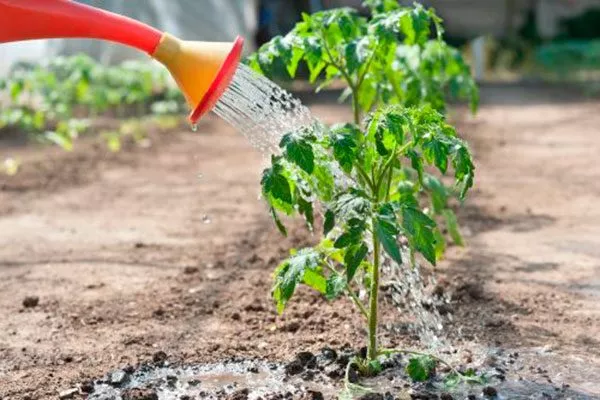
Watering
One of the key aspects of caring for tall tomato varieties is moderate moisture. Plants require plenty of water, but infrequently. In cloudy weather, water them once every 7 days, and during dry periods, water them 3-4 times a week.
Apply water only to the roots, avoiding drips on leaves and stems to prevent disease and rot. Use warm, settled water for watering, as cold water, especially from a hose, can slow plant growth and impact their development.
Formation and pinching
Train the Garlic tomato into single or double stems for better fruiting. Remove all side shoots below the first flower cluster, and when training into double stems, leave only one strong side shoot. Pinch the tops after 4-5 clusters have formed to direct the plant's energy toward ripening tomatoes.
The variety is prone to actively growing side shoots, which can lead to the takeover of the entire greenhouse space and a decrease in yield if they are not trimmed.
Structuring bushes provides several important advantages:
- increases productivity indicators;
- vegetables become larger and juicier;
- tomatoes ripen faster;
- Nutrients are directed to the tomatoes and not wasted on extra shoots;
- the risk of infection with fungal diseases is reduced;
- care becomes easier and more effective.
Pest and disease control, prevention
Despite the plant's strong immunity, experienced gardeners recommend preventing late blight. Ordan, which is equally effective against bacterial spot, is an effective treatment for this.
To boost immunity and protect against disease and other fungal infections, use iodine: add 5 drops to 1 liter of water and spray on the leaves. Milk or whey can be used instead of water for spraying plants.
To prevent blackleg on seedlings, treat the seeds before planting. You can use TMTD. If the disease has already developed on the seedlings, Previkur will help.
Pros and cons
The Garlic Tomato boasts not only a unique appearance but also a number of other advantages. Among its key benefits, gardeners note:
Gardeners note the need for staking, pinching, and shaping among the plant's shortcomings. The flavor may become less pronounced if the soil lacks nutrients.
Reviews
Garlic is a versatile and easy-to-grow tomato variety with good yields and high disease resistance. This variety is ideal for beginning gardeners, as it requires minimal care and boasts numerous positive qualities. Proper cultivation techniques allow you to grow strong, fruitful plants.