
The Bonsai tomato is a compact and decorative variety, ideal for growing in confined spaces, such as windowsills or balconies. It requires little care, produces fruit for a long time, and adapts well to various lighting conditions. Its tomatoes have a rich flavor, and the plants require no staking or pinching.
Origin and growing regions
This variety was developed by a group of breeders: S. F. Gavrish, V. V. Morev, E. V. Amcheslavskaya, and O. A. Volok. It was obtained in 1998 and officially approved for use in 2001.
Bonsai is successfully cultivated in various regions of Russia. In the central part of the country and further north, this variety is most often grown indoors.
Description of the bush and fruits
This compact dwarf plant reaches 20-30 cm in height. Due to its small size, it is suitable for planting in containers and pots.
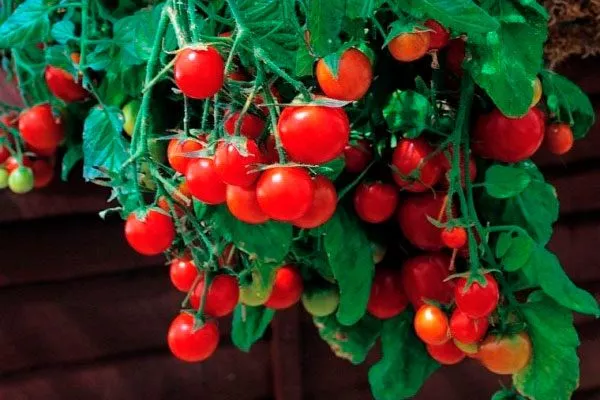
Distinguishing features:
- the leaf blades are dark green in color and have a characteristic wrinkled structure;
- belongs to standard varieties and forms strong shoots that do not require garter;
- the bushes form a dense green mass, and the inflorescences appear above the sixth leaf;
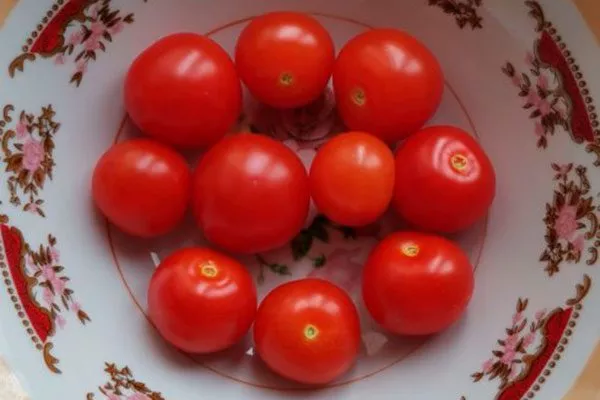
- tomatoes are small, round in shape;
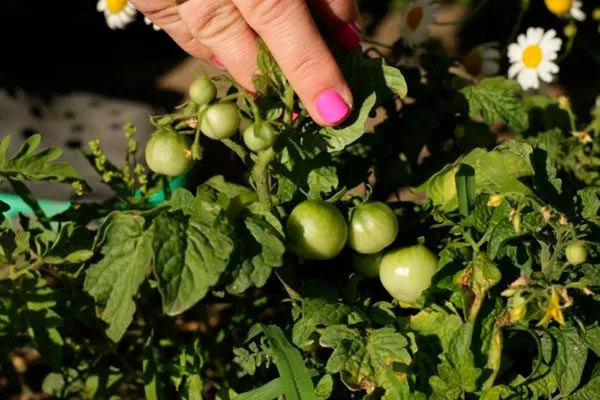
- When unripe, tomatoes are light green, but when fully ripe, they turn red;
- the weight of each vegetable varies from 24 to 27 g;
- The fruits are covered with a smooth skin, contain 8-10% dry matter and are formed in clusters of 5-6 pieces.
Main characteristics
Bonsai is a great choice for those who don't have the time to garden but still want to grow fresh tomatoes. This miniature, early-ripening tomato grows well on a balcony any time of year. This makes it a popular choice among indoor and container gardeners.
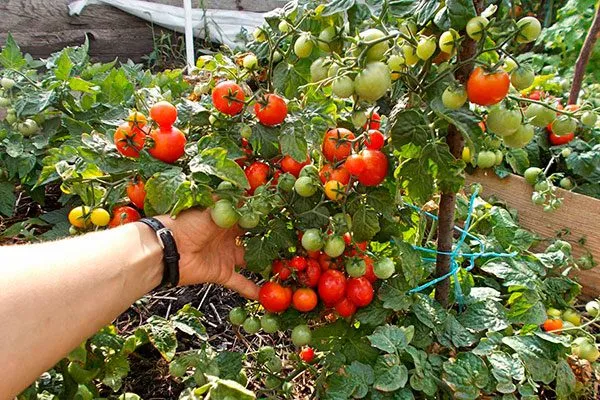
Where to grow balcony tomatoes?
This variety shows consistent results in cultivation. Tomatoes are grown:
- on the windowsill – Suitable for year-round cultivation with additional lighting in winter;
- on the balcony or loggia – in summer and during the warm off-season it is better to choose the sunny side;
- in the greenhouse – if there is a possibility to place pots or containers;
- on the terrace or veranda – a place protected from the wind with sufficient lighting.
The main thing is to provide the plants with 12-14 hours of light, regular watering with warm water and nutritious soil.
Ripening and fruiting, productivity
Bonsai is characterized by early maturity—the first tomatoes begin to ripen 85-90 days after germination. This allows for conveyor-belt vegetable growing on a windowsill, sowing seeds at 30-day intervals.
Fruiting is spread out and uneven, with tomatoes ripening gradually over several months. With proper care, a single bush can yield up to 1 kg of miniature fruits.
Application area, resistance to diseases and pests
Tomatoes are excellent for eating fresh and in salads. They retain their flavor and shape well when canned whole. Although the thin skin can crack under high temperatures, the dense flesh remains firm, making them ideal for preserves.
The bushes are sensitive to sudden changes in weather and are susceptible to late blight, especially when planted outdoors without protection. Indoors, the plants tolerate low light well, but with insufficient light, yields are significantly reduced.
Growing Bonsai Tomatoes
For successful growth, it's important to maintain temperatures between 18-25°C and provide proper care. Despite their compact size, the bushes produce delicious and beautiful fruit, making them an excellent decorative element.
Preparing soil, containers and planting material
For growing bonsai, you can use a ready-made nutrient-rich soil purchased at a flower shop or garden center. A general-purpose substrate is perfectly suitable, but specialized mixtures created by agronomists offer several advantages:
- balanced in nutritional content;
- have an optimal level of acidity;
- provide good water permeability;
- have a suitable structure for air circulation;
- do not require additional fertilization.
If you plan to prepare the soil mixture yourself, it should include:
- compost (fresh);
- garden soil (not used for nightshade crops);
- humus (ripe);
- coarse-grained sand.
Mix the ingredients in a ratio of 1:1:1:0.3. Add 20 g of superphosphate and ammonium nitrate per 10 kg of this mixture. Prepare the soil in advance, allowing it to mature for 5-6 months (in the fall, for spring use). If time is short, let the mixture sit for at least 2-3 weeks.
To ensure good germination and plant health, treat the planting material:
- Select large, firm, undamaged seeds. To check their quality, soak them in a 5% salt solution (5 g salt per 200 ml water). Remove any light, floating seeds—they're empty.
- Soak the seeds in a slightly pink potassium permanganate solution (1 g per 100 ml of water) for half an hour, then rinse thoroughly. Alternatively, soak them in a 3% hydrogen peroxide mixture for 10 minutes.
- Wrap the seeds in a damp cloth or gauze and place in a warm place (+22…+25°C) for 12-24 hours.
Place the sprouted grains in the refrigerator (2 to 5°C) for 12 hours, then at room temperature for the same amount of time. Repeat 2-3 times.
Sowing seeds and growing seedlings
There's no need to plant Bonsai tomato seeds individually in individual pots—it's more convenient to use a spacious seedling box. Follow these planting steps:
- Place drainage material (broken brick, expanded clay, crushed stone or fragments of clay pottery) at the bottom of the container.
- Add a 1cm layer of sand.
- Fill the box one third with prepared soil.
- Compact the surface and scatter the tomato seeds 3-4 cm apart.
- Sprinkle with a layer of soil and moisten with a spray bottle.
- Cover the container with film or glass.
- Place the container on a well-lit, draft-free windowsill.
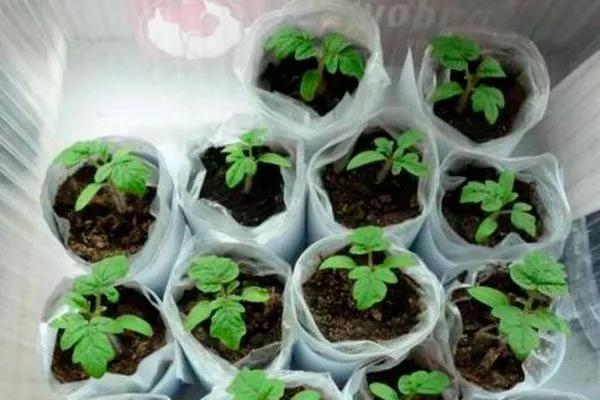
Regularly open the cover for ventilation, and moisten the soil with warm, settled water. Seedlings will emerge in 3-7 days. After mass germination, reduce the temperature from 24°C to 17-20°C during the day and 15°C at night. A cool temperature prevents the seedlings from stretching, promoting strong, stocky growth.
Landing
Bonsai tomatoes are grown in open beds, successfully on windowsills, or in greenhouses. This allows for fresh and tasty fruits even in limited space, making them ideal for city apartments or the winter months.
Growing Bonsai in a Garden Bed
Transplant the seedlings when two true leaves appear. However, when growing on a windowsill, it's best to wait until the bushes' leaves begin to touch—only then transplant them into individual pots.
Step-by-step instructions:
- Fill the containers halfway. Carefully remove the seedling from the main container, being careful to preserve the root ball.
- Make a depression in the center of the new container and carefully transplant the seedling, immersing it up to the cotyledon leaves.
- Cover the roots with soil and compact the soil lightly.
- Moisten the plants with warm water. Excess liquid should not leak through the drainage holes.
Growing in a greenhouse
If you're considering this variety for indoor use, planting it in regular beds isn't advisable, as the yield is poor and the space will feel empty. The best option is to grow it in hanging baskets, hanging them at least 60 cm from the ceiling.
If the greenhouse has side shelves, place potted plants on them. It's important that the plants don't touch the plastic film, as condensation on it can create a breeding ground for fungi. The shelves must be strong enough to support the weight.
Rules for growing tomatoes at home
If your balcony is fully glazed and insulated, start sowing seeds as early as March. Grow the seedlings in a single pot, then transplant them into individual containers in April, then move them to windowsills and shelves.
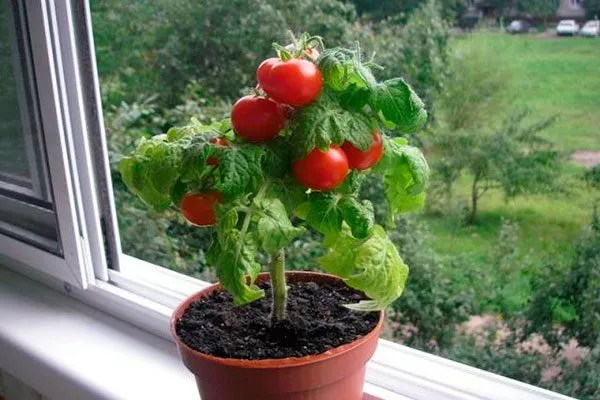
You can place containers on shelves or in hanging baskets. If your balcony faces south, ensure it's shaded, as strong sunlight can be harmful to the plants.
Further care
Two-month-old Bonsai seedlings are already capable of forming inflorescences and tomatoes. Although the flowers are self-pollinating, periodic shaking of the clusters will help speed up the fruiting process.
Care for this variety is the same for all growing conditions:
- regular watering;
- application of fertilizers;
- loosening the soil.
Follow simple agricultural practices and adhere to the rules:
- Water only with room-temperature water in moderate amounts to avoid waterlogging. The top layer of soil should always remain slightly moist.
The frequency of watering depends on the condition of the plants: elastic, bright green leaves indicate a sufficient amount of moisture, while drooping and dried out leaves indicate a lack of it. - Two weeks after replanting, add nitrogen fertilizer, such as ammonium nitrate (4 g per 1 liter of water), to separate containers. After 10 days, repeat the feeding with a potassium sulfate solution in the same proportions. After another 12-14 days, apply superphosphate.
As a supplement, you can use ready-made balanced mineral compositions in crystallized or liquid form, strictly following the instructions.
Pest and disease control
Take preventative measures, including regularly ventilating the greenhouse and removing damaged leaves. Follow these recommendations:
- if powdery mildew appears, treat with fungicides Topaz or Fitosporin;
- To protect against aphids and other insect pests, insecticides or folk remedies, such as garlic infusion, are effective;
- Avoid over-watering the soil, as this can promote the development of root rot;
- To prevent late blight, periodically spray plants with copper sulfate or Bordeaux mixture;
- If fusarium is detected, use Previkur;
Pros and cons
To prevent potential difficulties and avoid problems, carefully study the advantages and disadvantages of this tomato variety. Among the advantages of this tomato variety are:
As for drawbacks, this variety has none. It's ideal for growing on a windowsill or balcony, even for novice gardeners.
Reviews
Bonsai is an excellent choice for indoor plant enthusiasts and vegetable gardening novices. This variety will delight you not only with its decorative appearance but also with its delicious fruits, which can be enjoyed even in winter. Its disease resistance and ease of care make it a versatile choice for both balcony and garden cultivation.