
The Bolshaya Mamochka tomato is a versatile domestic variety that can be grown in virtually all regions of the country, in open ground or under cover. It was developed relatively recently, but has already become a favorite among gardeners for its authentic tomato flavor and excellent agronomic properties.
Description of the Big Mommy variety
The Big Mama tomato plant grows in determinate growth, with limited growth. The stems are strong, the foliage is medium, and the leaves are medium-sized and green, allowing full sunlight penetration. The height of the bush is 60-75 cm. The inflorescences are simple.
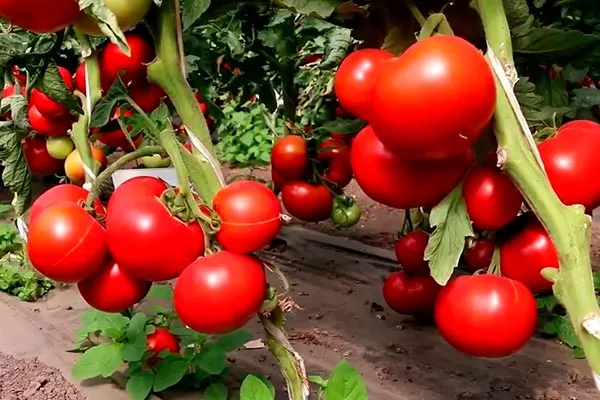
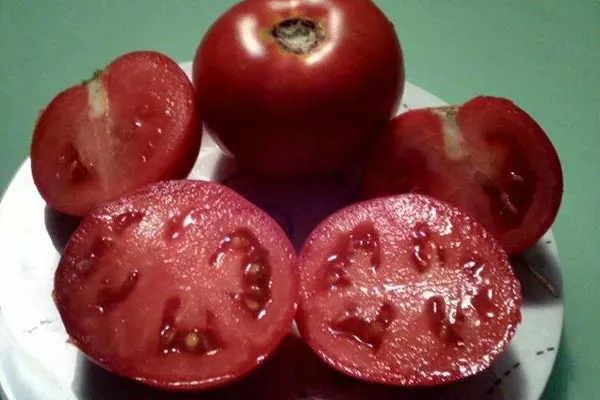
The first cluster of fruits begins to grow after the seventh leaf. Subsequently, fruits are located after every second leaf. A single cluster typically produces up to six large tomatoes. The flesh is medium-dense, and there are very few seeds.
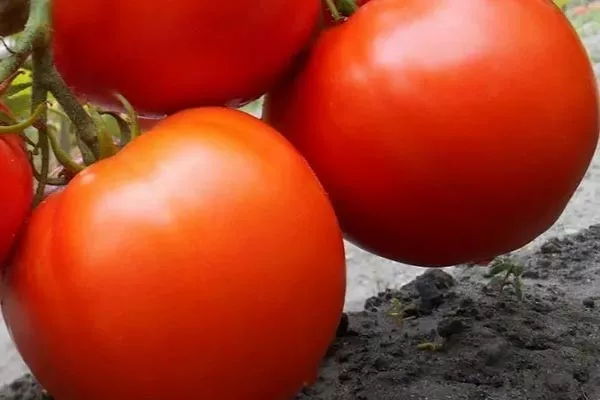
Brief description of fruits:
- Colour: bright red.
- Shape: fruits are heart-shaped or round, elongated towards the bottom, slightly ribbed.
- Skin: thin and dense.
- Weight: 200-250 g. Individual specimens reach 300-340 g.
Who brought it out and when?
The variety was bred by a group of breeders from Gavrish Breeding Company LLC. Authors: S. F., Gavrish, V. V. Morev. E.V. Amcheslavskaya, T. V. Degovtsova, O. A. Volok, G. M. Artemyeva, T. A. Redichkina.
The variety was approved for cultivation in 2015. It is recommended for cultivation in all regions of the country, including the Northern, Ural, and Far Eastern regions.
Taste and purpose of fruits
The flavor is rich, distinct, and slightly sweet, with a hint of tartness. The fruits are versatile: they're eaten fresh, used in summer salads, cold cuts, ketchups, juices, tomato pastes, and all kinds of dressings, and they're also used to make a variety of preserves.
Characteristics
The Big Mama tomato has excellent agronomic characteristics. It's hardy and resilient to a variety of challenges, allowing it to be grown in the most challenging climates.
Ripening time
The Bolshaya Mamochka tomato is a mid-early variety. It takes an average of 85-95 days from germination to the first fruits ripening. The exact ripening time depends on planting time, climate, and weather conditions.
Productivity
This variety is characterized by high yields. Under favorable growing conditions and good care, 7-8 kg are harvested per square meter. A single bush can yield 4.5 kg of tomatoes.
Frost and drought resistance
The variety tolerates extreme weather conditions, including cold snaps, sudden temperature fluctuations, and droughts. Adverse weather conditions have virtually no effect on the productivity of the bushes.
Disease resistance
This variety has a high immunity and is resistant to most diseases affecting nightshade crops. The Big Mama tomato is highly resistant to tobacco mosaic virus, powdery mildew, and late blight.
Pros and cons
The Big Mama tomato attracts gardeners not only with its unusual name and excellent taste, but also with its excellent agronomic characteristics.
Landing
The Big Mama tomato is grown from seedlings. In the south, they are planted in open ground, while in northern regions, they are grown under cover.
Seed preparation
Before planting, seeds are treated to ensure high-quality, healthy seedlings. They are sorted, heated on radiators for 1.5-2 days, disinfected in a potassium permanganate solution, hardened, soaked in a growth stimulator, and germinated in damp cheesecloth. If treated seeds are purchased, they can be sown directly into the soil.
How to choose and prepare a site?
Choose a warm, sunny planting site with no standing water. Solanaceous crops should not be grown there; cucumbers, zucchini, and dill are considered the best predecessors for tomatoes. It is recommended to treat the soil with Fitolavin before planting.
- ✓ The site should be protected from northerly winds to minimize the risk of frost.
- ✓ Soil should have a pH in the range of 6.0-6.8 for optimal nutrient absorption.
In the fall, the soil is dug over, adding organic matter and, if necessary, other components that help improve the soil structure and adjust its acidity—the soil should be nutritious and loose, not acidic. Sawdust or wood ash can be mixed in.
Growing seedlings
Big Mama tomato seedlings are sown in March and planted in the ground in May. Growing the seedlings takes 55-60 days.
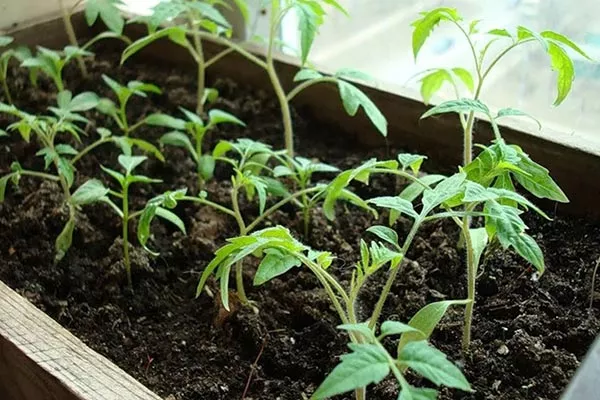
Features of growing seedlings:
- Seedlings are grown in large containers or individual cups. Peat pots can also be used. The containers are filled with a general-purpose potting mix (consisting of river sand, peat, and humus), which is readily available in stores.
If desired, you can prepare your own seedling soil mixture. To do this, mix garden soil with non-acidic peat, wood ash, and washed river sand. The soil should be from a plot where zucchini, carrots, dill, or cucumbers were grown. Instead of ash, you can add dolomite flour, pine needles, or sphagnum moss. - Before planting, the container is disinfected with a weak solution of potassium permanganate and then filled with soil mixture.
- Make shallow furrows (1-2 cm) in the soil and place the seeds in them at 2 cm intervals, leaving 3 cm between rows. Alternatively, plant 2-4 seeds in cups (then leave one, the strongest, seedling). Cover the seeds with soil and water with warm, settled water from a spray bottle. Cover the seedlings with plastic and place them in a warm, well-lit area. When the first shoots appear, remove the covering material.
- Water the seedlings regularly, preventing the soil from drying out or standing water. When watering, avoid getting the stems and leaves wet.
- When two true leaves appear on the seedlings, container-grown seedlings are pricked out - the roots are pinched by 1-1.5 cm, and they are transplanted into separate containers.
- Every two weeks, the seedlings are fed with mineral fertilizers. Fertilizers are added only after 10 days of transplanting. During this period, the plants are provided with at least 12 hours of light. For this purpose, phytolamps are placed above the seedlings.
- When the seedlings reach 45 days of age, they begin hardening off by taking them outside. Initially, this is done for half an hour, then gradually increasing the time to four hours. It is recommended to leave the seedlings outside overnight one to two days before planting.
Transplanting
Transplanting seedlings into the ground is carried out when the soil warms up to at least +13… +15 °C, and the air to +12 °C.
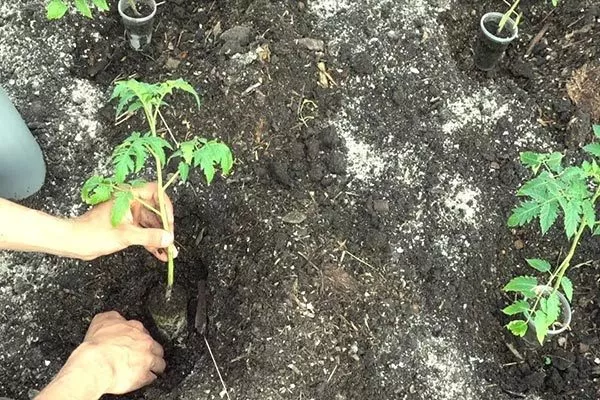
Features of planting Big Mommy tomato seedlings:
- A day before planting, the soil is watered with boiling water or a strong solution of potassium permanganate.
- Planting is done using a 40x50 cm pattern. There should be no more than six tomato plants per square meter. Dig holes large enough to accommodate the roots of the plants removed from their containers. The diameter and depth of the hole should be approximately 5 cm larger than the root ball of the seedlings.
- The plants are placed vertically in the holes, and the roots are covered with fertile soil up to the first pair of true leaves. A support approximately 60 cm high is installed nearby. After two weeks, the tomato plants are tied to this support.
Plant seedlings in the evening or on cloudy days to avoid exposing them to direct sunlight. If the weather is sunny, shade the seedlings for the first 10 days.
Care Features
To ensure that tomato plants grow well and develop, producing numerous ovaries and fruits, they must be provided with water and nutrition, and a number of other procedures required for cultivating the crop must be carried out.
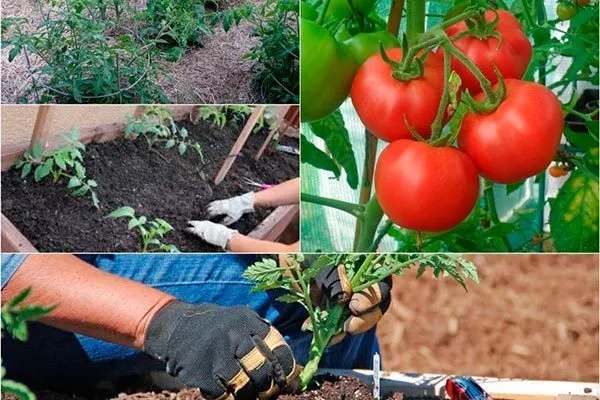
Watering
Water the bush whenever the soil dries out. Water should be applied at the roots, avoiding the leaves and stems. The recommended watering frequency is approximately once a week. In hot weather, water tomatoes more frequently, and less frequently in rainy weather. It's important to avoid overwatering the soil to prevent the development of fungal infections. In greenhouses, water tomatoes only in the morning.
Fertilization
Fertilizers are applied every 10-12 days, alternating organic and mineral fertilizers. Before flowering, tomatoes are fertilized with nitrogen fertilizers, and when flowers appear, with potassium fertilizers.
To increase yields, it is also recommended to carry out foliar feeding - spray the bushes with solutions of boric acid and wood ash.
Loosening and weeding
When the soil dries out (after watering or rain), it is loosened, weeded, and then mulched with straw, humus, peat, hay, etc. Mulching reduces the amount of watering, weeding, and loosening.
Formation
The bushes are trained so that they have 2-3 stems. One or two side shoots are left on each main shoot, and the remaining branches are pruned. The bushes are pruned once a week. However, no more than two side shoots can be removed at a time.
As the bushes develop, the branches are gradually tied to pre-installed trellises. This prevents them from breaking under the weight of the fruit.
Also, the lower leaves of the bushes are periodically torn off, as they only take away nutrients and also contribute to the spread of infections and harmful insects.
Pest and disease control
The variety has a fairly strong immune system, but under unfavorable growing conditions and poor agricultural practices, there is a risk of late blight, powdery mildew, and other diseases. When symptoms of these or other diseases appear, tomato plants should be treated with fungicides such as Topaz, Fitosporin, Quadris, and other effective products.
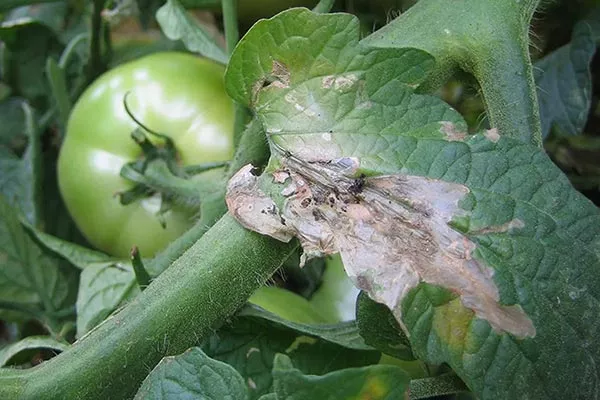
The variety is resistant to most pests, but during a widespread infestation, it can be attacked by whiteflies. They typically appear on tomatoes grown in greenhouses. This insect prefers damp conditions, so it's important to ventilate greenhouses daily.
Colorado potato beetles can also appear on the bushes. If pests appear, treat the tomatoes with insecticides such as Inta-Vir, Confidor, or Fitoverm.
Harvesting and storage
Ripening tomatoes are harvested every 2-3 days, picking them with the stems still attached. If the tomatoes are to be transported or stored, it's important to harvest them in dry weather. If the air temperature drops to 10°C to 11°C, it's recommended to harvest all the tomatoes.
Red tomatoes are eaten immediately or processed; slightly unripe ones are stored in a dark, dry place. Under favorable conditions, the fruits can retain their marketable appearance and flavor for several weeks.
Reviews
The Big Mommy tomato is a very interesting and promising variety that gardeners across the country can explore. It will appeal to anyone who prefers hardy, large-fruited varieties with a classic tomato flavor.