
Tomato plants are often affected by diseases, both in greenhouses and in the open field. Some diseases are carried by pests, while others are caused by poor care or adverse weather conditions. Addressing the problem is essential, so familiarize yourself with common tomato diseases and pests.
Non-communicable diseases
Tomatoes are susceptible not only to viral diseases and infections. They often become ill due to genetic defects, improper care, nutrient deficiencies, or unfavorable growing conditions.
Fruit cracking
Tomatoes can crack for several reasons: lack of moisture, excessive fertilizer, and large temperature fluctuations. Read more about this. here.
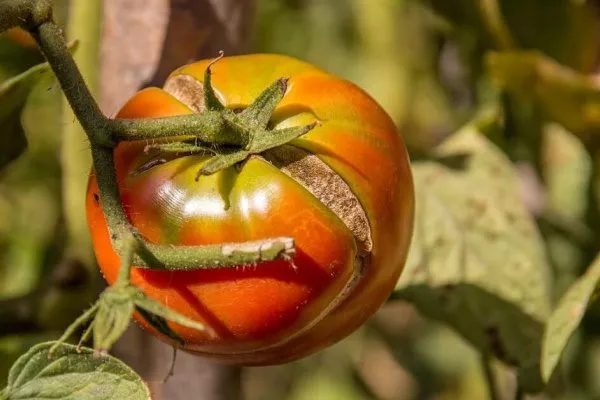
As a preventative measure, experienced gardeners recommend feeding the bushes with potassium. Also, choose varieties that don't split easily.
- ✓ The optimal soil moisture level should be maintained at 70-75% of the total moisture capacity.
- ✓ The temperature in the greenhouse should be stable, without sharp changes between day and night.
Uneven coloring of fruits
Fruits are often unevenly colored. This is due to growth and developmental disturbances. Fruits may also suffer from potassium and magnesium deficiencies.
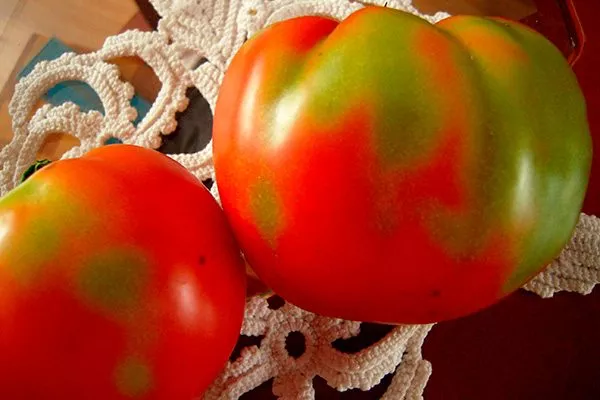
To avoid this problem, apply the right fertilizer and provide shade for your plants using a shade net, which can be purchased at a specialty store.
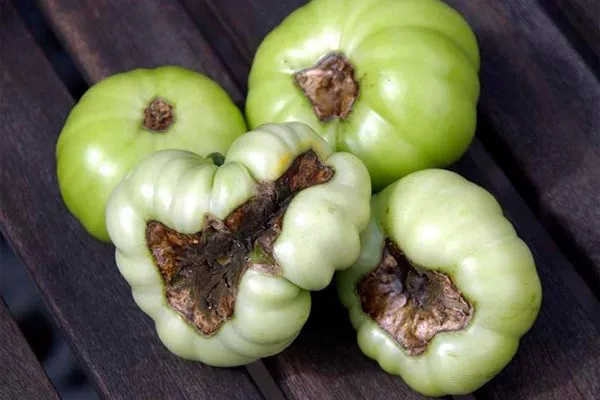
Blossom end rot
A disease caused by calcium and water deficiency, blossom-end rot typically affects tomatoes due to improper care and poor growing conditions. Uneven watering and damage to the root system can also cause damage.
You can identify the disease by dark brown or black spots on the tops of the fruit. For prevention, apply foliar feeding.
- ✓ Maintain soil pH in the range of 6.0-6.5 for optimal calcium absorption.
- ✓ Ensure uniform watering, avoiding drying out or over-watering the soil.
Fight the disease during the period of fruit formation and setting – spray the plants with calcium fertilizers, for example, EKOLIST Calcium.
Fall of flowers and ovaries
Flowers and ovaries on plants fall off for the following reasons:
- potassium and phosphorus deficiency;
- insufficient absorption of boron and manganese due to highly acidic soil.
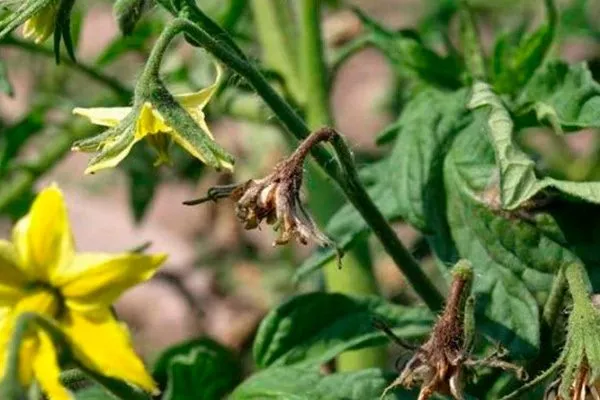
As a preventative measure, avoid overdoing the nitrogen fertilizer when planting seedlings. This can lead to poor fruit set.
Oedema
This non-infectious disease manifests itself when the soil becomes excessively wet. Raised spots resembling white mold appear on the fruit.
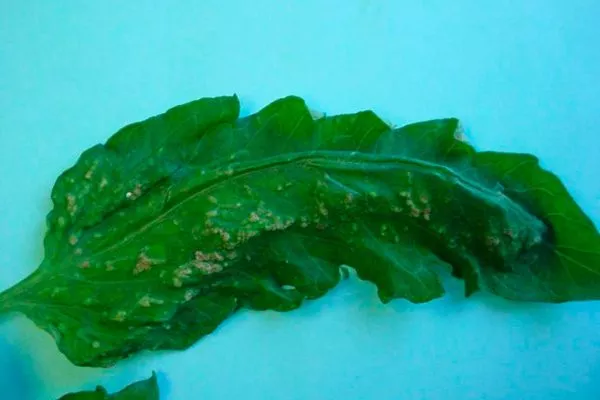
The main cause of edema is overwatering. Try to ventilate greenhouses as often as possible and normalize humidity levels to avoid this problem.
Dry rot of fruits
The disease is caused by the stink bug, which feeds on the fruit's sap. The pest's saliva contains an enzyme that prevents tomatoes from turning red. If the insect is not eliminated by mid-summer, it can destroy the entire crop.
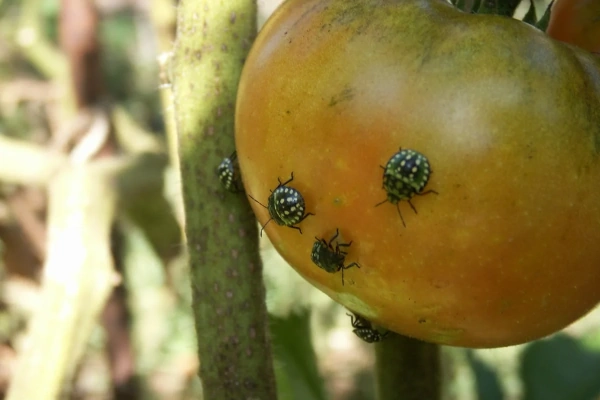
When the disease is present, a single plant may contain both infected and healthy tomatoes. To get rid of the stink bug, use insecticides:
- Actellic;
- Fitoverm;
- Tanrek;
- Fufanon-Nova;
- Karate.
Internal browning
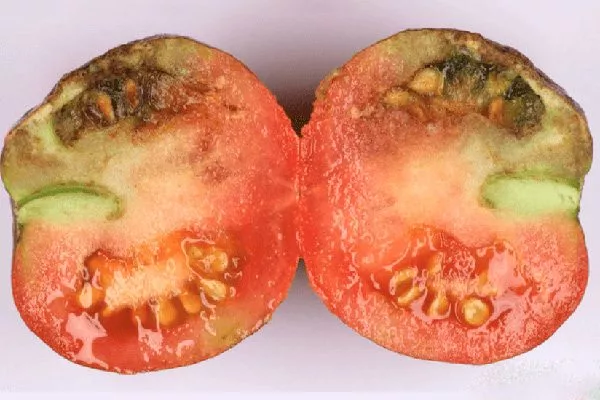
The disease is often referred to as "uneven ripening." Internal browning is accompanied by the following symptoms:
- deformed areas do not mature;
- on green fruits, “bumps” or flat areas of a dark gray hue appear;
- in the middle, the affected areas are colored dark brown;
- During the ripening process, the deformed areas acquire a yellow tint.
Nutritional deficiencies
Deficiencies of specific micronutrients can cause various symptoms. The main signs of nutrient deficiency in tomatoes are:
- Zinc. The leaves develop dark orange chlorosis, curling and thickening.
- Sulfur. Old leaves and petioles change color.
- Nitrogen. Diseased plants begin to lag in growth, the foliage turns pale, and the stems become thinner.
- Bor. The tips of old leaves become covered with light spots, and corky fruit is observed.
- Phosphorus. Leaf growth slows down, they become dull and age prematurely.
- Magnesium. Chlorosis occurs, then necrosis of the areas between the veins on the leaves.
- Molybdenum. As the plant ages, necrosis of the leaf tips appears.
- Iron. The leaves become dull, then turn yellow and fall off.
- Potassium. Foliage burn is visible.
- Calcium. Dark spots appear on the tops of the fruits.
- Manganese. Chlorosis occurs, then necrosis of the leaves.
Treatment of tomatoes involves additional feeding of diseased tomatoes with mineral fertilizer, which contains a sufficient amount of the deficient microelement.
Autogenous necrosis
The cause of the disease is a genetic disorder. It can be inherited. Inspect the still-green fruits for transparent or translucent, oval, greenish spots. Over time, the spots enlarge and take on a yellowish-brown hue.
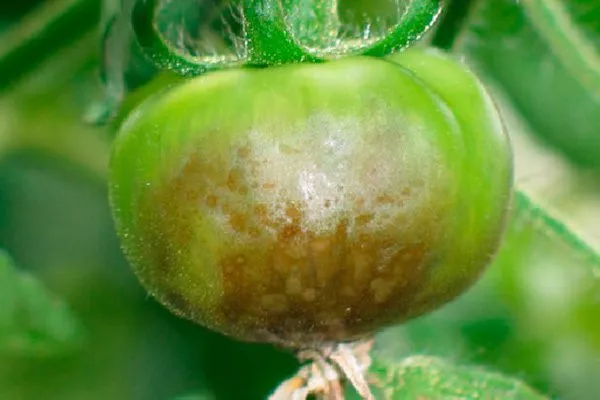
It's impossible to predict the progression of tomato disease, nor is it possible to combat it. You can avoid it by choosing resistant varieties and hybrids.
Chemical damage and burns
Damage is caused by chemicals used to combat pests and infections. If the concentration of the chemical is incorrect and instructions are not followed, plant burns may occur.
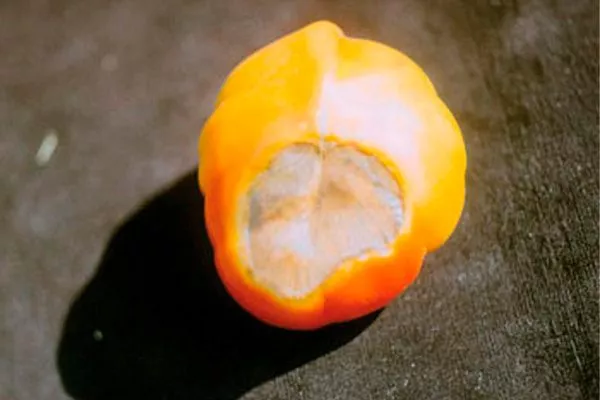
Another cause of plant damage is adverse weather conditions. The problem can usually be identified by yellowing or blackening of the fruit, and drying and wilting of the leaves.
Viral diseases
Viral diseases are very dangerous – they can seriously damage crops, forcing the fruit and plants themselves to be discarded. To address the problem promptly, familiarize yourself with the diseases caused by various viruses.
Tobacco mosaic
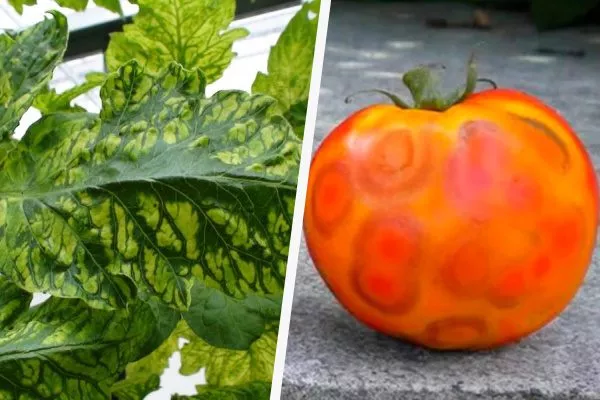
The disease can cause up to 20% of tomato plant losses. The mosaic virus does not disappear after the plant is infected and dies. It can survive for a long time on equipment, tomato supports, greenhouses, and containers.
The first signs of the disease appear 10 days after infection: mosaic spots appear on the leaves, the tomatoes turn yellow, and the foliage curls. The virus attacks many plant organs. Brown necrotic spots appear on shoots and fruits.
For prevention:
- plant resistant varieties;
- Treat your instruments regularly;
- disinfect door handles and other greenhouse structures;
- use only clean soil;
- Wash your hands thoroughly before and after work.
If you find infected tomatoes, remove them from the area and destroy them, then disinfect everything. There are no chemicals to combat the virus.
Bushy dwarfism of tomatoes
The disease spreads due to mechanical damage to the crop—the virus enters through small wounds and attacks tomatoes. Young seedlings are typically affected, negatively impacting their growth and development.
The disease can be identified by the presence of light stripes on the leaves, softening, and death of affected seedlings. The stems become thinner, and there are fewer leaves.
Streaking
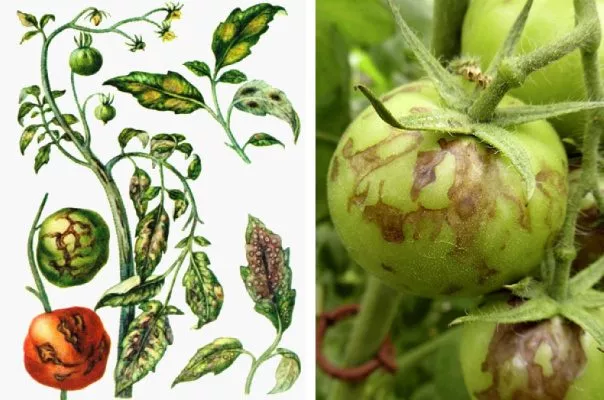
The disease affects all parts of the plant. Tomato growth is stunted, and shoots become brittle and fragile. Leaves become covered in bright brown stripes, and small necrotic spots appear on the fruit.
For prevention, you can use the following solution: dissolve 4 g of manganese sulfate, 2 g each of zinc sulfate, boric acid, and copper sulfate in 10 liters of water. A few days before planting, spray the seedlings with the boric acid solution.
Remove infected plants from the area. Also, remove all weeds between the rows.
Bronzeness
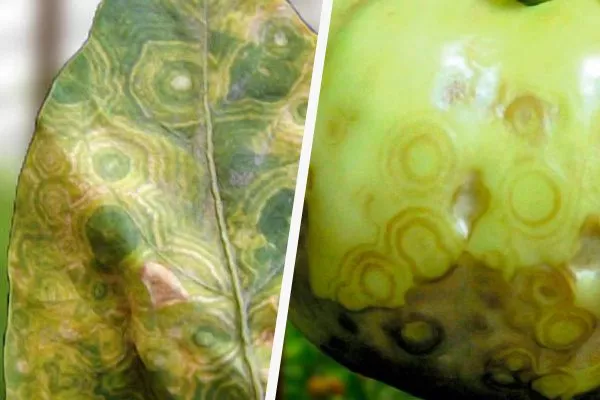
When growing tomatoes in a greenhouse, plants are often susceptible to a viral disease called rot. Young leaves are typically affected, developing thickened veins and brown spots. This causes the leaves to curl and stunts the growth of the plants.
To prevent the disease, choose resistant tomato varieties. To get rid of the disease, control the virus's vectors—thrips and weeds. Use insecticides and herbicides:
- Fitoverm;
- Tanrek;
- Karate.
Yellow mosaic
The infection is transmitted by the whitefly, a pest. The more insects present, the higher the risk of an epidemic. The virus is particularly dangerous during the initial stages of development, especially in the first weeks after planting.
The disease can be identified by the condition of the fruits: they become small and inconspicuous, and many show chlorosis. The leaves turn yellow and curl.
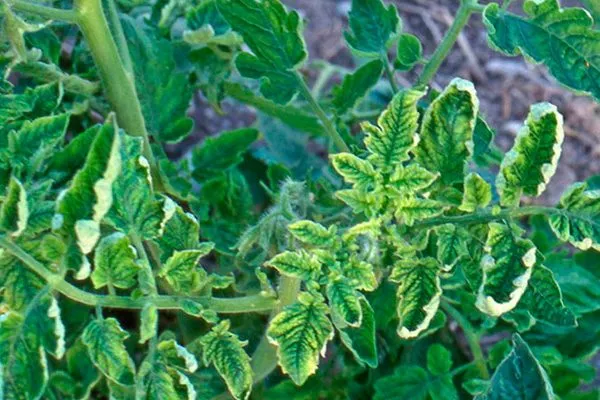
Control involves using insecticides (Actellic, Fitoverm) and weeding the beds. It's important to quickly spot insect infestations to eliminate them before they lay eggs.
Infectious chlorosis
The disease is spread by whiteflies. It is extremely rare and most often affects tomatoes grown in greenhouses. It is not transmitted through seeds or gardening tools.
Symptoms appear on the young upper leaves, while older leaves begin to die. Leaf blades become covered with irregular yellow spots, while the longitudinal veins remain unchanged.
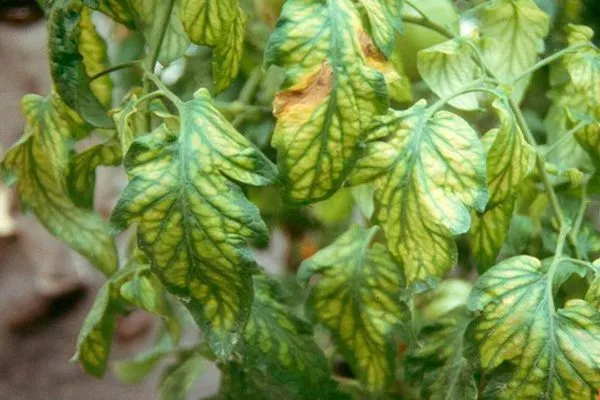
To prevent disease, plant tomatoes in fertile soil that is protected from viruses and fungi. Use sterile tools when caring for the plants.
Treating tomatoes is simple: get rid of the insect pest that spreads the virus. Actellic is a suitable treatment.
Stolbur
A viral disease transmitted by leafhoppers. The pathogen resides in the roots of weeds. Weed control is extremely difficult, so the virus will always be present in the soil.
Stolbur manifests itself with the following symptoms:
- lignification of the stem;
- abnormal enlargement of buds;
- absence of seeds in the seed chambers of the fruit;
- increase in the size of the stalk;
- irregularly shaped tomatoes;
- yellowing of leaves;
- development of lateral shoots.
Curly top
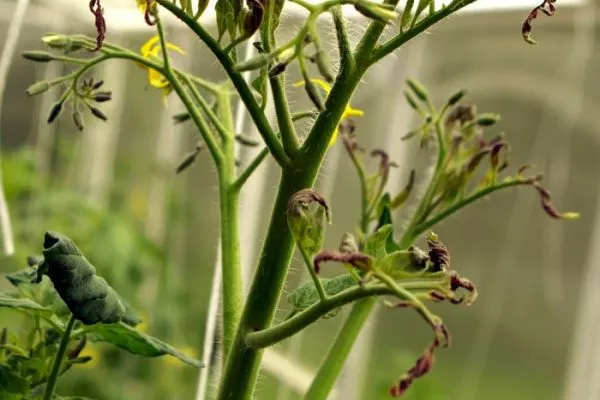
A disease transmitted by leafhoppers. The main sign of infection is curling of the upper leaves of plants. You can also identify the disease by other symptoms:
- fruits are wrinkled;
- tomatoes are small in size and there are few of them;
- thickening of leaf blades;
- change in color of leaves to light yellow, and veins to light purple;
- the plants look stunted.
In the spring, as a preventative measure, treat the area allocated for tomatoes with a solution of Fufanon: dilute 60 ml in 10 liters of water.
Treatment for crown curl involves killing leafhoppers in the beds and areas where beets are grown.
Bacterial diseases
Many diseases caused by bacteria are untreatable. The most difficult part is that the illness often goes undetected for a long time.
Bacterial cancer
The most dangerous bacterial disease of tomatoes. It typically affects plants in greenhouses and other enclosed structures.
Symptoms of the disease:
- At the initial stage, the leaves begin to wither, then brown spots appear on them, which leads to death.
- The stems may become covered with long brown stripes and cracks, with bacterial slime oozing from the wounds.
- Brown spots appear on the fruits, and eventually the tomatoes rot completely.
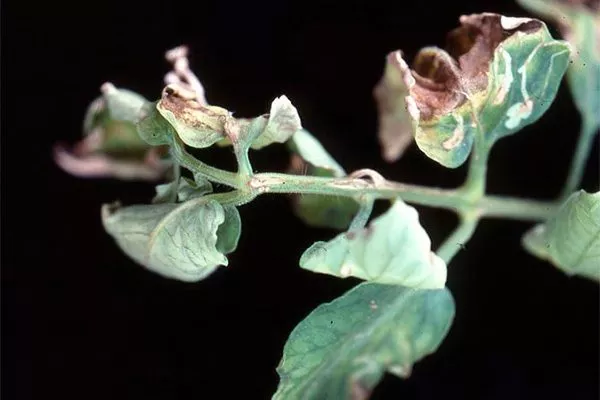
This disease is difficult to control. Remove diseased plants and spray the remaining ones with Kocide 2000 35 WG (30 g per 10 l of water/100 sq. m). Do not grow nightshade plants in this area for 4 years.
As a preventative measure, disinfect seeds before sowing and treat all tools.
Bacterial mottle
The cause of the disease can be frequent precipitation and moderate temperatures, as well as plant debris in the soil.
Bacterial mottle is easy to identify: small necrotic spots with a yellow border appear on the leaves. At a later stage, the spots enlarge, causing the leaf blades and other plant parts to dry out.
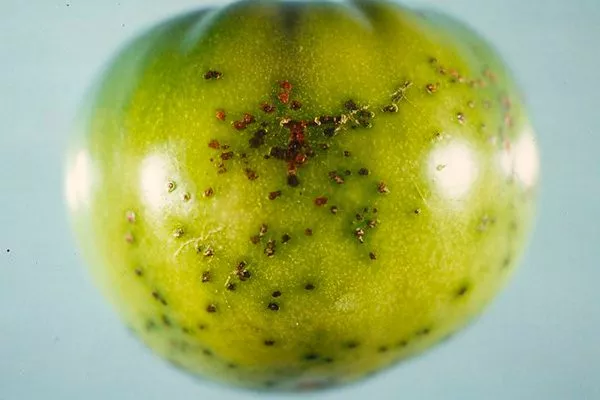
To prevent pests, tend to plants in dry weather, disinfect tools after work, and use healthy seeds when planting. For control, use the following products:
- Cobresal 50 WP;
- Miedzian 50 WP.
Bacterial wilt
Bacterial wilt is difficult to detect. In the chronic form of the disease, brown longitudinal stripes form on the stem, the foliage turns yellow, and the fruits become smaller and fall off. The bacteria are present in the soil and then enter the stem through the roots.
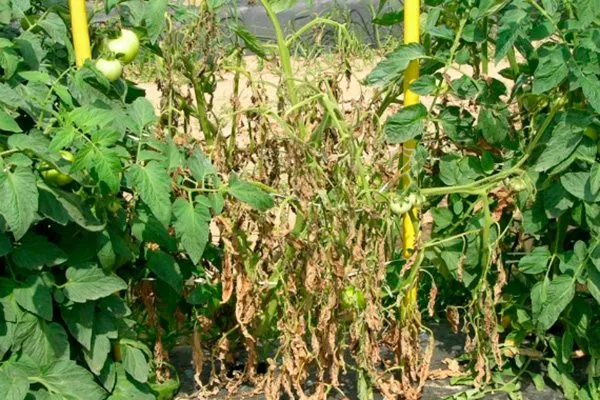
The disease cannot be cured. You can use Fitolavin. It suppresses the infection, preventing it from spreading further. Treat the bush and the soil.
Necrosis of the core
The disease occurs due to temperature fluctuations, excess nitrogen in the soil, and high humidity. No more than 30% of infected bushes survive. Infection occurs through the roots.
Signs of necrosis include yellowing of the leaves at the top of the plants. Stems become covered with black ulcers, and seeds within the fruit become infected. Ultimately, the crop dies.
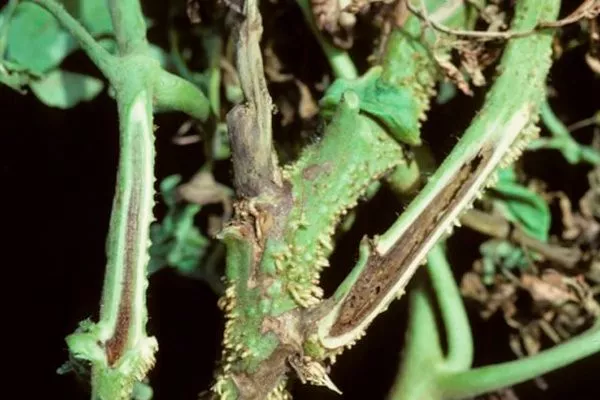
For prevention, spray the plants with a special infusion:
- Chop 100 g of garlic.
- Pour a glass of water.
- Leave for 24 hours.
- Strain the solution.
- Dilute in 10 liters of water.
- Add 1 g of potassium permanganate.
There is currently no treatment for heartwood necrosis. Destroy infected plants to protect remaining bushes from the disease. Disinfect the soil under the affected plant with Fitolavin.
Fungal diseases
Fungal diseases are very common. The best prevention is proper agricultural practices, planting patterns, and crop rotation.
Gray mold
Gray mold appears as brown spots on petioles and leaf blades. Fruit may rot and fall off during the disease. Causes include high humidity, inadequate spacing between plants, poor ventilation, and inadequate calcium and potassium fertilizers.
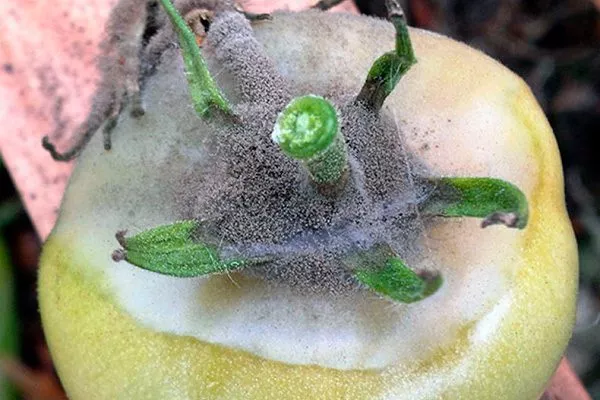
To prevent the disease, water tomatoes so that the leaves remain dry. When grown in greenhouses, maintain low humidity. Fungicides such as Quadris, Acrobat, and Ridomil will help treat tomatoes.
Late blight
Late blight is considered the most common disease capable of destroying plants. It can be identified by the following signs:
- there is a smell of rot in the air;
- Brown spots with a white coating appear on tomatoes;
- Bumpy growths appear on the leaves.
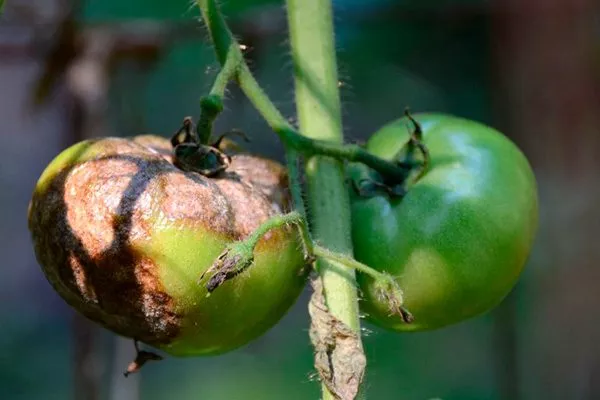
Preventive measures:
- do not plant tomatoes next to potatoes;
- do not wet the leaves when watering;
- Grow varieties resistant to late blight;
- Spray the bushes with horsetail decoction.
Collect and burn the leaves if you notice the first signs of disease. If the plant is severely affected, use a fungicide: Acrobat or Quadris. You can also plant sage and lavender nearby.
Septoria (white spot)
Sunny weather and high temperatures favor the disease's development. Fruits, shoots, and young leaves become covered with large white spots. Eventually, the foliage dries out and turns lighter, and fungal spores form in the center as black dots.
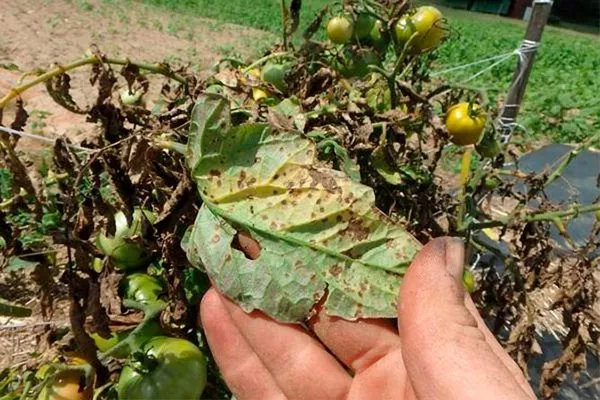
As a preventative measure, do not replant tomatoes in the same location for at least three years. Also, spray the bushes with Bordeaux mixture. If the infestation is severe, destroy the remaining plants.
For treatment, use fungicides Revus, Thanos, Fundazol.
Alternaria
The disease develops rapidly. The fungus can survive in tomato seeds. When affected by Alternaria, large spots appear on tomatoes, which eventually dry out and crumble. Another symptom is yellowing and leaf drop.
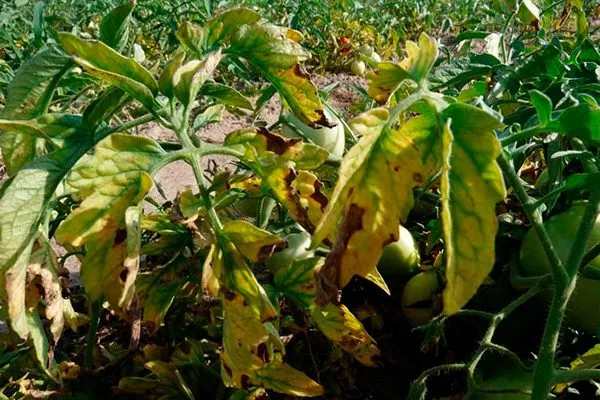
The cause of the disease is high humidity and high temperatures (over 25 degrees Celsius). Avoid growing tomatoes in light soils; spray the plants with fungicides and till the soil deeply in the fall.
To combat Alternaria, spray plants with fungicides. Suitable:
- Thanos;
- Ridomil Gold;
- Fitosporin-M;
- Luna Tranquility.
Greenhouse pests
Tomatoes often become susceptible to pest attacks when planted in a greenhouse. It's important to know which insects to watch out for and what to do to control them.
Greenhouse whitefly
The most dangerous insect, the whitefly, settles on the undersides of leaf blades. The larvae suck plant sap and consume its tissue. Adult pests fly from one plant to another. Whiteflies are carriers of fungal and bacterial diseases.
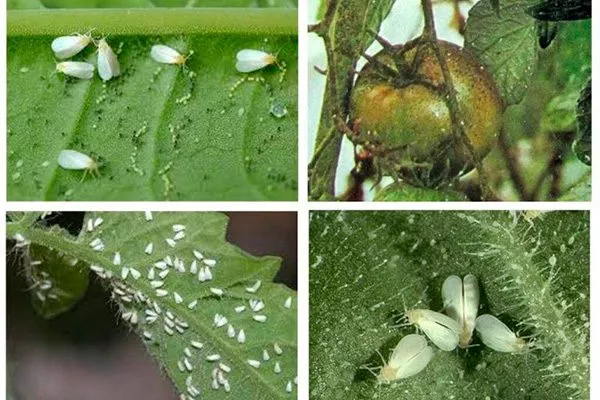
To prevent frost, disinfect the premises, collect and burn all plant debris and weeds in the greenhouse after harvesting. Before frost, dig the soil up to the depth of a spade.
To control the insect, use Biotlin, Iskra, and Tanrek. Treat the undersides of the leaves. Whiteflies are highly resistant to chemical treatments. Alternate them for best results.
Thrips
Thrips live for only three weeks, but they reproduce quite quickly. These insects are dangerous because they transmit the spotted wilt virus. They also feed on tomatoes, causing spotting.
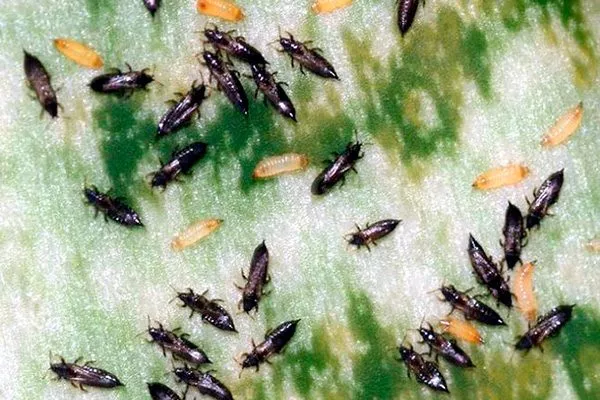
For prevention, use sticky traps, regularly inspect the flowers and leaves of plants, and arrange for periodic watering of the bushes by sprinkling.
Control thrips at the first sign of activity. Use insecticides:
- Biotlin;
- Aktara;
- Alatar.
Common spider mite
The pests are virtually invisible, but you can detect their presence by their activity. They primarily attack young leaves and shoot tips, where they cover them with a fine web. The spider mite feeds on plant sap, causing the plant to wither and die.
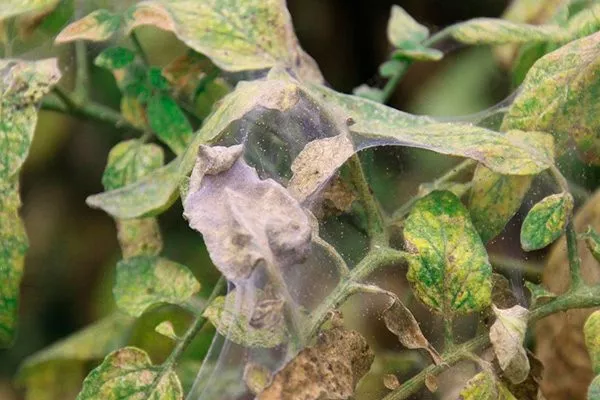
As a preventative measure, choose fertilizers with a high content of potassium and phosphorus, and spray the plantings with garlic infusion (pour 2 crushed heads of garlic into it and leave for 5 days).
For treatment, use acaricides:
- Anti-tick;
- Apollo;
- Agravertin;
- Neoron;
- Sunmite;
- Omayt.
Don't use folk remedies to fight the problem - they won't help.
Outdoor pests
Outdoor tomato plants are home to many pests, which are extremely dangerous because they carry various diseases when moved from one tomato plant to another. This can result in many plants becoming infected, which can lead to crop losses.
Aphid
Aphids feed on plant sap. These pests can encircle bushes with entire colonies. Aphids are particularly fond of young foliage.
You can tell if insects have attacked your tomatoes by the waste they leave behind: discolored punctures are visible in the leaves when held up to the light, and a sticky coating is also noticeable. Eventually, the leaves curl and dry out.
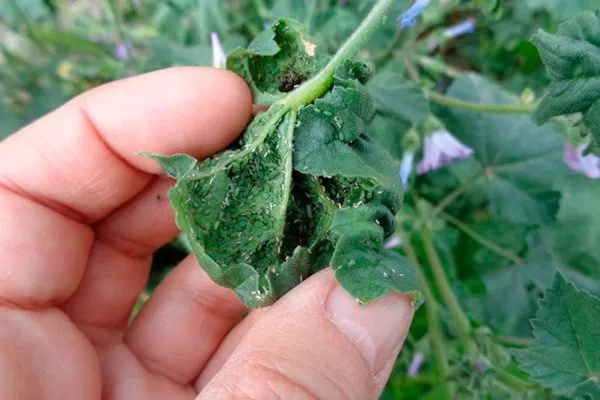
To protect tomatoes from aphid attacks, follow these recommendations:
- plant calendula, daisies or amaranth in the area;
- spray tomatoes with infusions of tobacco dust and wood ash;
- treat with flea shampoo (100 ml per 10 liters of water).
If the number of aphids is very large, use universal insecticides:
- Prestige;
- Oberon;
- Commander;
- Inta-Vir.
Springtails
These are small insects that come in light and dark colors. These pests prefer tomatoes grown from seed in the early stages of development. Springtails can completely destroy cotyledons.
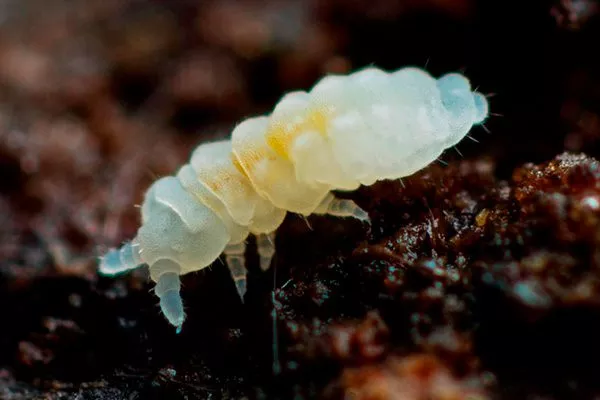
To prevent pests, do not over-water and do not allow water to stagnate.
As folk remedies use:
- Potato. Make bait: cut the potato in half and place the halves cut side down. In a couple of hours, the insects will attack the potato. Quickly remove the potato pieces and destroy them.
- Wood ash. Add a 1 cm layer of soil on top. Reduce watering and lower air humidity.
Folk remedies don't always help. Use store-bought medications: Dimilin, Regent, Bazudin.
Ants
Ants themselves don't feed on tomatoes, but they can breed aphids, which feed on the plant's sap. Furthermore, building their nests can damage tomato roots, which can lead to fungal infections.
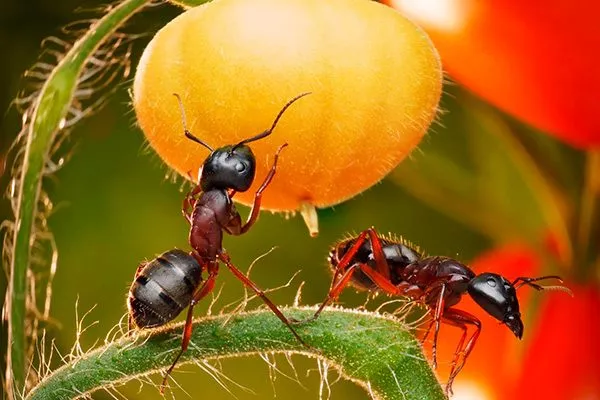
To prevent this, plant the following plants near your tomatoes:
- mint;
- anise;
- wormwood;
- parsley;
- mustard;
- tansy.
Gardeners also recommend treating anthills with wood ash or slaked lime. Products like Muravied are effective against ants.
Colorado beetle
A pest that feeds on potatoes also attacks tomatoes. The larvae feed on the foliage. They are immediately noticeable on plants due to their contrasting coloration. Among folk remedies, try the following:
- attract moles, shrews, and dragonflies to the area;
- plant calendula, horseradish, and garlic near tomatoes;
- Spray with ground pepper infusion.
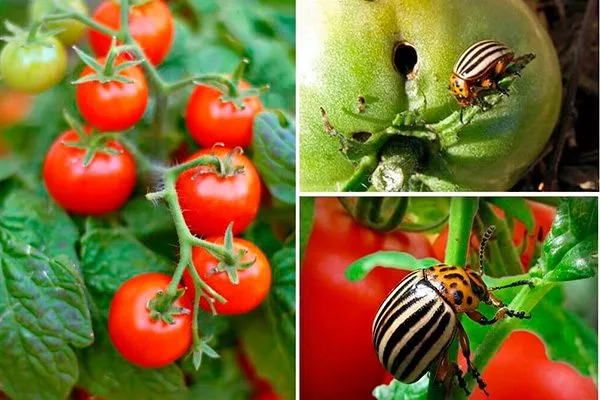
As a preventative measure, use wood ash to fertilize the soil when planting potatoes. Avoid killing spiders, lacewings, and ladybugs. These insects are the Colorado potato beetle's worst enemies. Plant fragrant flowers near the tomatoes. Calendula, marigolds, and night violets are considered ideal.
From chemicals use:
- Face;
- Colorado;
- Aktar;
- Regent;
- Gulliver;
- Calypso.
owl
The nocturnal caterpillars feed on all green material. The eggs laid by the butterfly overwinter in plant debris and soil.
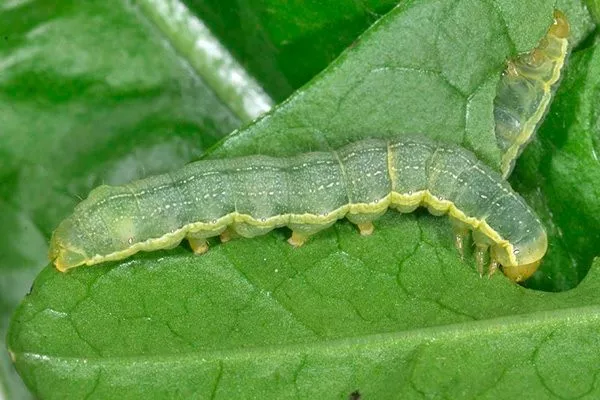
To prevent the pest from appearing, remove weeds, dig the soil deeply, collect the caterpillars and spray with the biological product Strela.
During the period of caterpillar development, use insecticides Calypso, Dimilin, and Nemagon to control them.
Slugs
An elongated pest with a naked body, slugs reach 4-5 cm in length. They feed on the above-ground parts of plants—leaves, stems, and fruits. After a slug attack, crops can become infected with late blight, powdery mildew, and rot. Ultimately, the plant dies.
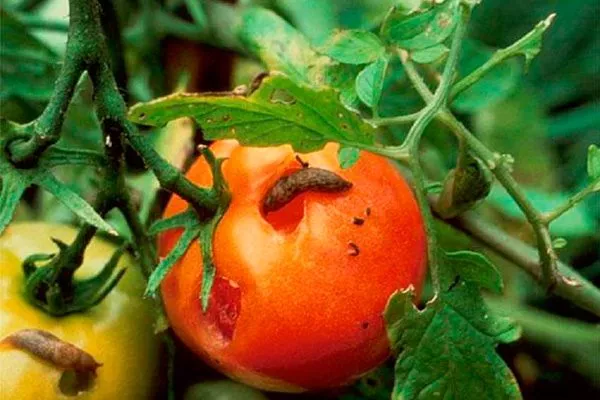
As a preventative measure, ensure regular watering, loosen the soil and treat the beds with insecticides.
Collect slugs by hand at night and set traps. Use chemicals containing metaldehyde as the active ingredient.
You can also use folk remedies:
- ammonia solution (60 ml per 10 l of water);
- with a decoction of onion peel (let it brew for 3 days).
Diseases and pests can kill tomatoes completely, leading to crop loss. It's important to combat these issues, promptly respond to the first symptoms, and constantly monitor the crop's growth.