
Blush is one of the most popular bicolor cocktail tomato varieties in the United States. It's a favorite among domestic gardeners thanks to its distinctive fruit coloring, miniature size, and excellent flavor. It's grown in outdoor beds, plastic greenhouses, and even in pots on a balcony.
Growing regions, origin
This vegetable variety was created in 2011 thanks to the efforts of talented Californian breeder Fred Hampel. He is known for developing striped varieties. His creations, Maglia Rosa and Sunrise Bumble, are the most popular among vegetable growers. Blush is the result of a cross between the two.
This American's original creation can be grown throughout the country, as it adapts well to indoor conditions (plastic greenhouses, glass balconies). Domestic gardeners successfully grow the bicolor tomato in the following regions and districts of the Russian Federation:
- Northern;
- North-West;
- Central;
- Volga-Vyatka;
- Central Black Earth Region;
- North Caucasian;
- Middle Volga;
- Lower Volga;
- Ural;
- West Siberian;
- East Siberian;
- Far Eastern.
Description of the bush and fruits of the Bashful Blush
Shy Tiger plants are indeterminate and grow vigorously. They require support and training.
The description of their appearance includes the following features:
- “height” – 1.5 m in open ground, 1.8-2 m in greenhouses;
- strong stems;
- foliage: moderately dense, green, potato type;
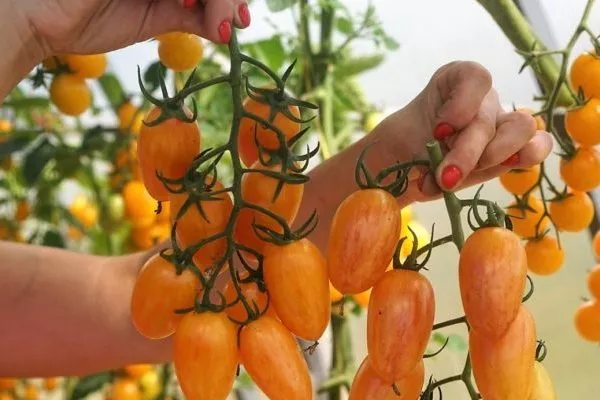
- fruit clusters consisting of 10-14 tomatoes.
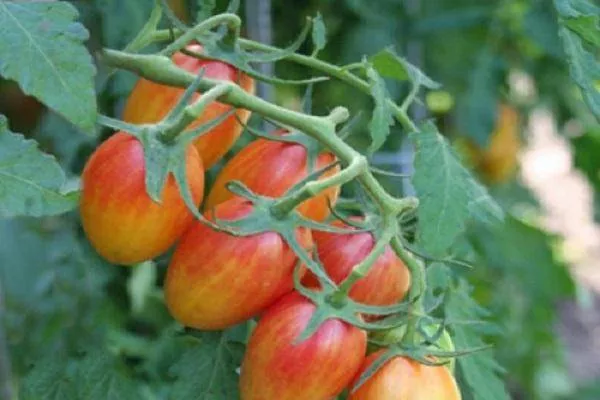
The hallmark of this American variety is the unusual appearance of its fruit. The tomatoes are uniform, miniature (cherry-type), and have a unique two-tone coloring, visually reminiscent of exotic fruits.
They are characterized by the following indicators:
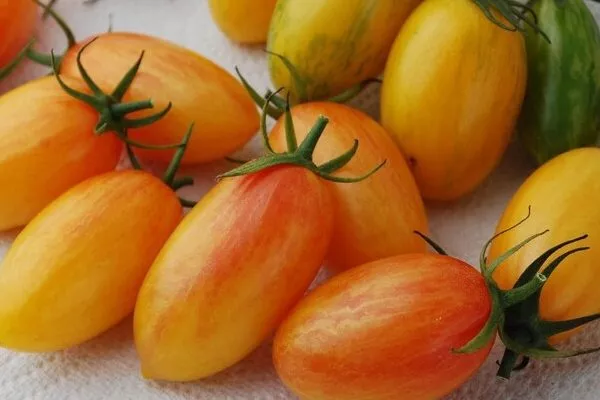
- with an elegant, elongated shape, its outlines resembling a plum;
- weight - 25-30 g;
- slightly ribbed or smooth surface;
- golden-yellow color with blush pink strokes, pale or bright depending on growing conditions;
- length indicator - 5-7 cm, diameter - 2-3 cm;
- skin: glossy, not very strong (in rainy weather it tends to crack);
- pulp: fleshy, juicy and aromatic, moderately dense (when fully ripe it becomes soft, melting in the mouth), pink-yellow at the break, with 2 nests and a small seed content.
The tasting qualities of striped tomatoes are superb. They delight the eater with their sweetness, a subtle tartness, and a wonderful fruity aftertaste.
Ripe tomatoes don't keep for long, but are considered a true summer dessert. Slightly unripe, they are suitable for storage and transportation.
Characteristics of tomato varieties
This creation of the famous Californian boasts many excellent qualities. It is chosen not only for its interesting harvest, but also for its long, abundant fruiting, its low maintenance, and its resistance to adverse weather conditions, particularly cold snaps. The variety also has good disease resistance.
Ripening period, yield
If you're planning to grow striped cherry tomatoes in your garden, check out the key technical characteristics of the striped variety. They are:
- the ripening period of vegetable products is average, 90-100 days;
- harvest period - lasts from the end of July until the first frosts in October;
- The yield is high and stable (according to summer residents’ reviews).
Useful properties and applications
Cherry tomatoes with a yellow outer layer are considered a valuable food product. Their flesh is richer in composition than that of red or pink varieties. They have a caloric value of 24 kcal/100 g and a glycemic index of 20. They contain 1.1 g of protein, 2 g of fat, and 3.8 g of carbohydrates. They are hypoallergenic.
The Bashful Blush harvest is rich in many healthy substances that support the body and ensure its normal functioning:
- vitamins A, C, D, E (their pulp is especially rich in carotene);
- minerals, in particular potassium, magnesium, sodium;
- antioxidants, especially lycopene.
Eating plum tomatoes with yellow and pink markings will strengthen your immune system, improve your mood, and help prevent cancer. They also benefit your heart, blood vessels, and kidneys.
If you suffer from stomach ulcers, gastritis, pancreatitis, or kidney stones, raw peanuts are contraindicated. For chronic conditions, consult your doctor before including them in your diet.
Thanks to their sweet, fruity flavor and attractive appearance, Blush tomatoes are widely used in home cooking. These tomatoes are delicious not only fresh, but also canned and cooked.
Housewives use them like this:
- added to salads, soups, side dishes, casseroles;
- prepare snacks;
- they complement sandwiches, sandwiches, pizza;
- decorate hot meat and vegetable dishes;
- processed into juice;
- cook original jam or marmalade;
- make sauces and ketchup;
- Cherry tomatoes can be frozen without cutting them into pieces, and 90% of the nutrients in the pulp will be preserved.
Their miniature size and beautiful shape make Shy Tiger tomatoes ideal for canning for the winter. A jar holds a generous amount of tomatoes. Canned tomatoes look beautiful and unusual, visually reminiscent of fruit compote.
Selecting seeds for growing Blush tomatoes
Purchase seed from a specialist or branded store to reduce the risk of buying a counterfeit. These stores store seeds in suitable conditions, maintain a favorable temperature, and maintain optimal humidity.
When choosing a bag of Shydlivy Rumyanets tomato seeds, pay attention to the expiration date. Don't buy expired products.
To be sure of its quality, pay attention to the following nuances:
- examine the integrity of the packaging (it must be sealed to prevent damage to the seed material from moisture getting inside);
- evaluate the quality of the image on the package (reputable manufacturers have high-quality packaging: with a clear image and font, bright colors);
- look at the expiration date (the expiration date should be stamped on the product, not handwritten);
- Make sure the packaging contains the following information: the full name of the variety and the agricultural company producing it, as well as its trademark, weight in grams or the number of seeds in pieces, a barcode, the address and phone number of the seed company, a link to the official website, and a mark indicating that the product quality complies with GOST.
Seeds purchased from a specialty store, whose freshness and germination you're confident in, don't require pre-treatment before planting. Be sure to do this for Blush tomato seeds you've collected yourself:
- sort them out to discard empty and damaged ones;
- treat the samples left for sowing in a solution of potassium permanganate (1-2%) for 1.5-2 hours;
- Soak them in honey water or in an Epin solution to achieve better germination and rapid emergence of friendly shoots.
How to properly plant and care for tomato plants?
Grow bicolor tomatoes, bred by an American breeder, using seedlings. Follow the planting schedule and instructions, and care for your seedlings properly to ensure they'll reward you with a bountiful harvest.
Sowing tomato Blush
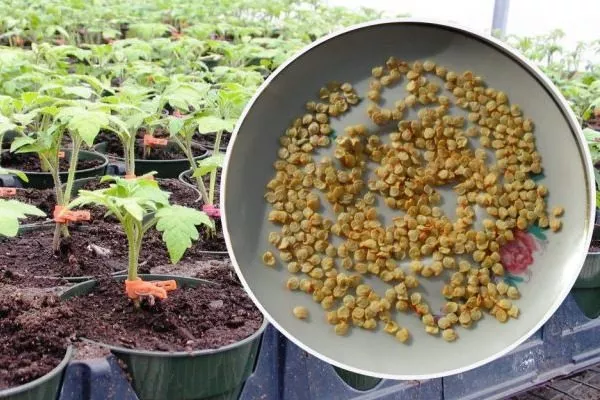
Start planting 7-8 weeks before you plan to transplant the seedlings to their permanent location: an outdoor garden bed, a greenhouse, or a tub on a glazed balcony. Begin sowing in March (gardeners start sowing in late February). Follow these step-by-step instructions:
- Fill a wooden box or plastic cups (or peat pots) with a general purpose substrate.
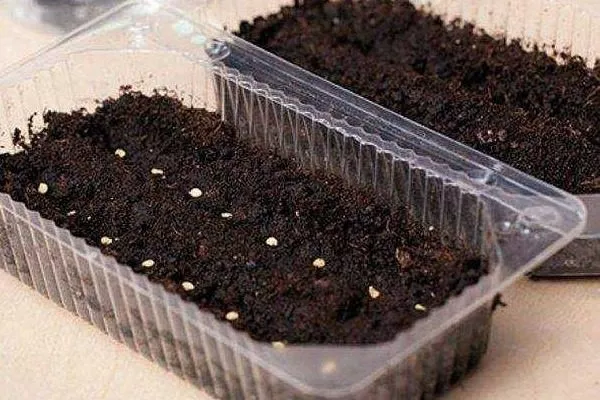
- Place the 'Shy Blush' tomato seeds in furrows (1-1.5 cm deep in the soil). Leave a distance of 3 cm between them. Sow 1-2 seeds per individual container. Cover them with soil.
- Moisten the seeds with lukewarm, settled water. Use a spray bottle for convenience. Avoid washing the seeds out of the soil.
- Cover the planting container with plastic wrap and leave it in a room with a temperature of 22-25°C.
Growing features:
- Every day, slightly uncover the crops to allow them to breathe fresh air for 15-20 minutes. This will prevent mold from developing.
- Remove the covering material after the seedlings have emerged en masse. Transfer the seedlings to a sunny windowsill. Reduce the room temperature to 18-20°C.
- Rotate the containers daily to ensure even light exposure. Water them moderately. Once two leaves appear, transplant and harden off.
You can transplant Blush seedlings to the greenhouse in May, and to the open garden bed once the soil warms to 16°C and the threat of frost has passed. By the time they're transplanted to their permanent location, the plants should have developed at least 9-10 true leaves.
This vegetable crop thrives on both light and heat. For good fruiting, it requires favorable growing conditions. Select a plot of your garden for planting bicolor cherry tomatoes that meets the following requirements:
- solar;
- windless;
- providing protection for tomato bushes from drafts;
- not flooded by groundwater;
- well drained;
- with loamy or sandy loam soil, loose, rich in humus, with an acidity index of 6.0-6.8 pH.
Prepare the chosen garden site for growing the Blush variety in advance. Till the soil, remove weeds and plant debris, and apply organic fertilizer.
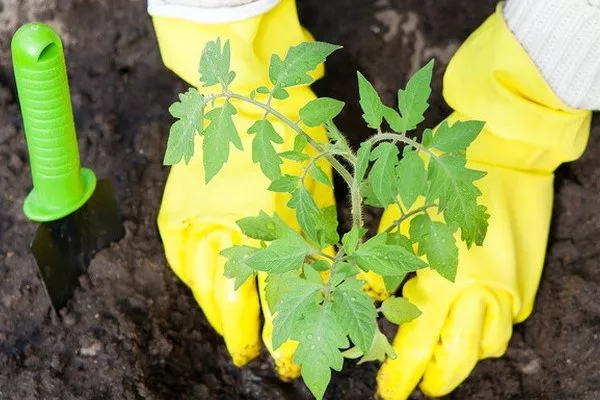
Plant no more than 3-4 bicolor tomato seedlings per square meter. Maintain a distance of 40-45 cm between them in protected soil and at least 80-90 cm in open soil. Transplant on a cloudy, windless day. Follow these steps:
- Make holes in the soil, the size of which would correspond to the volume of the root ball containing the seedling roots.
- Water them. Wait until the moisture is completely absorbed into the garden soil.
- Place a seedling in each hole. If you grew Blush in peat pots or pellets, plant the plants directly into the garden bed.
- Cover the tomatoes with fertile soil up to the cotyledon leaves.
- Water the planting again.
- Place a support next to each seedling.
Caring for Blush tomato plants
By following standard agricultural practices, you can maximize your yields from your Shydlivy Rumyanets tomato plants. This variety is easy to grow and requires the following care:
- GlazeWater the bed regularly and moderately. Avoid waterlogging and do not allow the soil to dry out for extended periods. Apply settled, sun-warmed water to the roots of the tomatoes. Do this once or twice a week. The soil beneath the plants should be constantly moist to a depth of 3–5 cm.
- Weed removalHarmful plants compete with crops for moisture and nutrients, and they provide breeding grounds for pathogens and hiding places for insects. Weeding will help you maintain the health of your plants and ensure their normal development.
- Loosening the space between rowsPerform the procedure carefully. Work the soil to a depth of 5-7 cm. Break up the dense soil crust every time after watering the bed or after rain.
- MulchingThe organic matter you apply to the soil beneath your tomato plants will help retain moisture and create a favorable microclimate for the vegetable crop.
- Top dressingApply nutrient solutions three times during the season. Seven to 10 days after transplanting the seedlings to their permanent location, apply a mullein solution. After flowers appear on the bushes, apply liquid superphosphate. When fruit sets, fertilize striped cherry tomatoes with potassium humate.
- Formation of bushesTrain the plant to have 2-3 stems. Leave two lower side shoots in addition to the main stem, and remove the rest. You will also need to remove lower leaves and any that shade the fruit. Proper care will allow the green organism to direct all its energy toward fruiting.
- GartersIndeterminate plantings of the Shy Tiger variety require trellis or stake support. This prevents stems from breaking, which are under heavy strain due to the abundance of fruit.

The main problems and diseases of Blush tomatoes
The striped variety of this plant delights gardeners with its strong immunity. With proper care, Bashful Blush bushes are disease-resistant. They are only mildly susceptible to the infections that most commonly affect nightshades.
In unfavorable growing conditions or during rainy summers, yellow-pink cherry tomatoes can suffer from blossom-end rot. This condition is caused by calcium deficiency. Applying lime to the garden soil can help prevent it. Apply lime twice:
- during the process of planting tomatoes in the garden;
- in July.
Despite the plant's relatively strong immunity, don't neglect disease prevention. Treat the plants with Ordan several times, leaving 7-10 days between treatments. Apply the first treatment after the seedlings have six leaves, and the last treatment no later than 20 days before harvest.
Growers growing bicolor cherry tomatoes native to the United States sometimes encounter difficulties. Potential problems include:
- Damage to the root systemCauses of this complication include: lack of moisture, salinity in the garden soil, and pests. This causes slower growth and development of the bushes. By strictly following agricultural practices, you can avoid this problem.
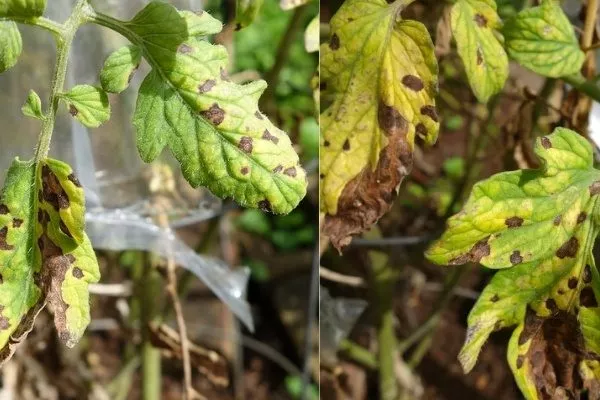
- Viral infectionDue to sudden temperature fluctuations, high humidity in the greenhouse, and dense plantings, tomatoes become susceptible to mosaic and other infections. The source of these infections is soil and untreated seeds.
Diseased plants are easily identified by their curled and withering leaves. They bear fruit poorly, producing deformed and unsightly crops. They will need to be removed from the garden bed and burned.
To prevent this problem, carry out high-quality pre-planting treatment of the soil and seed material, and periodically spray the tomatoes with a milk solution (1:10) with the addition of urea. - Fungal diseasesIn adverse weather, the risk of powdery mildew or gray mold infestations increases for Blush cultivars. Affected bushes develop spots on the leaves and fruit, which become covered with a whitish or gray coating. This problem threatens to reduce crop yields.
For prevention purposes, use commercial products (Zaslon, Barrier, Fitosporin-M, Oksikhom), spray the planting with garlic infusion. - Insect invasionIf poorly cared for, Bashful Blush bushes can be attacked by mole crickets, whiteflies, aphids, Colorado potato beetles, spider mites, and slugs. Insecticides (such as Grom, Fitoverm, or Actellic) can help control pest attacks. Apply them in the evenings, during calm and dry weather.
Practice hand-picking the pests and washing them off the leaves with moderate water pressure. Don't shy away from using folk remedies: soapy water, hot pepper, and ammonia solution.
Harvesting and storing the Blush tomato crop
Begin harvesting striped cherry tomatoes as they ripen. Inspect the planting regularly and carefully remove ripe tomatoes from the branches, being careful not to damage the shoots. It's acceptable to remove entire clusters of fruit from the bush.
Store the harvested fruit indoors for 7 days. Spread the fruit in a single layer on a flat surface. Store in a cool, dry place.
Pros and cons
Gardeners and farmers have come to appreciate the two-colored Blush tomatoes, developed by a talented Californian breeder. They liked this original variety for its many positive characteristics. However, the Bashful Blush also has several drawbacks that those planning to grow it in their garden for the first time should be aware of.
Reviews
Blush is a marvel of American breeding, captivating the hearts of gardeners who prefer unique tomato varieties. Its plum-shaped form, miniature size, and beautiful two-tone coloring, along with its fruity, sweet flavor, leave no one indifferent. It's an excellent choice for those who love cherry tomatoes and grow them for fresh consumption.