
The Black Bison tomato is a Russian-bred variety with a very unusual fruit color. Another unique feature of this tomato is its resistance to a wide range of environmental challenges, making it suitable for cultivation in virtually all regions of the country.
Description of the plant and fruits
The Black Bison tomato plant grows tall and is an indeterminate variety. It reaches 150-180 cm in height. Indoors, it can reach even higher, reaching 250 cm. The stems are very strong, and the leaves are medium-sized, elongated, and green.
- ✓ Change in leaf color from light green in seedlings to dark in mature plants.
- ✓ Intermediate inflorescences and peduncles with articulation.
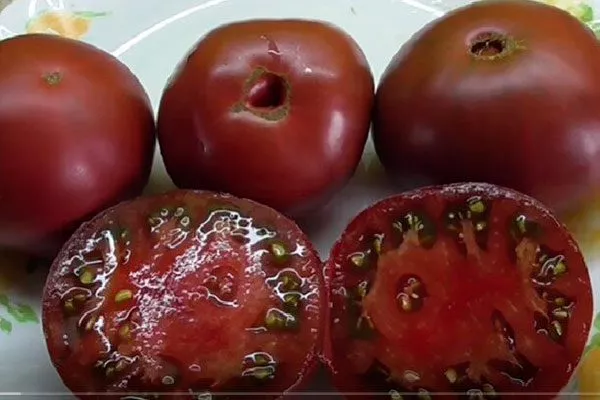
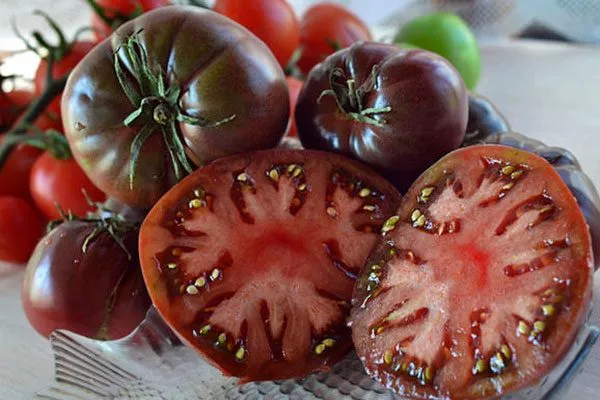
The fruits are very large. They are rarely black; purple, blue, brown, and violet shades are common. The seed chambers contain few seeds.
Brief description of fruits:
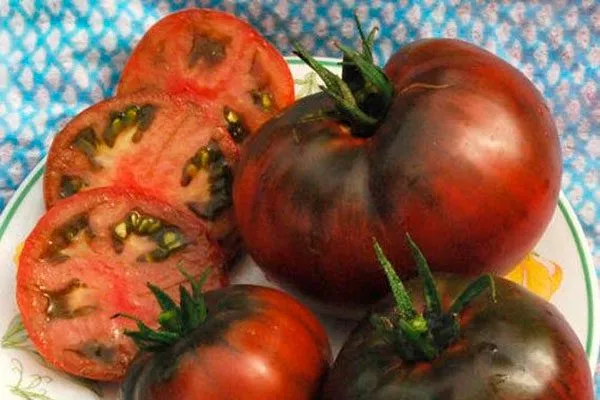
- Unripe fruit color: dark green with a dark green spot at the base.
- Color of ripe fruit: purple-brown.
- Form: The fruits are flat-round, slightly ribbed, flattened vertically.
- Pulp: medium density.
- Skin: thin, delicate.
- Weight: 150-180 g
Individual specimens can reach a weight of 300-350 g.
The history of the Black Bison tomato
The Black Bison variety was developed by Agrofirm Poisk LLC. A group of breeders worked on this tomato: A. N. Khovrin, N. N. Klimenko, T. A. Tereshonkova, and A. N. Kostenko. The variety was approved for cultivation in 2015.
The taste of fruits and their purpose
The fruit has a rich, sweet flavor, with fruity notes and a lingering aftertaste. The flesh is juicy and meaty, with a pleasant aroma.
The variety is suitable for fresh consumption, it is used to make sauces and ketchups, and it is also used in the preparation of various culinary dishes.
Characteristics
The Black Bison tomato is a mid-early variety. It takes 115-120 days from germination to harvest. The yield is 6.3 kg per square meter. One bush produces an average of 3-4 kg of fruit. The variety is resistant to tobacco mosaic virus.
Pros and cons
This variety with a striking and unusual name boasts not only attractive and unique fruits, but also other advantages that are recommended to be explored in advance. It's equally important to familiarize yourself with all of this variety's shortcomings.
Landing features
The Black Bison tomato is grown using seedlings and is recommended for growing in greenhouses and under film covers.
Selecting a site
The Black Bison variety thrives in sunny, warm locations. It does not thrive in low-lying areas, marshy soils, drafts, or gusty, cold winds.
It is recommended to plant tomatoes in soil where the following crops were grown: cabbage, carrots, zucchini, onions, radishes, pumpkin, and garlic. Tomatoes should be planted no sooner than 3-4 years after nightshades.
Seed preparation
Before sowing, the seeds are calibrated, sorted, and tested for germination. A salt solution helps discard any non-viable seeds. After half an hour, all the defective seeds float to the top. After checking, the seeds are washed and soaked in a growth stimulator, such as Epin.
It's recommended to warm tomato seeds in the sun or on a radiator, then harden them in the refrigerator (on the bottom shelf). It's also recommended to germinate the seeds by wrapping them in damp cheesecloth.
Site preparation
The Black Bison variety grows best in light loam or sandy soils. The optimal soil pH for growing tomatoes is 6 to 6.5. Preparing the plot for planting begins in the fall. Add organic matter such as humus, compost, and rotted manure before digging.
To enrich the soil with nitrogen, it is recommended to sow it with green manure crops, such as wheat or clover. In the fall or spring, the soil, along with the green manure, is dug over with a spade. If the soil is highly acidic, add lime or dolomite flour. A week before planting the seedlings, add mineral fertilizers, and two days before planting, add wood ash.
Growing seedlings
Seedlings are sown in March. The seedlings are grown for 70-75 days before planting in the ground.
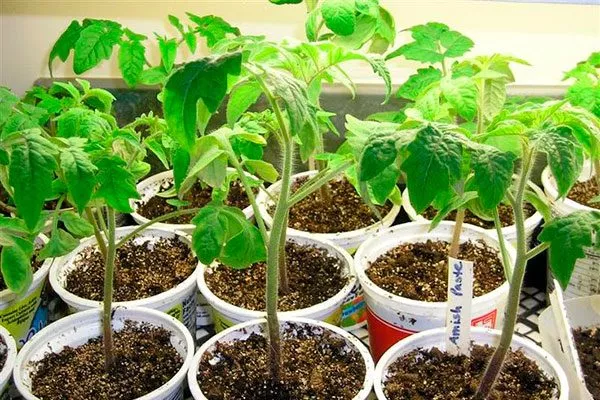
Features of growing Black Bison tomato seedlings:
- Seedlings are grown in peat pots or plastic cups. However, it's more convenient to sow them in larger containers, from which the plants are transplanted into individual containers and pricked out.
- Empty containers are disinfected, for example, by treating them with boiling water, a solution of potassium permanganate, or hydrogen peroxide. Then, the planting containers are filled with a prepared substrate—preferably a mixture specifically designed for tomatoes.
- If desired, you can prepare your own soil mixture, for example, from mature humus, well-rotted compost, lowland peat, and soil—forest, meadow, sod, or garden soil. Fine river sand, vermiculite, or perlite can be added to the soil mixture to loosen the soil. You can also add vermicompost, humates, beneficial bacteria, soil microorganisms, biologically active substances, etc.
- Sow seeds into moist soil, planting them 1 cm deep. Leave 2-3 cm between adjacent seeds and 3-4 cm between rows (when sowing in containers).
- The crops must be covered with plastic film (or glass) to create a greenhouse effect. This will help the seeds germinate faster. The crops are kept in a warm room with diffused light. The crops are ventilated daily to prevent condensation on the walls of the cover, which causes excessive moisture.
Monitor the seedlings daily to ensure they don't miss germination. As soon as germination occurs, remove the covering immediately, and lower the room (or greenhouse) temperature from 20°C to 25°C to 14°C to 16°C. If the temperature isn't lowered, the seedlings will overgrow, stretch out, and weaken.
The cool regime is maintained for a week, with 24-hour lighting provided during this period. Then the temperature is raised again to 20–22°C. Nighttime temperatures should be a few degrees cooler.
Features of seedling care:
- After a week, round-the-clock lighting is reduced to 18-20 hours, and after another week, to 11-12 hours.
- Until the seedlings are transplanted, water them no more than 1-2 times a week, and after transplanting, water them 3-4 times. Use only warm, settled water.
- If the seedlings are growing on a windowsill without additional lighting, the planting containers should be turned regularly so that the plants receive even light.
- When the seedlings have two true leaves, they are pricked out. They are transplanted into 300-500 ml cups. When transplanting, the central root is pinched back by 1/3.
- Fertilizing seedlings begins only after transplanting, two weeks later. You can use complex fertilizers, such as "Senior-Tomato."
Transplanting
Tomato seedlings are planted outdoors in late May or early June. The Black Bison variety is recommended for growing under cover. Planting in greenhouses is done a couple of weeks earlier. The exact timing depends on regional climate conditions. In greenhouses, it's important to wait until the soil warms to 15–16°C.
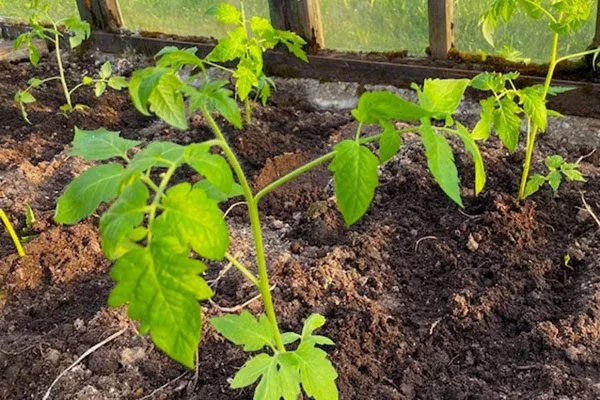
- ✓ Optimum soil temperature for planting seedlings: +15…+16 °C.
- ✓ Soil loosening depth after watering: the first 2-3 weeks - 10 cm, then - 4-5 cm.
Features of planting Black Bison tomato seedlings:
- For planting, prepare holes measuring approximately 15 x 20 cm. The hole should be large enough to accommodate the roots of the seedling along with the peat pot or root ball.
- The optimal planting pattern is 50 x 50 cm. No more than 4 plants are placed per 1 sq. m.
- Add a few handfuls of organic matter—humus or compost—and a little wood ash to the dug holes. Add 1 tablespoon of superphosphate. Then water the holes with warm, settled water. After half an hour to an hour, when the water has been absorbed and the soil has settled slightly, you can begin planting the seedlings.
- Place the seedlings vertically in the holes. If they're very tall, place them at a slight angle, so that part of the stem is buried. Before planting, be sure to remove all the leaves from the portion of the stem that will be underground.
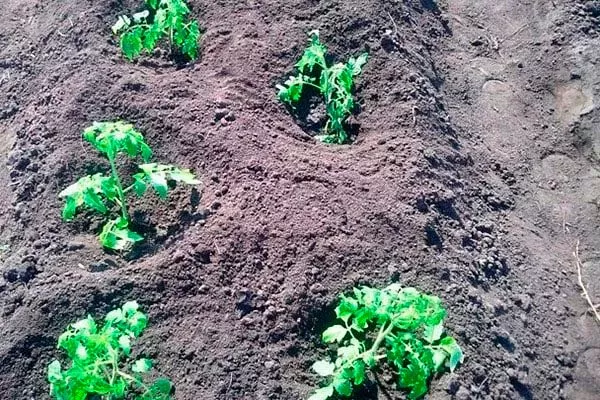
- The seedling's roots are covered with soil and compacted, forming a small depression around the stem (to prevent water from spreading during watering). The plants are watered again once the water has been absorbed, and the soil is mulched with straw, hay, peat, etc.
Care Features
The Black Bison tomato is not fussy, but to obtain a good harvest, it requires proper, competent, and regular care. To ensure large, tasty fruits form on the bushes, water and feed them, and follow all other recommended agricultural practices.
Watering
Experts recommend not watering planted tomatoes for 10 days (unless there's a heat wave). Subsequently, water approximately 1-2 times a week. The frequency depends on the weather, rainfall, and soil conditions. Water should be applied at the roots, preventing water from reaching the above-ground parts of the plants.
Loosening
The next day after watering, it is recommended to loosen the soil to prevent the formation of a hard crust that is impermeable to air.
The first time tomato soil is loosened is 2-3 weeks after planting the seedlings, when the plants have fully adapted and established themselves. Initially, the soil is loosened to a depth of about 10 cm; as the roots form and grow, this depth is reduced to 4-5 cm.
Fertilization
Black Bison tomatoes are fertilized approximately three times per season (not counting supplemental feedings during seedling development). Both organic and mineral fertilizers are used. A week after planting, nitrogen fertilizers are applied, and when flowers appear, complex mineral fertilizers are applied. Then, every two weeks, the tomatoes are fed with phosphorus and potassium.
Shaping and garter
The Black Bison tomato produces large, tall bushes that require support. The plants also require training, with two stems. The shoot is pinched after the sixth ovary.
Diseases and pests
The Black Bison tomato has relatively good immunity to the main diseases of nightshade crops, but with improper care and unfavorable growing conditions, the bushes can be affected by fungal and bacterial infections. When symptoms of late blight appear, treat the bushes with Alirin-B or Gamair, and for prevention, use fungicides such as Previkur Energy, Provizor, or similar products.
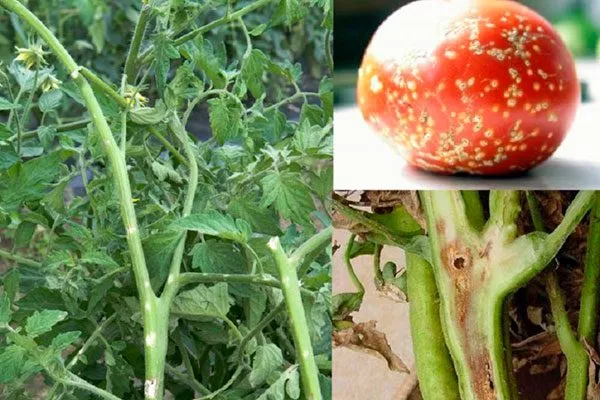
Black Bison tomato plants are not susceptible to pest infestations, but attacks are possible if they become widespread. To combat aphids, spider mites, and other insects, use biological products such as Actofit, Bitoxybacillin, Verticillin, and others.
Harvesting and storage
The harvest takes place in late summer to early fall. The fruits are harvested at the point of biological ripeness and are immediately used for eating or processing, or stored in the refrigerator for about a week. This variety is not suitable for long-term storage, as the skin is too thin and easily damaged.
Reviews
The Black Bison tomato is an original variety with fruits that are unique in every way. This tomato is perfect for those who grow vegetables under plastic, as the manufacturer recommends growing it indoors.