
The Beefsteak Marshi tomato is an original American variety with exotic-colored fruits. This large-fruited variety will delight tomato lovers with its excellent flavor, robustness, and high yields. This variety is a collector's item.
Description of the variety
The bushes are vigorous, indeterminate, with rapidly growing side shoots, reaching 1.8-2 m in height. The leaves are large, standard-shaped, and have a slight purple tint on the underside. This characteristic is normal for this variety and does not indicate a phosphorus deficiency.
Brief description of fruits:
- Unripe fruit color: green.
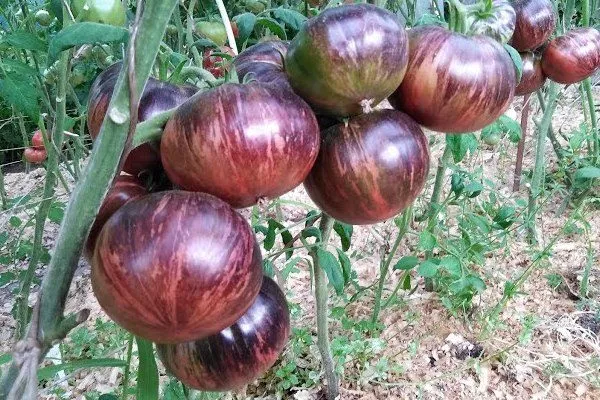
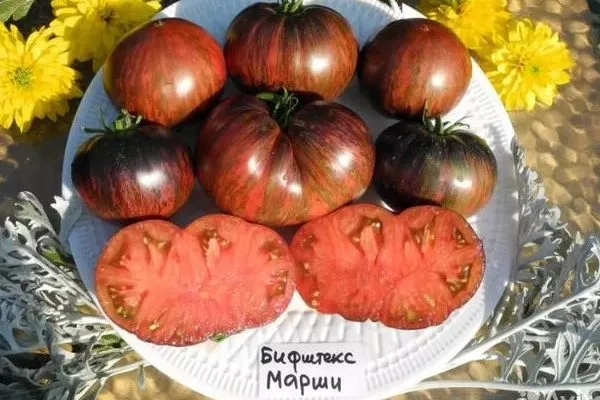
- Color of ripe fruit: from dark purple to cherry, almost black, with many strokes and stripes (silver, reddish, greenish shades) and with anthocyanin on the “shoulders”.
- Form: flat-round.
- Pulp: fleshy, juicy, oily.
- Pulp color: dark cherry.
- Skin: thin, smooth, glossy.
- Weight: 180-200 g
Each cluster produces 4-5 ovaries, which produce fruits of varying sizes—some large, some small. The fruits are irregular in shape, round and slightly elongated, and sometimes heart-shaped.
Who bred the Beefsteak Marshi variety?
The Marsha's Starfighter Beefsteak tomato belongs to the "Star Wars" series, created by American breeders Marsha Eisenberg and Russell Crowe (South Florida). They dedicated the new line, featuring exotically colored fruits, to the film of the same name.
Taste and purpose of fruits
The flesh of the Beefsteak Marshi tomato is juicy and meaty, and the taste is rich and sweet, with a whole range of diverse notes – tomato, spicy, and fruity.
These versatile fruits are suitable for fresh consumption, salads, and appetizers. These tomatoes can also be canned, dried, cured, and processed into pastes, sauces, ketchups, and more.
Characteristics
The Beefsteak Marshi tomato is a mid-season variety with a high yield of up to 11-12 kg per square meter.
The variety is resistant to viral diseases and tolerates temperature fluctuations well.
Pros and cons
The American tomato Beefsteak Marshy has many advantages that our gardeners have already appreciated. And for those just planning to plant this unusual variety in their garden, it's useful to familiarize themselves with all its advantages and disadvantages.
Landing
The Beefsteak Marshi tomato can thrive and bear fruit both outdoors and indoors—in heated greenhouses or under plastic covers. In either case, this variety is grown using seedlings.
Selecting a site
The site for planting the Beefsteak Marshi tomato should be well-lit; shade is contraindicated. It should be free of drafts and gusty north winds. Planting tomatoes in low-lying areas where water accumulates is strictly prohibited.
- ✓ The site should be protected from northern winds, which can damage plants.
- ✓ The soil must be well drained to avoid water stagnation.
Tomatoes can be planted in the same spot no sooner than three years after planting. The best predecessors for tomatoes are root vegetables, greens, squash, and melons. Avoid planting tomatoes after nightshade crops such as potatoes, peppers, eggplant, etc.
Soil preparation
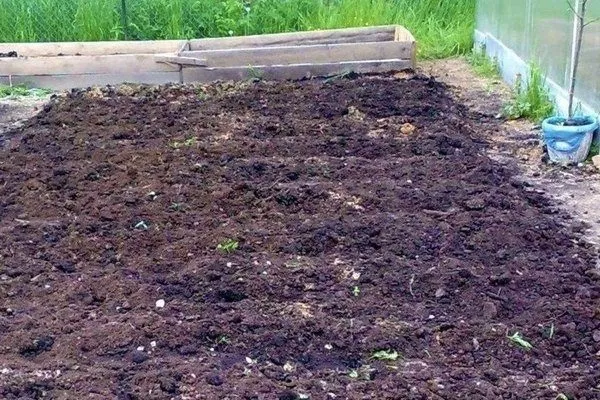
Tomatoes prefer fertile, loose, and light soils, sandy loams and loamy soils, that are moisture-retentive, water-permeable, and breathable. Fertilizer is best applied in the fall, during tillage. Approximately 10 kg of humus, compost, or rotted manure should be added per square meter.
It's recommended to add compost to sandy soils, and sand to clay soils. Dig the soil to the depth of a spade. It's also important to assess the soil's acidity using litmus test strips. If the pH is above 6.2 to 6.8, add deacidifying agents such as slaked lime, dolomite flour, or wood ash.
Seed preparation
Healthy and viable seeds are selected for sowing. This can be done using a salt solution: 5 g of table salt dissolved in 100 ml of water. All the good seeds will settle to the bottom, while empty and non-viable ones will float to the top and be discarded.
To disinfect, soak the seeds in a fungicide solution, such as Maxim, Topaz, or similar solutions. A 1% potassium permanganate solution or 3% hydrogen peroxide can also be used. After disinfection, soak the seeds in a stimulating solution such as Epin, Zircon, or succinic acid.
Growing seedlings
Tomato seedlings of Beefsteak Marshi are sown 60 days before the expected planting, the timing of which depends on several factors - climate, soil type (covered or open), weather conditions.
Typically, seedlings are sown in March, in the south - at the beginning of the month, in the middle zone - in the middle, in the northern regions - closer to April.
Features of sowing seedlings:
- The seeding container should have drainage holes to remove excess moisture. Large containers that can accommodate dozens of seedlings can be used for sowing, or individual pots and cups for growing just one seedling. However, sowing 2-3 seeds per pot increases the germination rate and allows you to select the best-quality seedling.
- The planting container is disinfected and filled with a nutrient-rich substrate—you can buy a ready-made one or make your own. For example, a mixture of peat and humus (1:1) with 10% vermiculite is suitable for growing tomato seedlings. General-purpose seedling soil can be used instead of peat.
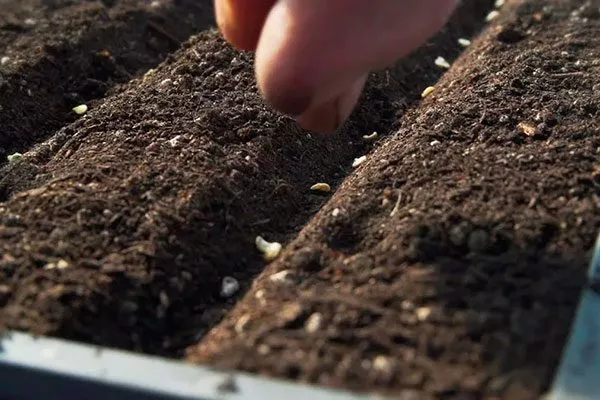
- The soil in the planting containers is leveled and moistened with warm, settled water from a spray bottle. The seeds are planted 1 cm deep. Furrows are made in the planting containers or templates with appropriately sized cells are used. Space adjacent seeds 2 cm apart, and 3-4 cm between rows.
- The crops are covered with a transparent material, such as plastic film, and placed in a warm room with diffused light. The mini-greenhouse is ventilated daily to prevent condensation.
Under favorable conditions, seeds germinate in 5-6 days. The optimal temperature for germination is 23 to 25°C.
Caring for seedlings
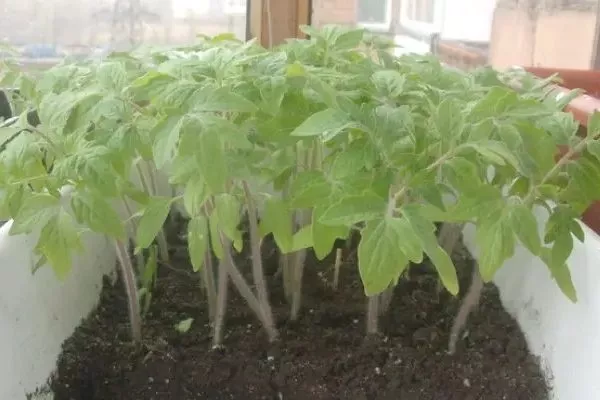
Once the seedlings emerge, place the planting containers near windows to ensure maximum light exposure. Most importantly, remove the covering immediately, otherwise the germinating tomatoes will overheat. At the same time, lower the room temperature to 14–16°C, otherwise the seedlings will stretch and weaken.
Features of caring for Beefsteak Marshi seedlings:
- The seedlings are kept at a lower temperature for 3 days, then the temperature is raised again to +22…+25°C. Night temperatures should be 2-3 degrees lower than daytime temperatures.
- For the first week after germination, maintain 24-hour lighting. After a while, reduce the daylight hours to 18 hours; starting at one month of age, seedlings should receive 12-14 hours of light per day. For supplemental lighting, it is recommended to use special phytolamps.
- Seedlings are watered moderately, maintaining a balance between being too dry and too wet. Water in the morning so the soil has time to dry by evening. Water should be applied at the roots; avoid splashing on the stems and leaves, as this can promote fungal diseases.
- For the first two weeks, before transplanting, water the seedlings 1-2 times a week. After transplanting, increase the watering frequency to 3-4 times a week. Use only settled, room-temperature water.
- The relative humidity in the room where the seedlings are grown should be maintained at 60-70%.
- Fertilizing tomato seedlings begins 2-3 weeks after transplanting. A solution of complex fertilizer with a high nitrogen content is applied to the roots. Subsequently, fertilize every 2-3 weeks, gradually increasing the proportion of potassium and phosphorus in the fertilizer.
- When 2-3 true leaves appear - approximately 2 weeks after emergence, the seedlings are pricked out and transplanted into separate containers, pinching off the central root by 1/3.
- For 2 weeks, the seedlings are hardened off by taking them outside, gradually increasing the time spent in the fresh air from 2-3 to 8-10 hours.
Transplanting
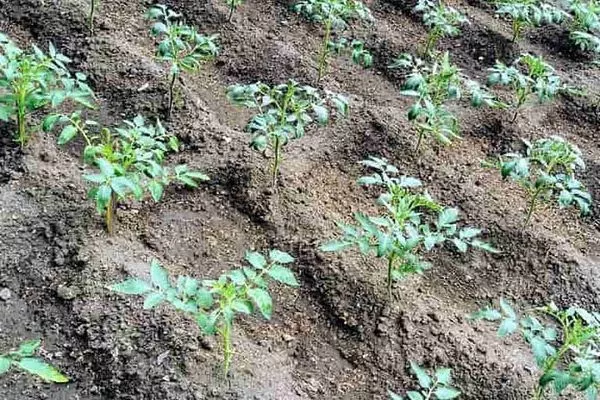
By the time the seedlings are transplanted to their permanent location, they should have at least 7-8 leaves. Planting takes place in May. The soil should warm up to 14°C, and the air temperature to 18–20°C.
Features of planting the Beefsteak Marshi tomato:
- An hour before planting, the seedlings are watered to facilitate their removal from the planting containers.
- The size of the holes is 15 x 20 cm. They are filled with humus, wood ash and superphosphate, and then soil is placed on top so as not to burn the roots of the seedlings.
- Pour 3 liters of water into the holes and after an hour begin planting the seedlings.
- The seedlings, along with the root ball, are transferred to the planting holes using the transshipment method. The empty spaces are filled with soil, compacted, and then watered.
No more than 3 Beefsteak Marshi tomato bushes are planted per 1 square meter.
Care Features
The American Beefsteak Marshy tomato requires standard care. Although this variety may look unusual, it doesn't require anything special. It requires watering, weeding, loosening the soil, preventative spraying, and mineral fertilizers.
Watering
Tomatoes are watered on average 1-2 times a week. Watering frequency can vary depending on weather conditions. In open ground, it directly depends on rainfall. Watering occurs when the top layer of soil has dried out; otherwise, there is a risk of waterlogging.
The watering requirement depends on the growing season; for a mature plant, it's at least 5 liters. When watering, avoid allowing water to fall on the above-ground parts of the plants. The best option for watering the Beefsteak Marshi tomato, both indoors and outdoors, is drip irrigation.
Loosening
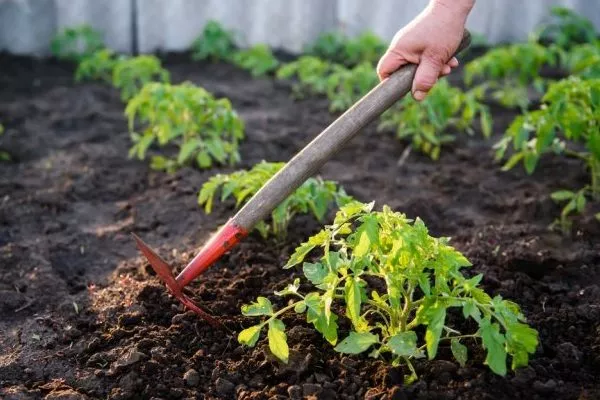
To prevent the formation of a dense soil crust that impedes normal air exchange, loosen the soil after watering and rain. The depth of loosening depends on the stage of vegetation: the more extensive the plant roots are, the less deeply the soil should be loosened. After planting, the soil should be loosened to a depth of 10-11 cm, and after a month of growth, to a depth of 3-4 cm.
Fertilization
It is recommended to feed the Beefsteak Marshi tomato with mineral and organic fertilizers in accordance with generally accepted agricultural practices. Immediately after planting, when the seedlings require support for successful establishment and adaptation, quickly digestible fertilizers are applied. It is also important to enrich the soil with organic matter by mulching it with peat or humus, sawdust, and straw.
During flowering and fruit set, potassium fertilizers are applied to promote fruit set, and phosphorus fertilizers are added to improve nutrition and stimulate root development. During fruiting, tomatoes again require potassium and phosphorus for fruit formation and ripening, as well as calcium, which improves fruit structure and prevents blossom-end rot.
Shaping and garter
It is recommended to train American Beefsteak Marshes tomato bushes into 1 or 2 stems. The stems also require pinching and tying to supports.
Diseases and pests
The Beefsteak Marshi tomato is resistant to many diseases, but high humidity and poor air circulation significantly increase the risk of fungal infections. To prevent disease, it is recommended to apply Gliokladin, Alirin, or similar biological preparations to each hole when planting. During the growing season, spray the bushes with Fitosporin three times, at weekly intervals.
Among pests, spider mites, aphids, nematodes, and Colorado potato beetles pose the greatest threat. To repel and control these and other insects, you can use soapy water, wormwood, or tobacco infusions; in severe infestations, insecticides are used.
Harvesting and storage
Ripening times depend on climate conditions, planting time, and many other factors. Harvest typically occurs in late July or August. The fruits are picked in dry weather, preferably in the morning or evening.
Tomatoes are picked with the stems attached to prevent spoilage. For storage, they are placed in a cool room, where they are stacked in single-layer crates. The optimal temperature is 12 to 15°C, with humidity of 85-90%. Under favorable conditions, Beefsteak Marshi tomatoes retain their flavor and appearance for 2-4 weeks.
Reviews
The Beefsteak Marshi tomato is sure to please gardeners seeking exotic and unusual varieties. If you're interested in trying the variegated fruits of a collectible American tomato, this is definitely the one for you.