
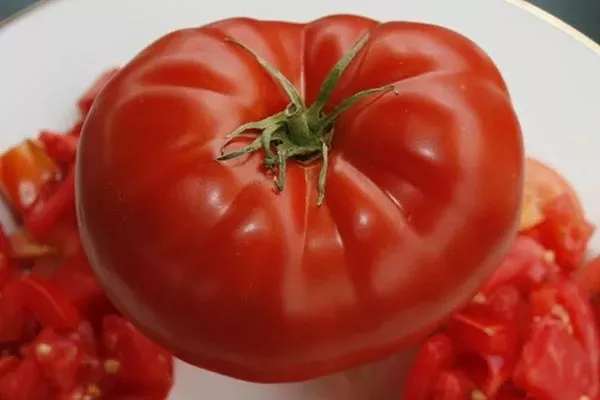
The Beefsteak variety was developed by Russian breeders and is a striking example of beefsteak tomatoes, which differ from regular tomatoes in that they are very large, sweet, and fleshy with grainy pulp.
Description of the variety
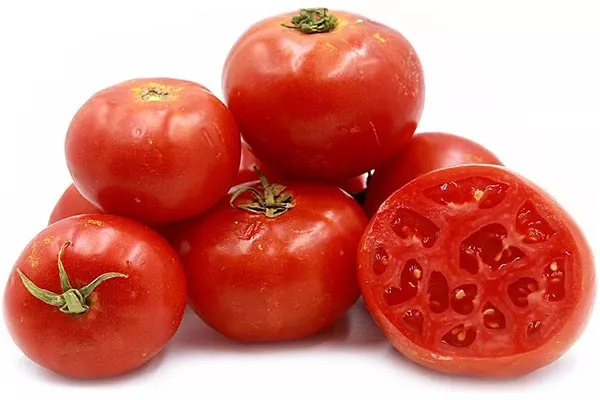
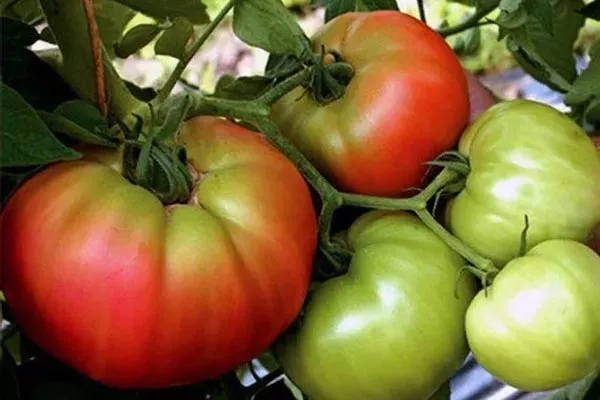
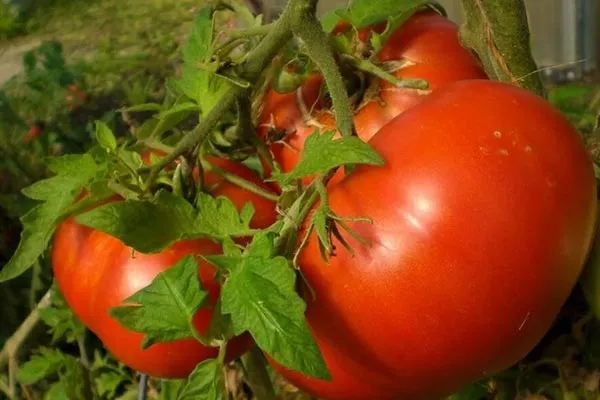
The Beefsteak beefsteak tomato has tall, indeterminate bushes that can grow up to 1.6-1.8 m in height. The leaves are medium-sized and light green. The fruits are large and attractive, with six or more seed chambers. The inflorescences are simple, and the stalks are articulated.

Brief description of fruits:
- Colour of unripe/ripe fruits: green/red.
- Shape: flat-round, with slight ribbing.
- Skin: thin.
- Weight: 200-280 g.
The History of the Beefsteak Tomato
The Bifshteks variety was developed by Russian breeders from Agrofirma Poisk LLC. Authors: V. V. Ognev, N. N. Klimenko, and A. N. Kostenko. The variety was approved for cultivation in 2009. It is suitable for virtually all regions, from the North Caucasus to the Far East.
Taste and purpose of fruits
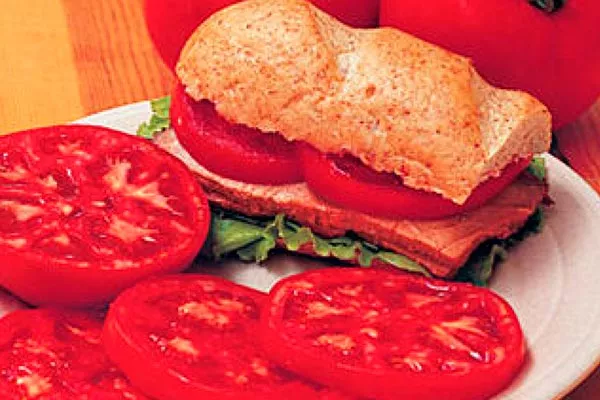
The fruit's flesh is medium-dense, meaty, tender, juicy, and sweet, melting in the mouth. It contains little liquid, making the tomatoes easy to cut because they don't leak juice when sliced. Beefsteak tomatoes are ideal for cooking. They are also used to make sauces, pastes, juices, and adjika. Fresh tomatoes are delicious in salads, paired with greens.
Characteristics
The Beefsteak tomato is a relatively new variety, but it's already well-known among gardeners and tomato lovers. It attracts them not only for its flavor and fruit size, but also for its excellent agronomic characteristics.
Productivity
The Beefsteak tomato is a high-yielding variety, yielding up to 8 kg per square meter. Under plastic covers, farmers harvest up to 11 kg/sq. m.
Ripening time
The Beefsteak tomato is a mid-early variety. It takes 80-85 days from planting the seedlings to fruiting, and 110-120 days from germination to fruit ripening.
Frost and drought resistance
The Beefsteak tomato is heat-loving and sensitive to temperature fluctuations. In the south, it can be grown in open ground, while in temperate climates, it is recommended to grow it under plastic covers. The optimal daytime temperature for Beefsteak tomato growth is 22°C, and the nighttime temperature is 15°C. The critical low temperature for this variety is 10°C.
Immunity to diseases
The Beefsteak variety is highly resistant to Alternaria, Cladosporiosis, and tobacco mosaic virus. Under unfavorable conditions, the risk of late blight increases.
Pros and cons
The Beefsteak beefsteak tomato has many advantages, making it a popular choice among gardeners. However, if you're growing tomatoes for canning or selling, you should also consider its drawbacks. This large-fruited variety may not be suitable for your needs.
Landing
Beefsteak tomatoes are grown from seedlings, which allows for a quicker harvest. Furthermore, in the ground, it's more difficult to protect young seedlings from diseases, insects, and adverse weather. By planting and caring for seedlings, gardeners are virtually guaranteed a good harvest.
Seed preparation
Seeds can be purchased or collected from the previous harvest. Growers typically sell seedlings ready for planting, but home-grown seeds will require some processing.
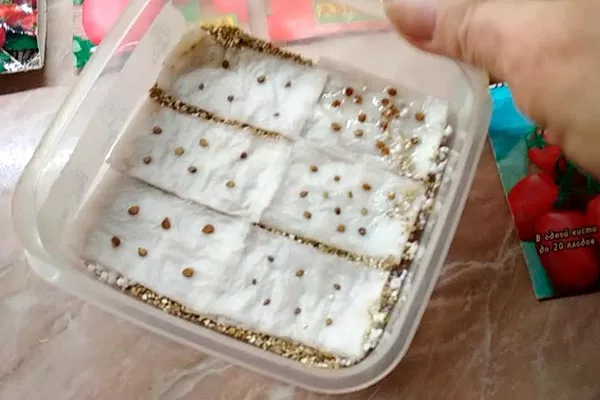
First, discard unviable seeds by immersing them in a saline solution. Then, soak them in a weak solution of potassium permanganate and soak them in a growth stimulator. The final step is germination in damp cheesecloth. When soaking, you can use biological products such as Baktofit, Fitoverm, Zircon, and others.
Selecting a site and preparing beds
Beefsteak tomatoes should be planted in a well-lit, level area, protected from drafts and northerly winds. Shade will negatively impact yield. Planting tomatoes in low-lying areas where rainwater accumulates is not recommended.
- ✓ The site should be protected from northern winds and drafts, with good lighting throughout the day.
- ✓ The soil should be fertile, with a pH of 6.0-6.8, well drained.
The soil should be fertile, loose, and light. Clayey and heavy soils are loosened with sand, which is added during the fall tillage. Sawdust or sand can also be added to the soil. For sandy soils, it is recommended to add more humus.
In the fall, remove all plant debris from the plot and dig the soil to the depth of a shovel blade. In the spring, dig the plot again. A couple of weeks before planting the seedlings, disinfect the soil by dousing it with a hot copper sulfate solution. To ensure the soil is warm by the time of planting, cover it with plastic wrap.
Growing seedlings
The future harvest depends on the health and vigor of the seedlings, so it's important to grow them correctly. Plants ready for planting should be firm and not leggy. Seedlings are sown in March.
Features of growing seedlings of the Beefsteak variety:
- Seedlings can be grown in containers or individual pots, including peat pots, which are then transplanted into the soil along with the plants. However, seedlings sown in containers must be transplanted into individual pots once they have two true leaves.
- Planting containers are filled with store-bought soil or a homemade potting mix (humus, peat, sand, or fertile soil). The mix is moistened before sowing. The seeds are planted 2 cm deep. The seedlings are covered with plastic film, which is removed as soon as the seedlings emerge.
- Until seedlings emerge, the crops are kept indoors at a temperature of 25°C. Later, when seedlings emerge, the temperature is lowered to 16°C. Under these conditions, the seedlings will be strong, hardened, and will not stretch. However, they should receive plenty of light, at least 11-13 hours a day.
- Subsequently, the temperature is raised again to 22°C, dropping a couple of degrees lower at night. The seedlings are watered regularly with warm, settled water, and liquid fertilizer is added 2-3 times. The seedlings should not be allowed to freeze. If there is a draft on the windowsill, it should be insulated.
- The grown seedlings should not feel crowded, so the pots are placed at a distance from each other.
Transplanting
Seedlings are planted at 50-60 days of age, around mid-May. By this time, they should have at least seven true leaves and the first flower cluster.
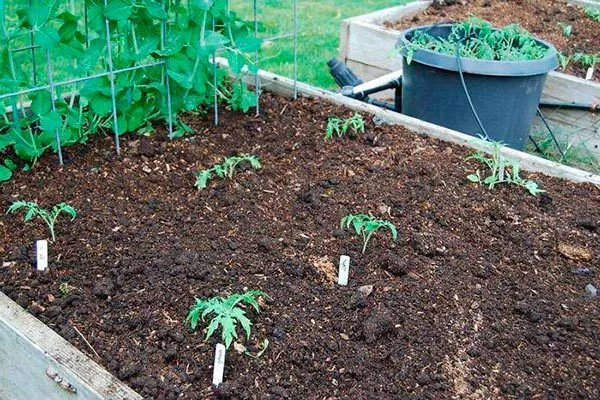
Features of planting seedlings:
- Dig holes for planting, measuring 60x40 cm. No more than three plants should grow per square meter. The holes should be large enough to accommodate the root ball.
- Add 3-4 handfuls of humus and 1 heaping spoon of superphosphate to each hole. Compost and wood ash can be used instead of mineral fertilizers—10 liters and 0.3 liters, respectively.
- Water the planted seedlings with warm, settled water. Once the moisture has been absorbed, mulch the soil with peat, straw, etc.
Care
The Beefsteak tomato requires a certain amount of care; it cannot be called difficult, but it does require attention and regular attention from gardeners.
Watering mode
Watering should be moderate, as the variety does not tolerate overwatering. Excess moisture leads to a decrease in dry matter and sugar content in the fruits, impairing their flavor. In greenhouses, high humidity leads to the development of late blight. However, a lack of water also negatively affects the plants, causing them to grow slowly and develop poorly.
Fertilizing tomatoes
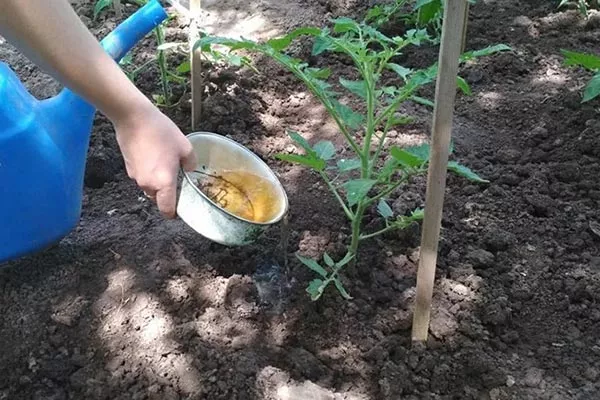
It is recommended to fertilize the bushes after watering with potassium-phosphorus solutions and a wood ash solution. Complex mineral fertilizers can also be used. During periods of intensive growth, the bushes especially need magnesium, and during flowering, boron. Tomatoes need fertilizing 3-4 times per season.
Loosening and weeding
The soil in the tomato beds is regularly loosened and weeded. The soil is loosened after watering, with the hoe buried 3-4 cm deep. Loosening is done 3-4 times per season until the plants have established themselves. Weeds are pulled as they appear, and mulch is applied to slow their growth.
- ✓ Forming a bush with 1-2 stems increases yield and improves fruit quality.
- ✓ Regular removal of shoots and lower leaves promotes better ventilation and lighting.
Shaping and garter
The Beefsteak beefsteak tomato plants grow tall, so they need to be regularly staked. The plants are trained into single or double stems. Regularly remove excess leaves and side shoots to prevent overcrowding, ensure air circulation, and ensure a high yield.
Diseases and pests
The Beefsteak variety has fairly strong immunity to common tomato diseases, but with excessive moisture and poor ventilation, which can occur during greenhouse cultivation, there is a risk of fungal infections.
How to prevent tomato diseases:
- Gliocladin, Alirin or similar biological preparations are added to each planting hole.
- During the growing season, the bushes are treated with Fitosporin three times. The intervals between sprays are one week.
- During cold and rainy periods, when the risk of fungal infections increases, tomatoes are sprayed with Trichopolum.
If the bushes do become diseased, the damaged leaves are torn off and then sprayed with copper sulfate or another effective preparation.
The most common insect pests that attack Beefsteak tomatoes are Colorado potato beetles, nematodes, spider mites, and aphids. Insect colonies can be controlled by spraying the plants with a soap solution, wormwood infusion, or tobacco infusion.
In case of widespread infestations, appropriate insecticides are used. Actellic, Apollo, or other acaricides are used against mites, while Intavir, Vermitek, and other acaricides are used against aphids and other flying insects.
Harvesting and storage
The fruits are harvested from the third ten days of July through August; the exact ripening time depends on planting time and climate. Tomatoes are harvested in dry weather, preferably in the morning or evening. They are picked with the stems attached, ensuring better storage.
Harvested tomatoes are stored in a cool room, stacked in boxes or other containers in a single layer. The optimal storage temperature is 12 to 15°C, with humidity at 85-90%. Under appropriate conditions, Beefsteak tomatoes can be safely stored for 2-4 weeks.
Reviews
The Beefsteak variety is an ideal choice for lovers of meaty and sweet tomatoes. This tomato consistently delights gardeners with large, tasty fruits, good yields, and strong, resilient plants, making it an excellent choice for both experienced and novice gardeners.