
Belle is a hybrid that is easy to grow, especially when grown in greenhouses. Even in less favorable conditions, it can produce a high yield. The plants easily tolerate hot temperatures and dry soil, and don't require excessive sunlight for normal growth and fruiting.
Description of the bush and fruits
The crop is grown both in open gardens and indoors. The plant is an indeterminate variety and reaches a height of 150-170 cm, with developed branches and medium foliage.
There are also other indicators of the hybrid:
- the leaves are bright green and medium in size, and the shape is standard;
- the root system is well developed, the trunks are strong and thick, which allows the plant to effectively absorb nutrients from the soil;
- the crown of the plants is moderately dense and provides protection for the crop from hail and direct sunlight;
- vegetables ripen evenly throughout the season;
- the inflorescences are simple, the first of which is formed above the ninth leaf, and the rest alternate every three leaves;
- As tomatoes age, they turn from green to bright red;
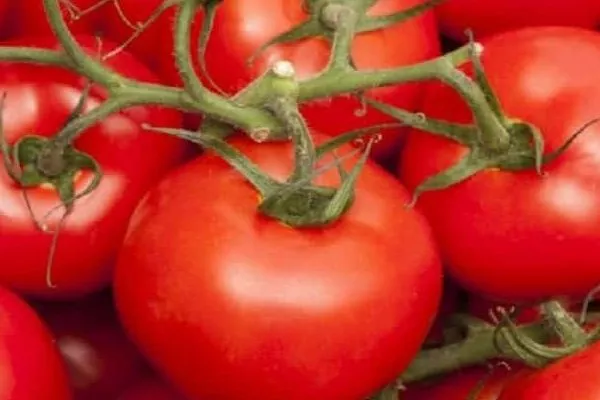
- the average weight of fruits ranges from 120 to 150 g, with occasional specimens weighing up to 180 and even 200 g;
- the shape is round, slightly compressed, the ribbing is weakly expressed;
- the pulp is fleshy, compact, colored dark red, and the skin is smooth and shiny;
- the fruits have good shelf life;
- The vegetables have a uniform shape and size, which makes them easy to transport, whether in boxes or in bulk – this property makes tomatoes popular in the market, where they sell out quickly;
- Chefs use them to prepare sliced meats, salads, purees, sauces and ketchups;
- Tomato juice is rich in minerals and vitamins, which makes it healthy;
- Tomatoes are also well suited for canning in glass jars, wooden and plastic barrels.
Main characteristics and history
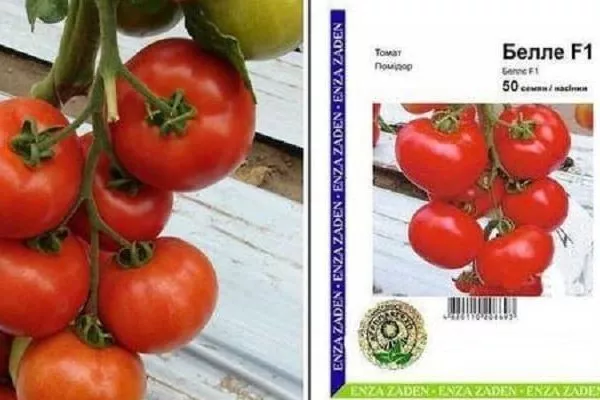
Tomato Belle F1 is a hybrid developed by Dutch agronomists from the company “Enza Zaden Beheer BV”. In 2003, it was registered in the State Register of the Russian Federation for cultivation in greenhouse conditions on small areas.
It is popular among gardening enthusiasts due to its high productivity and attractive appearance of fruits, as well as due to the following characteristics:
- Tomato Belle F1 is considered one of the most stable hybrids for growing in greenhouses.
- It provides stable, competitive yields even under unfavorable weather conditions. The plant is resistant to low temperatures, drought, and low sunlight.
- The variety promises large yields each season, with yields of up to 28-31 kg per square meter and an average of 6 kg of fruit per bush.
- The maturity of this hybrid is average; the first harvest can be expected 105-115 days after the first loops appear.
The hybrid was included in Russia's third light zone:
- Belgorod, Bryansk, Vladimir, Voronezh, Kaliningrad, Kaluga, Kurgan, Kursk, Lipetsk, Moscow, Oryol, Ryazan, Sverdlovsk, Smolensk, Tambov, Tomsk, Tyumen regions;
- Krasnoyarsk Krai;
- Republic of Bashkortostan;
- Yakutia;
- Republic of Tatarstan;
- Khakassia.
Growing seedlings
60-65 days before the plants are ready to be transplanted outdoors, seeding begins. This usually occurs after March 15th.
Soil preparation and sowing
The seeds don't require any additional treatment, such as disinfection or growth stimulants, as they are already prepared at the factory level. For growing seedlings, use a universal substrate, which can be purchased at a gardening store or made at home.
The process of post sowing:
- In a large container, mix equal parts peat, compost, turf, river sand, and charcoal, adding 1 tablespoon of superphosphate. To treat the substrate, you can bake it in the oven or spray it with potassium permanganate for disinfection.
- Fill seedling containers (pots or plastic trays) with the soaked substrate.
- Create holes 1.5-2 cm deep and carefully place the planting material at intervals of 2 cm.
- Fill with soil and cover with film, place the containers in a dark corner of the room.
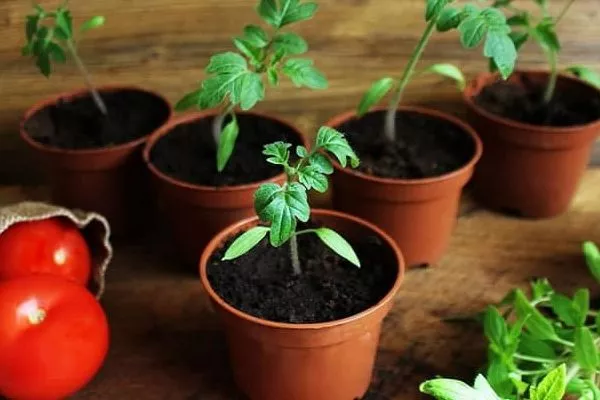
When the first shoots appear, the film is removed and the seedlings are transferred to a bright place for further growth.
Care
When properly caring for seedlings, warm, settled water is used to water the roots using pipettes or syringes. Transplanting into larger 1.5-2 liter pots occurs when the seedlings have two or three leaves.
Before transplanting into open ground, plants are fed with mineral preparations in three stages:
- After picking, apply 1 tablespoon of nitrogen per 1 liter of water or the specialized preparation Agricola.
- The second feeding is carried out 12-14 days after transplanting into individual pots, using 100 g of nitroammophoska per 5 liters of water (100 ml of solution is used for each seedling).
- A week before transplanting, apply a potassium- and phosphorus-based fertilizer: 1 teaspoon of superphosphate and 2 teaspoons of ash per 5 liters of water. Use half a glass of this solution for each seedling.
Agricultural technology of tomatoes
To achieve truly abundant fruiting, it is necessary to adhere to the basic principles of agricultural technology and know certain nuances in caring for this variety.
Transfer
Dutch tomatoes prefer well-fertilized, airy soil. Before transplanting, add compost, peat, sawdust, and humus to the soil. For disinfection, fill the dug holes with boiling water. Young plants are planted slightly deeper than usual to stimulate lateral root growth.
The tree trunk area is covered with a layer of mulch to avoid frequent loosening of the soil after watering. Peat or wood shavings are used as mulch; they not only retain moisture but also protect plants from bacterial infections and inhibit weed growth.
Care
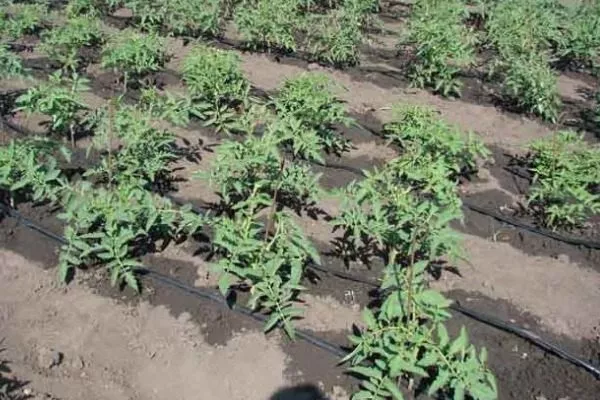
A key aspect of effectively growing the Belle f1 tomato hybrid is proper management of the bushes, which form into a single main stem. During the first couple of weeks after transplanting to the permanent site, remove all excess shoots.
What else needs to be done:
- During the first week after transplanting, tomatoes require ample watering, after which watering becomes more sparing. Ideally, the soil should dry out slightly before the next watering. Keep in mind that overwatering should also be avoided.
- To maintain the nutritional properties of the soil, tomatoes are fed with mineral complexes every two to three weeks:
- first top dressing is carried out two weeks after planting, using a solution of one part mullein and five parts water;
- second is carried out three weeks after the first, using 20 g of potassium salt and 20 g of superphosphate per 10 liters of water;
- at the budding stage the bushes need to be supplemented with boric acid in the amount of 2 g per 2 liters of water;
- during fruit formation It is recommended to use potassium-phosphorus fertilizer (20 g of potassium salt and 20 g of superphosphate per 10 liters of water).
- To maintain plant health, several important steps must be taken:
- weed removal;
- protection from insect pests and diseases;
- regular inspection of bushes.
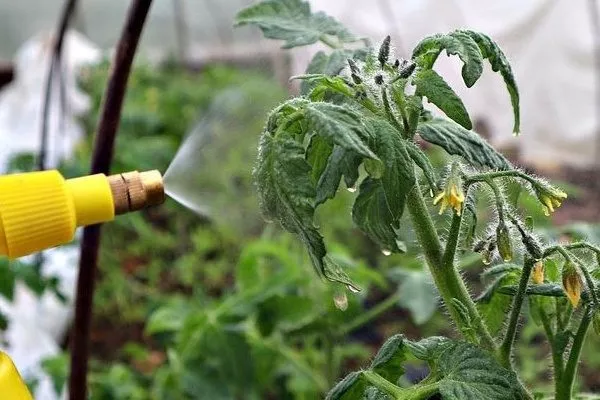
Prevention of diseases and pests
The Belle f1 hybrid exhibits high resistance to diseases such as tobacco mosaic virus, fusarium wilt, and verticillium wilt. However, it is not immune to late blight, which can cause brown spots on leaves, stems, and fruit. If not addressed promptly, this can lead to complete crop loss.
To combat late blight, you can use folk remedies prepared from the following components (per 10 liters of water):
- 200 g of crushed garlic and its feathers, mixed with 2 g of potassium permanganate;
- 180 g rock salt;
- 1 liter of kefir or whey;
- 1 liter of milk mixed with 20 drops of iodine;
- 1-liter jar of ash mixed with 50 g of shavings of laundry soap.
Fast-acting preparations (Quadris, Quadro and Consento) can be effective, but biological agents (Fitosporin, Planriz and Baktofit) are safer, although less effective.
To combat pests such as whiteflies, aphids, and spider mites, you can use Fitoverm, Aktara, Epin, and Zircon. These products will help protect your plants from pests and maintain the health of your entire crop.
Pros and cons
The Belle variety has many qualities that gardeners appreciate. The main ones are:
Flaws:
Reviews
The Belle F1 hybrid, originally from the Netherlands, has gained popularity in Russia due to its resistance to weather conditions and low light conditions. Farmers praise this variety for its ease of care, high productivity, and excellent flavor and marketability. It is recommended for growing indoors, for example, under a glass or plastic canopy.