
Barukh F1 is a hybrid indeterminate tomato variety ideal for both open-field and indoor cultivation. It has a moderate ripening period, making it an ideal choice for most climates in Russia. It produces particularly sweet and aromatic fruits.
History and regions of cultivation
The Russian agricultural company "Partner" is the initiator and source of the high-quality Barukh F1 tomato seed stock. The development is attributed to Vasily Ivanovich Blokin-Mechtalin, and the hybrid was officially approved for agricultural use in 2022.
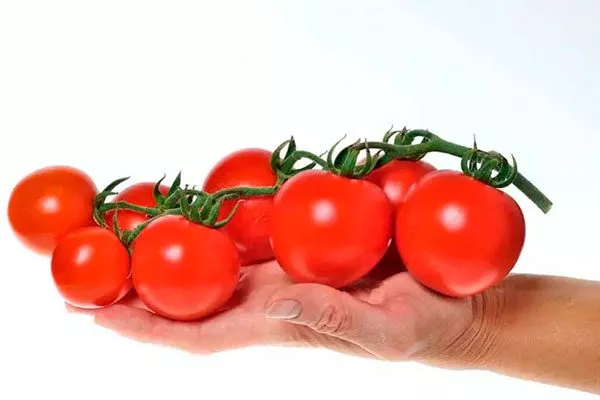
There is also a variant of the second origin, the tomatoes of which have characteristic features:
- Baruch tomatoes were developed by Israeli breeder Misha Steinbach in the 1980s;
- the variety appeared as a result of hybridization of Marmande and San Marzano;
- Barukh is a mid-season variety, beginning to bear fruit 110-115 days after sowing the seeds;
- the height of the plants is approximately 150 cm, and the leaves are large and have a rich dark green hue;
- tomatoes are distinguished by their significant size, weighing on average 180-200 g;
- the shape is round, with a slight flattening on the sides;
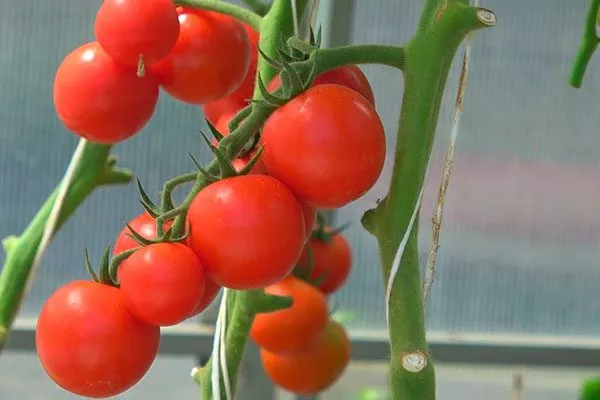
- the skin of the tomatoes is smooth with a bright ruby hue;
- The pulp is very juicy and the number of seeds is insignificant.
Description of the bush and fruits
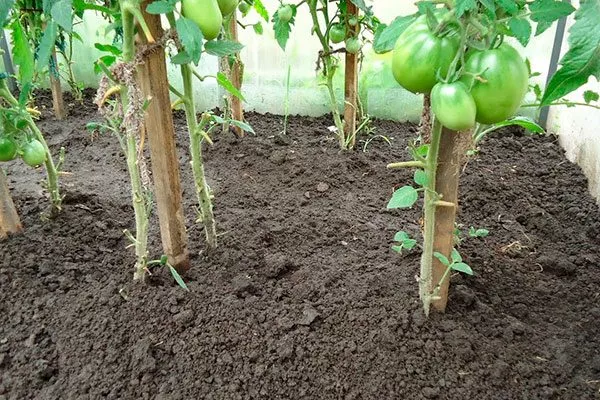
Barukh F1 bushes can grow up to 190 cm in height. In a garden, they typically reach 150-180 cm, while in a greenhouse, they can reach 200 cm. To support such tall bushes, they need strong supports to prevent them from falling over or breaking under the weight of the fruit.
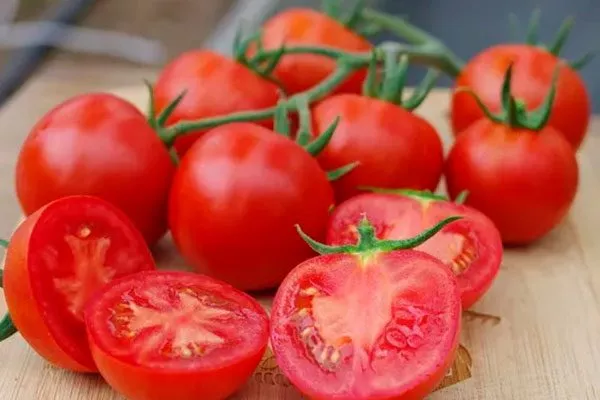
Key varietal characteristics:
- The shoots have a medium leaf mass, and the leaves have a typical tomato shape—oval-elongated with pointed tips and smooth edges. The leaf blades are slightly wrinkled, with prominent veins and an emerald green color.
- Flowers are arranged in racemes, each capable of producing up to eight fruits. The first raceme forms under the 7th or 8th adult leaf, while the remaining racemes are spaced at intervals of two true leaves.
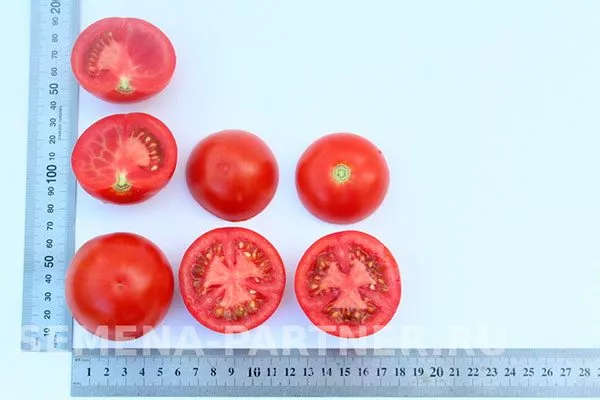
- Round tomatoes weigh between 55 and 80 grams. Each fruit contains 2 to 3 seed chambers. Unripe tomatoes are light green, while ripe ones turn a bright red.
- The pulp is characterized by increased density and a pleasant, fairly meaty structure.
- The hybrid has smooth skin.
Ripe fruits are versatile: they are suitable for freshly picked consumption, can be added to summer salads and appetizers, and can also be used for whole-fruit canning, pickling, or preparing various winter preserves and everyday dishes.
Main characteristics
Barukh is quite productive – up to 8-9 kg can be harvested from a single bush if all care recommendations are followed. Based on other data, Barukh F1 is a highly productive variety, promising up to 20-25 kg of ripe fruit per square meter in a greenhouse. To achieve this, use a planting density of 3 or 4 seedlings per square meter.
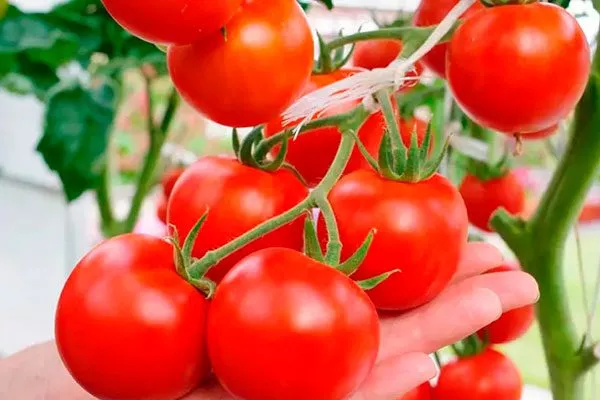
Please note the main characteristic features:
- It is capable of bearing fruit even in less than ideal weather conditions, making it a choice for unstable climates.
- The harvested crop has high resistance to transportation and can be stored in suitable conditions for a significant period of time.
- It belongs to the early maturing variety, reaching maturity in just 110 days.
- It is characterized by increased resistance to problems such as tomato mosaic, viral leaf curl, verticillium wilt, fusarium wilt, and nematode infestation. However, plants of this variety may be susceptible to pests such as Colorado potato beetles and spider mites.
If the Colorado potato beetle population is small, they can be removed manually. For larger infestations, insecticide treatment is recommended. The final treatment should be carried out at least 20-25 days before harvest.
Planting step by step
Barukh F1, like other varieties of this crop, is best grown indoors using seedlings. Other important considerations include:
- Optimal dates for planting. Seeds should be sown two months before the planned date of transplanting the plants to their final location - this usually occurs in March.
- Preparing the soil mixture and containers. Before sowing, it is important to thoroughly treat the containers with disinfectants and fill them with a specialized soil mixture designed for the growth of seedlings of this vegetable crop.
- ✓ Check the expiration date of the seeds; the optimal shelf life for tomatoes is no more than 4 years.
- ✓ Make sure that there is a quality certificate confirming the hybridity of the seeds.
The process of planting seeds:
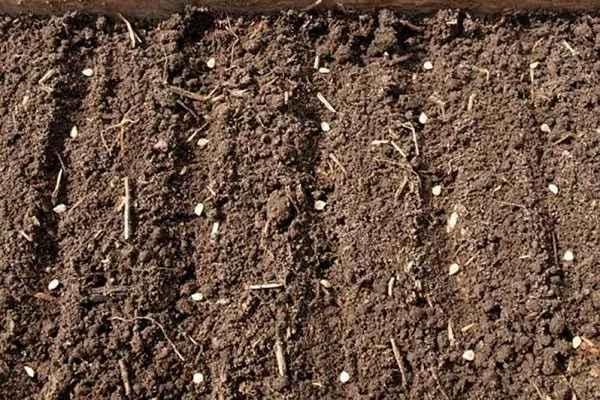
- Pour the nutrient substrate into the prepared containers and form 1 cm wide furrows on it.
- Carefully place the planting material in them, then cover with soil.
- Spray using a spray bottle (to avoid washing away the planting material), then cover the containers with glass to create a greenhouse microclimate.
- Transfer to a room with a comfortable temperature and leave there until the first green shoots appear.
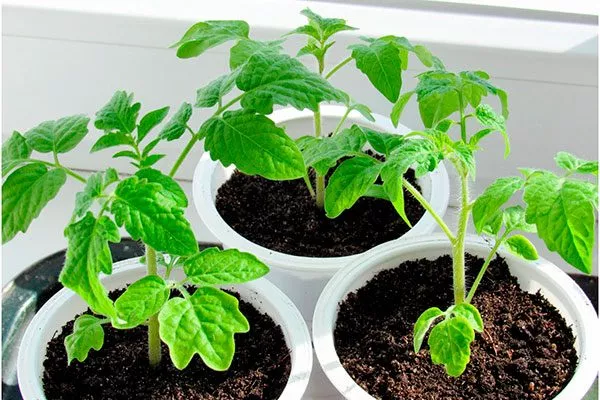
Water the seedlings regularly, ensuring the soil in the containers is consistently moist. When the plants have two true leaves, transplant them into individual pots with a capacity of approximately 500-700 ml.
Other events:
- During the growing process, apply urea twice to stimulate growth and development.
- Two weeks before transplanting the bushes to their permanent location, begin acclimating them to harsher conditions. This is accomplished by temporarily opening the windowsills over the containers holding the seedlings.
Further cultivation
Caring for the hybrid is not difficult and requires only a few simple manipulations: regular spraying, loosening the soil, periodically adding fertilizer and removing weeds.
Key actions:
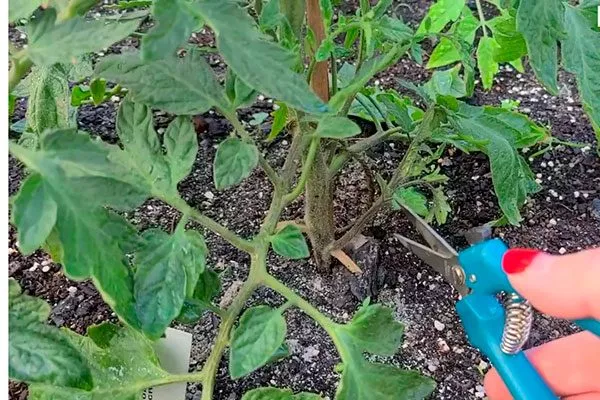
- Formation. When growing in greenhouses, it is recommended to leave two main shoots and remove all other side shoots. In open ground, it is possible to form a bush with three stems.
- Features of watering. Barukh requires regular misting—every 3-4 days using warm water. It's best to mist in the morning or evening, focusing on the plant's root system.
It is important to avoid water droplets getting on all the green mass of the tomato bush during spraying. - Fertilizing tomatoes. During the season, tomatoes undergo several stages of fertilization:
- Shortly before transferring the seedlings to their permanent growing area, it is recommended to carry out the first feeding – use a solution of urea or nitrophoska to stimulate the development of leaves and root shoots.
- When the first flowers appear on tomatoes, apply superphosphate and potassium salt. These fertilizers promote the formation of more flowers and ovaries, which in turn increases tomato productivity.
- The next stage of feeding with the same fertilizers is carried out during fruit formation to optimize their quality and accelerate ripening.
- Loosening and caring for the soil. After each watering or rain, it is necessary to loosen the soil around the tomatoes to soften the dry crust that accumulates on the surface.
It is important to regularly remove weeds from the garden bed and mulch the soil using grass or humus to slow down the evaporation of moisture.
Pros and cons
The key advantages of the Baruch F1 hybrid include the following characteristics:
Potential disadvantages of the hybrid include the need to support the shoots and the inability to obtain seeds from ripe fruits, since the tomato is a hybrid.
Reviews
The Barukh F1 tomato is one of the most popular mid-early hybrids with small fruits. It stands out for its good yield, pleasant ripe fruit flavor, attractive appearance, and ease of cultivation. These qualities make it particularly popular among vegetable growers across Russia.