
Banana Legs is an early-ripening tomato variety suitable for growing in both open and protected ground. Its signature feature is the unique appearance of its fruits, reminiscent in shape and color of the exotic fruit for which it is named. Some gardeners rave about them, while others find their rich flavor palette lacking.
History and regions of cultivation
This tomato variety was developed by the talented Russian breeder V. I. Blokin-Mechtalin. It was added to the Russian Federation State Register in 2019 and approved for cultivation in the following regions of the country:
- Northern;
- North-West;
- Central;
- Volga-Vyatka;
- Central Black Earth Region;
- North Caucasian;
- Middle Volga;
- Lower Volga;
- Ural;
- West Siberian;
- East Siberian;
- Far Eastern.
Description of the variety
If you're planning to grow the Banana Legs tomato variety at your dacha, familiarize yourself with its botanical description and key technical characteristics.
Appearance, taste characteristics
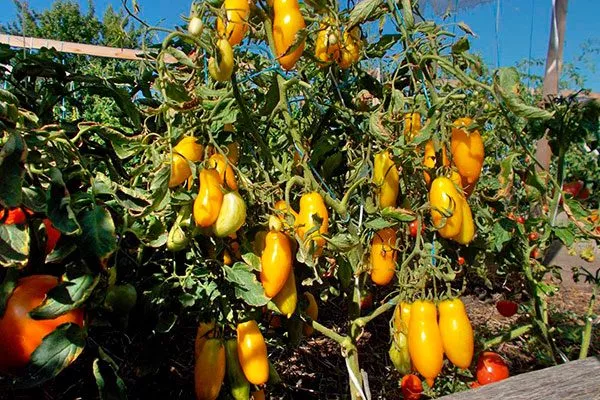
Tomato bushes, resembling an exotic fruit, are medium-sized. They are characterized by the following external features:
- height - up to 1 m (in an open bed), 1.2-1.5 m (in greenhouse conditions);
- high degree of branching;
- foliage: dark green, elongated, drooping;
- flowers: yellow, funnel-shaped, collected in a brush of 7-12 pieces.
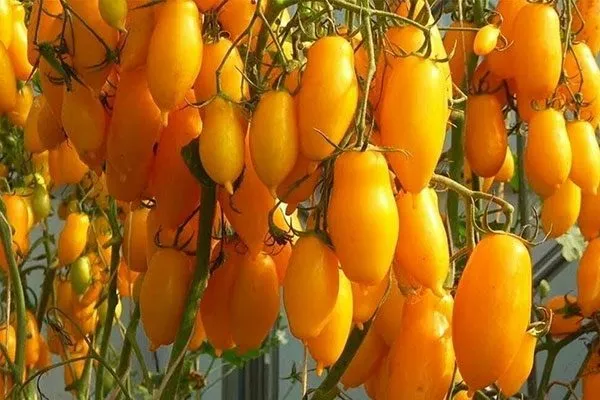
Banana Legs bushes produce their first inflorescence above the ninth leaf, with others forming every two to three nodes. They produce numerous fruits simultaneously, gathered in strong clusters (up to 12 in each). They require support. They are characterized by vigorous growth of side shoots, which require frequent removal.
To ensure maximum productivity, train plants with multiple stems (2 to 5). Four stems is optimal. Leaving more than four stems will reduce yield, the fruit will become smaller, and their flavor will suffer. With proper care, you'll have plenty of ovaries and avoid flower drop.
Banana leg fruits are of the "plum" type. They have an unusual appearance for a tomato, vaguely resembling exotic fruits.
They have the following characteristics:
- small size (length - up to 10 cm);
- weight - 80-100 g;
- an elongated, bumpy shape with a long, pointed nose that deviates to the side;
- a rich yellow-orange color with longitudinal stripes of the same color, but a different shade, and barely noticeable pinkish blotches (ripe fruits grown in a hot climate with plenty of sun may have silvery streaks on the surface);
- skin that is distinguished by its density;
- pulp: dense, fleshy, melts in the mouth, slightly juicy, with 2 small seed chambers with a small amount of content in them, having a fruity aroma.
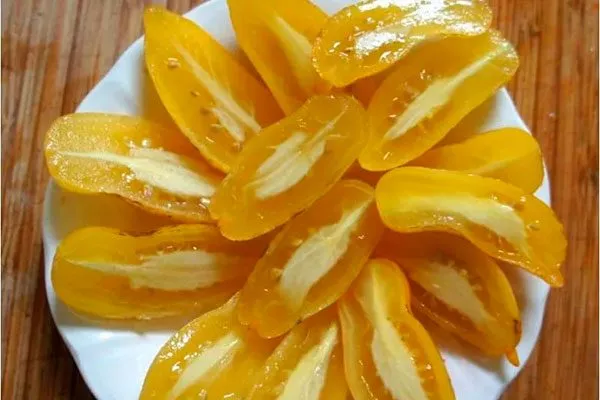
The banana variety's harvest pleases gardeners with its high consumer qualities, excellent shelf life, and suitability for long-distance transportation.
Yellow tomatoes have excellent tasting qualities. They have a pleasant flavor, with a hint of sweetness and milky and lemony notes. This flavor is most fully developed when ripe and is highly dependent on weather and growing conditions.
Scope of application
This variety is versatile. The yellow "cream" varieties are primarily intended for fresh consumption.
They also found application in home cooking:
- they are used to prepare summer vegetable salads;
- added to various dishes;
- used to decorate dishes;
- canned (slightly unripe tomatoes are suitable for preparing preserves for the winter, since the skin of ripe specimens tends to crack during heat treatment);
- processed into tomato paste;
- sauces are prepared from them;
- freeze;
- They are dried, which is possible thanks to the dense, low-juice pulp of banana tomatoes.
Ripening and yield
This variety belongs to the group of early varieties and hybrids. Its harvest ripens in 90-95 days after germination. When grown in the climate of the central and cold regions of Russia, the ripening period increases by 7-14 days.
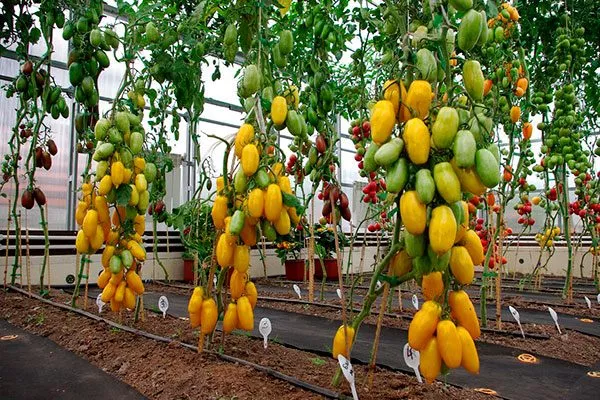
Domestic gardeners have come to love this unusual variety for its excellent fruit set in any weather, as well as its abundant fruiting, which extends throughout the season. They harvest 4-5 kg of tomatoes from one bush, and 17.8-20 kg of yield from one square meter.
Resistance to diseases and pests
The Banana Legs tomato pleases gardeners with its resistance to many fungal and bacterial diseases of nightshade crops, in particular to the following infections:
- late blight;
- fusarium;
- Cladosporiosis.
Yellow tomatoes are no more attractive to harmful insects than other varieties. They are most affected by aphids and whiteflies, which are common enemies of garden crops. Focus on controlling them: use traps, treat the plants with tobacco infusion, soapy water, Rapsolinum, or BioNim.
Growing seedlings
Gardeners cultivate the Banana Legs variety using seedlings. They sow the seeds 55-65 days before the planned transplanting date. This is done in late March or the first week of April if they plan to grow them outdoors, and in February and March if they plan to grow them indoors.
Seed preparation
The seed material requires special treatment to increase its germination, speed up the emergence of sprouts, and prevent future diseases of banana tomato plantings.
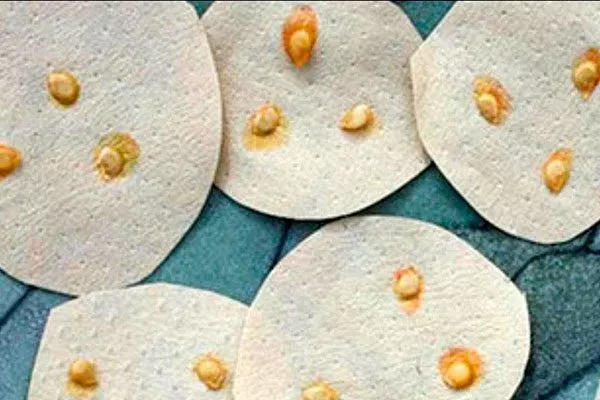
Carry out the following procedures for him:
- Checking expiration datesInformation should be provided on the seed packaging. Do not use old seeds.
- Rejection of empty, damaged and darkened specimensYou can easily identify seeds that are unsuitable for growing by soaking the seeds in salt water (at a rate of 1 teaspoon per 1 liter). Only those that sink to the bottom should be left for planting. Discard any floating seeds.
- DisinfectionTo reduce the risk of seedling disease, treat the seeds by soaking them in water with 1% potassium permanganate added for half an hour.
Solutions of other substances are also applicable for this purpose: Fitosporin-M (7 ml of the preparation per 100 ml of water), soda (3 g per 250 ml), aloe juice (1:1). - Stimulation of germinationAfter etching in a solution of potassium permanganate, treat the seeds of yellow tomatoes with a preparation such as Epin.
How to prepare soil and containers?
Grow banana seedlings in wide, shallow wooden or plastic containers with drainage holes in the bottom. Once the seedlings develop true leaves, transplant them into individual cups or peat pots. Disinfect the containers with a solution of potassium permanganate before use.
Prepare a suitable substrate for tomatoes, light and nutritious:
- universal soil mixture from a flower shop;
- made with your own hands from black soil and humus (1:1) with the addition of peat or sand (½ of the total volume), a handful of ash and a small amount of superphosphate (23 g per 10 l).
Sowing seeds
Carry out planting work following the step-by-step instructions:
- Fill the box with nutrient substrate, leaving 3 cm from the edge of the side.
- Level the soil mixture. Make furrows in it. They should be 1-2 cm deep and spaced at least 3 cm apart.
- Place the seeds in the furrows, keeping the sowing distance at 2-3 cm.
- Cover them with soil. There is no need to compact it.
- Carefully moisten the substrate with seeds using a spray bottle filled with settled, slightly warm water.
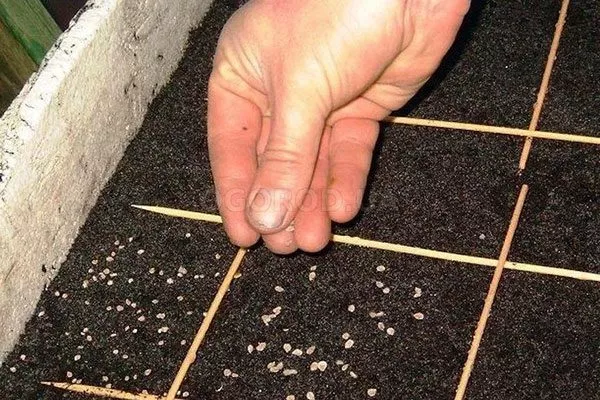
Create a greenhouse for the seedlings by covering the box with plastic or glass. Leave it in a warm place. At a temperature of 25°C, seedlings will appear quickly.
- ✓ Optimum temperature for seed germination: +25°С.
- ✓ The need to use a phytolamp to provide 12 hours of light per day.
Gardeners living in the south can grow banana legs by directly sowing the seeds into the garden soil. They are used dry, without pre-germination. After planting, cover the bed with plastic. The warmer the soil, the faster the seedlings will emerge. The plants grow strong and vigorous.
Caring for seedlings
Provide proper care for seedlings at home:
- Place them in a sunny window in a room with a temperature of 20-22°C. Provide them with plenty of light (at least 12 hours a day) using a grow light.
- Protect tomato seedlings from cold, drafts, and sudden temperature changes. Otherwise, they may become diseased due to stress.
- Water the plants carefully, avoiding dripping onto the leaves and stems. Use settled, room-temperature water. Moisten the soil in the container as the top layer dries out.
- After the first true leaf appears, transplant. When transplanting seedlings into individual containers, be careful not to damage their roots. Otherwise, their growth will be stunted.
- 14 days after transplanting, fertilize the banana seedlings by watering them with a solution of a complex composition (make it 2 times less concentrated than indicated in the instructions).
Repeat the feeding after 2 weeks. Five days before transplanting the seedlings to the garden, apply the nutrient solution again. - Harden off the plants before moving them to the garden bed. Leave them outdoors for 14 days.
Let them spend 30 minutes outside the first time. Over the following days, double the time they spend outside. It's best to spend the night before transplanting them to their permanent location outside, covered with plastic.
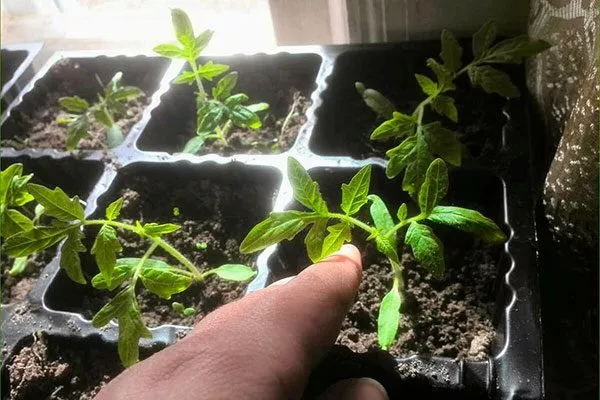
Transplanting tomatoes to a permanent location
Gardeners grow this variety both in greenhouses and in open-air beds. In the latter case, they choose the sunniest area of the garden, protected from drafts and wind. Planting Banana Legs in shade is not recommended. Under such conditions, yields decrease, and the fruit becomes sour.
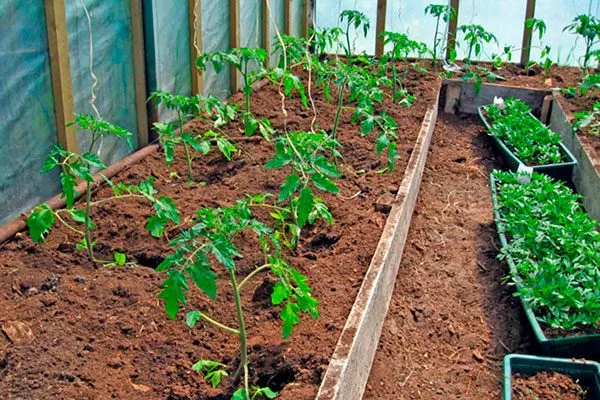
Don't plant tomatoes in a plot where you grew nightshades last season. They also don't belong next to yellow tomatoes. Potatoes are considered the worst predecessor/companion for them.
Grow crops after these garden bed inhabitants:
- beans;
- cabbage;
- Luke;
- carrots;
- cereals.
In the fall, dig up the soil in the selected area, clear it of weeds, and enrich it with organic matter (mullein, humus, wood ash) and superphosphate. This variety produces the highest quality harvest when grown in loose, moderately moist soils rich in humus.
Plant tomato seedlings in their permanent location after the danger of frost has passed and the soil temperature has warmed to 15°C. For most regions, the appropriate time is May or the first week of June. In regions with cold summers, it's recommended to move the seedlings to a greenhouse during the last month of spring.
Transplant young tomatoes following these step-by-step instructions:
- Dig a row of holes in the area, about the depth of a spade blade. The distance between them should be at least 50 cm. The width between rows should be at least 60 cm. Plant 3-4 seedlings per square meter.
- Add nutrient solutions (slow-release mineral fertilizers in granules, wood ash) to each hole.
- Carefully remove the seedlings from the cups. They will need to be watered a few days before transplanting. There's no need to break up the root ball.
- Place the seedlings in the holes, trying to center them. Cover them with soil.
- Water the Banana Legs tomato plant with warm water. Wait at least 14 days before watering again. Provide shade if the weather is hot and sunny.
Care
Banana Legs tomato plants require proper care to ensure abundant fruiting and healthy growth. Pay particular attention to planting, watering, and fertilizing.
Shaping and garter
The stems of this species are quite thin and require staking to prevent them from breaking under the weight of ripening fruit.
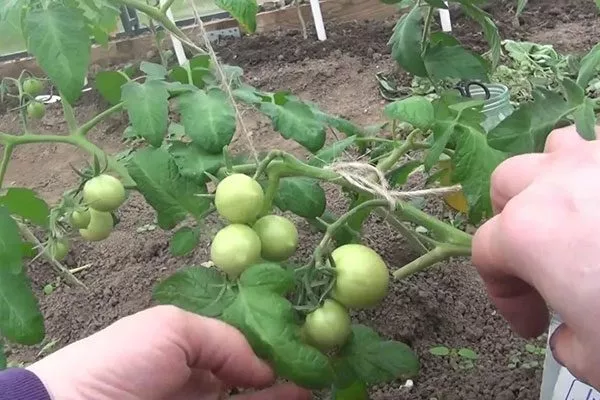
Another essential step when growing bananas is shaping the bushes. Follow the recommendations of experienced gardeners:
- grow tomatoes in several trunks (2-5 pieces);
- if you leave 4-5 stems, the fruits will ripen later (and the harvest will be more abundant);
- when planting a plant with 3 stems, the tomatoes turn out larger;
- If you leave more than 6 shoots on a bush, its productivity will suffer and the quality of the harvest will decrease (the tomatoes will be small and not sweet enough).
Yellow plum tomato plants require pinching. Failure to do so will complicate the maintenance of the tomato bed.
Fertilizers
To ensure high-quality and abundant harvests, don't neglect feeding your Banana Legs bushes. Apply nutrients 3-4 times during the growing season, following the following schedule:
- 14 days after transplanting tomato seedlings to a permanent location, apply complex mineral fertilizers;
- when the first flower clusters appear, use compositions rich in phosphorus and potassium;
- 2-3 days after the second feeding, spray the plants with a solution containing substances such as boron and zinc (they promote better fruit set);
- When the fruits on the first bunches reach the size of a walnut, re-fertilize the banana tomato planting with a phosphorus-potassium mixture.
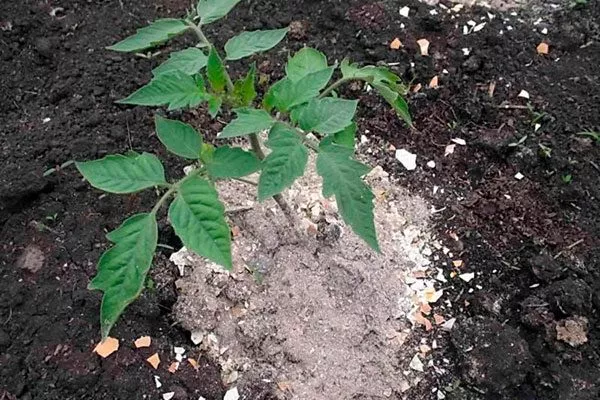
In the future, organic fertilizers (herbal or ash infusion, mullein solution) will be sufficient for the fruit-bearing bushes. Apply them as needed. Otherwise, the tomatoes will become overweight. If you didn't fertilize the soil before planting, fertilizing is essential.
During the hot and dry summer season, take care to prevent blossom-end rot. Applying calcium-rich fertilizers can help prevent this complication.
Watering, weeding and loosening
Water the yellow "cream" planting according to the following rules:
- do not carry out the procedure often, but water the tomatoes generously;
- the optimal frequency of watering is once every 7 days;
- During hot periods, moisten the soil under tomato bushes three times a week;
- give preference to a drip irrigation system;
- the water used for irrigating the crop must be warm and settled;
- pour it under the roots of the bushes;
- try to avoid splashes on green parts of plants;
- Water tomatoes in the morning.
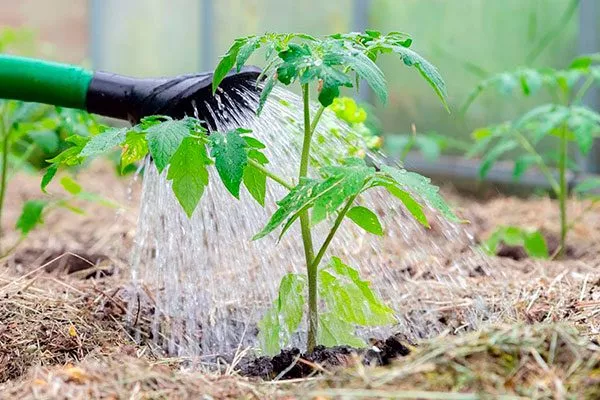
Do not neglect the agricultural practices that must be carried out after each irrigation of the beds or rain:
- Loosening the soilCultivate the soil between rows shallowly (up to 5 cm). Try not to damage the root system or stems of the tomato plants. Perform this procedure the day after watering. This will prevent the formation of an air-tight crust on the soil.
- WeedingRemove weeds as they appear in the garden. They rob tomatoes of moisture and nutrients, hindering their growth and development. They also provide a breeding ground for pests and pathogens.
- MulchingAfter moistening the soil under your tomatoes, cover it with mown grass or straw. This will reduce the amount of watering and weeding.
Mistakes in growing tomatoes
When growing the Banana Legs variety, gardeners sometimes encounter certain difficulties. Mistakes they make lead to complications:
- Using natural materials to tie bushes to supports, which can cause plants to rot. It's best to use synthetic thread for this purpose.
- Neglect of the garterFailure to do so often results in the fruit coming into contact with the ground. In such cases, the risk of tomato blight and slug damage to the plants and crop increases.
- Incorrect garter placementExcessive tying of the stem with thread or tape disrupts the plant's nutritional processes. This can lead to crop disease and reduced yields.
- Leaving damaged and incorrectly formed inflorescences on the bushes. They need to be removed to stimulate the formation of healthy fruits.
- Carrying out bush shaping and removing side shoots in damp weatherIn high humidity, wounds are more susceptible to infection and take longer to heal. Perform all work on a dry day.
- Incorrect application of fertilizersExcess nitrogen/zinc or nutrient deficiencies (nitrogen, phosphorus, potassium, copper) cause leaf curling and reduced productivity. Overuse of fertilizers can also lead to complications such as "fatten" tomatoes.
- Incorrect wateringExcess moisture promotes disease and causes root rot. Insufficient watering also has a detrimental effect on tomato plants. In thirsty plants, the leaves curl upward (their edges curl upward).
Diseases and pests
The Banana Legs variety pleases gardeners with its bushes' good resistance to many vegetable diseases. They are not susceptible to late blight, fusarium wilt, or cladosporiosis. In unfavorable years and with poor care, there is a risk of tomato infection.
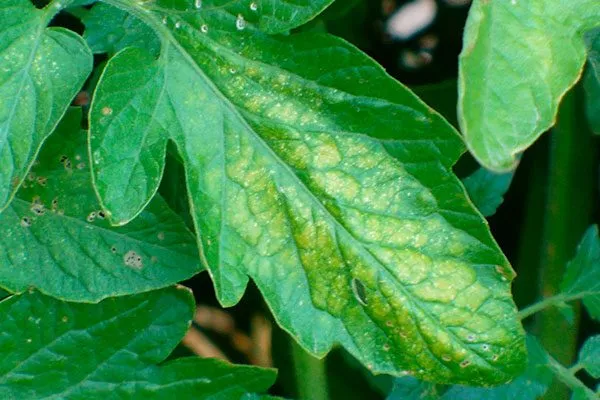
To prevent yellow tomato plantings from becoming infected, take the following preventative measures:
- disinfect seeds, planting containers and soil intended for growing seedlings;
- Disinfect the tools you use to care for your Banana Legs planting to prevent the spread of fungal and viral infections;
- follow the rules for watering vegetable crops;
- shape the bushes correctly;
- tie them up;
- apply fertilizers wisely;
- Spray tomato plants with Fitosporin-M, use Bordeaux mixture, HOM, and Maxim for regular preventative treatments.
If the first signs of disease appear on banana bushes, remove all affected parts of the plants. Then treat the plantings with medicinal products:
- Fitosporin-M;
- Fundazol;
- Ridomilom Gold.
Insects not only damage tomato plants but also carry fungal and viral infections. Aphids, whiteflies, and spider mites pose the greatest threat to this variety.
If pests attack your yellow tomato bed, resort to folk remedies:
- infusion of tobacco dust or onion peel;
- decoction of wormwood/celandine;
- garlic water;
- laundry soap.
The nuances of growing in a greenhouse and in open ground
The Banana Legs variety is suitable for both open-air and greenhouse cultivation. Before transplanting its seedlings to the garden, learn the nuances of growing tomatoes in different conditions:
- If you plan to plant seedlings in a greenhouse, replace the topsoil with highly fertile soil of the correct structure. Fertilizing the previous year's soil will not be enough.
- When growing tomatoes in a plastic greenhouse, maintain the correct temperature (17-19°C during the day, 12-14°C at night) and humidity (60-70% air, 70-75% soil). Don't neglect daily ventilation of the greenhouse.
- Indoors, Banana Legs bushes reach a height of 1.5 m, while in open ground, they reach up to 1 m. Consider this when choosing supports.
- Tomatoes grown outdoors may require protection from night frosts. This is especially true for tender seedlings. Cover the plants with plastic wrap every evening for the first two weeks after transplanting.
- If you're growing this variety outdoors, don't neglect mulching. Cover the bed with hay, straw, or burlap.
Collection and storage
Harvest banana tomatoes once they've ripened. Harvesting tomatoes that haven't yet reached full ripeness is also acceptable. They can be ripened further at home.
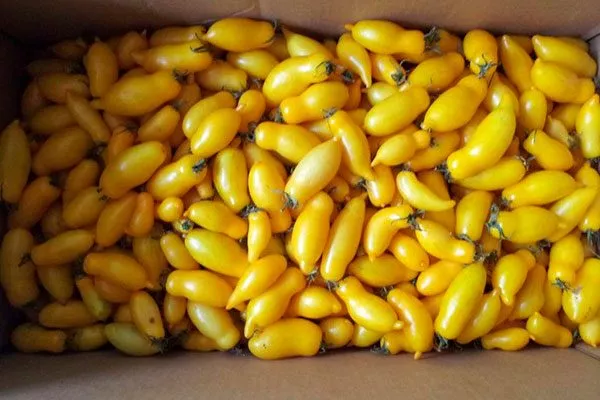
Store the harvested fruits in a cool, dark place, spreading them out on a flat surface in a single layer. Their thick skins help them keep well. Eat or process overripe fruits immediately after picking them from the bush; they will spoil quickly.
Pros and cons
The banana variety has become a favorite among gardeners and has taken root in garden plots across our country thanks to its many inherent advantages:
The yellow tomato also has several disadvantages:
Similar varieties
| Name | Ripening period | Disease resistance | Soil type |
|---|---|---|---|
| Banana legs | 90-95 days | High | Loose, moderately moist |
| Pinocchio | Mid-season | Average | Not specified |
| Pepper yellow | Mid-early | High | Not specified |
| Long stocking | Early ripening | High | Not specified |
The Banana Legs tomato has several analogues that produce elongated, bright yellow fruits:
- PinocchioThis variety is characterized by mid-season maturity, low growth, a unique tomato shape, and sunny skin color (they weigh up to 120 g), along with a sweet and sour taste. It is grown outdoors. A single bush yields 6 kg.
- Pepper yellowA mid-early variety. Its bushes do not exceed 1 m in height. The fruits are elongated, cylindrical, yellow, and sweet. They weigh 100-150 g. One plant produces 3.5-6 kg of fruit.
- Long stockingIt is characterized by early maturity, semi-determinate bushes, interestingly shaped fruits with a "beak" of rich yellow color, pleasant flavor, and tender flesh. Fruits weigh 80-90 g. One bush yields up to 5 kg.
Reviews
Banana Legs is a new variety bred in Russia, highly appreciated by lovers of yellow plum tomatoes. The fruit's distinctive elongated shape with a pointed tip, sunny coloring, and fruity aroma are a source of genuine interest among gardeners. This variety thrives in both open garden beds and greenhouses, producing high yields.