
The "Red Banana" tomato variety was developed over 20 years ago, but remains highly prized by gardeners. It can be grown in a variety of climates, has high commercial quality, and is suitable for long-distance transportation. Learn about other positive qualities and growing methods for this variety in this article.
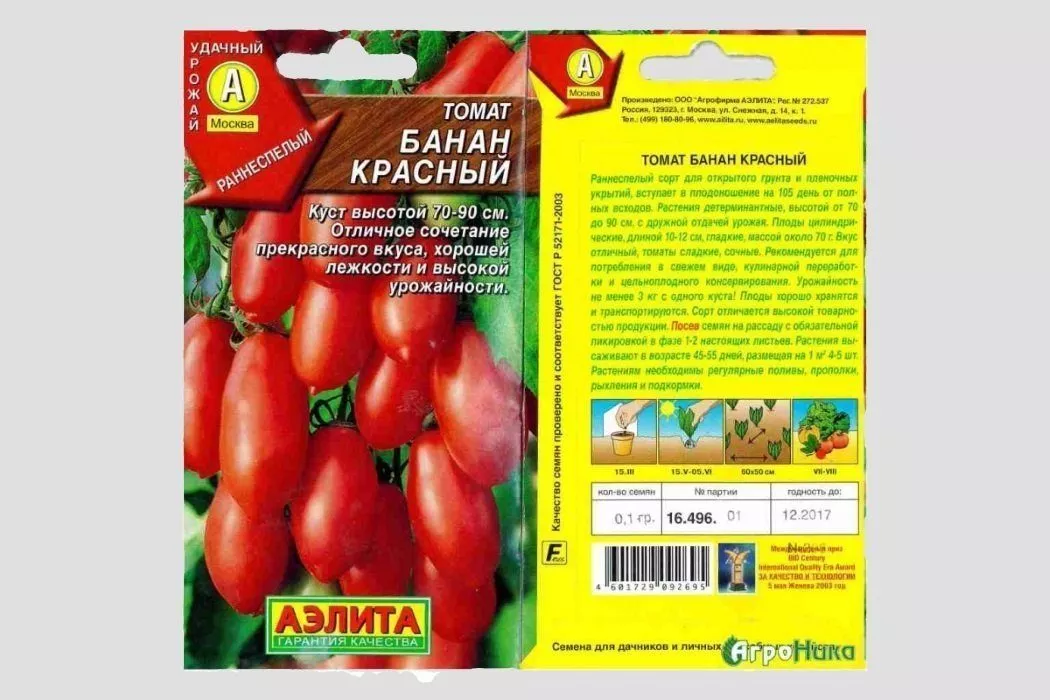
Tomato seeds "Red Banana"
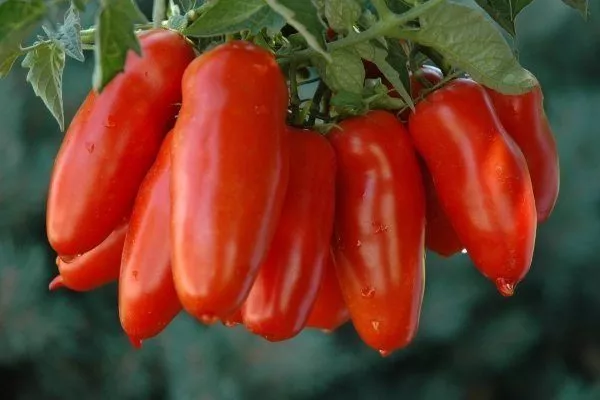
Tomatoes of the "Red Banana" variety
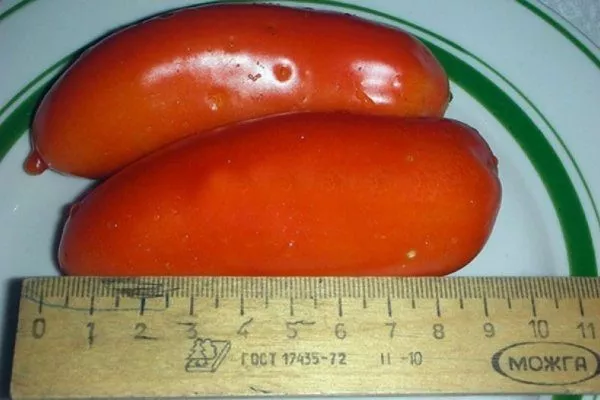
Red Banana tomatoes can grow up to 12 cm in length.
History of selection
The variety was developed in 1996 by domestic breeders at the Gavrish company. It became available for sale to Russian citizens in 1997. Currently, this tomato is widely grown in Russia and some regions of the CIS.
Does not apply to hybrid varieties.
Description and characteristics
Below is a detailed description of the most significant parameters of the tomato.
Fruit
Have the following characteristics:
- Form. Elongated, resembling a cylinder, with a slight rounding at the tip.
- Length. The largest fruits reach 12 centimeters, but on average they grow to 7 cm.
- Weight. Large. 1 medium fruit can weigh 100 g.
- Color. The vegetables have a rich red color.
- Seeds. Located in 3 separate chambers.
- Skin. Firm to the touch, dense, rarely cracks. Sometimes feels rough.
- Pulp. It has a dense structure and medium juiciness.
- Taste. Expressed to a medium degree, a little bland.
Plants
The following is characteristic:
- Height. A low-growing plant. The bush can reach a maximum height of 120 cm.
- Ovary. The first stem forms above the 8th leaf. Subsequent stems typically grow every two leaves.
- Inflorescence. Each brush produces up to 12 flowers. Therefore, the fruits usually form clusters.
Productivity
What is known about this:
- Ripening period. This is an early-ripening variety. The first harvest can be obtained as early as 105 days after planting. The mass harvest begins after another 14 days. This makes the variety suitable for cultivation in temperate and northern regions.
- Productivity. From 1 bush you can get about 30 fruits (3 kg) per season.
- Collection period. The variety bears fruit until November.
Application
You can use "Red Banana" for:
- pickling and canning;
- drying;
- making various sauces;
- eaten fresh or in salads.
Due to the variety's resistance to long-distance transportation, it can be used for sale.
The juice from the fruit is very thick and not to everyone's taste.
The main characteristics of this variety and the appearance of the seeds are described in more detail in the video below:
Growing methods
There are 2 main ways to grow red tomatoes:
- In the greenhouse. The soil in the greenhouse should be enriched with the necessary minerals. Adequate humidity and light should be provided. A temperature of at least 20 degrees Celsius should be maintained. To enrich the air with oxygen, open the greenhouse doors wide once or twice a week.
- In open ground. Planting in open ground should take place during the warm season, when there is no risk of frost. May is the most common time. It's best to prepare the soil in the fall, by fertilizing it well.
- ✓ Optimum soil temperature for planting seedlings: not lower than 15°C.
- ✓ Recommended soil pH: 6.0-6.5.
Carrots, cucumbers and cabbage are suitable as predecessor crops.
Growing the Red Banana variety of vegetables involves several stages.
Preparing and planting seeds
Before planting, it's essential to prepare the seeds to ensure good germination. Here's how:
- Sorting. Carefully sort through all the seeds to ensure that there are no empty or small ones among them.
- Washing. Rinse the seeds thoroughly, then soak them in a very weak solution of potassium permanganate for 1/4 hour, wrapped in clean gauze. This will help protect the sprouts from pests.
- Germination. Wrap the seeds in cheesecloth soaked in warm water and place them in a well-lit area. Moisten them daily. As soon as sprouts appear, you can begin planting.
Seedling
To plant seeds for seedlings you need:
- Prepare the ground. To do this, line the bottom of a plastic container with drainage material. Add soil on top of it.
- Landing. Make small holes (no more than 1 cm) in the soil. Place the seeds in them, then cover them with soil.
- Watering. The water should be slightly warmer than room temperature.
- Germination. To keep the plants warm, cover the container with thin film. Regular watering is necessary.
- Emergence of sprouts. At this time, remove the film and move the container with the plants to a window closer to the sun.
- Picking. Once two true leaves appear, transplant each sprout into a separate container, such as a peat pot.
- Hardening. Two to three weeks before planting, take the plants outdoors during the day. Start with just a few minutes, gradually increasing the time. Stop watering the seedlings a week before planting.
It is best to transplant tomatoes into the ground on the 55th day after planting the seeds.
Purchased seedlings
If there is no desire grow seedlings You can grow it yourself or buy it. When buying seedlings, pay attention to:
- Plant height. Should be up to 30 cm.
- Healthy appearance. Leaves should not appear drooping, yellowed, deformed, spotted, or have signs of pest infestation.
You can recognize an excess of nitrogen fertilizers, which unscrupulous sellers use to stimulate the growth of seedlings, by bright green leaves curled inward.
- Stem. The shoot should be strong and thick, with 10 leaves developing on it.
- Roots. Without defects, well developed.
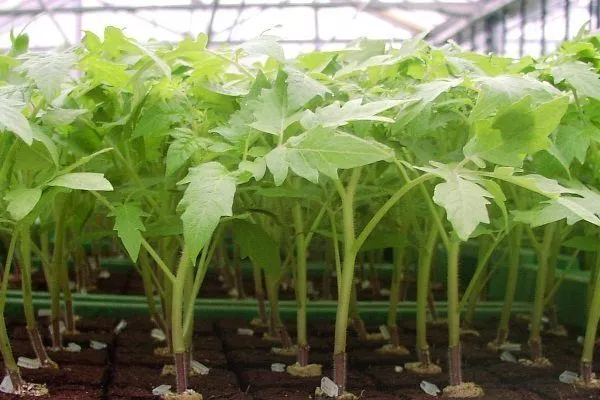
Planting plants in the ground
Transplant the seedlings into open ground using a 50 x 60 cm spacing. Three to four plants per square meter are recommended. Plant the seedlings in the prepared holes and fill them with soil. Water the plants thoroughly.
The method of planting in a greenhouse is no different from planting in a garden bed.
Sowing seeds
In southern regions, seeds can be sown directly into the ground. Follow these steps:
- In the prepared bed, dig holes 1.5 cm deep, following the pattern for planting seedlings;
- Pour warm water into each hole and let it soak in;
- Place 4-5 seeds in each hole and cover with soil;
- create a mini greenhouse by covering each hole with a jar or a cut plastic bottle;
- Place the frame over the rows and stretch the film over it.
Care
Below are basic recommendations for caring for the Red Banana tomato variety.
Bush formation
Plants are trained into two stems. To ensure proper growth, they need to be tied to a support such as a wooden or metal pole.
When tying up plants, do not over-tighten them, otherwise there will be no fruiting.
To prevent the plant from growing too large, regularly remove excess side shoots by hand. It's recommended to do this in the morning, when there's no risk of sudden rainfall. Avoid watering or fertilizing the plants beforehand. Wear thin gloves when doing this. Treat the broken side shoot with ash.
Top dressing
At the beginning of the season, enrich the soil with nitrogen and add organic fertilizer. Regular manure or ash will do.
During the period of active growth, apply fertilizer at least 3 times, using complex fertilizers (Nanovit, Mivena).
When the plant begins to bear fruit, use fertilizers containing magnesium and potassium.
Weeding and loosening
After watering, be sure to weed the bed to prevent weeds from growing.
Using sawdust, hay, or sunflower husks mixed with soil, you can create a protective layer around vegetables. This will retain moisture and prevent weeds from growing. More information on soil mulching has been written. here.
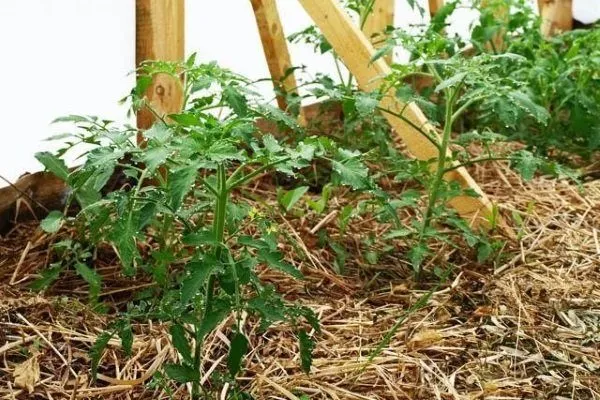
It is better to loosen the soil immediately after watering or precipitation.
Watering
Until the ovaries have formed, water the plants daily. After that, you can limit yourself to 1-2 waterings per week.
If the plant grown in open groundDuring the rainy season, avoid watering altogether.
Sustainability
It is worth mentioning separately the resistance of this variety of tomatoes.
| Disease | Sustainability | Prevention methods |
|---|---|---|
| Cladosporiosis | Average | Garlic solution |
| Late blight | Low | Salt solution |
| Fusarium | Low | Copper sulfate |
To external conditions
The Red Banana variety can be grown in a variety of climates, as it is highly tolerant of climate change. Mature plants tolerate both heat and cold well.
To diseases and pests
Among the main problems that can affect the "Red Banana":
- Cladosporiosis. It occurs when air humidity exceeds the permissible level. It appears as yellow spots covering the surface of the leaves. The underside becomes covered with a grayish coating. As the disease progresses, the leaves wilt and turn brown.
To prevent the disease, maintain proper growing conditions and spray the leaves with weak garlic or iodine solutions. Copper-containing products can also be used to treat the plant. - Late blight. It can appear during prolonged periods of rain or frequent climate changes. The main sign of the disease is the appearance of dark brown spots on tomato leaves and fruits.
The disease can be prevented by taking precautions when pruning side shoots or by spraying the plants with a weak salt solution. Treatment is carried out with Fitosporin. - Fusarium. This is a fungal disease caused by improper planting or insufficient light. First, tomato leaves turn yellow and curl into tubes. The plant begins to wilt. The root system is the last to die. The plant rots and soon dies completely. Symptoms are more pronounced in hot weather.
To prevent disease, treat the planting soil with a copper sulfate solution. The plants can be treated with Trichodermin, but this should be done as early as possible. - Tomato is moderately vulnerable to pests, one of which is whitefly. To protect plants from parasites, treat them with insecticides at the first signs of damage.
For preventive purposes, carry out treatment every 14 days after the formation of ovaries.
Harvesting and storing tomatoes
There are several rules to consider:
- To store vegetables for a longer time, pick them off with the stems;
- pick tomatoes when they are not yet fully ripe; they ripen well in the sun;
- wooden boxes are suitable for storage;
- To ensure safe transportation, place the vegetables in separate rows.
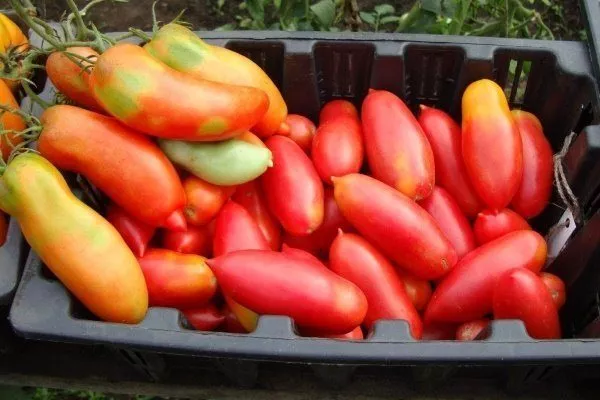
Under favorable conditions, vegetables can be stored raw for up to 150 days.
Pros and cons
To summarize, the main advantages of the variety can be listed:
- Easy to grow. "Red Banana" can be grown in various climate zones throughout Europe. It's ideal for northern regions.
- Immunity. In addition to those listed, tomatoes are resistant to most diseases.
- Germination. Most seeds germinate after planting.
- Transplantation resistance. Given the right conditions, plants thrive.
- Good yield. You can harvest up to 15 kg of tomatoes per square meter. Moreover, external growing conditions do not affect the yield.
- Commercial qualities. Tomatoes are virtually uniform in size and shape. They retain their appearance and flavor even during long-term storage.
But one should also pay attention to the disadvantages:
- Nutritional value. Tomatoes are not juicy or tasty enough and are unsuitable for many dishes.
- Difficulties in cultivation. You need to shape the bushes yourself and constantly monitor them to ensure they don't become too overgrown.
- Intolerance to humidity. In conditions of high humidity, plants become vulnerable to fungi.
Reviews
The most informative reviews:
The "Red Banana" isn't everyone's cup of tea. It's primarily suited for growing in northern regions. The plants are easy to grow, resistant to many diseases, and ideal for drying and preserving. However, their nutritional value is considered average due to their bland flavor and unsuitability for juice production.