
To understand the characteristics of the Babushkino variety, it's worth noting that this tomato is not a hybrid and does not have F1 forms that can develop without pollinators. Therefore, cultivating tomatoes requires pollination, either by insects or by hand, especially when grown indoors.
Country of origin and year of registration
Renowned breeder Blokin-Mechtalin initiated the development of this variety almost 20 years ago (the exact year remains a mystery). It was only officially recognized in 2019 (many online sources claim it's not registered—this information is outdated) and has already demonstrated all its advantages.
- ✓ For hand pollination, use a soft brush, brushing it over the flowers in the morning when the humidity is optimal.
- ✓ Make sure that the temperature in the greenhouse does not exceed 30°C to avoid reducing the viability of the pollen.
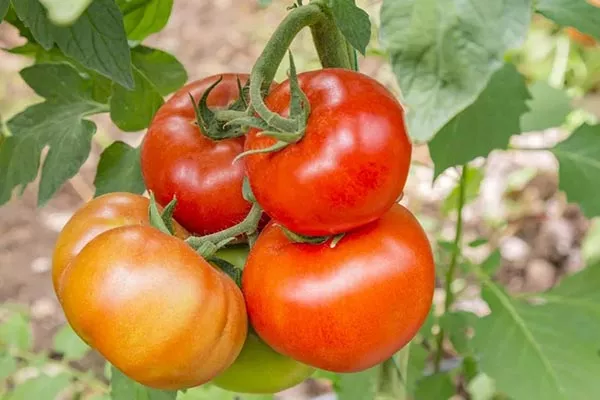
The origins of this variety are the subject of many legends. It's most likely that its selection was based on the already established Babushkin Podark (Grandmother's Gift) variety, as the two tomato varieties share significant similarities in characteristics.
Features and specifications
This variety thrives both outdoors and in greenhouses. Yield is directly proportional to the quality of care, soil fertility, and other factors.
Vegetative form
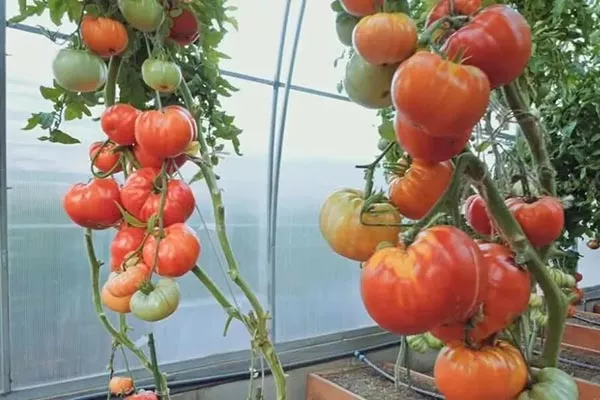
The variety is indeterminate, meaning it continues to grow without a defined crown. The bushes are not standard and require careful crown shaping during growth.
Other varietal characteristics:
- The height of the indeterminate variety reaches 220-250 cm, and the growing season ends after the first frost.
- The bush is distinguished by a large number of side shoots, but with a balanced formation of 2-3 stems, the tomatoes do not decrease in size, but their number increases.
- The plant is distinguished by a strong stem and well-developed brushes with short internodes.
- The inflorescences are multi-fruited, under favorable conditions they produce numerous ovaries; from each brush you can collect 5-8 fruits or more.
- The leaves are light green in color and have a typical tomato shape.
- The first brush is laid after the seventh leaf, and the subsequent ones are laid at intervals of one to three leaves.
Description of fruits
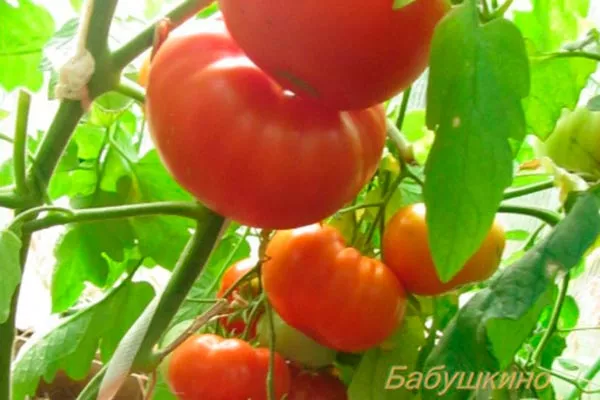
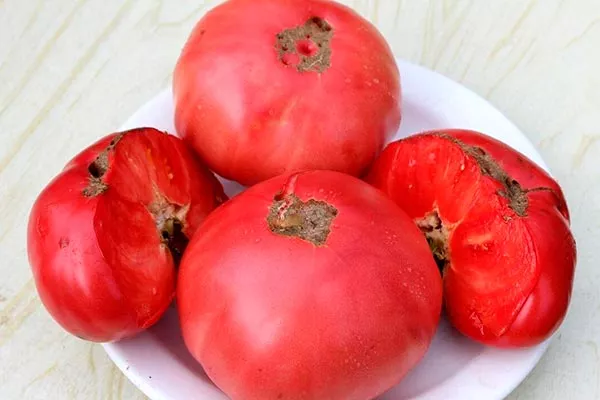
Babushkino is distinguished by its large size. The vegetables are initially green, but over time they acquire a bright red hue. Their shape is flat and round, with a slight ribbed texture, which is especially noticeable near the point where they attach to the stem.
Other features:
- The skin of the tomato is very thin, while the flesh is incredibly dense.
- The seed chambers inside the fruits are few in number and contain only a few seeds.
- The taste of tomatoes is sweet and sour, with sugar predominating over acidity. The aroma of tomatoes is particularly pronounced.
- The size of tomatoes varies, some of them reach 250 g, while other gardeners can grow fruits weighing 600-800 g.
- During its life cycle, the plant produces about 10-12 brushes, each of which grows an average of 6 tomatoes.
- The pulp is red and firm.
Ripening and fruiting
This mid-early ripening variety produces fruit within 100-115 days of sowing, with the early harvest typically being particularly vigorous. This variety's productivity is impressive: 18 to 22 kg per square meter, or approximately 5 kg per bush.
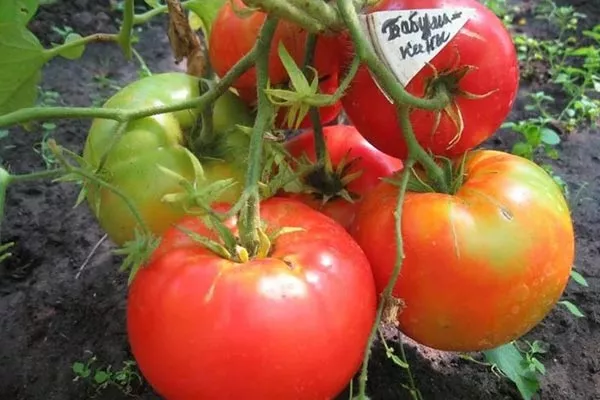
A cluster of Babushkino tomatoes can produce up to twelve fruits, but don't aim for that many, as the fruit weight decreases as the number of fruits increases. Some experienced gardeners, by removing excess ovaries, achieve tomatoes weighing up to 900 g.
Where is it grown?
This variety, which thrives in greenhouses, is widely grown throughout the country. It is cultivated in the Urals, central regions, the Far East, and various parts of Siberia. In the south, it can also be grown successfully, but in open gardens.
Methods of application
This variety is distinguished not only by its attractive appearance but also by its wide variety of uses. Tomatoes can be used in fresh salads or eaten raw. They are also used to make various pastes, adjikas, sauces, and ketchups. They are also suitable for first courses and tomato juice.
Tomatoes have also found industrial applications, where they're used to make sauces and juices due to their large size and juiciness. The only drawback is the difficulty of preserving them for the winter: it's impossible to fit these vegetables into a jar. It's best to soak them in wooden barrels.
Planting times and rules
The time for sowing seeds depends on the weather conditions in your region. If tomatoes are traditionally planted in your area in mid-May, then it's best to start seed production in early spring.
Selection of planting material
Babushkino is not sown directly into the soil, but rather grown from seedlings. Because this variety is not a hybrid, the first or last harvest can be used to produce your own seeds, eliminating the need to search for seed later.
The peculiarity of seed reproduction of the Babushkino variety is that the varietal tomato contains only a small number of seeds, which makes it necessary to use several fruits to obtain a sufficient amount of material for further propagation.
Collection Features:
- Tomatoes from the upper branches are left for propagation.
- If the fruits selected for continuation of the line do not have time to ripen on the plant, they can be left indoors, where they ripen perfectly and produce seeds with a high germination rate.
- The material extracted from the pulp can be immediately sown into the ground.
- For long-term storage, rinse, dry and store in a hermetically sealed glass jar.
Preparation and sowing
After choosing the optimal time for sowing, prepare the soil and containers for sowing, and carry out all the necessary procedures with the seeds:
- To disinfect them, they are soaked in a solution of manganese acid (1-2%) for a strictly defined period - no more than 20 minutes.
- Then they are germinated in a damp cloth (2-4 days).
- You can use growth stimulants (Zircon or Epin) or replace them with an ash solution. Some gardeners prefer to use Aloe Vera serum or a honey solution to stimulate tomato germination.
- You can either purchase ready-mixed soil from specialty stores or prepare your own. Ready-mixed soils are convenient, but it's crucial that they contain not only peat or soil but also humus and additives to improve aeration. If using a peat mixture, add river sand, humus, and soil—usually leaf mold or turf.
- Each substrate requires preventive treatment, for which a concentrated solution of potassium permanganate is used.
- The following sequence of actions should be followed: preheat the substrate, water it, and then, if necessary, add fertilizers, such as Superphosphate.
- Tomato seeds should be sown in treated soil no earlier than three to four days after disinfection.
Initially, you can sow them in common containers, and then, after some time, transplant the seedlings.
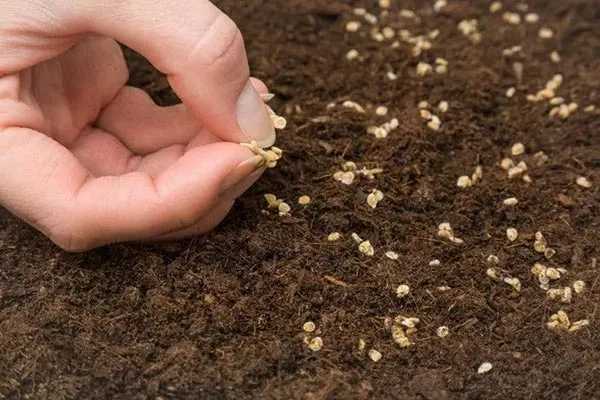
The process of growing Babushkino variety seedlings includes the following steps:
- Fill the cups or trays with substrate.
- Spray the substrate with clean water at room temperature through a spray bottle.
- Plant the seeds at a depth of 1.5 cm, with a distance of at least 3-3.5 cm between them. This will promote better rooting of tall varieties.
- After sowing, spray with warm water.
- Cover the seed containers with glass or plastic sheeting to create greenhouse conditions.
- During the period before seed germination, set and maintain the temperature in accordance with optimal conditions for tomatoes – no higher than +25°C.
The containers should be ventilated daily, leaving the plastic cover open for an hour each day. Once shoots emerge, the cover is removed, and the temperature is gradually reduced to a comfortable temperature for tomato growth—around 20°C.
Caring for seedlings
Caring for tomatoes involves creating favorable temperature conditions, regular watering, and fertilizing. If young plants are actively growing and have strong stems, fertilizing can be postponed:
- If it is necessary to use fertilizers, it is preferable to choose complex mixtures containing all the microelements important for tomatoes.
- 10-14 days before the planned transplanting time, tomatoes begin to adapt to the outdoor conditions. The plants are moved into a cool area, such as a balcony or veranda, to acclimate to the new conditions. Initially, a short period of time outdoors—15-20 minutes—is sufficient, gradually increasing to several hours.
- If the weather in May is warm and there are no cool nights, tomatoes can be moved into a greenhouse and left there overnight.
Picking
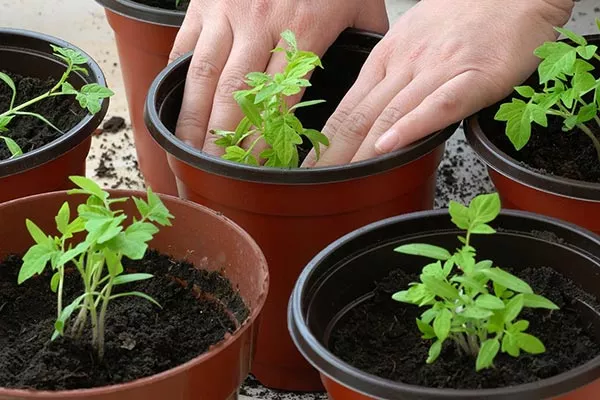
When growing tomatoes, whether in shared containers or by sowing them in individual small pots, you'll need to resort to transplanting. This method typically involves transplanting the seedlings into larger containers and removing the apical shoots. However, each gardener chooses the best approach for themselves, and most often, the process is limited to transplanting.
The key moment for transplanting is when the seedlings have two or three true leaves. Transplanting should not be delayed to avoid excessive stem elongation.
After this procedure, it is recommended to slightly protect the tomatoes from bright sunlight and avoid watering for two days to allow the seedlings to adapt more quickly and begin new growth.
Transplantation into open ground
When the young tomato plants reach the desired size, they are transplanted into the garden, digging deep holes with a spacing of 50-55 cm between plants. The distance between rows should be 60-65 cm. To save space in the garden bed, it is recommended to stagger the tomato plants.
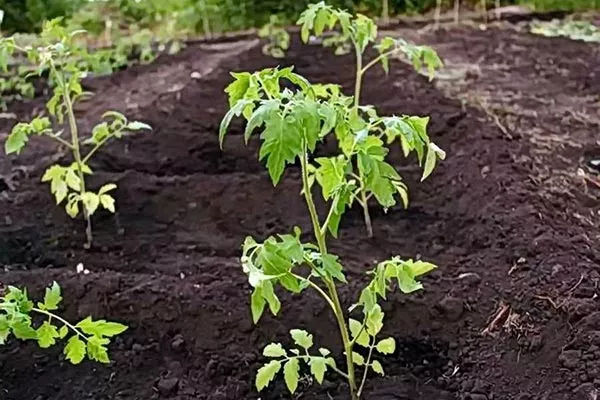
Tomatoes should be transplanted outdoors once the threat of frost has passed. The chosen location should meet the following requirements:
- protection from strong winds;
- fertile soil, which should be light and loose;
- Places where undesirable predecessors, such as nightshade crops, were previously grown are unacceptable.
Furrows are dug in the prepared area, into which the young plants are then transplanted. The plant roots are covered with loose, nutrient-rich soil.
Planting in greenhouses
In greenhouse conditions, a technique is used to form a bush into a single stem, while all shoots up to 3.5-4 cm long must be removed.
Outdoor-grown tomatoes don't require pinching. After transplanting, each plant should be secured to special support structures. The recommended planting interval for tomatoes is 2-3 plants per square meter of soil.
When growing tomatoes in a greenhouse, it is extremely important to ensure a stable temperature and humidity level.
Care instructions
Reviews of the Babushkino tomato variety vary, but those who paid special attention to caring for their crops were satisfied with this variety. Like other indeterminate varieties, Babushkino requires systematic and professional care.
During the period of growth and development of the plant it requires:
- Caring for the bush. It is recommended to leave only two or three main stems, removing the remaining shoots to prevent excessive foliage and small fruits.
- Plant support. Tall tomato plants need to be secured with stakes, trellises, or other supporting structures. Large, strong tomato clusters can break under the weight, so each mature cluster also needs to be supported.
- Nutrition of the earth. This variety requires a rich supply of nutrients. To achieve this, it's necessary to regularly and adequately feed the plant, using both organic and mineral mixtures.
If yellowish spots appear on fruit, indicating a potassium and magnesium deficiency, it's recommended to enrich the soil with these micronutrients. This will promote more regular fruit ripening. - Working with soil. To maintain the bush's health, it's necessary to regularly hill it, keep the soil loose, and remove weeds. Mulch can be used as an additional moisture retainer.
- Irrigation. Babushkino should be watered with warm water with particular care, as excessive watering during the fruit formation period can cause them to crack, so the gardener should exercise moderation.
- The first feeding should be carried out 2 weeks after transplanting, using a complex mineral fertilizer.
- The second feeding is at the beginning of flowering, with an emphasis on potassium and phosphorus.
- The third feeding is during the period of fruit formation, increasing the dose of potassium.
Pest and disease control
Tomatoes of the Babushkino variety are prone to infection by the most common diseases, so regular preventative treatment and problem control are required:
- To prevent diseases, it is recommended to rotate crops with plants resistant to tomato diseases, such as corn, beans, and cabbage, for at least three years. It is important to avoid crops such as peppers, eggplants, potatoes, and sunflowers.
- All infected plant debris must be carefully removed and destroyed both in the greenhouse and in the open area.
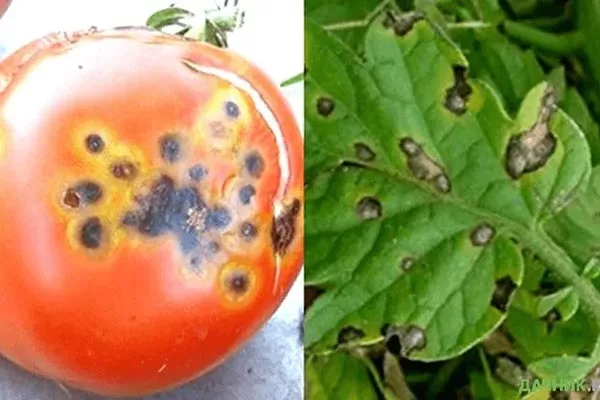
- Early blight is a serious problem for the Babushkino variety. To reduce the risk of disease, analyze your garden soil annually and maintain adequate potassium levels.
Tomatoes require monthly spraying with calcium nitrate to ensure healthy growth. If the disease progresses, use one of the following fungicides: Mancozeb, Chlorothalonil, or copper-based preparations.
To minimize the risk of late blight when cultivating the aforementioned tomato variety, a number of precautions should be taken.- Prevent foliage from becoming damp.
- Provide sufficient space between plants and avoid watering in the evening.
- Do not use compost from rotten potatoes to fertilize the soil.
- To combat bacterial spot, avoid areas where peppers were previously grown. Avoid overhead irrigation; drip or furrow irrigation is preferred. Using a copper fungicide provides effective bacterial control.
- If core necrosis is detected, it is important to carefully remove and destroy the affected plants, including the roots. This disease is aggravated by excessive nitrogen fertilizer application early in the season, so a soil test is recommended to determine the need for additional nitrogen fertilizer.
Harvesting
Tomatoes are excellent for storing and transporting. Pick them when they're not fully ripe but still have a slight brown tint.
The significant amount of dry matter contained in Babushkino tomatoes ensures their long shelf life, up to two months.
Pros and cons
This tomato variety is easy to grow and will appeal to both experienced and novice gardeners.
Babushkino is a mid-season variety, producing large, juicy fruits early in the season. This makes it ideal for growing in areas with short summers. Another consistent attraction is that the fruits are resistant to damage during transportation and retain their exquisite texture and aroma.
Despite all its advantages, the Babushkino variety also has its weaknesses, which should be taken into account when choosing:
Reviews
The Babushkino tomato variety certainly deserves the attention of both novice and experienced gardeners. Its main advantages are its resistance to temperature fluctuations and its large yield. All its shortcomings are related to insufficient soil nutrition, so gardeners should be especially careful when fertilizing.