
The Babushkin Sekret tomato is a variety that can yield fruit in a wide range of climates across the country. Its fruits are large, rich, and sweet, making them indispensable for gardening enthusiasts. This variety was developed by specialists in Siberia and boasts a number of unique characteristics.
History of creation
The "Babushkin Sekret" variety was developed thanks to the efforts of Novosibirsk breeders T. N. Postnikova and V. N. Dederko. Years of work to develop a tomato resistant to various diseases led to the new variety being approved for use and added to the Russian State Register in 2007.
Recommended for open-field cultivation in the south of the country and greenhouse cultivation in the north. In other regions, a lightweight plastic cover can be used.
Description of the variety
Babushkin Sekret tomatoes are distinguished by their good productivity of large fruits thanks to their varietal characteristics. This variety is characterized by rapid growth and requires special support and shaping.
Bushes
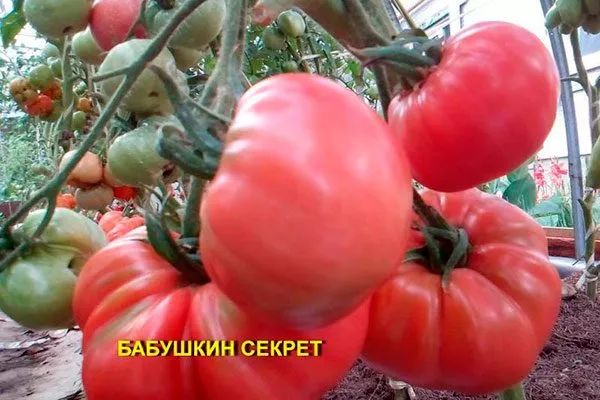
Grandma's Secret is a beefsteak variety. The plant has strong stems, large dark green leaves, and simple inflorescences. Its root system develops horizontally, not deep, requiring sufficient space for full growth.
Other subtleties:
- The first fruit-bearing branch is formed above the eighth leaf, with 5-7 fruits formed on each brush.
- Tomatoes 'Babushkin Sekret' have an indeterminate growth pattern, reaching a height of up to 170 cm, while the bushes are compact and not spreading.
- The root system is located close to the surface of the ground, occupying a large space around the stem, which must be taken into account when weeding so as not to damage the roots.
- The stem is strong, the branches are powerful, well-foliated. The leaves are pubescent and wrinkled.
- Inflorescences form between two leaves. To obtain the largest fruits, it is recommended to leave no more than eight flower clusters on the plant; otherwise, the tomatoes will significantly decrease in size and weight.
Fruit
Tomatoes have a limited shelf life due to their thin skin. They quickly lose their marketable appearance and are not suitable for long-distance transportation.
Characteristic features:
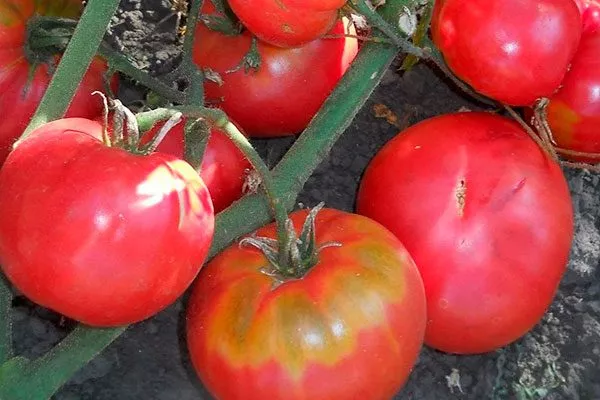
- The fruits are characterized by their flattened shape. Their flat-round appearance is broken up by ribs, and the thin skin protects the rich, juicy, and sweet flesh. The articulation is noticeable at the stalk.
- Each tomato weighs between 300 and 500 g, and its diameter reaches 10 cm. These tomatoes can weigh up to 1 kg.
- At the beginning of ripening they are colored green, but over time they become bright red.
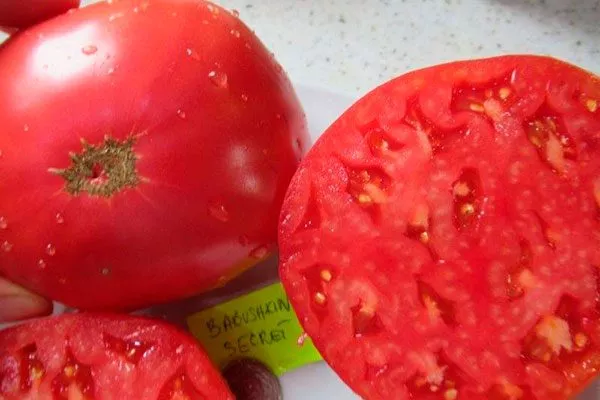
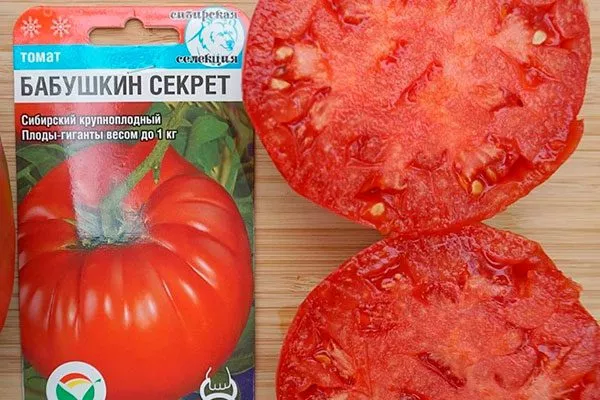
- Inside the fruit there are three to six seed chambers with a small number of seeds.
- The skin of Grandma's Secret tomatoes is smooth and elastic, although quite thin.
- When cut, the tomatoes have a sugary-raspberry color, with a tender, fleshy texture in which there is not much liquid.
- The taste of the berries is excellent - it is sweet and practically devoid of acidity.
Distinctive features and characteristics
The Babushkin Sekret tomato variety is distinguished by its continuous fruiting: if flowering is not interrupted, the tomatoes will ripen almost until the first frost. Fruiting can only be stopped by removing the top of the plant.
Scope of application
Tomatoes are versatile and belong to the salad variety, making them the ideal base for a variety of vegetable recipes. However, they are also excellent for making adjika, pasta, and lecho.
Application area:
- Conservation. Despite the difficulty of extracting tomato juice, these fruits are excellent for canning. Recipes using cut tomatoes are also suitable. For canning whole tomatoes, it's recommended to use wide-mouthed containers to accommodate larger tomatoes.
Experienced gardeners have come up with ways to grow smaller tomatoes: by leaving all the canned bunches on the plant, they become smaller due to the overcrowding of the bush. - Seed turnover. It is excellent for obtaining seeds, but it should be noted that to obtain the required amount of planting material you will need to grow slightly more plants.
- As a fresh product. This tomato variety is irreplaceable in culinary combinations. Its sweet and meaty interior will add a unique texture to any salad.
- Cooking. Perfect for preparing borscht, fried dishes, and also as an additive, gravy, or sauce for a main course.
- Sale. Tomatoes are not recommended for commercial use. But don't give up – it's important to remember that the fruits are prone to deformation, cracking, and rapid spoilage. Therefore, they should be transported unripe, in special crates, stacked in a single layer and kept away from close contact.
Despite some limitations in the use of this crop (unsuitability for making tomato juice, difficulties in collecting seeds, transportation and preservation due to its large size), the variety compensates for this with its advantages.
Productivity, ripening time
It is distinguished by a particularly long fruiting period, continuing until the gardener decides to prune the top of the bush. This allows for extended harvesting periods almost until the first frosts of winter.
Other important indicators:
- A mid-season variety, it reaches full maturity in 115-120 days.
- One square meter of land can yield up to 16.9 kg of tomatoes. The average yield per bush is about 6 kg, although this figure can vary.
- It is not intended for long-term storage, it is not prone to cracking right on the bushes and does not over-ripen too quickly.
Regions
The breeders' mission was to develop a variety ideally suited for cultivation in Siberia, and their mission was successfully accomplished. The Babushkin Sekret variety has received official approval for cultivation in the Northern, Northwestern, Western Siberian, and Eastern Siberian districts.
It thrives in the Far East. In southern regions such as Stavropol and Krasnodar, Babushkin Secret is especially popular among gardeners due to its ability to thrive in open ground.
Growing tomatoes
Before sowing, seeds undergo a special treatment that strengthens their defense mechanisms and increases the likelihood of germination.
Grandma's Secret is cultivated in much the same way as other species, but it is important to strictly follow the established recommendations.
Cultivated from seedlings. Sowing seeds outdoors is only permitted in southern regions.
Sowing dates
As seedlings, Babushkin Secret should remain in the soil for 60 to 65 days. This period should be taken into account when choosing the sowing time. Avoid sowing the seeds prematurely, as this can lead to them being overgrown by the time the plants are transplanted, which can slow their further development and cause other problems.
Seeds should be sown for seedlings in mid- to late March, taking into account specific regional conditions. In cooler regions, such as Siberia, it is recommended to plant seeds towards the end of the month, while in southern regions, it is recommended to plant them in mid-March.
- ✓ Check the seeds for germination using a salt solution: healthy seeds will sink to the bottom.
- ✓ Pay attention to the expiration date of the seeds indicated on the packaging.
Seed preparation
Before planting, seeds and soil should be thoroughly cultivated. This process involves several key steps:
- First, the seeds are selected. They are laid out on a flat surface and carefully inspected for defects. High-quality seeds are light in color and should not be deformed.
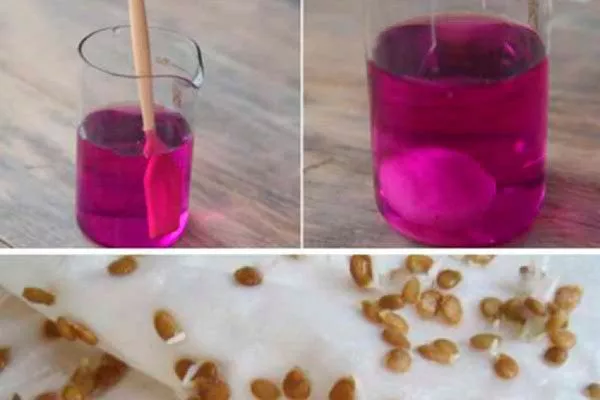
- Next, the seeds are checked for emptiness. Add 1 teaspoon of salt to a glass of warm water to create a saline solution. Place the seeds in the solution for 8-10 minutes. Healthy seeds will sink to the bottom, while those that float should be discarded, as they are empty and will not support plant growth.
- The next step is disinfection. Dissolve a small amount of potassium permanganate in a glass of water, creating a pink solution. Soak the seeds in the solution for 20 to 30 minutes, then rinse thoroughly with running water.
- To stimulate growth, planting material is soaked in special preparations, such as Zircon and Epin, for 10 hours.
Container and soil
It's best to use a soil mixture consisting of turf, organic fertilizer, and river sand, taken in equal proportions. The substrate should be treated to kill microorganisms using a dark solution of potassium permanganate or by heating it in an oven at 50°C for 15 minutes. Clean soil promotes healthy seedling growth. Alternatively, the soil can be heated or steamed.
Avoid using a manganese solution that is too dark, as it can damage the seeds. It's also important to thoroughly mix and dissolve the potassium permanganate crystals to prevent possible seed burn.
Drainage holes should be made in the bottom of the planting containers. Excess moisture can threaten young shoots, causing them to rot. Seeds can be planted in a shared wooden box or in individual peat or plastic cups.
Sowing
The sowing process involves several simple steps:
- filling containers with soil;
- substrate moistening;
- uniform distribution of seeds on the surface at intervals of 1.5-2 cm;
- covering with a layer of soil and subsequent moistening from a spray bottle.
Then cover the containers with seeds with film and place them in a warm place for germination.
Caring for seedlings
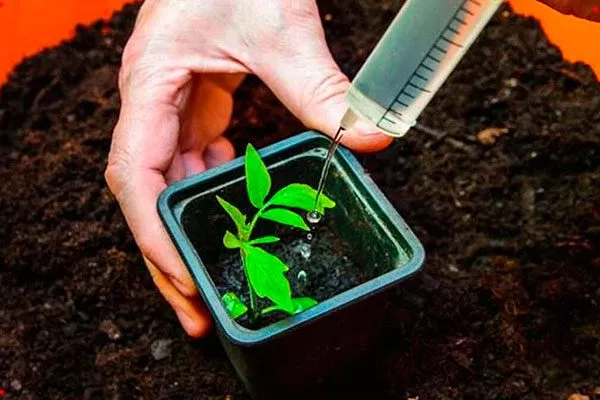
When the first green leaves emerge above the ground, move the seedlings to the windowsill and remove the plastic wrap. At this point, reduce the temperature to 16°C to prevent excessive stem elongation. Furthermore, a moderate temperature drop helps harden off the young plants early.
Other rules:
- Provide watering only when the soil layer begins to dry out slightly, using water that has been left to settle and warmed to a comfortable temperature.
- When tending the soil, keep in mind that plant roots develop wider, not deeper. Therefore, loosening should be done carefully, limiting the soil to the top layer.
Picking and hardening
Once each seedling has two true leaves, begin transplanting them into individual containers. It's important to remember that the Babushkin Sekret tomato variety doesn't tolerate transplanting and doesn't acclimate well afterward.
Therefore, the best method for growing these seedlings is to sow the seeds directly into individual peat pots. This eliminates not only the need for picking but also the need to transplant into the soil, as peat dissolves in the soil.
Peculiarities:
- Before transplanting, the soil must be thoroughly moistened, and when transferring the seedlings to new pots, maintain the soil ball around the roots to minimize damage to the root system. It is important to avoid watering for a week after transplanting.
- To acclimate the plants to outdoor conditions, begin hardening them off in the fresh air two weeks before planting. Seedlings can be exposed to the fresh air for 1 hour during the day, gradually increasing this period to 10 hours. At night, the indoor temperature should be reduced to 13°C.
- ✓ Start hardening with 1 hour in the fresh air, gradually increasing the time to 10 hours.
- ✓ Reduce the night temperature in the room to 13°C for better adaptation of plants.
Transplantation into greenhouses or open ground
When weather conditions are favorable, tomato seedlings are transplanted to their final location. This process begins earlier in a greenhouse, and later in open ground. The transplanting period is usually 60-65 days, but this is not a hard and fast rule.
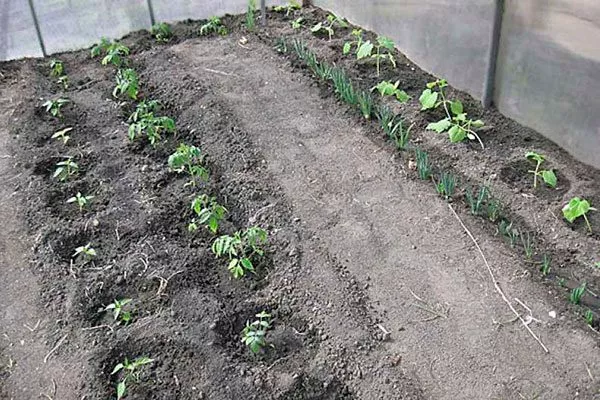
The main criterion for choosing the right time for transplanting is air and soil temperature. The Babushkin Sekret tomato can be planted in the garden or greenhouse when the soil temperature reaches 12°C, but only if the daytime air temperature is no lower than 15°C.
The process is simple:
- Dig up the soil and treat it with a warm solution of potassium permanganate of a bright red hue.
- Dig holes with a distance between them of 50-60 cm.
- Mix soil with any organic matter in a 2:1 ratio and fill the hole halfway with this mixture.
- Make a mound and place the seedling on it. If it has a root ball, create a depression in the ground. When moving seedlings from one location to another, it's crucial to avoid damaging the roots.
- After planting and filling the hole with soil, lightly compact the soil around the plant.
In the first few days after transplanting, white spots may appear on tomato leaves, but this is not dangerous as it is not associated with fungal diseases. These spots are burns caused by a sudden increase in solar radiation.
Caring for plantings
Classic care procedures are used, but with adjustments to varietal requirements.
Moisturizing
This tomato variety prefers regular and generous, but not too frequent, watering. If you can only visit the plot on weekends, the plants will survive a period without water, provided each plant receives at least 5-8 liters of water beforehand. However, during dry summers, more regular, sometimes even daily, watering will be necessary.
Weeding and loosening, pinching out side shoots
These procedures are best performed in combination. They should be carried out after watering. However, it's best not to do this immediately after watering; instead, wait until the soil around the bush has dried out a bit.
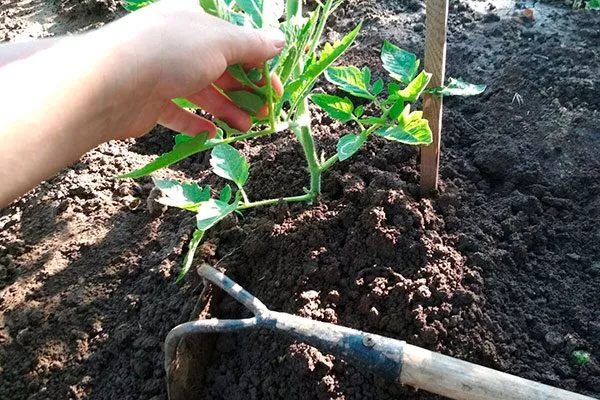
During the period of intensive bush development, many young shoots - stepchildren - appear in the internodes of the leaves, which will not be able to grow normally and will not produce a harvest.
In order for the tomato plant to be healthy and fruitful, it is necessary to regularly remove these shoots - this is called pinching.
Fertilizer
10-12 days after repotting, you can begin feeding the plants. During this period, the plants are already acclimated to their new surroundings and are ready to absorb additional nutrients:
- First, add a herbal solution or yeast extract (100 g fresh yeast, 2 tablespoons sugar per 9-10 liters of water, leave for 24 hours at a comfortable temperature). Alternatively, use a general-purpose fertilizer containing nitrogen, potassium, and phosphorus.
- The next feeding should begin in another 10 days. At this point, it's preferable to use ready-made formulas that also contain boron, such as Borogum. Particular attention should be paid to boron nutrition, as its need increases during the bud formation stage.
- Starting in July, it's recommended to switch to potassium-rich fertilizers. Potassium sulfate is suitable for tomatoes, and can be used alone or in combination with ready-made fertilizers. Potassium supplements improve the flavor of the fruit, making them sweeter.
- Iodine is essential during the ripening stage of tomatoes. Several vials can be placed in the greenhouse to slowly release the iodine and allow it to be absorbed by the plants. Foliar feeding (60 drops per 10 liters of water) is effective.
Protection from pests and diseases
The Babushkin Secret tomato variety has a relatively high resistance to fungal infections, but preventative measures are still required;
- every 10 days after transplanting seedlings, treat with Fitosporin;
- From mid-July, use more effective biopreparations – Alirin and Gamair.
Preventative measures against pests are not required. Simply follow agricultural recommendations and avoid overcrowding. If problems arise, it is recommended to treat tomatoes with commercial insecticides.
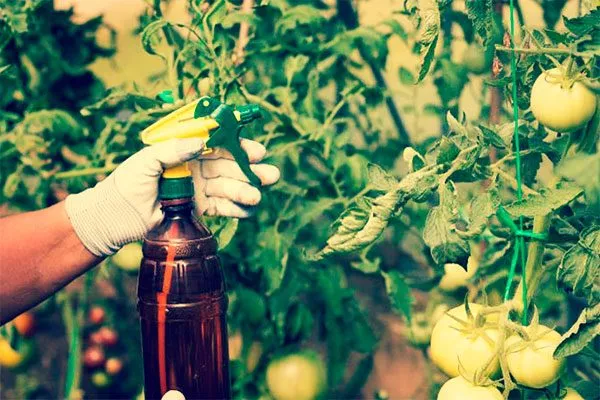
Regular preventative measures can effectively protect seedlings from potential infections. These measures include:
- watering taking into account the humidity level;
- loosening the soil to ensure its aeration;
- removal of unwanted vegetation;
- covering the soil with a layer of mulch;
- ventilation of rooms for plants growing indoors;
- application of fertilizers to strengthen plant immunity.
The nuances of greenhouses and open ground
Without growth restrictions, the plant will continue to produce fruit, but few nutrients will be allocated to fruit development, resulting in smaller fruit. This is the only special requirement for open beds.
In a greenhouse, consider the following:
- Renew the top layer of soil each season. This is necessary to prevent the accumulation of diseases and pests that overwinter in greenhouses and can cause significant damage to crops in the spring.
- If it is not possible to replace the soil, disinfect it in the fall and spring.
- Be sure to ventilate greenhouses; otherwise, fungal infections cannot be avoided.
After transplanting young plants into open ground or a greenhouse, they are sprayed with a weak solution of potassium permanganate or fungicides to prevent fungal infections.
Collection
When tomatoes acquire a raspberry-red hue, this is considered a sign of technical ripeness. The skin of Babushkin Secret tomatoes is delicate, so the fruits should be picked carefully.
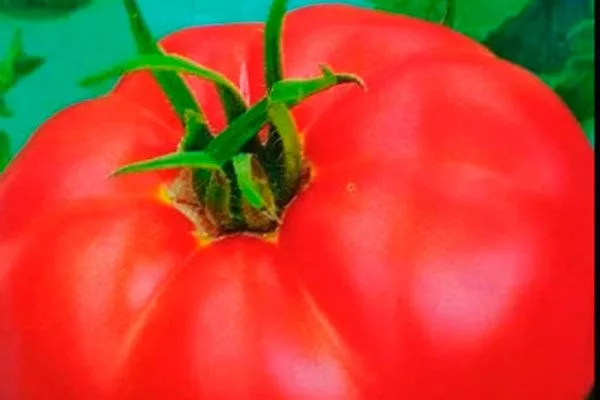
It's recommended to eat tomatoes fresh or process them immediately. For long-term storage, it's best to pick tomatoes that are not yet fully ripe—they ripen best in a cool, dark place.
Identical varieties
| Name | Growth type | Fruit color | Fruit weight (g) |
|---|---|---|---|
| Grandma's secret | Indeterminate | Bright red | 300-500 |
| Miracle of the Earth | Determinant | Pink | 250-400 |
| Superbomb | Indeterminate | Red | 400-600 |
| Hospitable | Determinant | Red | 200-350 |
| Mammoth | Indeterminate | Pink | 350-550 |
The tomato variety Babushkin Secret has several similar representatives:
- Miracle of the earth – This is a mid-season tomato that begins to bear fruit approximately 110 days after sowing. The yield per square meter does not exceed 14 kg.
- Superbomb - A mid-late-ripening bush that reaches maturity 120 days after the first shoots emerge. This variety produces large fruits weighing up to 600 g. The manufacturer promises a yield of 7 kg per plant.
- Hospitable – The fruits ripen in 110-115 days, the yield reaches 5 kg from each plant.
- Mammoth - A mid-early tomato with large fruits. Mamont yields approximately 5.5 kg per bush, making it similar to Babushkin Secret.
Pros and cons
The Babushkin Secret tomato variety has a number of advantages, making it a popular choice among gardeners and farmers:
When grown outdoors, where conditions cannot be controlled, diseases can only be avoided through special preventative measures.
To maintain objectivity, it is necessary to note the disadvantages of this variety:
Reviews
Grandma's Secret is famous not only in the southern regions but also far beyond. This variety is renowned for its large fruits with sweet pulp, which enrich the flavor of any dish. It is characterized by competitive productivity and requires little care, making it an ideal choice for beginning gardeners.